First Minister John Swinney recently met the Scotland men’s national team in Glasgow to celebrate the squad qualifying for their first World Cup finals since 1998. The Scotland men’s national side, managed by Steve Clarke and captained by Andy Robertson MBE, will face Haiti, Morocco and Brazil in Group C this month, with matches taking place in Boston and Miami.
The Scottish Government has announced £2 million for a “Summer of Sport” football fund to support clubs across the country to deliver new opportunities for children and young people by using the power of football.
A landmark moment
First Minister John Swinney said: “Football is woven into the fabric of life in Scotland. The men’s team qualifying for the World Cup was a landmark moment, and the reaction to the dramatic win against Denmark illustrated how important football is to this country. Thousands of fans will make the journey to the USA, but the whole country will be right behind the team. The Scottish Government will build on the excitement surrounding the World Cup and Glasgow’s hosting of the Commonwealth Games to deliver new sporting opportunities for young people across the country. Qualifying for the finals is an incredible achievement and I’m very proud of the team – this was an opportunity to recognise and celebrate that success.”
Monday 15 June 2026 has officially been confirmed as a national bank holiday to mark Scotland’s participation in the men’s football World Cup finals. The holiday was proposed by First Minister John Swinney to allow people, businesses and other organisations in Scotland to celebrate after the team’s opening game against Haiti.
Scotland’s World Cup group fixtures:
Scotland v Haiti — Boston, 14 June, 21:00ET/02:00 BST
Scotland v Morocco — Boston, 19 June, 18:00ET/23:00 BST
Scotland v Brazil — Miami, 24 June, 18:00ET/23:00 BST
Main photo: First Minister meets with Scottish National Football Team. Photo: The Scottish Government.
Do you enjoy our content?
Content on the Scottish Banner website remains free for users. Stories and events listed for the international Scottish community continue to be an important resource for many across the world. As advertising revenue remains a challenge, our readers can donate to help us produce unique Scottish content for global Scots. Every contribution counts and thank you for considering your support.
Support the Scottish Banner! To donate to assist with production of our publication and website visit: The Scottish Banner
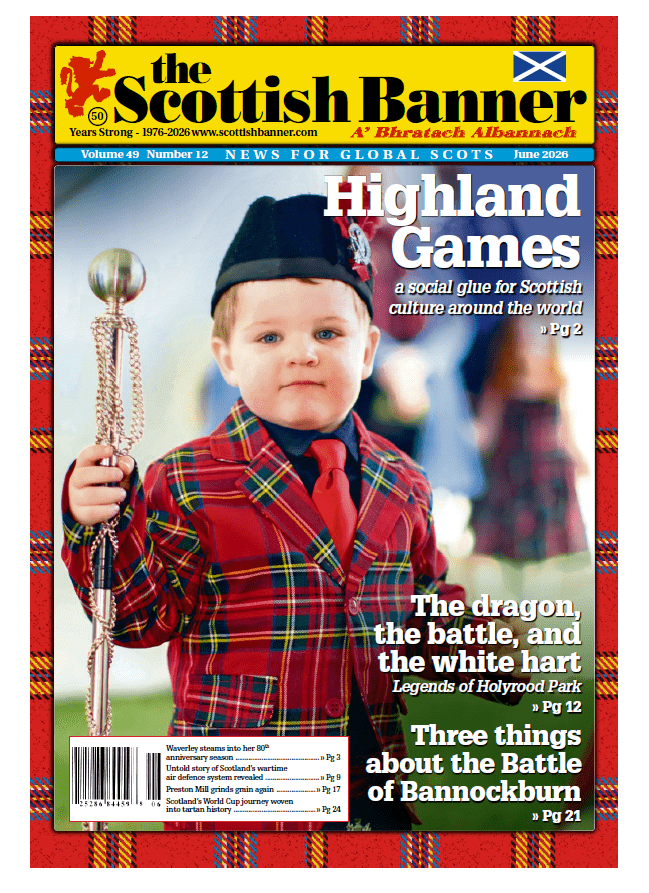
Highland Games a social glue for Scottish culture around the world
Victor Streicher, aged 3, celebrating Scotland at the Bundanoon Highland Gathering. Photo: James Bailey.
It would be impossible to be a regular reader of the Scottish Banner and not see a Highland Games, Gathering or Scottish festival mentioned within these pages.
For five decades we have highlighted Scottish events right across the world, in fact most of the events found in our pages are taking place quite far from Scotland itself, but their spirit and celebration of Scottish identity and tradition are the same as those that take place in Scotland.
Highland Games connoisseur
I not sure what makes a ‘Highland Games connoisseur’ but I have attended hundreds of Highland Games across the world and have grown up and witnessed these special community events which bring so many together. Some may be surprised to learn just how many take place around the world, a visit to our website could have you booked up until next year attending events near and far as we list events across five countries and our listings are added to weekly. Jump online, find an event and plan to take part!
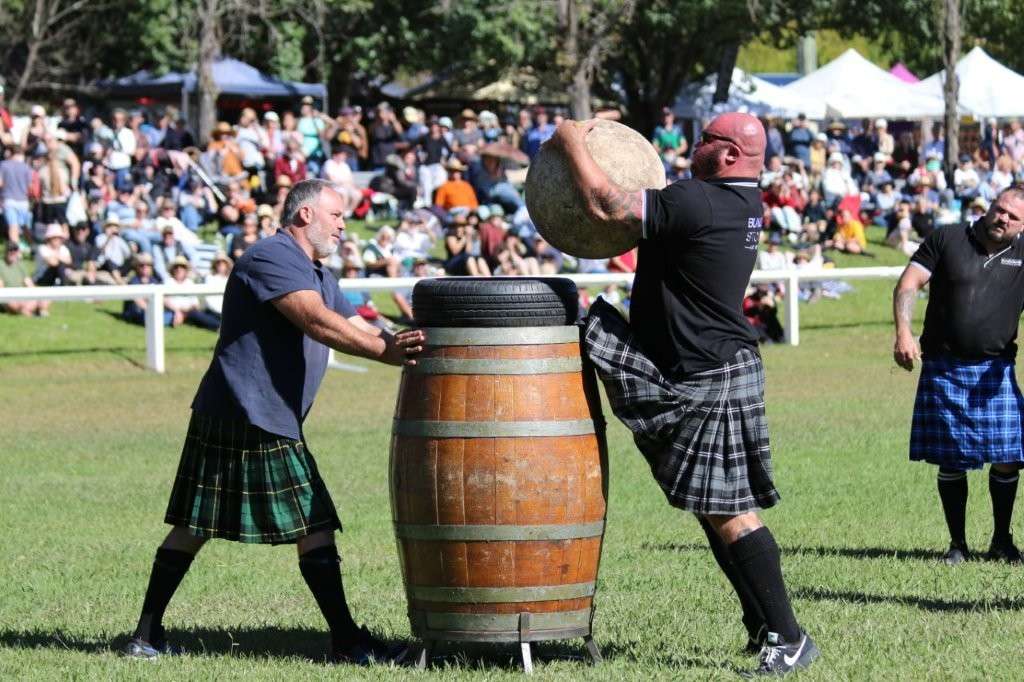
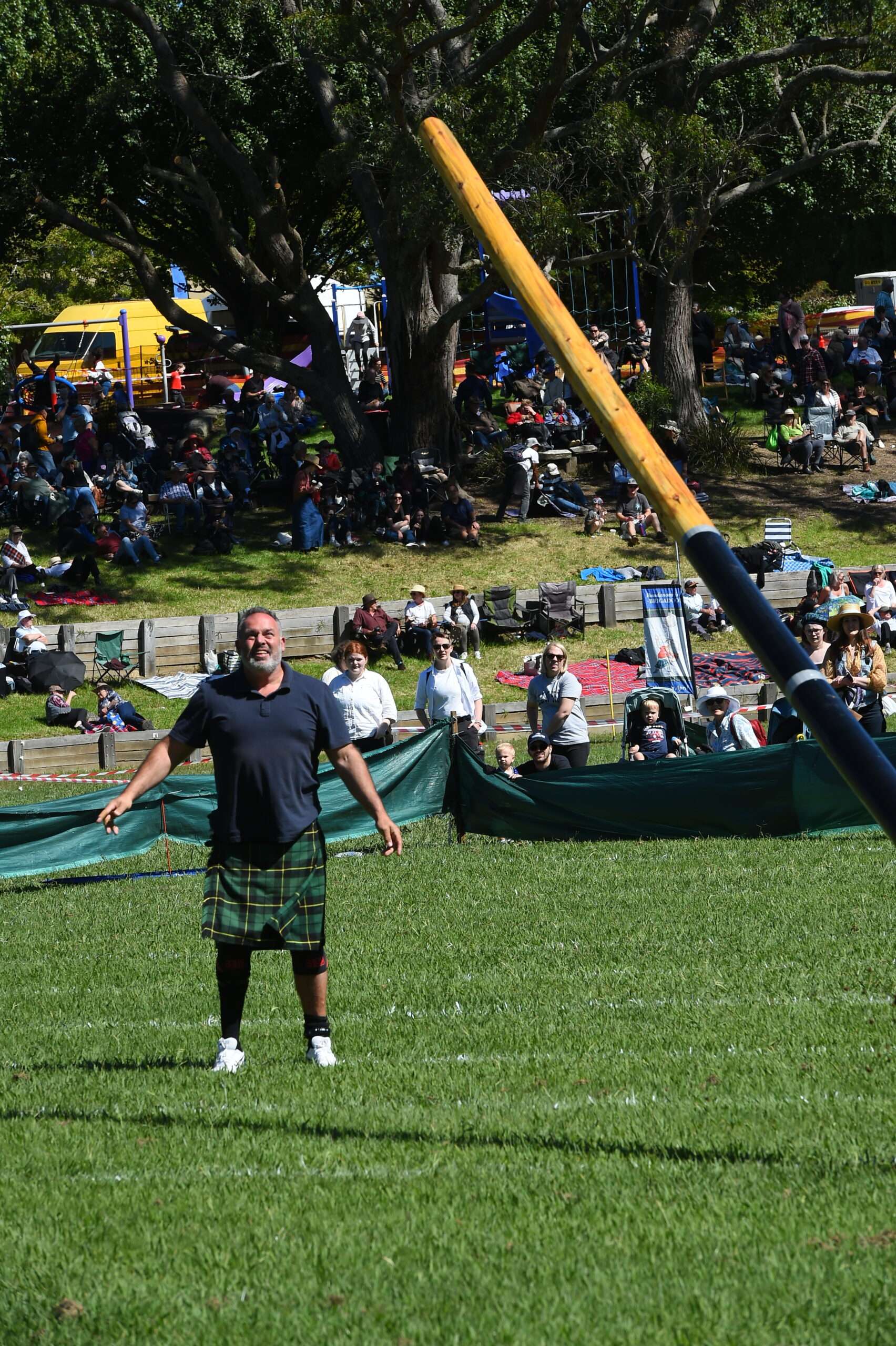
The Highland Games trace their roots to ancient clan gatherings, where contests of strength, music, and dance were woven into social and political life. Events like the caber toss, hammer throw, and tug-of-war symbolized not only physical prowess but also the unity and pride of the clans. Over centuries, these games evolved into organised festivals that celebrated and nurtured Scottish strength, performance and culture. Queen Victoria’s patronage at the Braemar Gathering in 1848 elevated them from local tradition to a national event. This royal endorsement helped export the Games abroad, where emigrant Scots carried their customs to new and far-flung communities.
A melting pot of Scottish culture at one location
For Scots who settled overseas— whether in Canada, the United States, Australia, or New Zealand—the Games became a way to maintain connection with their homeland. They offered a tangible link to ancestry, language, and musicnot just for those born Scots who moved far away but also for those generations born after. Scottish festivals bring together an array of people who participate in various aspects of Scottish culture who all come together to make an incredible event. From pipers and drummers, to dancers, entertainers, Clans and society members, reenactors and more drawing both Scots and non-Scots alike.
In fact, the Scottish Banner was launched at a Highland Games back in 1976 and more on that next month! Attend one of these great events today and you really can experience a melting pot of Scottish culture at one location. Today these gatherings blend athletic, dance and music competition with clan tents, whisky tastings and ceilidhs, creating immersive experiences that truly connect people.
These events are a hotbed for the continuity of Scottish culture today and we are fortunate to have them as part of modern life. They help us not just showcase Scottish heritage, but keep the flame burning so people can enjoy their own pursuit of Scottish identity or simply enjoy participating in a traditional Scottish craft as people from all walks of life are invited and welcomed to be part.
In this issue
If you are ever in Edinburgh, especially during August, sometimes a retreat is needed. Holyrood Park is Edinburgh’s best back yard. It offers open space from lovely lawns to Arthur’s Seat, an extinct volcano and the highest point in Edinburgh. It is also a place of history and legend as we learn more about in this issue.
Scotland has a long and bloody battle history and on June 23 & 24, 1314 the Battle of Bannockburn took place in Stirling. This was a defining moment in Scottish history when Robert the Bruce defeated the much larger English army under Edward II. Bannockburn has echoed in Scottish history and folklore ever since, and the David vs Goliath battle is today celebrated at the must-see Battle of Bannockburn Visitor Centre.
Showcases of Scotland
One thing I have noticed is many Scottish events seem to go from strength to strength; this is not a fad that was brought to lands which faded as the generations went on. People are still bringing their families today and these showcases of Scotland are evolving for the present day. They are celebrating not a historic relic of a culture but a vibrant and dynamic one and one we are lucky to have as our own.
So much thanks must go to the teams, of often volunteers, that work tirelessly to make the day go as smoothly as able. There are many hours devoted to each event and if you have or are planning to attend one perhaps leave a nice note on their social media or email to let them know their hard work is appreciated.
If you have not already, perhaps now is the time to make plans to attend a Highland Games? They provide a space where Scottish identity can be expressed, adapted, and shared with others. Those early pioneers of Scottish Games in Scotland would have never imagined places as far off as Asia, Australia, New Zealand, Canada and the USA would host events hundreds of years later with thousands of people from all walks of life attending.
I know many people who not only attend their local events but also plan to travel further afield to experience other events in our regions and even countries. There is an abundance of events taking place across the globe and I hope you too, if not already, also become a ‘Highland Games connoisseur’.
This month also sees Scotland return to the FIFA World Cup after nearly 30 years and will bring the nation to a standstill-good luck Scotland and we wish you all the success possible!
Do you have you any comments from the content in this month’s edition? Share your story with us by email, post, social media or at: www.scottishbanner.com/contact-us
#ScottishBanner, #TheBanner #NewsForGlobalScots
The Scottish Banner is more reliant than ever on our readers helping us to provide you with our unique content by buying a copy of our publication, regardless if by print or digital subscription or at a retail outlet.
We appreciate your support and hope you enjoy this edition.
Support the Scottish Banner! To donate to assist with production of our publication and website visit: The Scottish Banner
The late 18th century saw several talented poets emerge from the town of Paisley. Mostly they were working-class men, employed as weavers in what was becoming one of the great thread and fabric centres of the world.
The best-known of these was, of course, Robert Tannahill. Not only is his work still read and celebrated but his name lives on in the popular Scottish traditional music ensemble The Tannahill Weavers.
Alexander Wilson
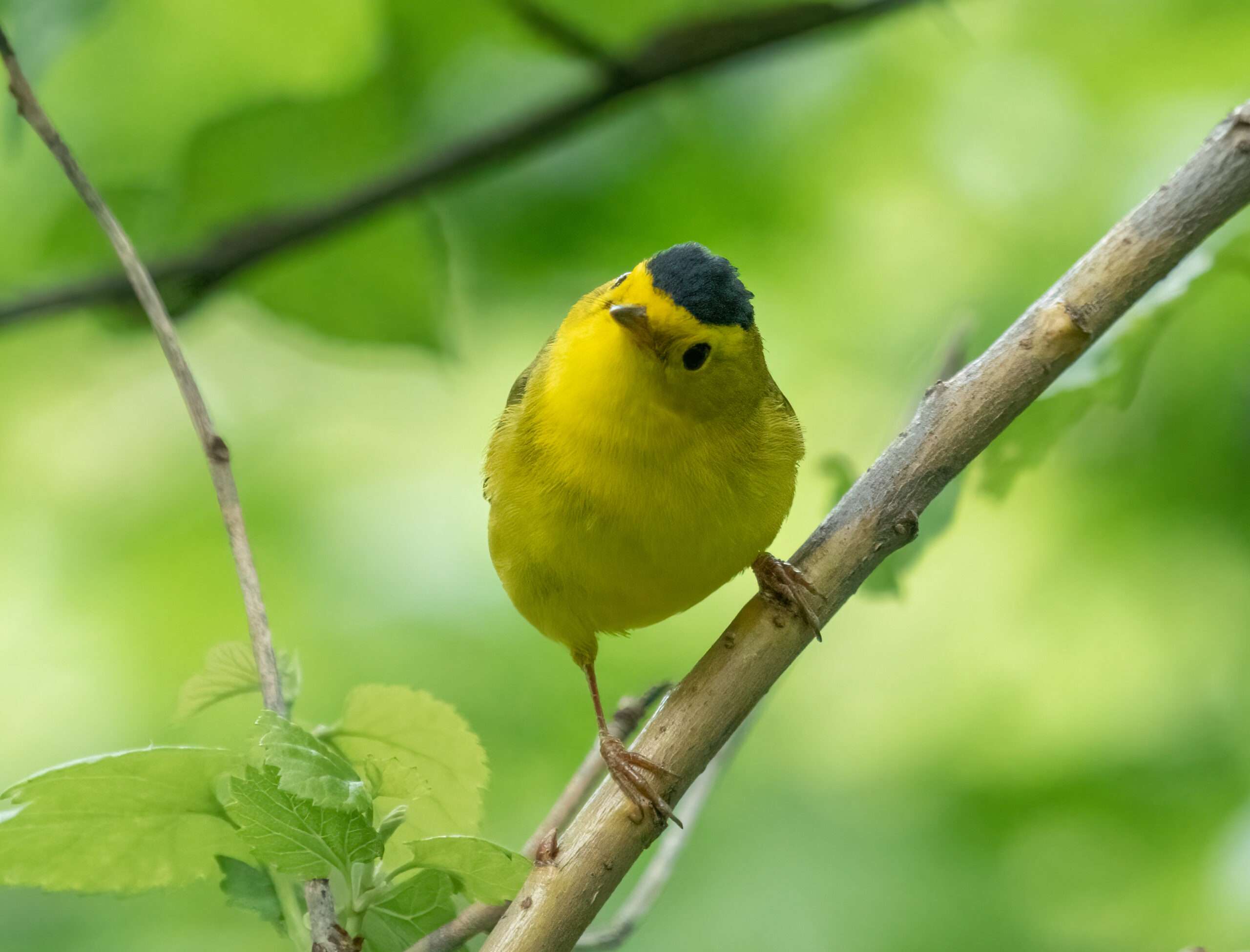
A Wilson’s Warbler. Photo: Rhododendrites , CC BY-SA 4.0.
However, there were others; Robert Allan, principally a songwriter, Ebenezer Picken and Alexander Wilson. Wilson would achieve some notoriety as a poet, fame in quite another field, yet he would die poor in a far distant country.
Wilson was born in 1766 in Paisley. His mother died when he was ten and he had to begin working on a farm in 1777 when his father married a widow with two children and there were three more mouths to feed. He began as a weaver in 1779, apprenticed to his brother-in-law William Duncan; he was 13.
Wilson had received some education but not much but this didn’t stop him growing and developing and acquiring an interest in poetry. This was especially fuelled by the publication of Burns’ Poems, Chiefly in the Scottish Dialect in 1786. Just as a generation of 60s youngsters heard The Beatles and picked up guitars, the emergence of Burns inspired many Scots to write imitative poetry. Wilson wasn’t the best such poet, but he certainly wasn’t the worst. He published a small collection (unimaginatively entitled Poems) in 1790. He published anonymously a long poem called Watty and Meg in 1792; some assumed it was by Burns himself. It opens as follows:
Keen the frosty winds were blawing,
Deep the snaw had wreathed the ploughs,
Watty, wearied a ‘ day sawing,
Daunert down to Mungo Blue’s,
Dryster Jock was sitting cracky,
Wi’ Pate Tamson o’ the Hill,
Come awa’, quo’ Johnny, ‘Watty Haith
we’se hae anither gill.’
Social justice
Like other Paisley poets, Wilson had a strong sense of social justice and often addressed the plight of working-class people. In 1794 he penned a poem called The Shark, or Lang Mills Detected which was a satirical attack on the Paisley mill owner William Sharp, whom he accused (disguised as ‘The Shark’) of using, no pun intended, sharp practices to exploit his weavers;
Think, thou unconscionable Shark!
For heaven’s sake bethink thee!
To what a depth of horrors dark
Sic wark will surely sink thee
Repent of sic enormous sins…
This poem was also published anonymously but Wilson unwisely tried to blackmail Sharp by offering to suppress the poem for five guineas. He was fined £60, couldn’t afford to pay, and so spent 14 days imprisoned in Paisley’s tolbooth in February 1793.
America
By 1794, Wilson was living in poverty. After being arrested again (for ‘political agitation’) he decided to emigrate to America at the age of 27. He landed in Delaware and walked to Philadelphia where he tried to make a living in his old trade but could find little work and so made the unusual, even for the time, switch into teaching. He taught for five years in Philadelphia before having to scamper off to New Jersey in 1801 after a scandalous affair. He taught for a while in Bloomfield, New Jersey before heading back to Pennsylvania. He taught at Union School near Gray’s Ferry from 1802 until 1806. A near-neighbour was the naturalist William Bartram.
Bartram seems to have identified Wilson’s enthusiasm for nature, especially bird life, a love that comes out clearly in a number of his poems. He encouraged Wilson’s growing interest in birds, and also his ambitions as a painter. Bartram’s niece gave Wilson lessons in draughtsmanship. By 1804 Wilson was expressing his ambition to publish a book recording all the known American species of bird. He started travelling, collecting, recording, observing, painting and acquiring subscribers to fund (‘crowdfund’ essentially) the work. He worked closely with Charles Willson Peale, the founder of the Peale Museum in Philadelphia (one of the first natural history museums in America) and used the ornithological collections there for reference.
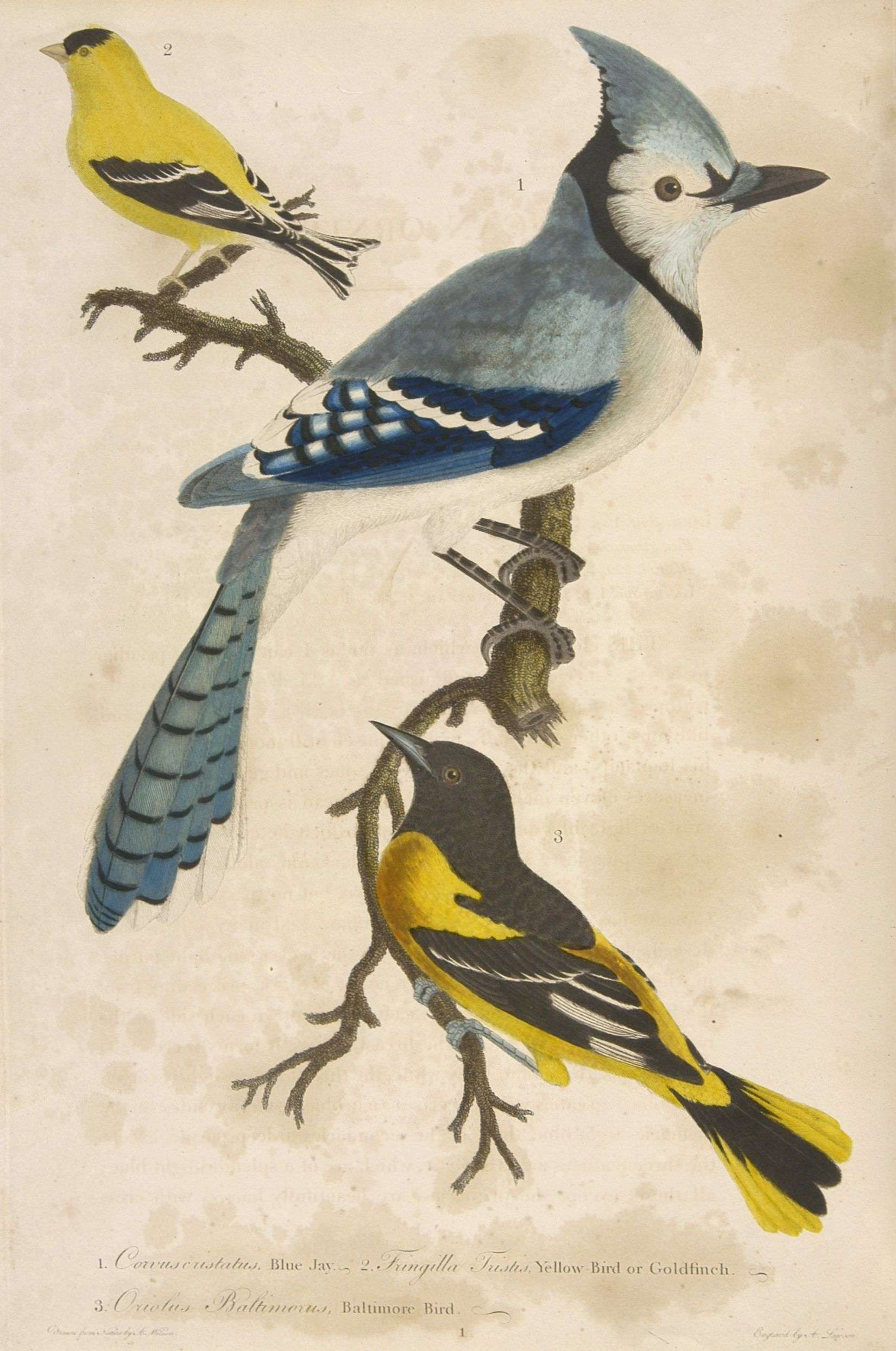
He resigned his teaching job in 1806 to become editor of New Cyclopaedia, but the bird volumes were still his focus. Eventually, American Ornithology was published in nine volumes (by the publishers of New Cyclopaedia) between 1808 and 1814. It described 268 species of birds, 26 of which had not previously been recorded in print, and featured 76 plates drawn by Wilson.
The father of American ornithology
An image from the 1832 book American Ornithology by Alexander Wilson, Public domain, via Wikimedia Commons.
On a collecting expedition on the Ohio and Mississippi in 1810 (in his skiff, Ornithologist), Wilson reached Louisville, Kentucky. Here he met John James Audubon who would be inspired to improve upon Wilson’s work. Audubon’s Birds of America was published between 1827 and 1838 in Edinburgh and London. While Audubon was much the better artist, some argued that he plagiarised much of Wilson’s writing and that he had actively tried to suppress American Ornithology in order to promote his own work. Ironically, in Wilson’s home town, Paisley Museum and Art Gallery holds a copy of the four-volume edition of Audubon’s book.
Wilson had become an American citizen in 1804 and in 1812 he was elected a member of the Society of Artists of the United States. The following year he was welcomed into the American Philosophical Society. Yet when Wilson died that same year, he was living in poverty, his great project having taken its toll. His friend George Ord, himself a zoologist of some note, saw the final two volumes of American Ornithology through to publication. Ord also later wrote Wilson’s first biography. Wilson is buried in the graveyard of Gloria Dei Church in Philadelphia.
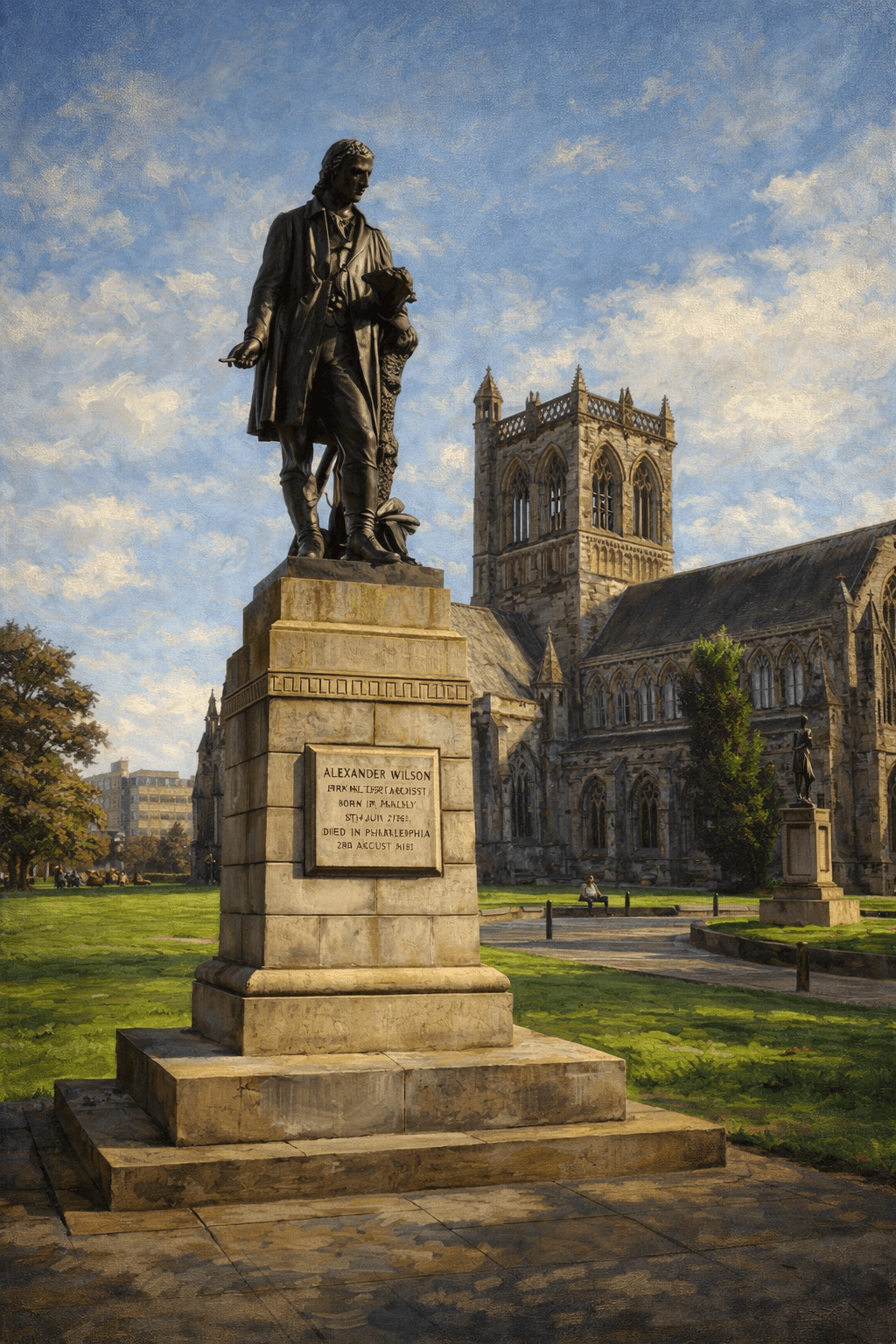
Wilson is not forgotten at home. His statue stands proudly outside Paisley Abbey while there is a plaque on the former Laigh Kirk (now the Paisley Arts Centre) where he was baptised. He is sometimes referred to as ‘the father of American ornithology’ and there were at one time several species of bird named after him. The American Ornithological society, however, is gradually renaming bird species named after individuals. Wilson’s Warbler, an attractive little yellow bird with a black cap, will be one of these. The bird serves as the logo of the Wilson Ornithological Society in the USA; it publishes the Wilson Bulletin. There is also a Wilson Journal of Ornithology.
Alexander Wilson travelled a long way from the weaving industry in Paisley. Poet, artist, ornithologist, teacher, he packed a great deal into 47 short years of life.
Main image: The statue of Alexander Wilson located in Paisley.
Do you enjoy our content?
Content on the Scottish Banner website remains free for users. Stories and events listed for the international Scottish community continue to be an important resource for many across the world. As advertising revenue remains a challenge, our readers can donate to help us produce unique Scottish content for global Scots. Every contribution counts and thank you for considering your support.
Support the Scottish Banner! To donate to assist with production of our publication and website visit: The Scottish Banner
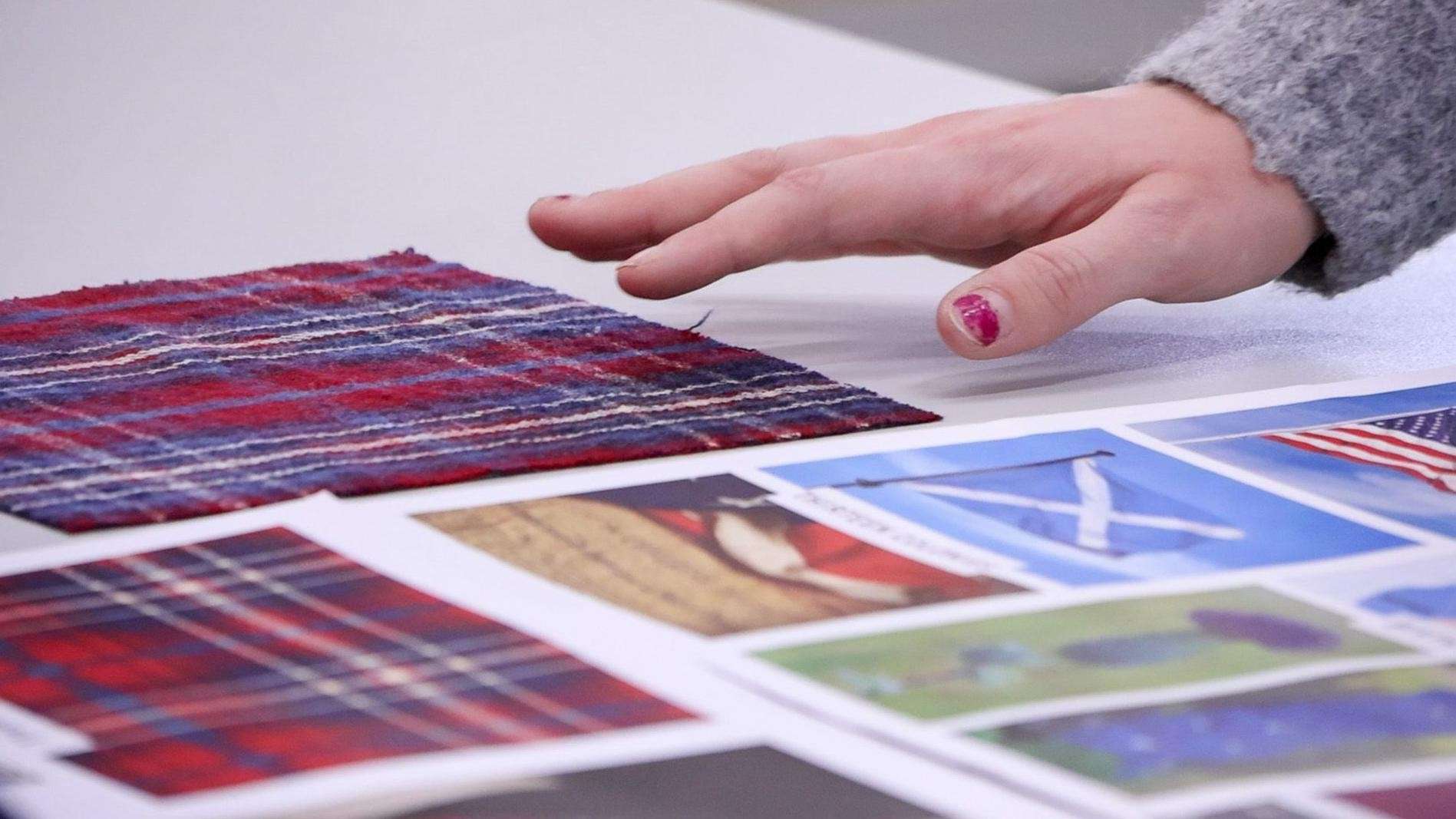
As the United States prepares to celebrate the 250th anniversary of its Declaration of Independence, students from Heriot-Watt University have been offered an historic opportunity to create a contribution from Scotland. They’re at the heart of a unique project to design the commemorative America-250th tartan, which will be presented in Washington D.C. this summer.
Heriot-Watt University was invited by the Scottish Government USA to create a tartan symbolising the enduring historical and cultural ties between Scotland and the United States. Students from the University’s School of Textiles and Design have presented their ideas to a panel of experts from both countries, who have selected the winning design. The chosen tartan will be revealed in the summer.
Professor Fiona Grant, Executive Dean of the School of Textiles and Design, said: “We were delighted to be chosen for this special assignment to mark the America250 celebrations. It’s a remarkable opportunity to contribute to a project of real cultural – and lasting – importance, while showcasing the breadth of skill, creativity and innovation that define Heriot-Watt’s School of Textiles and Design.”
The long and historic ties between the United States and Scotland
The initiative gives international exposure to Scotland’s emerging textile designers, linking their work to a globally recognised commemoration. It also provides an opportunity for Scottish Government USA to promote Scotland’s strengths in creativity, heritage, higher education and design to audiences across the United States. Mark Boyce, Acting Head, Scottish Government USA said, “The 250th anniversary of the Declaration of Independence is a moment to reflect on the long and historic ties between the United States and Scotland. A commemorative tartan is the perfect symbol of this interwoven relationship that continues to thrive through trade, education, culture and diaspora. We are delighted to bring this opportunity to the students at Heriot-Watt University, who are developing skills and creativity to help secure the future of Scotland’s unique tartans and textiles.”
The chosen design will be registered with the Scottish Tartan Authority as the official commemorative tartan for the America-250th organisation. An initial commemorative run will be produced at Lovat Mill in the Scottish Borders, with the winning student then travelling to Washington D.C. to formally present the tartan from Scotland to the USA. Each submission had to meet specific evaluation criteria. These include the historical and cultural relevance of the tartan design, the creativity and originality of the pattern and supporting narrative, as well as the design’s public appeal and potential for ceremonial and commercial use. Colour palette, warp and weft all contribute to the narrative conveyed, combining tradition with contemporary storytelling.
The tartan project is part of a wider programme of activity around America-250th and the America-Scotland relationship. Scotland has played a part in shaping America’s history, with many of the Founding Fathers and signatories of the Declaration of Independence of Scottish descent. Scottish immigrants also contributed to the development of American governance, industry and education. Lovat Mill in Hawick is an established partner of Heriot-Watt University’s School of Textiles and Design. It regularly provides placements for fourth year weave students and hosts tours of the mill for students from the school.
Do you enjoy our content?
Content on the Scottish Banner website remains free for users. Stories and events listed for the international Scottish community continue to be an important resource for many across the world. As advertising revenue remains a challenge, our readers can donate to help us produce unique Scottish content for global Scots. Every contribution counts and thank you for considering your support.
Support the Scottish Banner! To donate to assist with production of our publication and website visit: The Scottish Banner
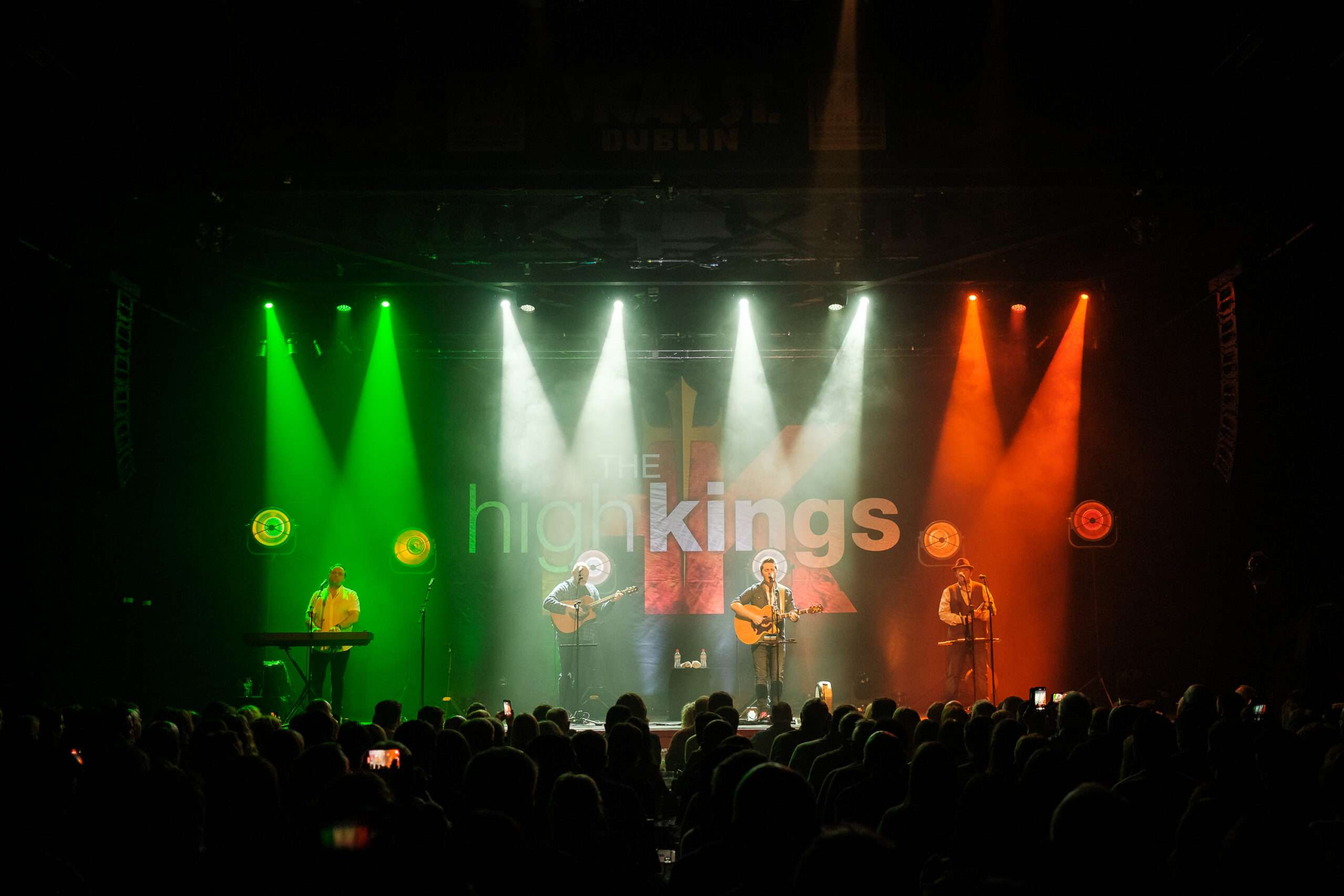
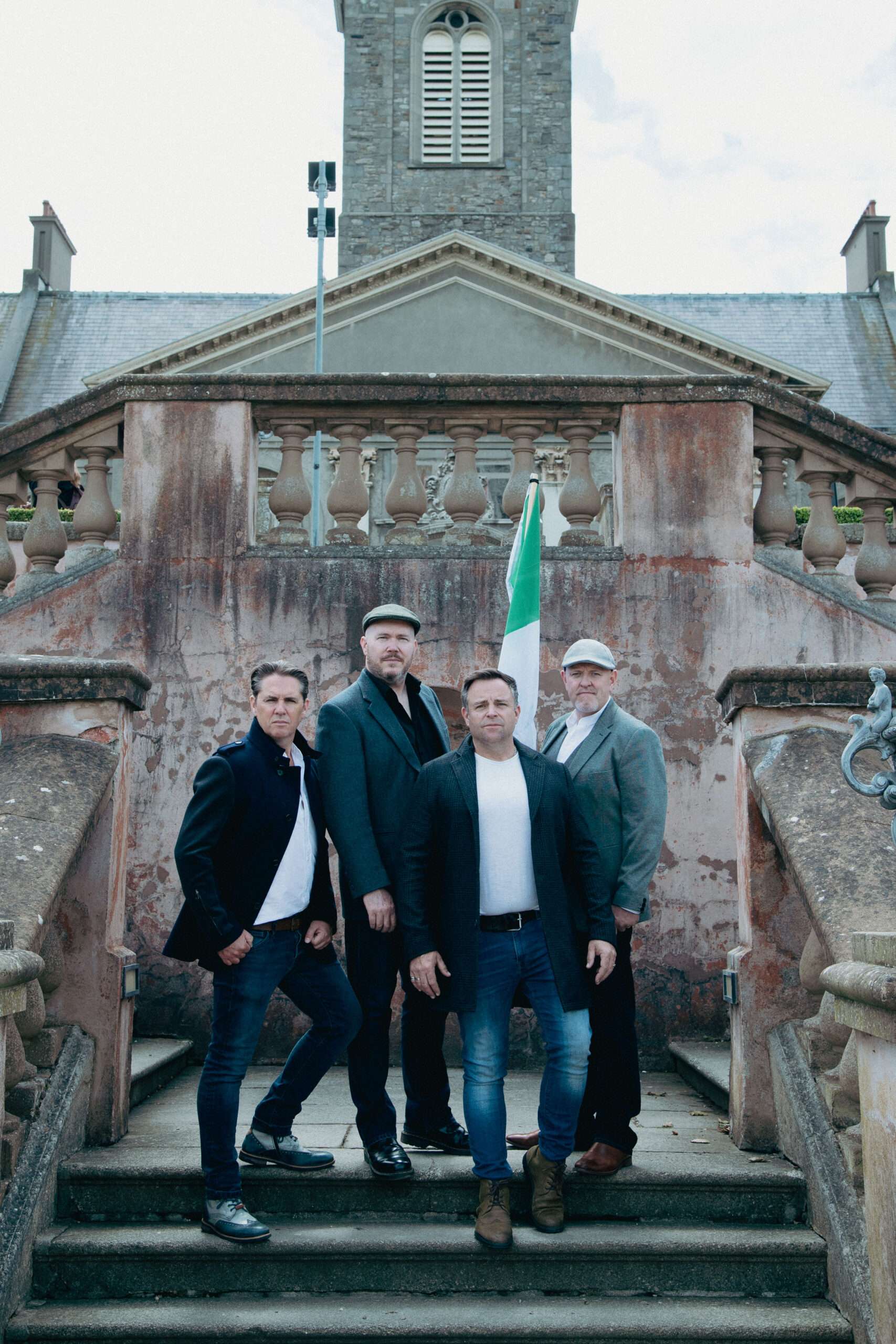
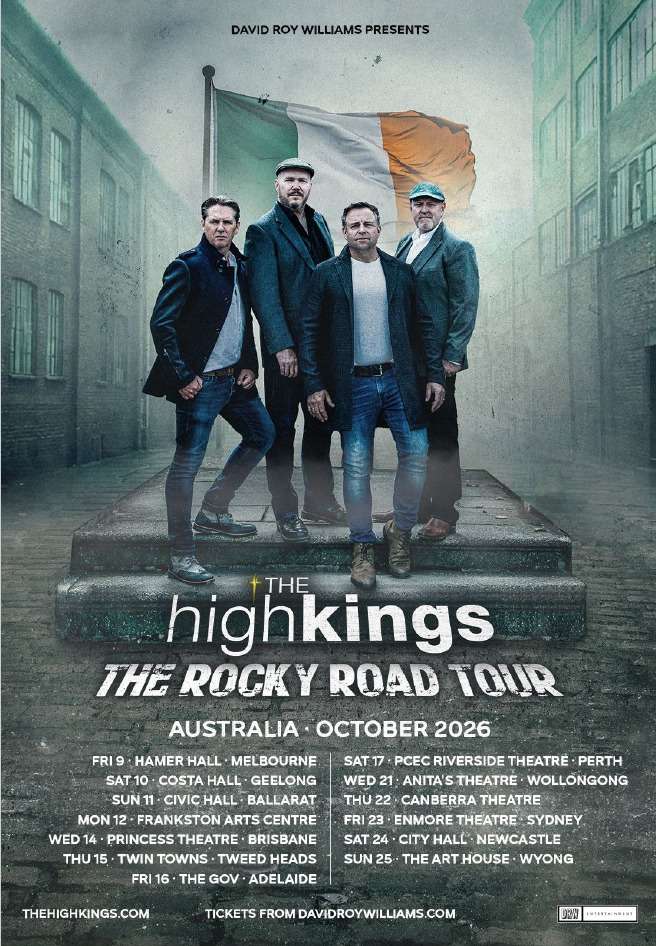
Ireland’s leading folk group, The High Kings, are set to excite fans once again with the announcement of their Rocky Road Tour 2026, which includes Australia in October.
As global ambassadors of Irish and Celtic heritage and storytelling, The High Kings have consistently brought the timeless tradition of folk music to audiences worldwide, earning them chart-topping success and widespread acclaim.
With their signature blend of classic tradition and modern edge, The Rocky Road Tour promises to be a vibrant showcase of Irish culture, energy, and musicality.
Following a record-breaking 2024 – including a sold-out world tour, a feature on Disney’s critically acclaimed Only Murders in The Building, and over 5 million weekly streams – the band are showing no signs of slowing down.
Their momentum continued in 2025 with a string of sold-out U.S. tour dates, culminating in a headline performance at the legendary Troubadour in Los Angeles on March 23rd, after stops in Kansas, Nashville, St. Paul, St. Louis, New York, New Hampton, Glen Ellen, Ridgefield, Alexandria, and more.
Storytelling, musicianship, and connection
But it was their inclusion on the soundtrack of Sinners—the current #1 movie worldwide, starring Michael B. Jordan and directed by Ryan Coogler—that marked a defining moment in their global recognition. The film’s soundtrack, already topping international streaming charts, was curated by Oscar- and Grammy-winning composer Ludwig Göransson (Oppenheimer, The Mandalorian, Black Panther), a long-time admirer of The High Kings’ distinctive vocal blend and musicianship.
After attending their sold-out show at The Troubadour in Los Angeles earlier this year, Göransson selected two tracks—The Rocky Road to Dublin and Go Lassie Go—to feature prominently in the film’s score.
The Rocky Road Tour 2026 will build on this global success, offering audiences a high-energy live show that reinforces The High Kings’ place at the forefront of Irish folk. With a renewed focus on storytelling, musicianship, and connection, the tour reflects the group’s ongoing commitment to honouring Ireland’s folk legacy while pushing creative boundaries.
As well as their recorded music triumphs, The High Kings have performed for hundreds of thousands across the globe and graced prestigious stages including Glastonbury Festival, The Isle of Wight Festival, Times Square, NYC, Trafalgar Square, London (St. Patrick’s Day) and many more/ Their live television appearances have spanned the U.S., with performances on Good Morning America, Good Morning LA, The View, and The Today Show.
Content on the Scottish Banner website remains free for users. Stories and events listed for the international Scottish community continue to be an important resource for many across the world. As advertising revenue remains a challenge, our readers can donate to help us produce unique Scottish content for global Scots. Every contribution counts and thank you for considering your support.
Support the Scottish Banner! To donate to assist with production of our publication and website visit: The Scottish Banner
The 2026 Holland Waterfront Celtic Festival & Highland Games returns June 26 & 27 at the Ottawa County Fairgrounds in Holland, Michigan. Sponsored by Guinness the festival, located two minutes from the white sand beaches of Lake Michigan was developed in 2022 by the Holland Celtic Society, a new 501(c)(3) non-profit cultural, heritage and educational organization the festival is dedicated to sharing Irish, Scottish, Welsh, and other Celtic heritage with the community in a fun, spirited, and celebratory way.
The festival is open from 4:00 PM to 11:00 PM on Friday, June 26 with four bands on stage for a 7 hour-long 25 & older “Ceilidh” featuring music, dance, food, and vendors.
All day festival for all ages
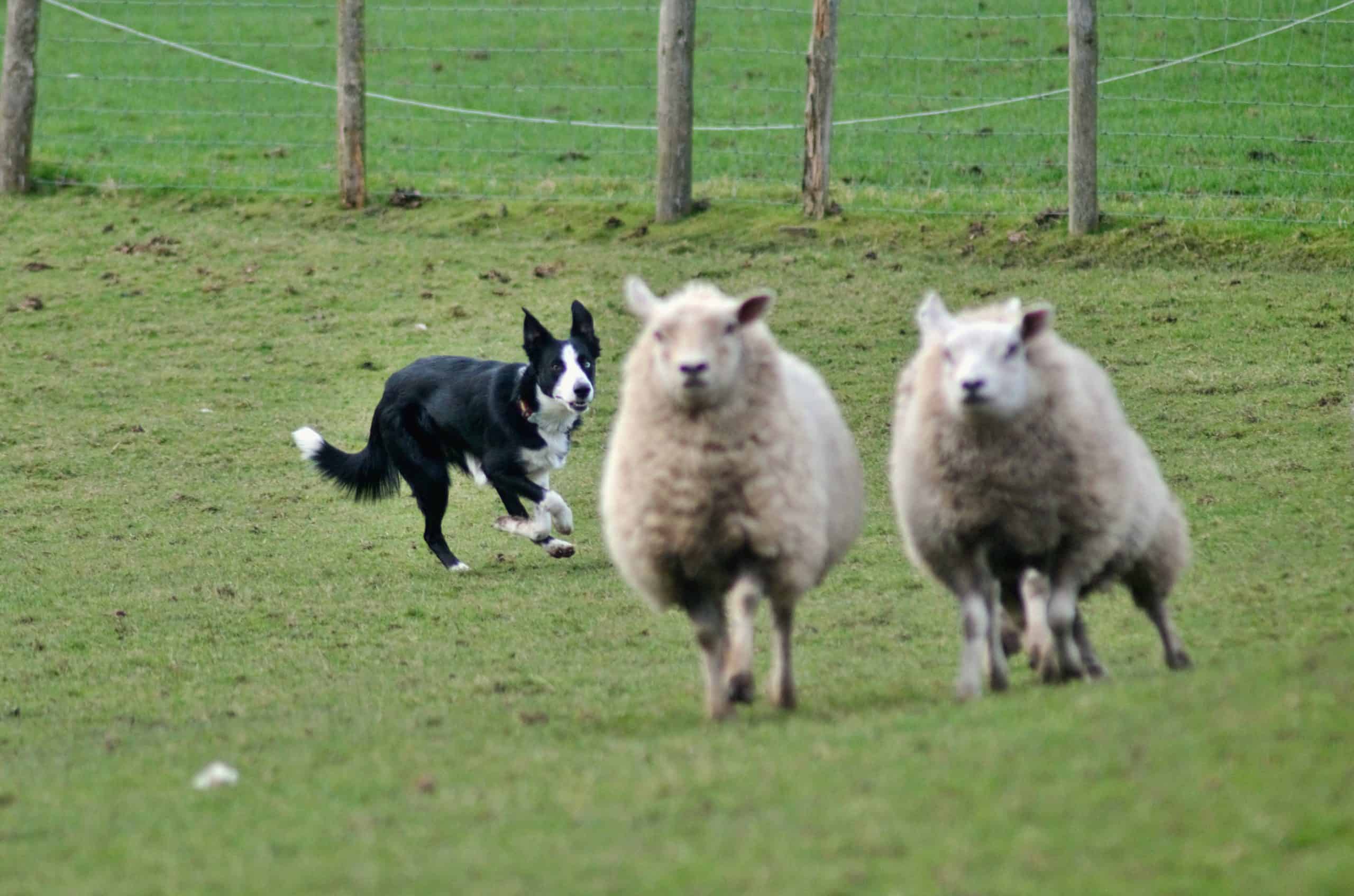
Sheep herding.
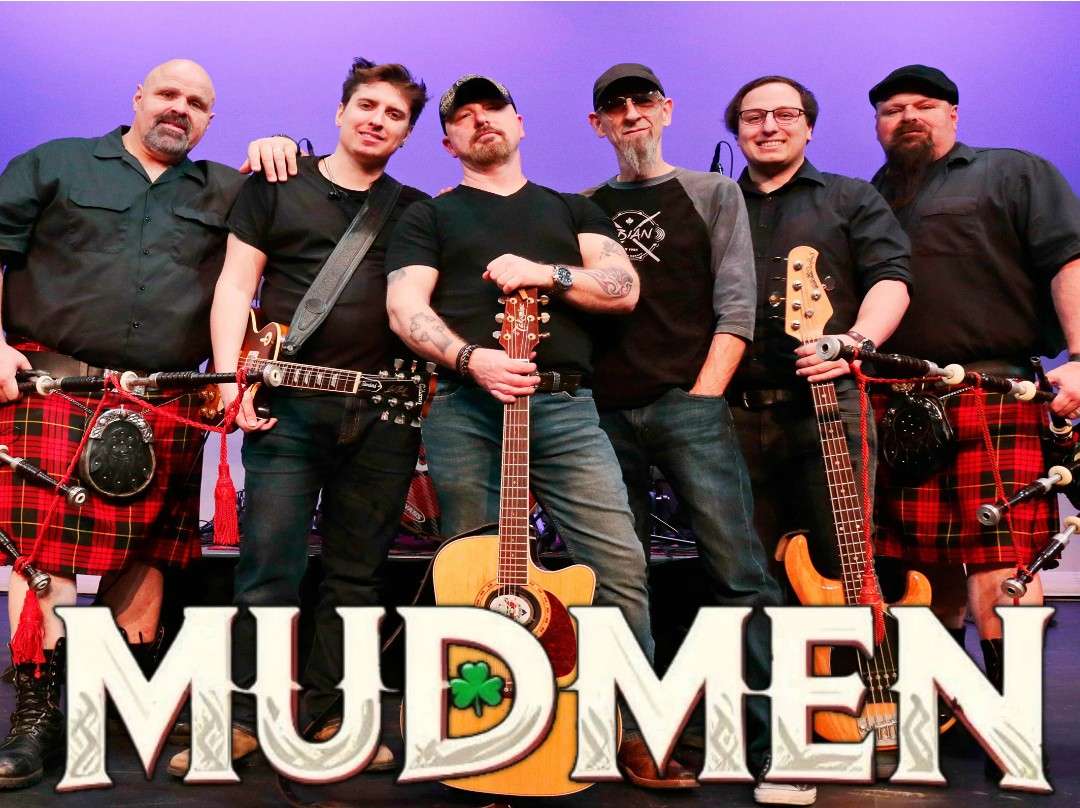
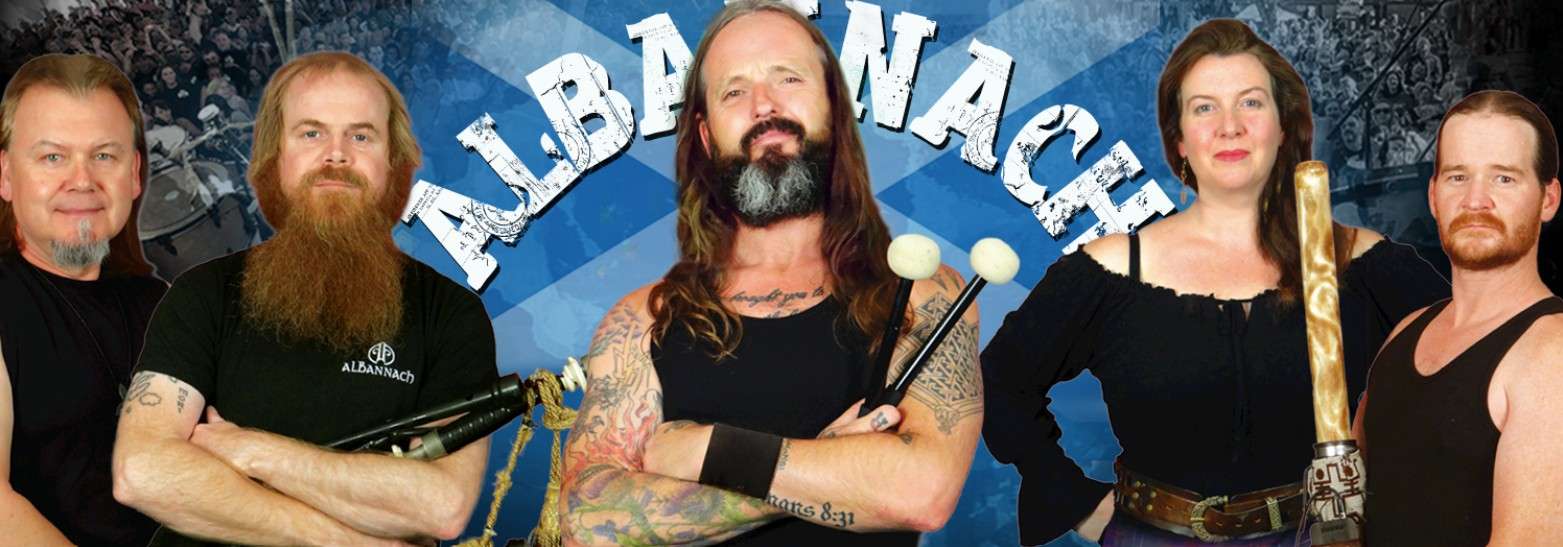
Saturday’s all day festival is for all ages, from 9:00 AM to 11:00 PM with 13 more bands on stage, along with pipe and drum bands, 60 athletes competing in Highland Games, Scottish Clans, Irish & Scottish dance groups, Celtic genealogy assistance, a dozen food trucks/tents, two dozen Irish & Scottish retail vendors, a children’s area, tomahawk throwing, and an on-site Irish Pub. Bands on the schedule for 2026 include Albannach, Mudmen, Crossbow, Brother Crowe, Whorled and ten others.
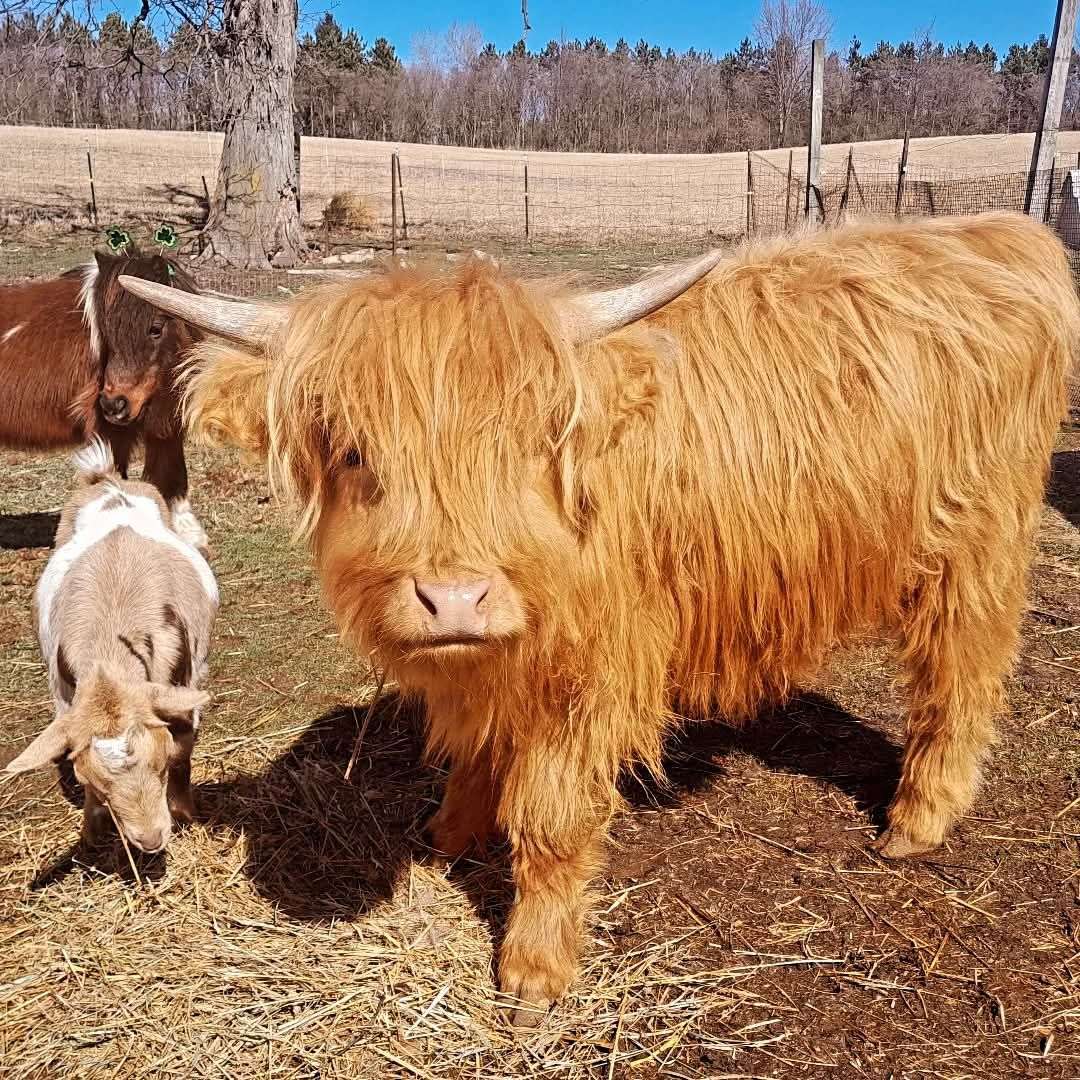
New for 2026 is a display of Scottish Highland cattle! These cows, or “Coos” are a huge attraction for adults and kids. Also, this year, we will feature demonstrations of border collies herding sheep.
Content on the Scottish Banner website remains free for users. Stories and events listed for the international Scottish community continue to be an important resource for many across the world. As advertising revenue remains a challenge, our readers can donate to help us produce unique Scottish content for global Scots. Every contribution counts and thank you for considering your support.
Support the Scottish Banner! To donate to assist with production of our publication and website visit: The Scottish Banner
‘Time, the deer, is in the wood of Hallaig’. So begins perhaps the most enduring and resonant poem by Somhairle MacGill-Eain (Sorley MacLean), dwelling in a place lost to the Clearances. No other animal than the deer could have carried the weight of this vision.
For thousands of years in Scotland deer have been seen as a potent embodiment of the natural, and indeed the supernatural, world. They appear as heraldic emblems, millennia-old carvings, iconic paintings such as The Monarch of the Glen, and in countless folkloric tales of grand hunts and encounters with the unknowable. Even now, the vision of a deer appearing in a back garden or bounding in a field beside a motorway evokes a sense of calming wonder in many people.
Some of the earliest people in Scotland to leave an archaeological record were intimately intertwined with deer. Deer bones and antlers are commonly found within Mesolithic middens, Neolithic chambered cairns, and Iron Age brochs. Not all can be explained by their utility as sources of protein and tools. Bones from 36 red deer were found within the Knowe of Yarso in Rousay, Orkney, where ancient tribes seem to have identified themselves in part by their affinity for certain animals. At Dun Mor Vaul, an Iron Age settlement in Tiree where there has never been a large deer population, a highly atypical proportion of deer remains were found, suggesting a possible special significance for local people which they expended great effort to maintain.
Deer are the only animal to appear on prehistoric decorated pottery from the Hebrides, where wolves, golden eagles, dolphins, and other suitably totemic animals roamed. Even more remarkable is their abundance in Neolithic rock art. There are only nine known examples of prehistoric figurative rock art depicting animals in Britain, and almost all of them include or exclusively feature deer. Clearly, these animals loomed very large in peoples’ imaginations and lived experiences.
Two of these depictions of deer are in or near to Kilmartin Glen in Argyll, a place I have explored in several past articles. Deep in Glen Domhain on a low stone beside a burn is a lightly carved image of an almost cartoonish deer, its pointed ears, big eyes, and tuft of a tail looking straight out of a Pixar animation. It likely dates from the Iron Age and is thought to mark the boundary between two kindreds, or possibly even between the Gaels of Argyll and the Picts of the central Highlands.
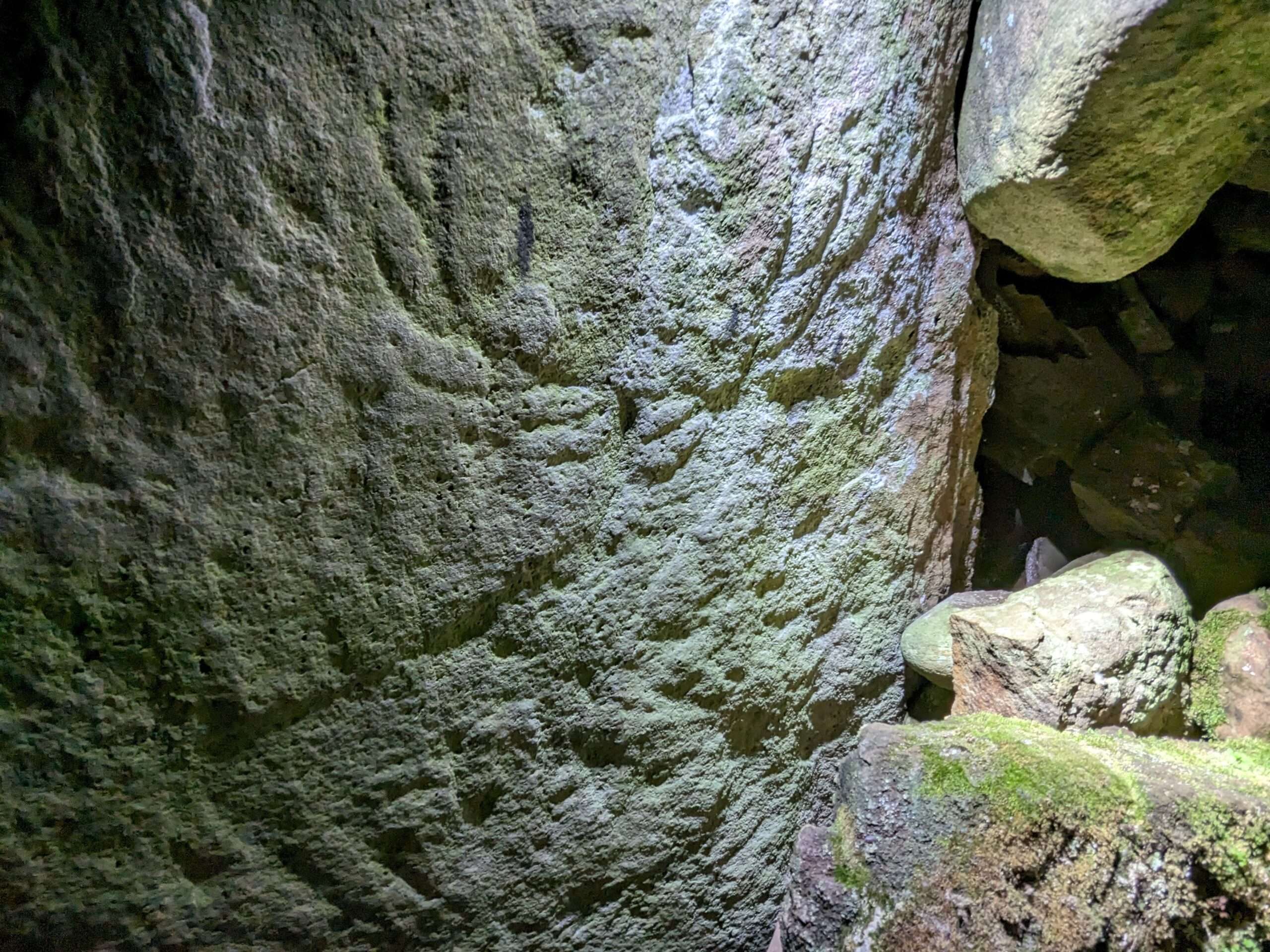
The other was discovered by chance in 2020 by Hamish Fenton on the underside of a capstone in Dunchraigaig Cairn, an Early Bronze Age burial chamber in Kilmartin Glen. There are five deer altogether, a pair and a trio, the most striking of which is the aptly named ‘Fabulous Stag’ with its massive antlers. Some of the deer appear to be in motion, as if climbing up a slope. The carvings were almost certainly made when the capstone was upright in the landscape, perhaps in the form of a standing stone which was then incorporated into a later funerary monument. Just like how people today display antiques in their homes, past peoples regularly incorporated older elements into their domestic and ritual spaces.
Of the nine known examples of deer in prehistoric British rock art, five are in Scotland. Besides Kilmartin Glen and Glen Domhain, they appear at Ballochmyle in Ayrshire, Eggerness in Dumfries & Galloway, and on the outer wall of a rock shelter on Blackford Hill in Edinburgh. Deer are pivotal in many of the oldest and best-known tales of the Celts, in which an encounter with a deer often heralds contact with the Otherworld. They are strongly associated with the Cailleach, a creation goddess in the folklore of Scotland, Ireland, and the Isle of Man who brings winter to the land and keeps nature in balance. Deer feature in many tales of the Fianna, which people across the Highlands and Islands held in great esteem. In one tale the deer-mother Saba mates with the great Finn mac Cumhaill (Finn MacCool) himself, bearing his two sons Oisín (Ossian) and Oscar. Oisín was the most gifted of all in the sacred art of poetry, a talent attributed to his unconventional parentage.
The appearance of a white hart – a deer with leucism – was a revered symbol in the Middle Ages. Catching sight of one could mean that the favour of God was upon the witness, or in the case of Arthurian lore that it was time to embark on a new quest. Thomas the Rhymer, the famed Borders prophet, was recalled into the land of the Elfen Queen beneath the Eildon Hills by the appearance of a white hart and hind in his village. Many pubs across Britain, including one in Edinburgh’s Grassmarket, are named ‘The White Hart’.
The location of Holyrood Abbey in Edinburgh is attributed to King David I’s pursuit of a white hart into Holyrood Park. Despite it being a Sunday feast day the king set out to capture it, but it charged him and threw him from his horse. As David I was about to be gored by the furious hart the Holy Rude (true cross) appeared in the sky, scaring the hart away. Later that night David I was visited in a dream by St Andrew who instructed him to build an abbey near that fateful spot as penance.
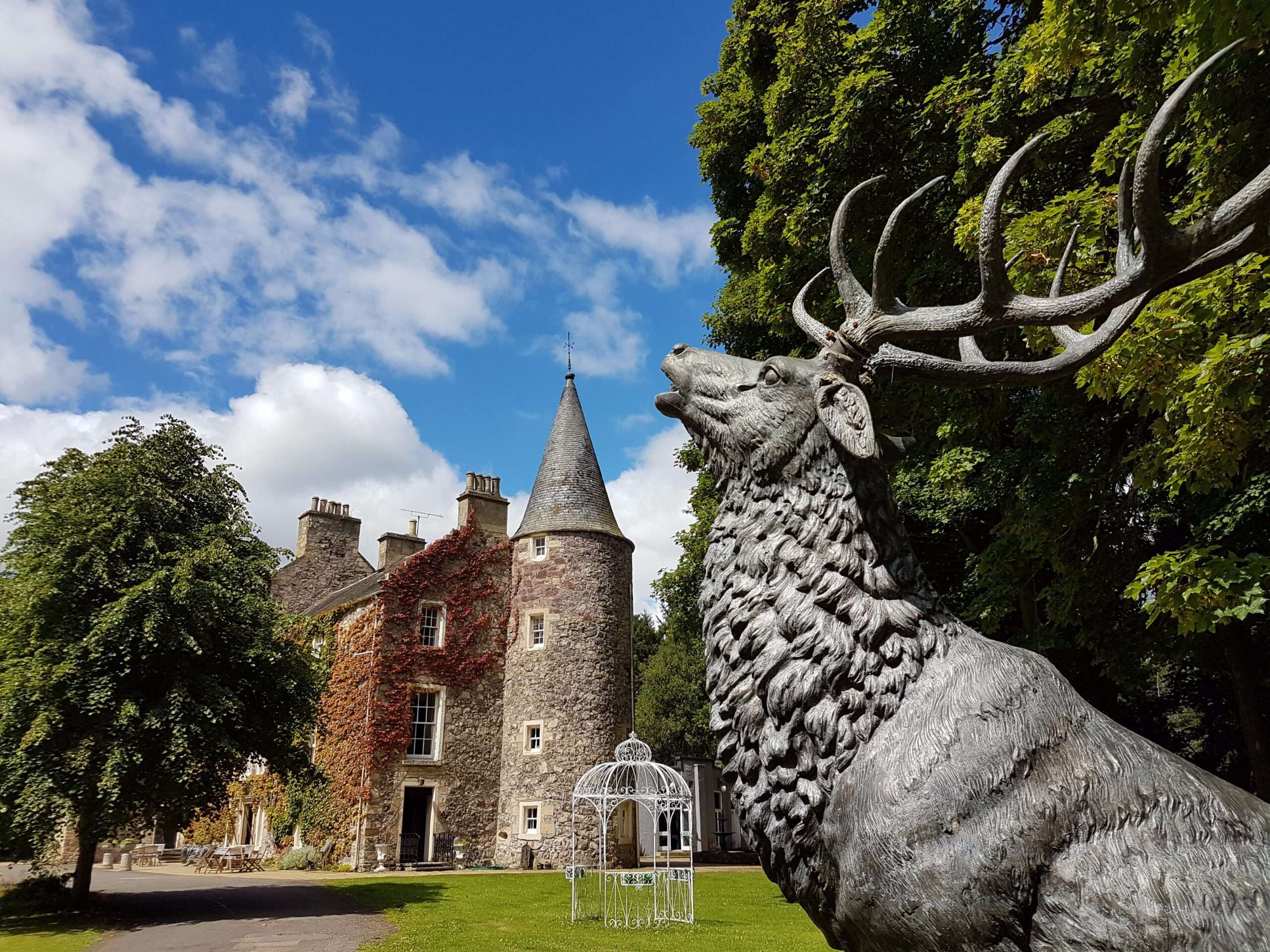
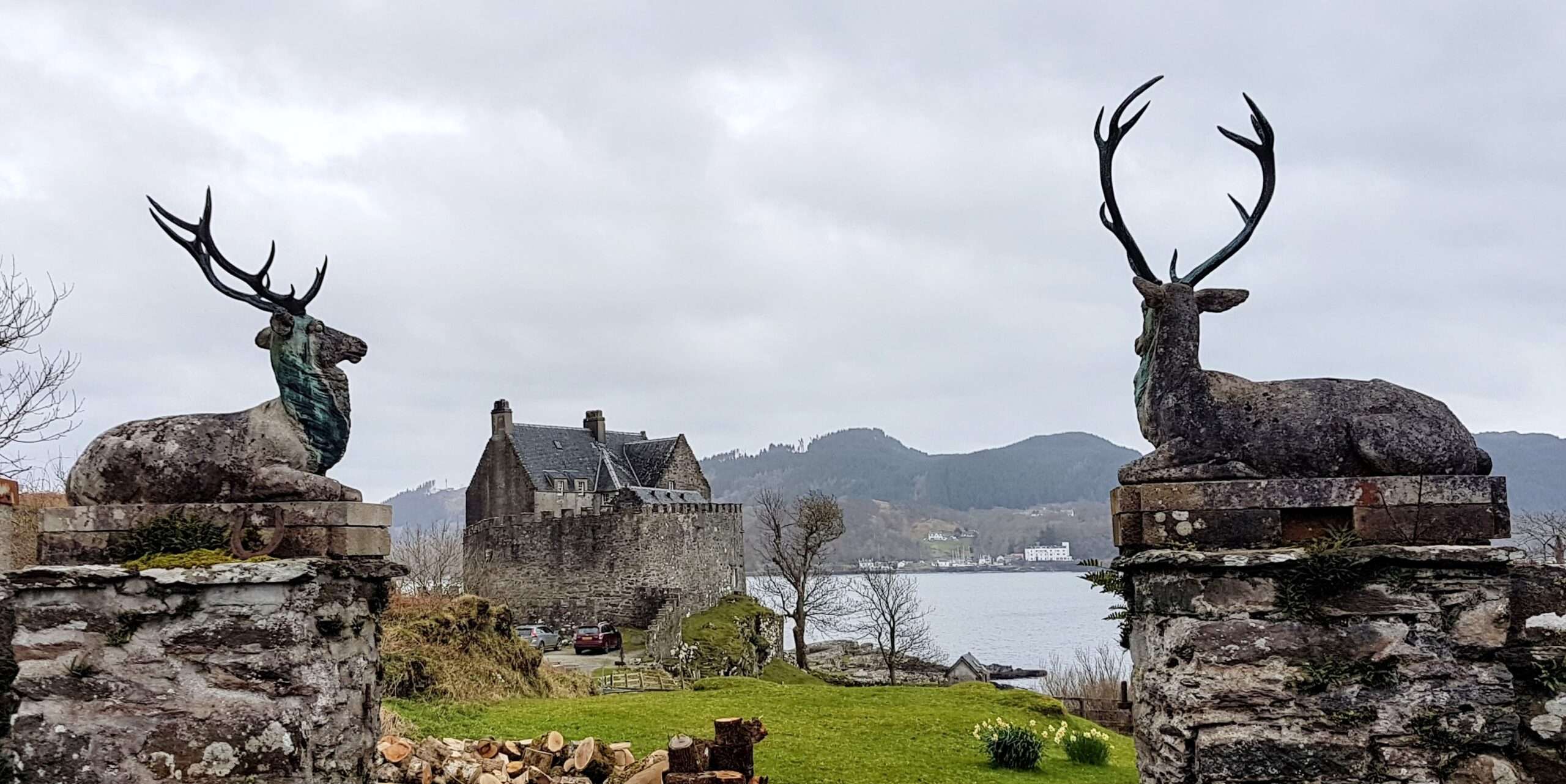
Many noble houses in the Middle Ages used deer – typically stags – in their heraldic emblems. Among them, to name but a few, are the crests of Fraser of Lovat, Clan Davidson, Clan Forbes, Clan Keith, and Clan Carruthers. Returning to Kilmartin Glen, the main landowners from the 18th century through today, the Malcolms of Poltalloch based at Duntrune Castle, use deer imagery on their crest, and the gate leading onto the castle grounds is adorned with
Deer forests
Our view of deer changed during the Industrial Revolution through Edwardian period when land previously used as commons were enclosed, people were evicted, and hunting estates were established. Deer, especially red deer, proliferated due to the extinction of large predators such as wolves in the 18th century, and many estates in the Highlands and Lowlands alike became ecological deserts given over entirely to hunting.
In 1811 there were only six ‘deer forests’ for hunting in Scotland; by 1912 there were over one hundred, covering a staggering 3.6 million acres. During this time, and still today, many people consider deer to be either a pest to be controlled or a product to be sold as part of the sporting estate package. No country house of this time was complete without a room displaying dozens, if not hundreds, of taxidermied specimens mounted on the walls attesting to our near-total domination of the countryside.
The history of peoples’ relationship with deer in Scotland can be read as shorthand for our changing views of the natural world. Prehistoric peoples saw great wonder in them, using deer totemically while also hunting them for meat and harvesting their sinews and antlers for daily tools and rituals. In the Middle Ages deer were often used in the foundational stories of saints and dynasties, becoming symbols connected with spiritual and secular power in an age of increasing hierarchies in society. In the age of enclosure and early modernity, deer lost much of their symbolic potency and became to many instead a mere resource to be exploited and profited from. Today, as the natural world is in dire peril and our connection to it weakens further still, deer are regaining some of their lost wonder – fleeting remnants of a world just beyond our own, sometimes fenced in but never fully domesticated. Next time you see one, ask what we might do to rebalance the scales.
Content on the Scottish Banner website remains free for users. Stories and events listed for the international Scottish community continue to be an important resource for many across the world. As advertising revenue remains a challenge, our readers can donate to help us produce unique Scottish content for global Scots. Every contribution counts and thank you for considering your support.
Support the Scottish Banner! To donate to assist with production of our publication and website visit: The Scottish Banner
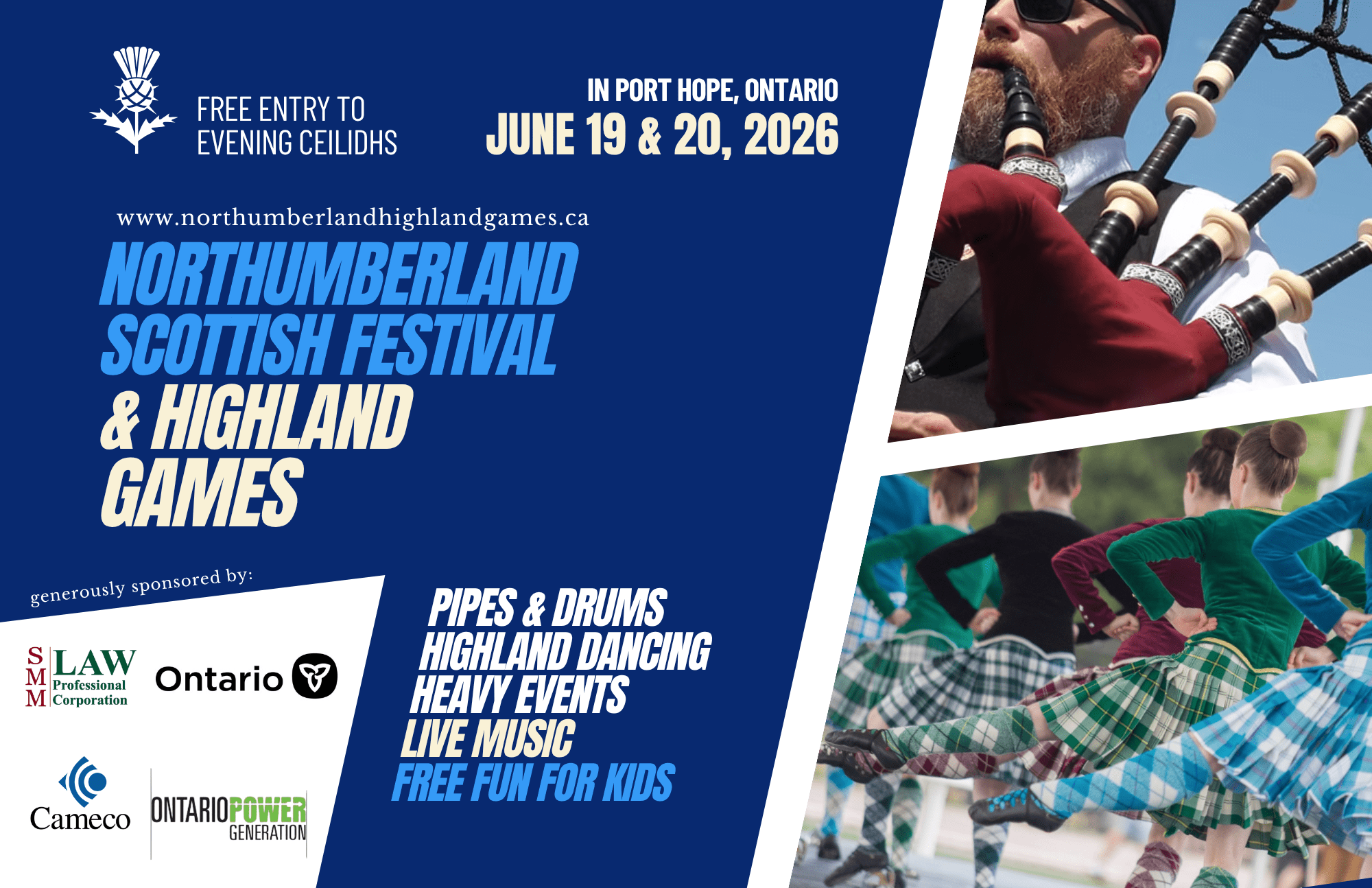
The Northumberland Scottish Festival & Highland Games proudly announces its 62nd annual celebration, set to take place at the scenic Port Hope Fairgrounds on June 19 & 20 2026.
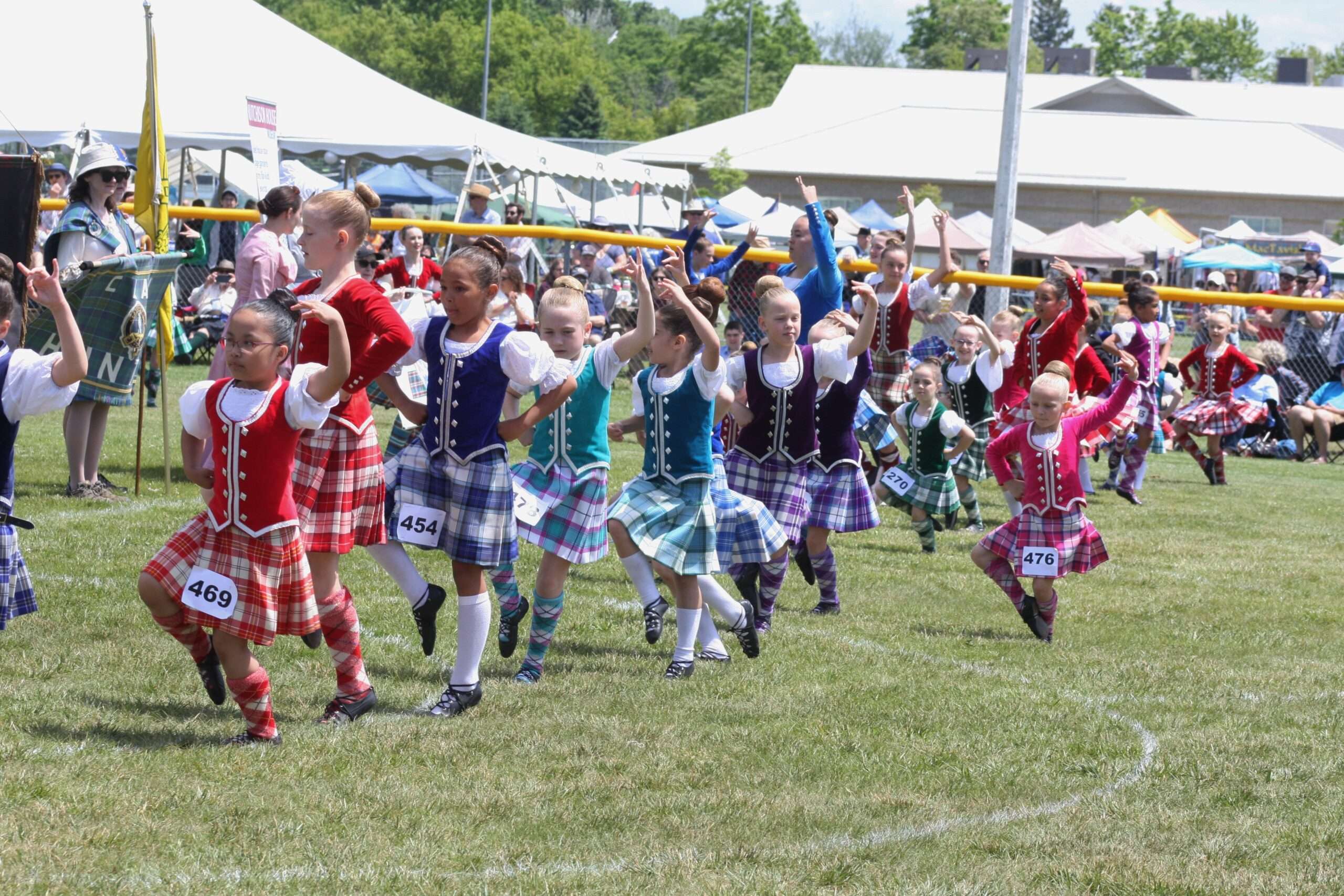
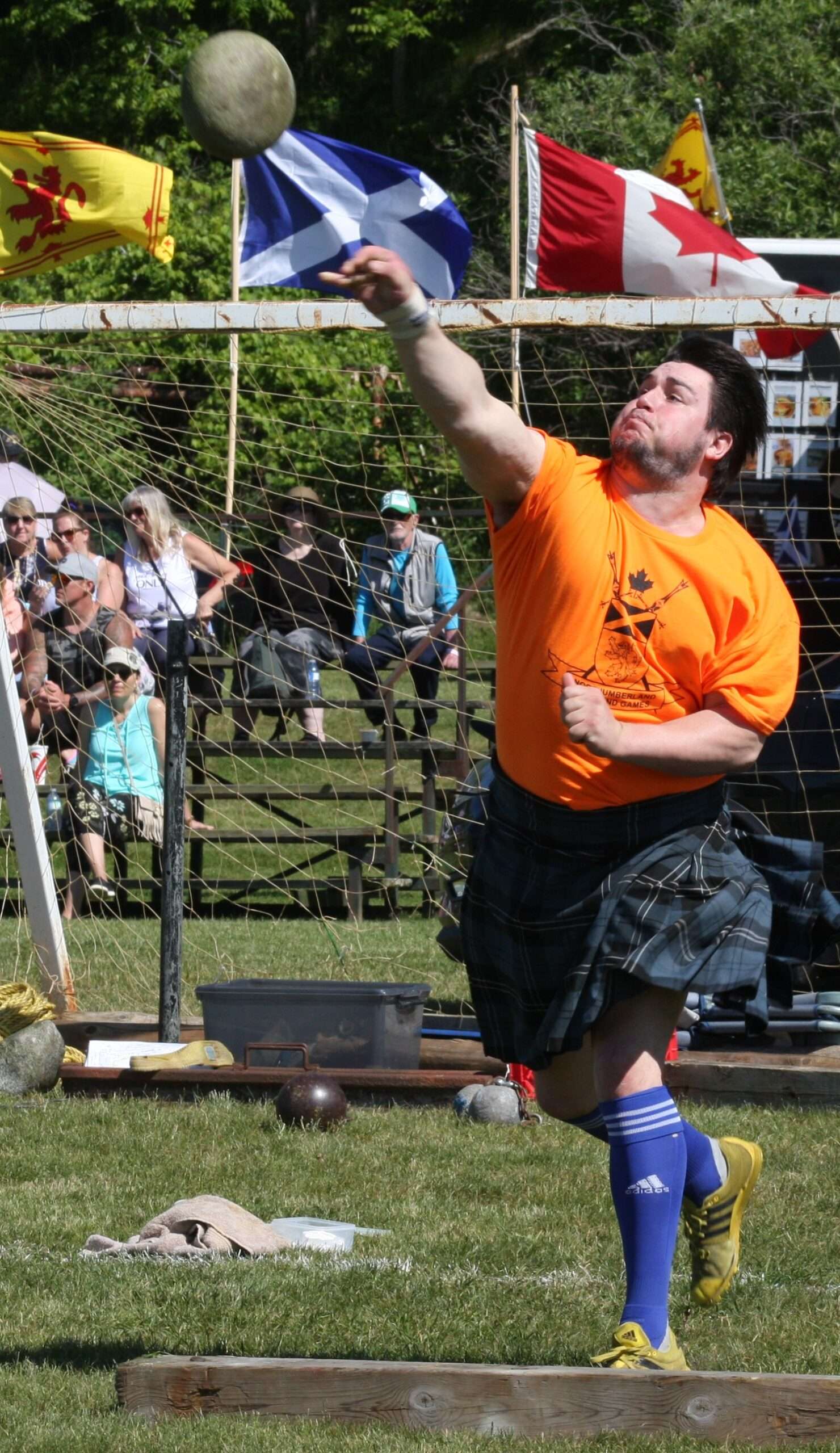
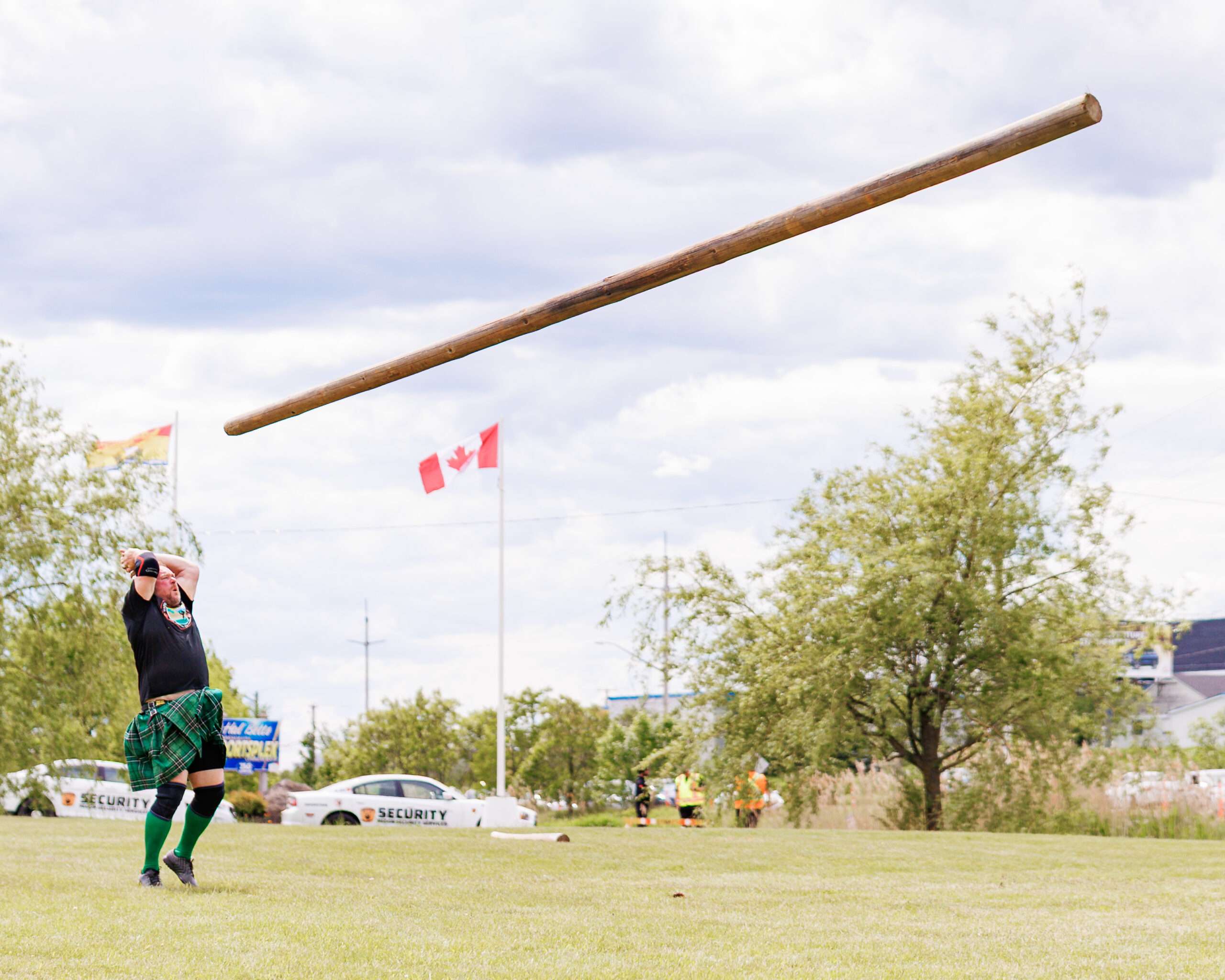
Renowned as one of Canada’s premier Scottish cultural events, the festival promises a vibrant weekend filled with music, dance, athletic competitions, and family-friendly activities that honour both tradition and community spirit. Attendees will experience the stirring sounds of pipe bands, traditional Highland dancing, and the excitement of heavy events such as caber tossing and hammer throw.
Local vendors will offer Scottish fare and artisanal goods, while clan tents welcome visitors seeking to explore their heritage. The young ones will enjoy the Wee Highlander area with a jumping castle, face painting, sword fighting lessons and caber toss lessons.
The festival is committed to fostering inclusivity and cultural appreciation, welcoming guests from across Northumberland County and beyond.
Scottish culture and Canadian hospitality
Heavy events on display.
This year’s festivities feature performances by internationally acclaimed pipers, dancers and heavy event competitors. Saturday afternoon you can experience the inaugural Lakeshore Open Highland Dance Championships. Friday night there is a free Ceilidh with The Fiddleheads, Saturday night with Irish Millie and Madman’s Window.
Whether you’re a seasoned Highland Games enthusiast or a first-time visitor, the 62nd Northumberland Scottish Festival offers an unforgettable experience rooted in Scottish culture and Canadian hospitality. Join us in celebrating the enduring legacy of Scotland in Northumberland County!
Content on the Scottish Banner website remains free for users. Stories and events listed for the international Scottish community continue to be an important resource for many across the world. As advertising revenue remains a challenge, our readers can donate to help us produce unique Scottish content for global Scots. Every contribution counts and thank you for considering your support.
Support the Scottish Banner! To donate to assist with production of our publication and website visit: The Scottish Banner
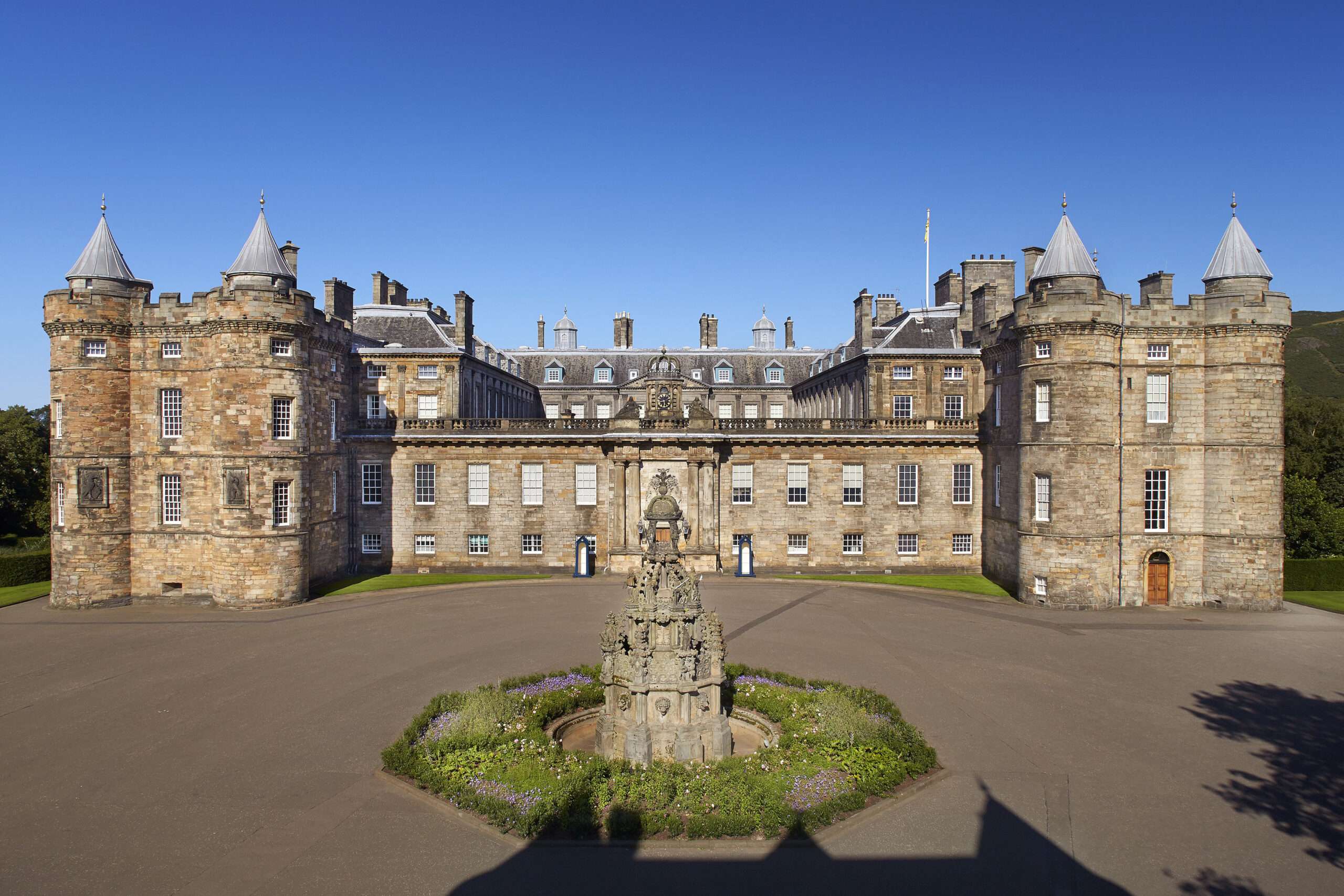
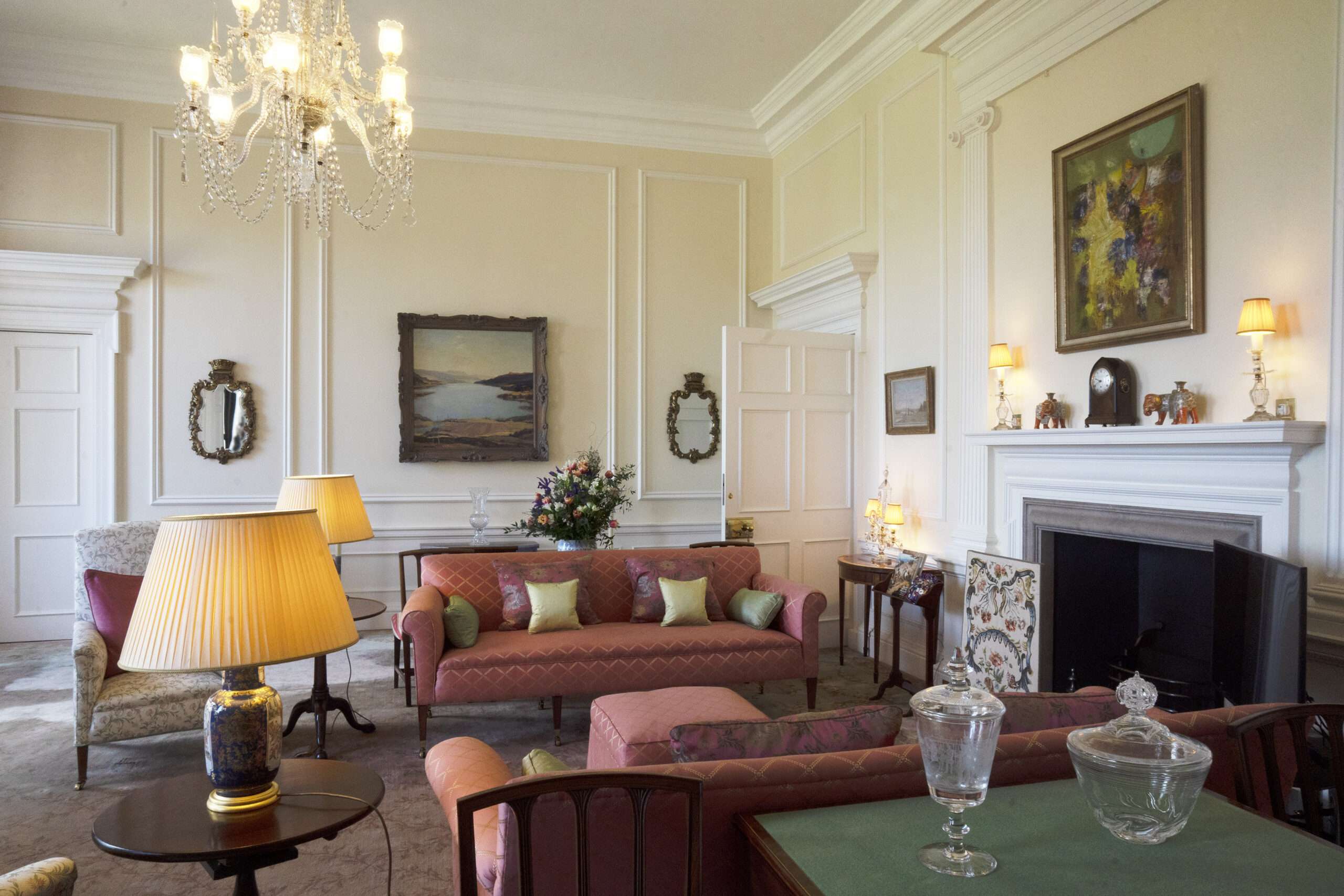
The private apartments used by Queen Elizabeth II when in residence at the Palace of Holyroodhouse, the official residence of the monarch in Scotland, will open to visitors for the first time in 2026 to mark the centenary of her birth.
Available only this year, the tours will run for 100 days and will see small groups taken behind the scenes by expert guides to discover the history of the rooms and learn how they were used by Queen Elizabeth II and Prince Philip, Duke of Edinburgh, during her 70-year reign.
Setting for many significant occasions
The private apartments used by Queen Elizabeth II. Photo: David Cheskin.
The Palace of Holyroodhouse was the setting for many significant occasions during the late Queen’s reign. While visiting Edinburgh to meet and celebrate Scots from all walks of life, she and Prince Philip would occupy a suite of private rooms on the Palace’s east side, with stunning views of the gardens and Holyrood Park. These modestly decorated rooms offer a rare glimpse into the personal, ‘lived-in’ spaces used during private moments between official duties. The rooms date from the 17th century and have been used by successive monarchs and members of the Royal Family since Queen Victoria’s reign. They are furnished with historic objects from the Royal Collection, as well as pieces from Queen Elizabeth and Prince Philip’s personal collections, many of which reflect their longstanding affection for Scotland.
Tours will take visitors through rooms and spaces including the Royal Breakfast Room, where the Queen and Prince Philip would dine privately while in residence. The room is hung with magnificent Flemish tapestries, woven around 1650, featuring a beautiful design of a pergola framing an ornate vase filled with flowers. The tapestries were hung in the room in the 1920s at the request of Queen Elizabeth’s grandparents, King George V and Queen Mary.
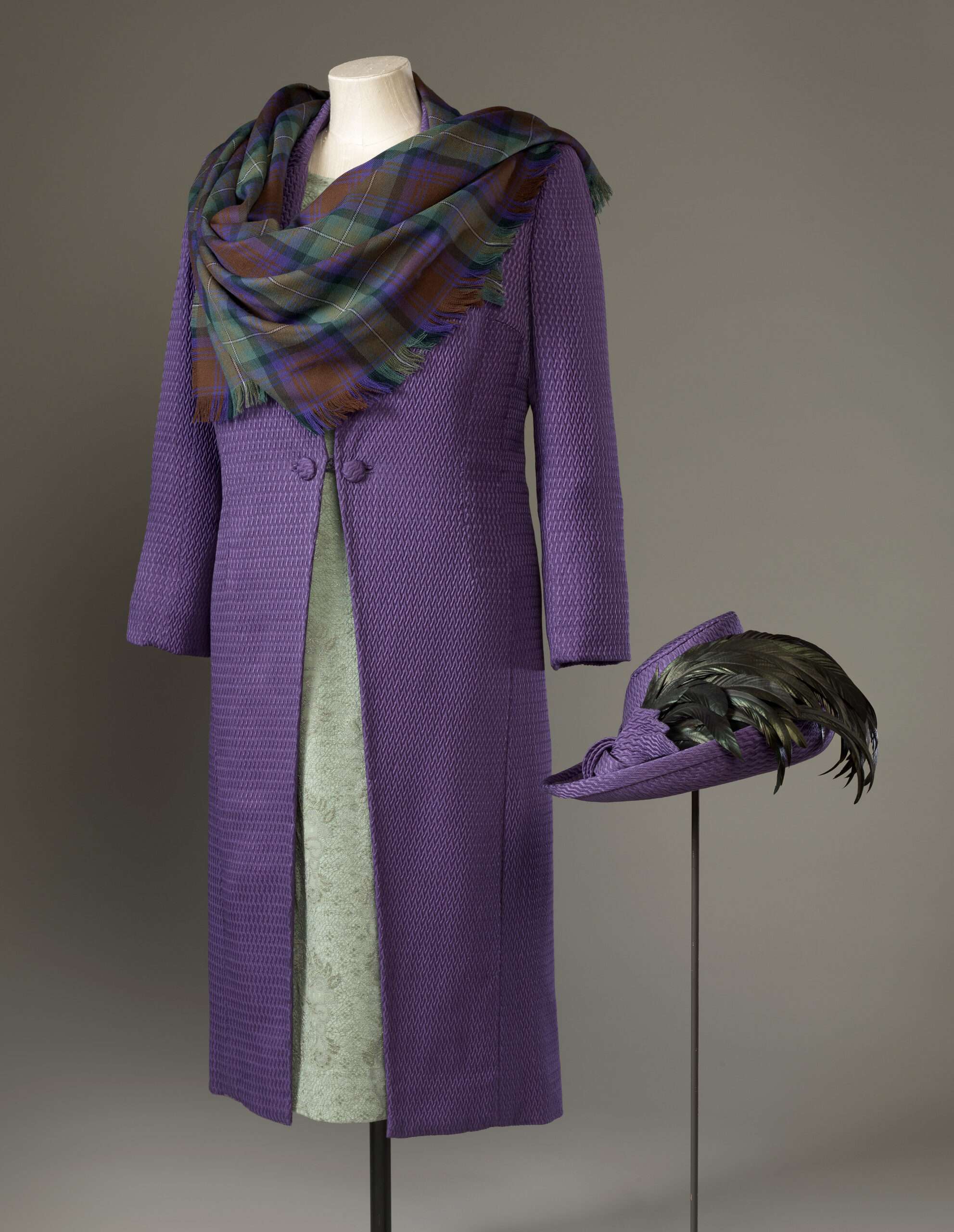
In the Dressing Room, giving a sense of how the Queen would prepare for official engagements, visitors will see three ensembles from her wardrobe, each worn during a significant occasion in Edinburgh. For the official opening of the Scottish Parliament on 1 July 1999, the Queen wore a purple coat made of a silk-wool blend with a green silk-crepe and lace dress, and a shawl of purple and green Isle of Skye tartan, woven on the Island of Lewis. The ensemble was inspired by the Scottish landscape and reflects the designer Sandra Murray’s interest in her Scottish heritage. The matching hat, by the milliner Philip Somerville, is trimmed with a bow of the silk-wool fabric of the coat and curled dark-green feathers.
Edinburgh’s royal palace
The Queen’s outfit from the opening of the Scottish Parliament.
The tours will conclude in the Sitting Room where the late Queen would work, reviewing the papers and documents presented in the Government red dispatch boxes, as well as using the room for private audiences or resting between engagements, often while watching horseracing on television.
Prince Philip was an enthusiastic collector of contemporary Scottish art and served as Patron of the Royal Scottish Academy of Art (RSA). Throughout the rooms, visitors will see highlights from his private collection, including works by 20th century Scottish artists, acquired over four decades at the RSA’s annual exhibitions and reflecting his deep appreciation of Scotland’s landscapes and wildlife.
The rooms are also furnished with a remarkable collection of furniture from the Royal Collection, made by the Edinburgh firm of Young, Trotter and Hamilton. The pieces were supplied to the Palace in 1796 in preparation for the arrival of Charles-Philippe, Comte d’Artois – Marie Antoinette’s brother-in-law and the future Charles X of France – who took refuge at the Palace during the French Revolution. Emma Stead, Curator, Palace of Holyroodhouse said: “Queen Elizabeth II’s well-known love for Scotland will be given fresh context through this unique and special access to the private apartments, where visitors will enjoy a new perspective into both the formal and more informal use of Edinburgh’s royal palace.”
After their tour of Queen Elizabeth II’s private apartments, visitors can explore the rich history of the Palace of Holyroodhouse, including the magnificent State Apartments and the historic apartments of Mary, Queen of Scots.
Queen Elizabeth II Private Apartment Tours will run daily from 21 May to 10 September 2026and can only be purchased with a ticket to visit to the Palace of Holyroodhouse. Visitor information and tickets: www.rct.uk, +44 (0)303 123 7300.
Do you enjoy our content?
Content on the Scottish Banner website remains free for users. Stories and events listed for the international Scottish community continue to be an important resource for many across the world. As advertising revenue remains a challenge, our readers can donate to help us produce unique Scottish content for global Scots. Every contribution counts and thank you for considering your support.
Support the Scottish Banner! To donate to assist with production of our publication and website visit: The Scottish Banner
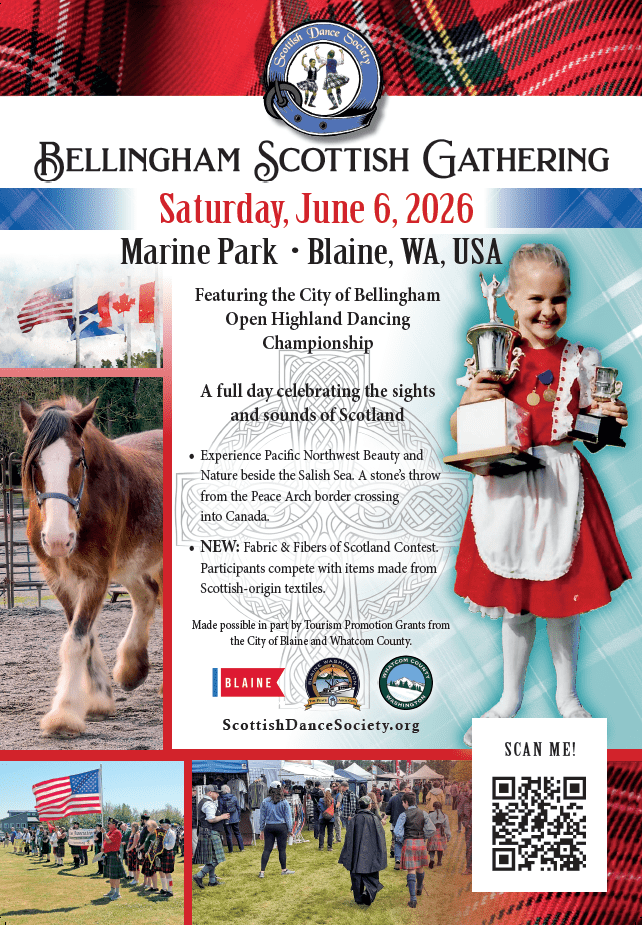
The Scottish Dance Society presents the 7th annual Bellingham Scottish Gathering on Saturday June 6, 2026. Spectacular Marine Park in Blaine, Washington has unrivaled natural beauty. Surrounded by the Salish Sea, the park affords views of Mount Baker and the Peace Arch border crossing into Canada.
The Scottish Gathering features the City of Bellingham Open Highland Dancing Championship and a full slate of competitive dance events for young beginners to adults.
Championships are the highest level of competitive highland dance and sanctioned by the Royal Scottish Official Board of Highland Dancing, the World-Wide Governing Body based in Edinburgh, Scotland.
The prestigious event includes the four traditional Highland dances performed by top-level competitors.
A celebration of Scotland’s culture
New this year, the ‘Fabric & Fibers of Scotland Contest” promoting the use of Scottish textiles in garment construction and exposes festivalgoers to the variety of wool fibers, yarns and fabrics originating in Scotland.
The Scottish gathering often offers Scottish-breed animals in educational and fun displays.
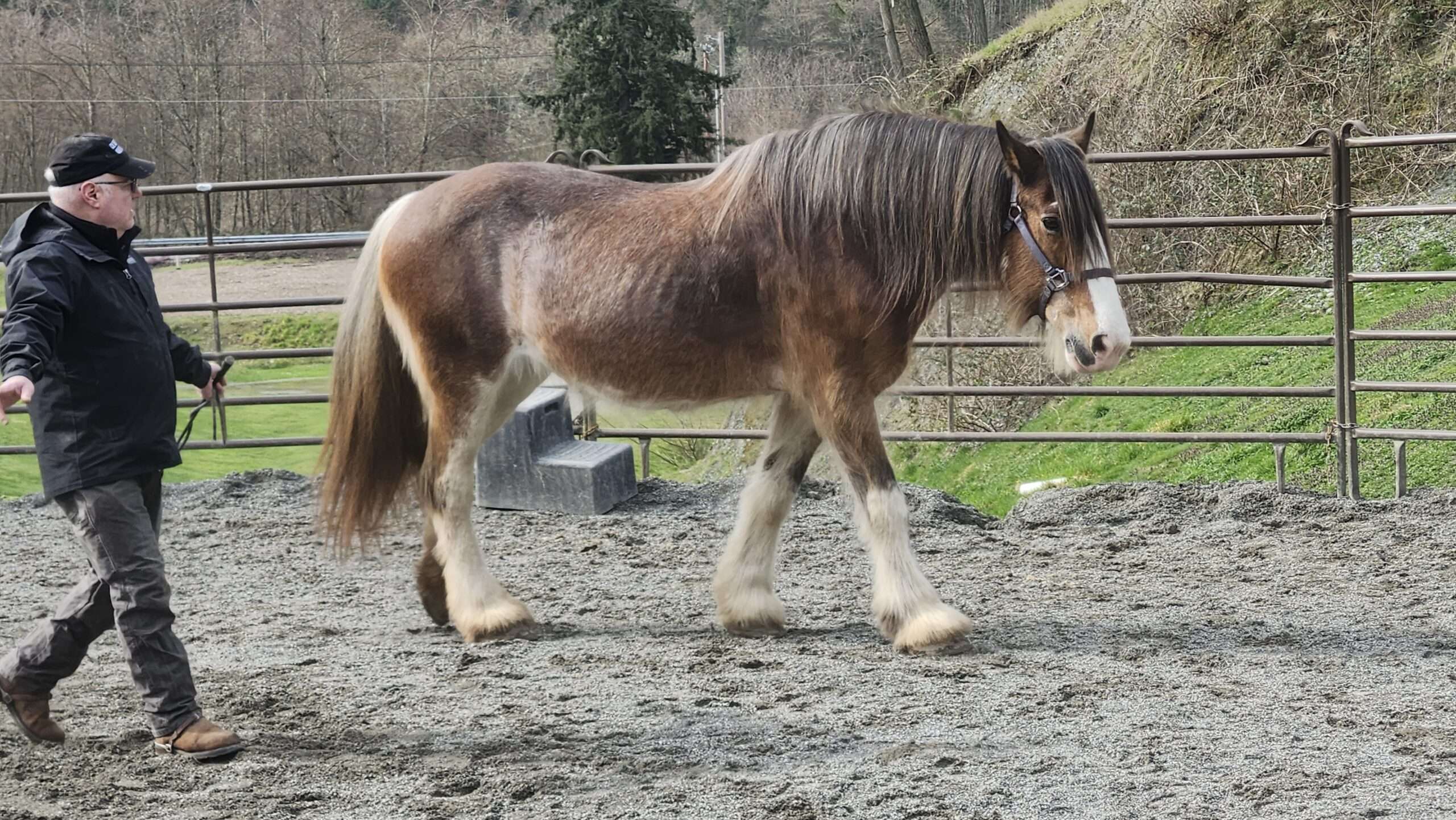
2026 is the year of the Clydesdale with the magnificent Katelyn joining the festivities. Celtic musicians entertain around the beer garden while Scottish clan and vendor booths offer information and goods for sale.
The day is a celebration of Scotland’s culture with something for everyone to enjoy in a beautiful outdoor venue.
Content on the Scottish Banner website remains free for users. Stories and events listed for the international Scottish community continue to be an important resource for many across the world. As advertising revenue remains a challenge, our readers can donate to help us produce unique Scottish content for global Scots. Every contribution counts and thank you for considering your support.
Support the Scottish Banner! To donate to assist with production of our publication and website visit: The Scottish Banner
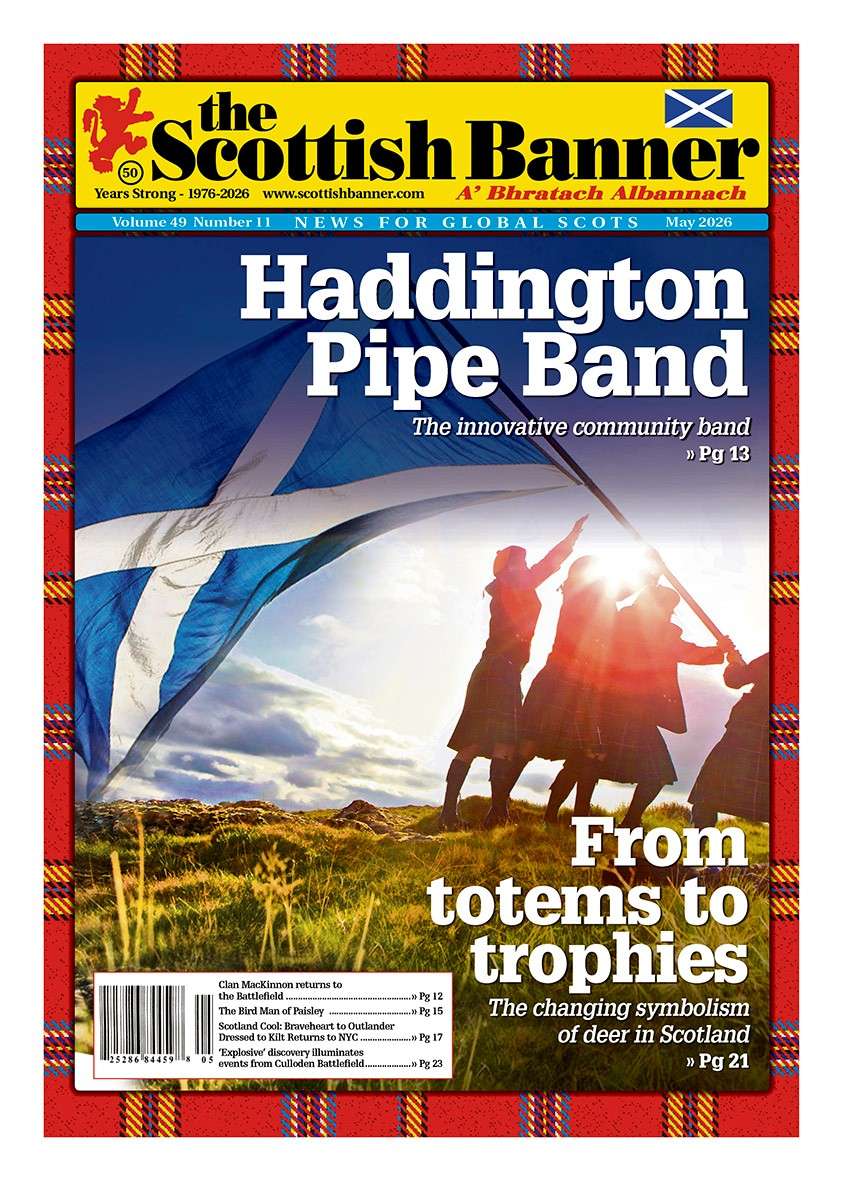
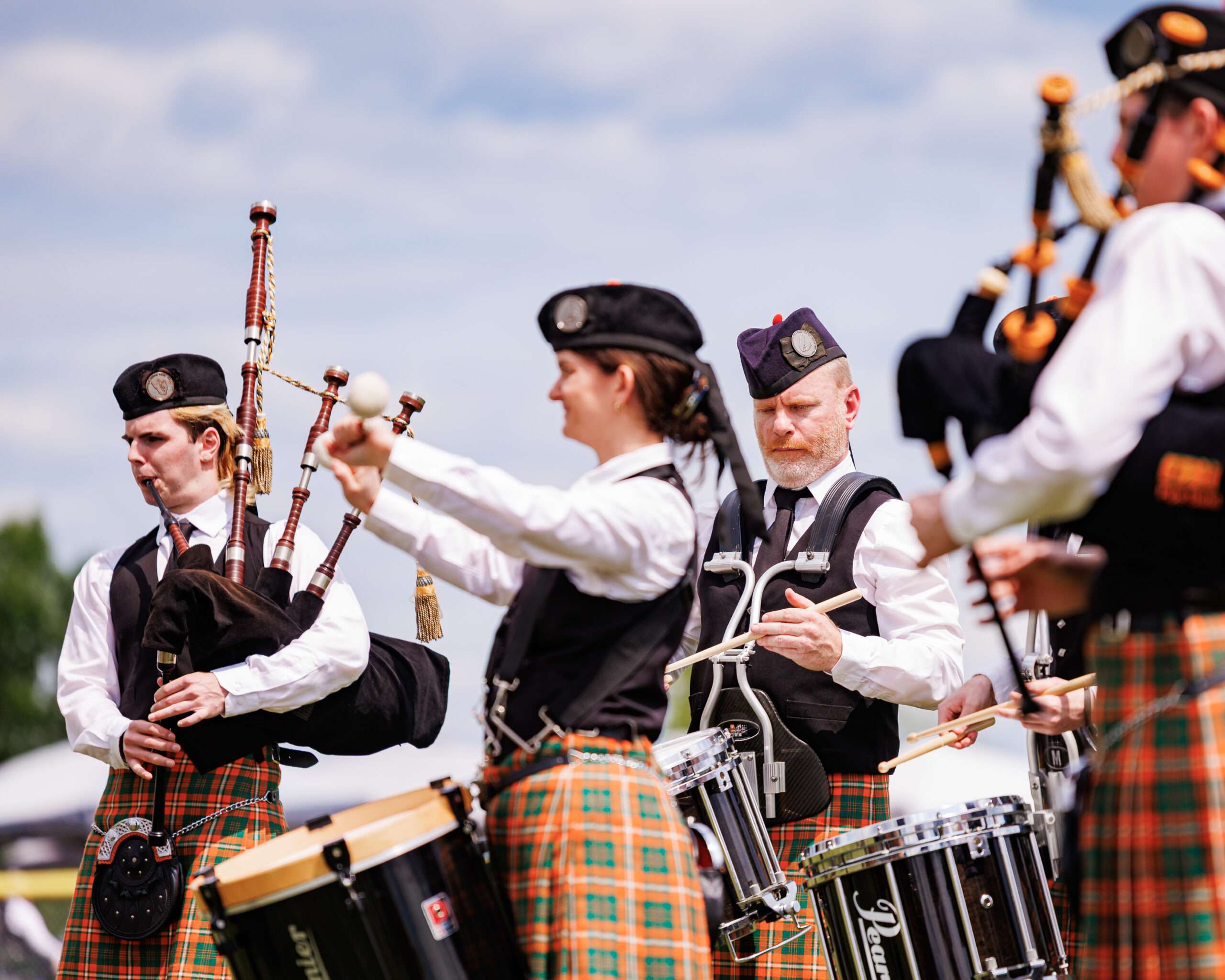
In the historic East Lothian market town of Haddington, where the first recorded mention of town pipers dates back to 1542 and a 15th century carving of a piper graces St Mary’s kirk, the musical heartbeat of piping and drumming has been part of local life for centuries. Yet it was only in the early 1980s that the modern incarnation of Haddington Pipe Band took shape under a formal name and structure. That initiative sparked a journey that would extend far beyond its borders and resonate with Scots and many others at home and abroad.
What began modestly in 1981 – when four friends abandoned fancy dress performances as the ‘Tyneside Tipplers’ to establish a ‘proper’ band – has blossomed into an organisation celebrated not merely for its musical talents, but for its cultural reach, community spirit, innovation, and international bridge-building.
Roots in community and tradition
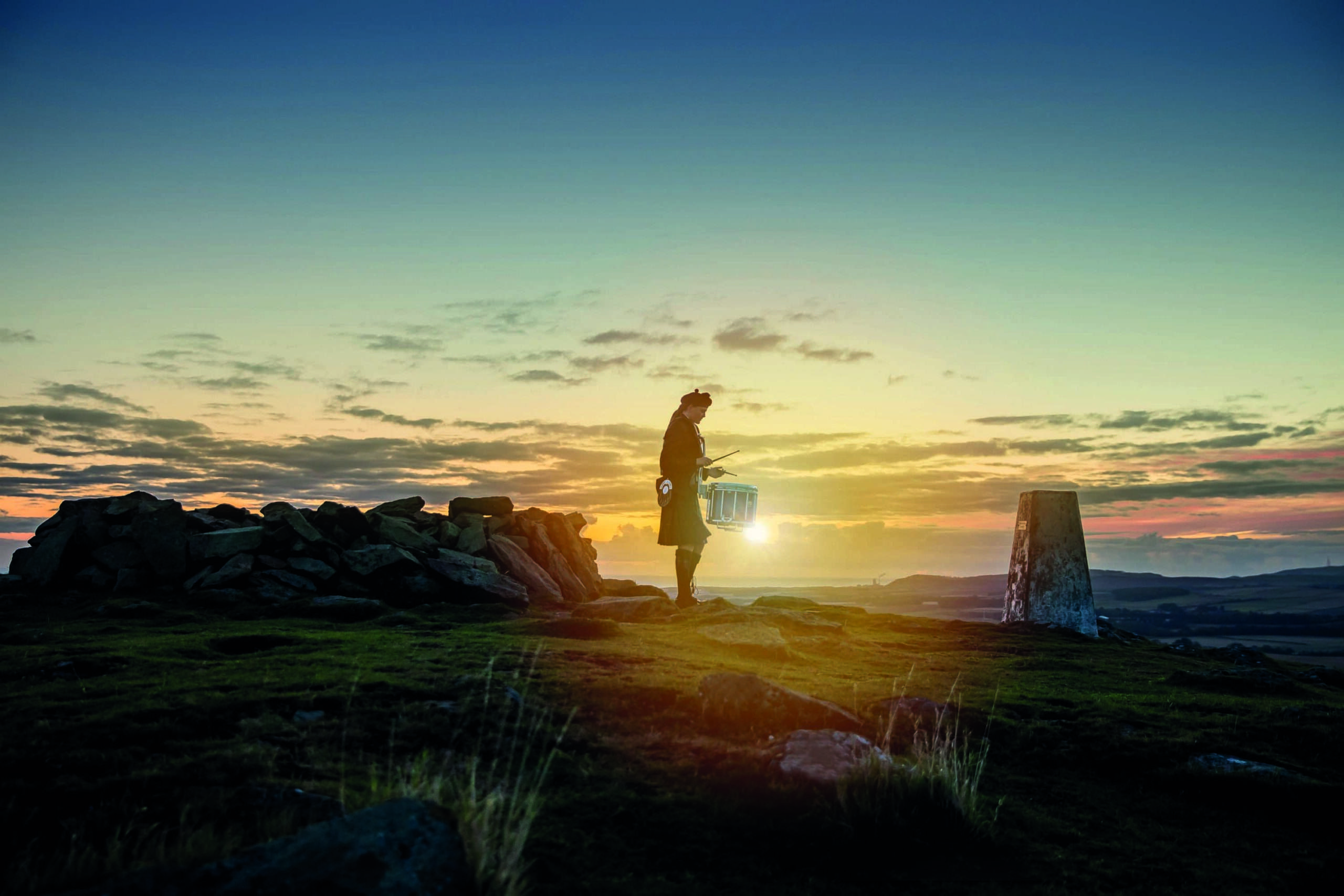
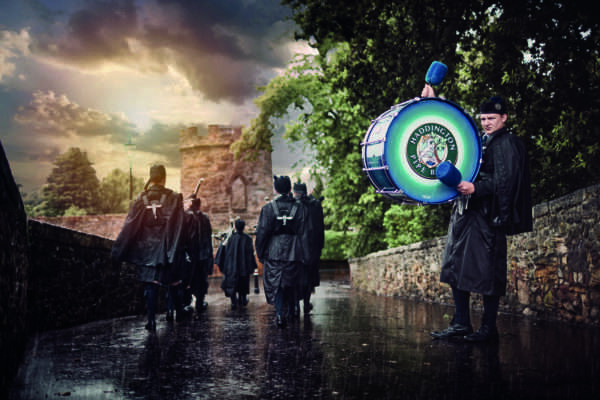
A photo staged for one of the band’s memorable calendars. Photo: Nick Callaghan.
Haddington Pipe Band describes itself first and foremost as a community band dedicated to encouraging the art and tradition of piping and drumming. Open to all ages and skill levels, it runs a structured tuition programme that nurtures young pipers and drummers alongside more seasoned players. Rather than pursuing competition circuits, the band has chosen a different path – one that prioritises cultural engagement. Band members regularly perform at local galas, festivals, weddings, charity events, dances, parades, and markets, embedding the sound of the pipes deep into the everyday life of East Lothian and beyond.
Over the years, engagement with local schools and collaboration across generations – from teenagers to octogenarians – has kept the tradition alive and evolving, fuelling a pipeline of young talent that carries the echoes of Scottish heritage into the future.
Celebrating Scottish musical heritage
In a proud tradition of cultural leadership and innovation, the band has spearheaded events that extend beyond performance alone. One standout moment came back in 2009, a year the band affectionately refers to as their ‘annus mirabilis’. The band organised a worldwide competition to compose a pipe anthem for East Lothian. Composers from across the globe sent in entries, and the winning tune – The Haddington Turnpike, by Bruce Thomson – was performed live in front of a large local audience. The tune has become the band’s signature tune and went on to achieve high recognition when it was included in the bible of outstanding pipe tunes, the Scots Guards Standard Settings of Pipe Music collection.
The band didn’t stop there. They brought together local bands in a series of massed band events to showcase this new anthem and the breadth of piping talent in the county, culminating in multiple awards at the Scottish Event Awards and – in a remarkable accomplishment – winning Scottish Pipe Band of the Year at the Scots Trad Music Awards in 2009, beating top-class competing outfits despite being a non-competitive community band. This focus on inclusion and celebration of Scottish musical heritage reflects a deep cultural confidence – a willingness to define success not by trophies but by community engagement and creativity.
International footsteps
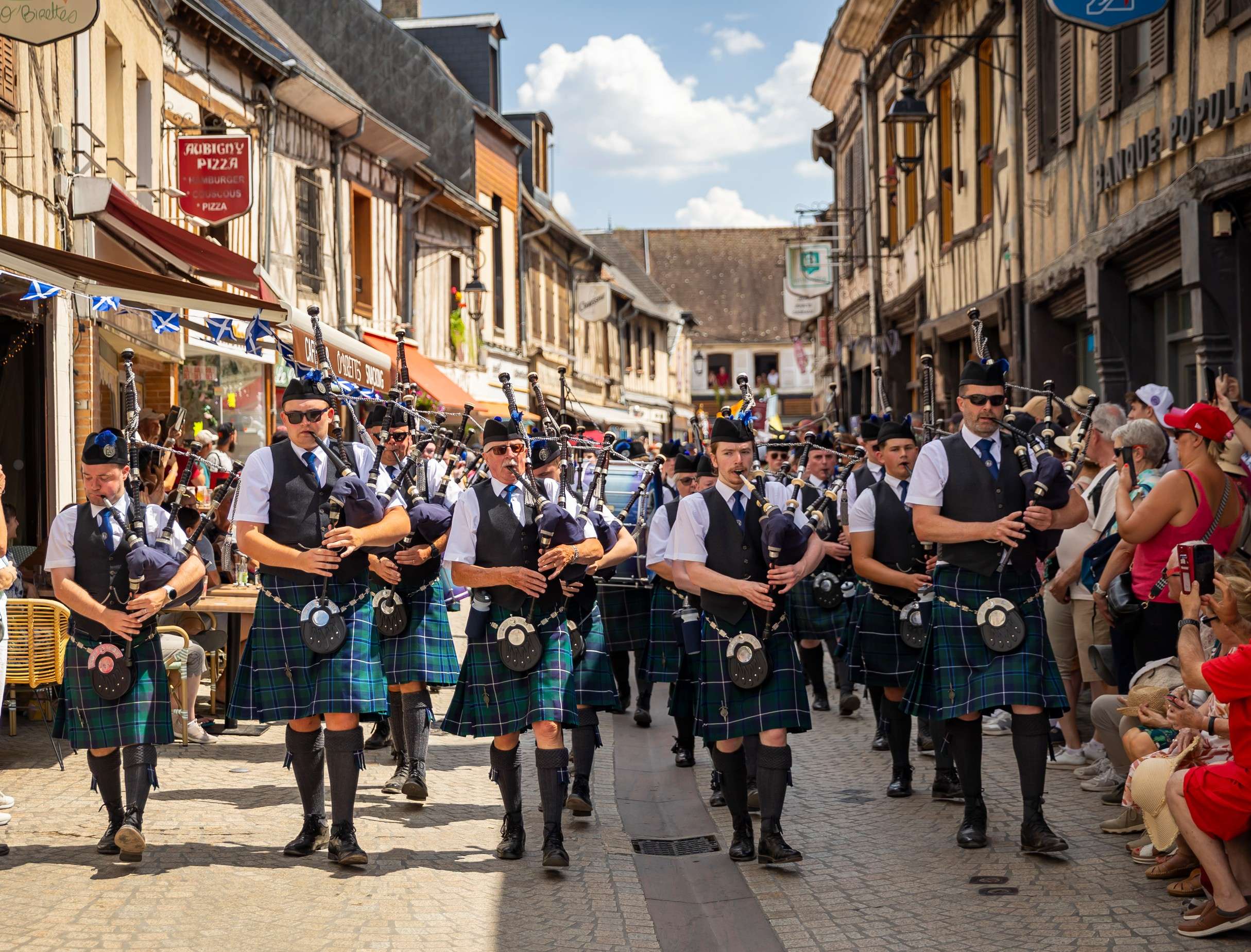
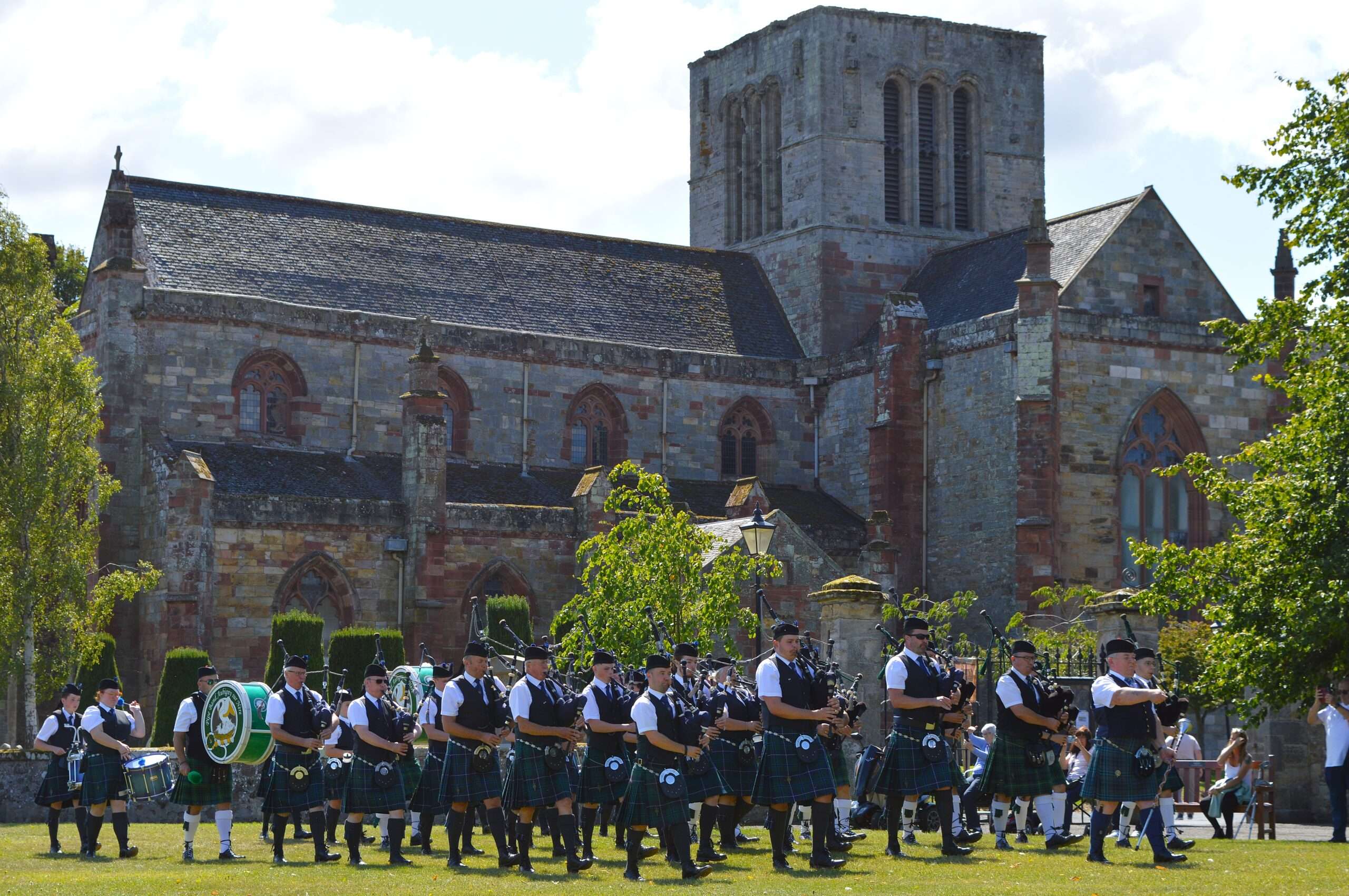
Performing in 2025 with the Aubigny-sur-Nère band under the shadow of Haddington’s St Mary’s Kirk. Photo: Daniel Hogarth.
Haddington Pipe Band hasn’t confined its influence to local shores. In addition to visits to, among other destinations, China and Germany, the band has maintained a thriving cultural link with Aubigny-sur-Nère, Haddington’s twin town in France. What began as a goodwill visit soon grew into a tradition of reciprocal performances and cultural exchange. The band regularly travels to Fêtes Franco-Écossaises, where crowds numbering tens of thousands gather in the historic French town to celebrate Scottish-French heritage through music, dance, and community spirit.
In turn, the Aubigny pipe band – whose very existence was sparked with Haddington’s encouragement – has performed in Scotland, joining forces with their Scottish counterparts in shared performances that honour the Auld Alliance between the two communities and nations.
These exchanges reveal a remarkable truth: Scottish culture – distilled in the haunting resonance of the pipes – travels not only across sea but through hearts, reinforcing diasporic ties and reviving old alliances. For many Scots abroad, stories of gatherings like those in Aubigny become bridges back to home.
Connecting to wider audiences
Photo: Nick Callaghan.
While rooted in community, Haddington Pipe Band has consistently stepped onto stages that connect Scottish tradition with wider audiences. They’ve organised award-winning traditional music festivals (Trad on the Tyne) and concerts, performed at Edinburgh’s Usher Hall, supported the Scottish Fiddle Orchestra in end-of-year concerts, and taken part in significant civic events like remembrance parades, torchlight processions, and memorial commemorations.
Perhaps most importantly, their performances at hospitals and charitable events underscore a belief in the positive power of music, bringing joy to children and communities alike.
A thriving tradition
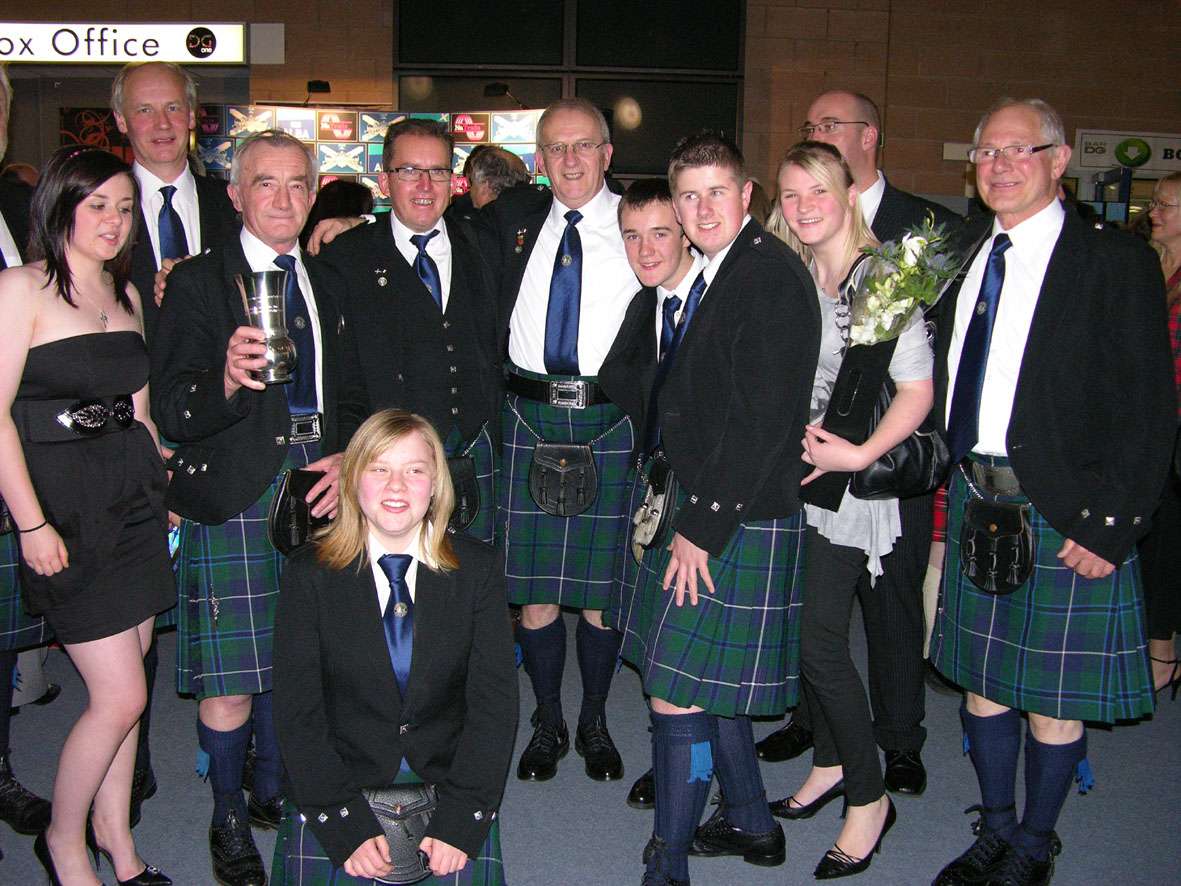
Band members at the Scots Music Trad Awards back in 2009, when the band won the Scottish Pipe Band of the Year award. Pipe Major David Leckie with the trophy.
For the Scottish diaspora, the story of Haddington Pipe Band is more than local history. It’s an affirmation of how tradition can thrive when it opens itself to exchange and innovation, celebrates community, and never forgets its roots. It’s not merely the sound of drones, chanters, and drums that travels; it’s the spirit of Scotland – resilient, generous, and joyful – carried by each performance, each shared tune, and each gathering where the pipes and drums fill the air with stories of home and carry forward a mightily significant facet of Scotland’s culture.
Main photo: The band at Aubigny-sur-Nère, led by Pipe Major Fraser Wilkinson, playing for the crowds at the 2025 Fête Franco-Écossaises. Photo: Nick Callaghan.
Do you enjoy our content?
Content on the Scottish Banner website remains free for users. Stories and events listed for the international Scottish community continue to be an important resource for many across the world. As advertising revenue remains a challenge, our readers can donate to help us produce unique Scottish content for global Scots. Every contribution counts and thank you for considering your support.
Support the Scottish Banner! To donate to assist with production of our publication and website visit: The Scottish Banner
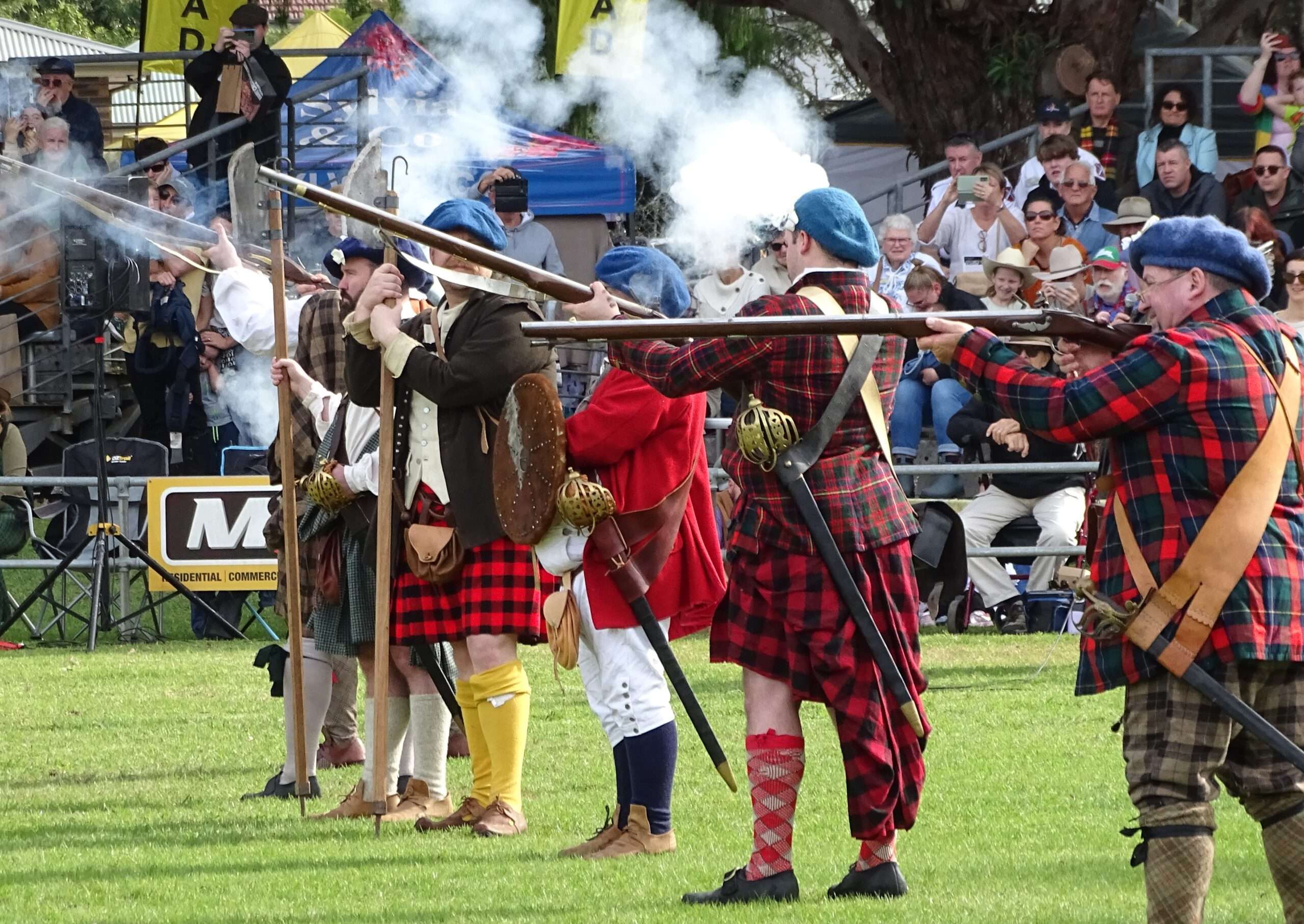
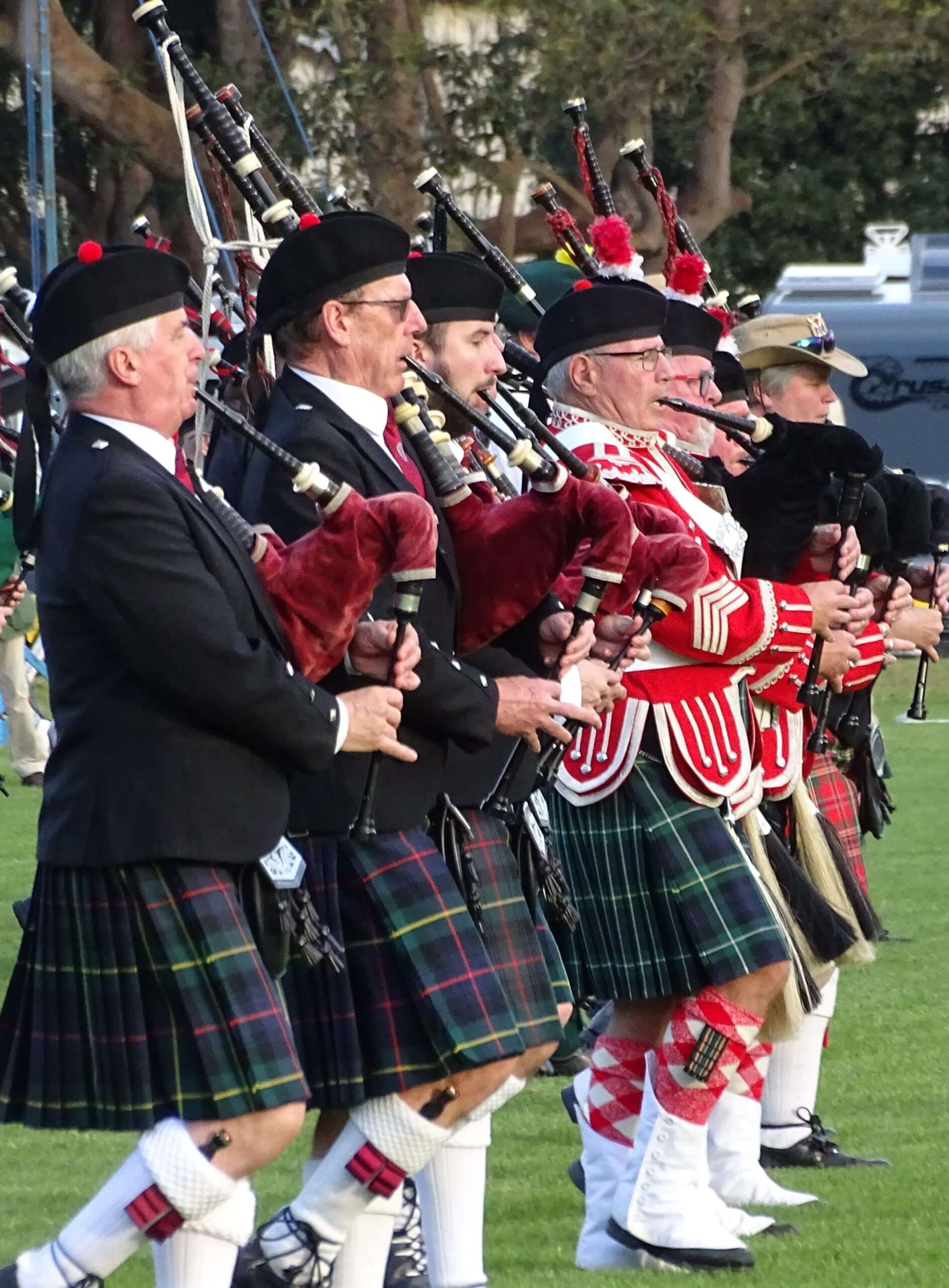
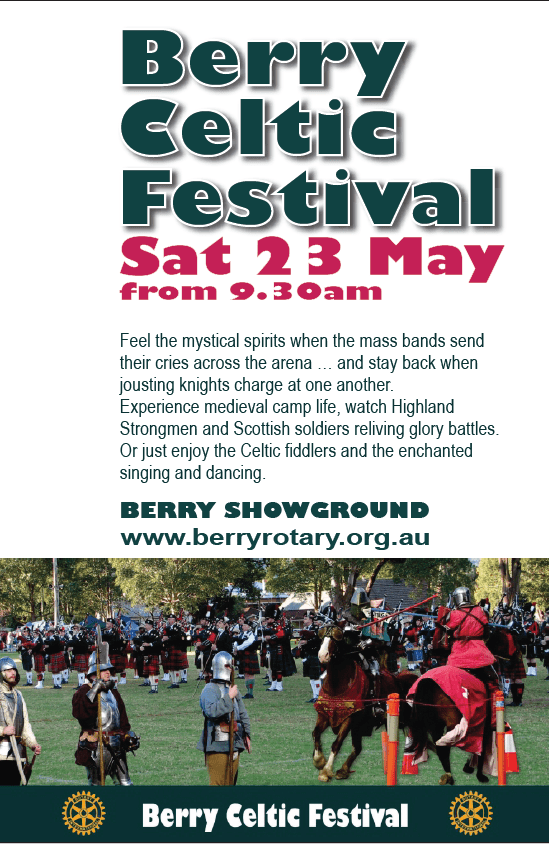
The 2026 Berry Celtic Festival will take place on Saturday 23 May. The day commences at 9.30am with the Grand Street Parade down the main street of Berry, leading to the Berry Showground for a breathtaking massed band performance to officially launch a day packed with Celtic fun, music, and culture.
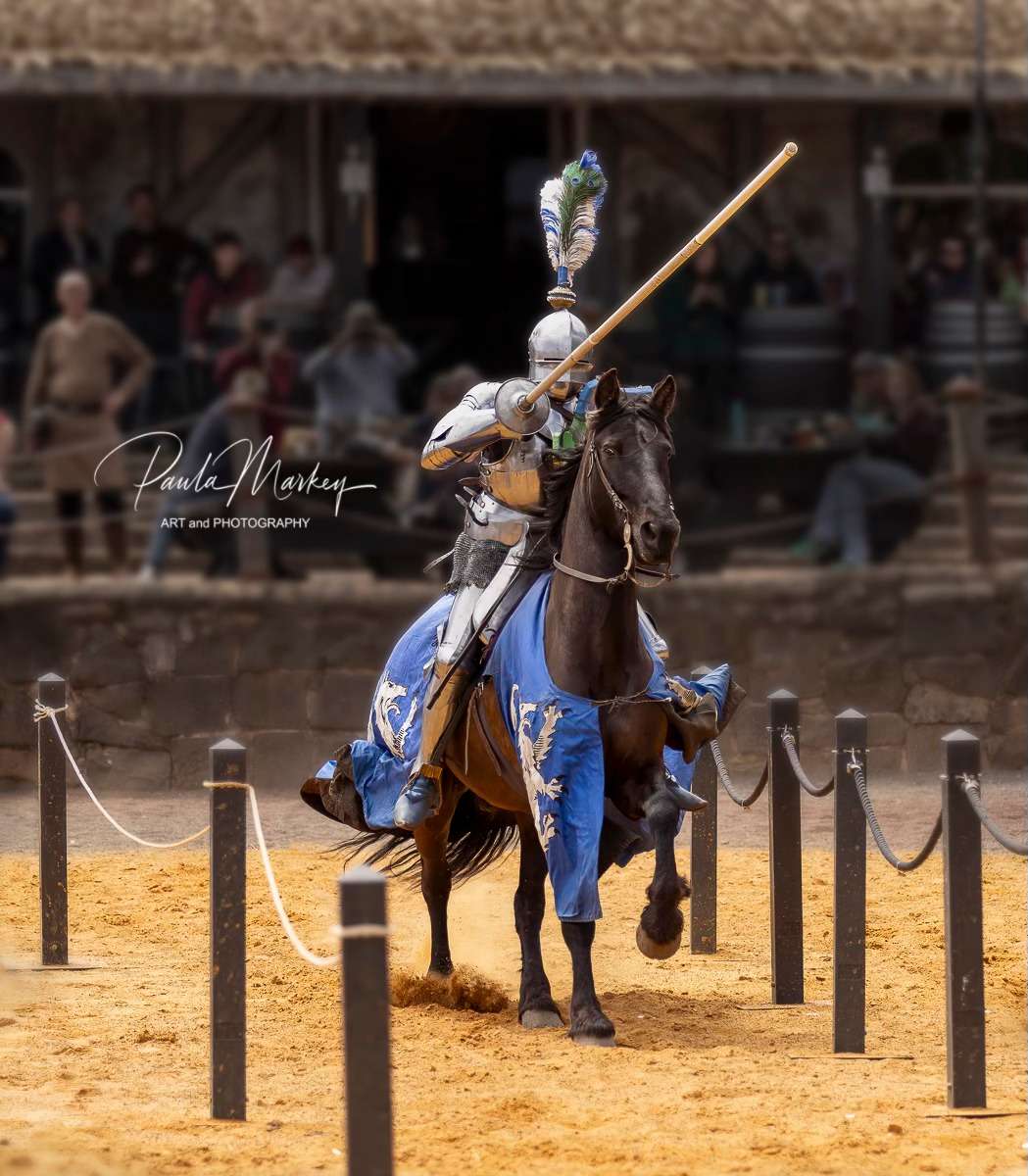
Enjoy family-friendly action including pipe bands, jousting knights, medieval re-enactments, Highland Muscle competitions, traditional artisan displays, Celtic themed market stalls, Celtic dancing and musicians, plus all the colour of the clans.
The bands in this year’s line-up include: NSW Police Pipe Band, Illawarra Pipe Band, Ingleburn RSL Pipes and Drums, Shoalhaven City Pipes and Drums, Canberra Celtic Pipe Band, Penrith RSL Pipes & Drums, Goulburn Soldiers Club Pipe Band, St George – Sutherland Pipe Band, Sydney Thistle Highland Band, PLC Sydney, Bundanoon Pipe Band and Kiama Pipe Band.
The 2026 Berry Celtic Festival will take place at Berry Showground in Berry, NSW.
Content on the Scottish Banner website remains free for users. Stories and events listed for the international Scottish community continue to be an important resource for many across the world. As advertising revenue remains a challenge, our readers can donate to help us produce unique Scottish content for global Scots. Every contribution counts and thank you for considering your support.
Support the Scottish Banner! To donate to assist with production of our publication and website visit: The Scottish Banner
The once infamous ‘Highland Hotel Robbers’ are among Victorian prisoners whose records are now online. Scotland’s People, the official site for Scottish government records, has published details of more than 100,000 inmates from Ayr and Inveraray jails.
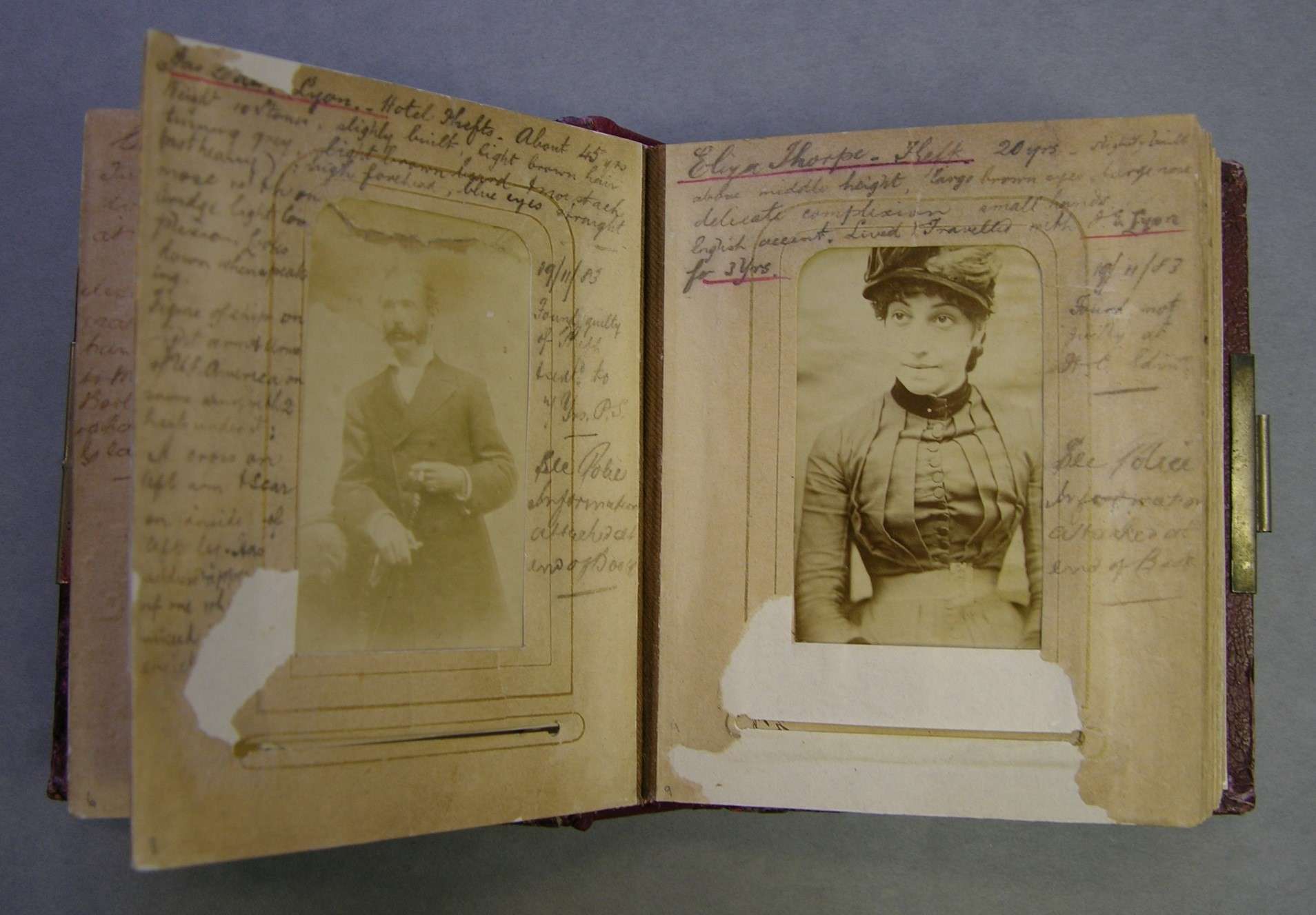
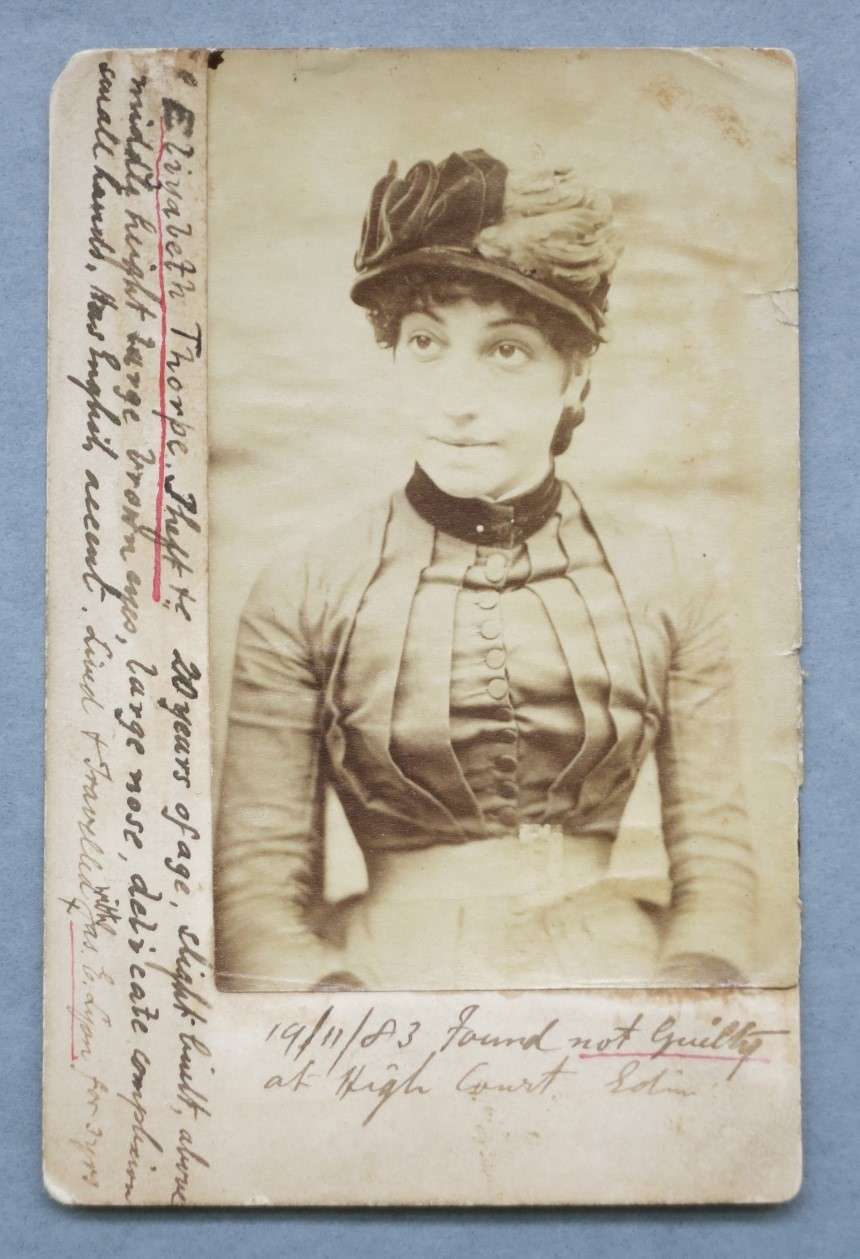
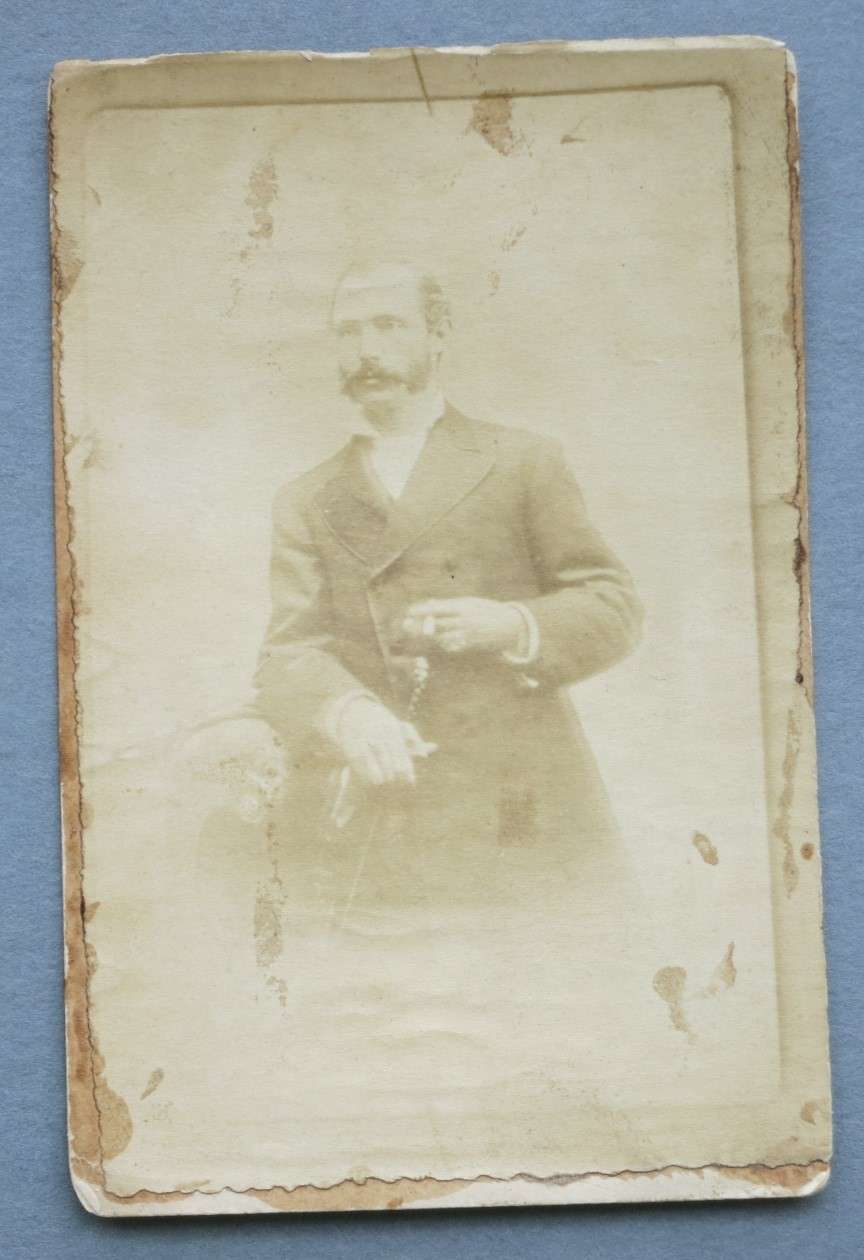
In the summer of 1883, American James Edward Lyon and his young accomplice Eliza Thorpe targeted well-to-do guests in fancy hotels from Argyll to Aberdeenshire. Cash, jewellery and other valuables went missing and Lyon and Thorpe just always seemed to be around when it happened.
Eliza Thorpe. Photo: Crown copyright National Records of Scotland.
The pair who travelled as man and wife were arrested at a hotel in Edinburgh. Their associate Joseph Dowling was caught red handed with some of the stolen items.
At their trial the men were convicted but the case against Thorpe, who was 20 years old, was found not proven. Lyon was sentenced to seven years. Photographs of Lyon, Thorpe and Dowling were kept in an album of interesting cases by the local procurator fiscal.
Prison registers are a rich source of information
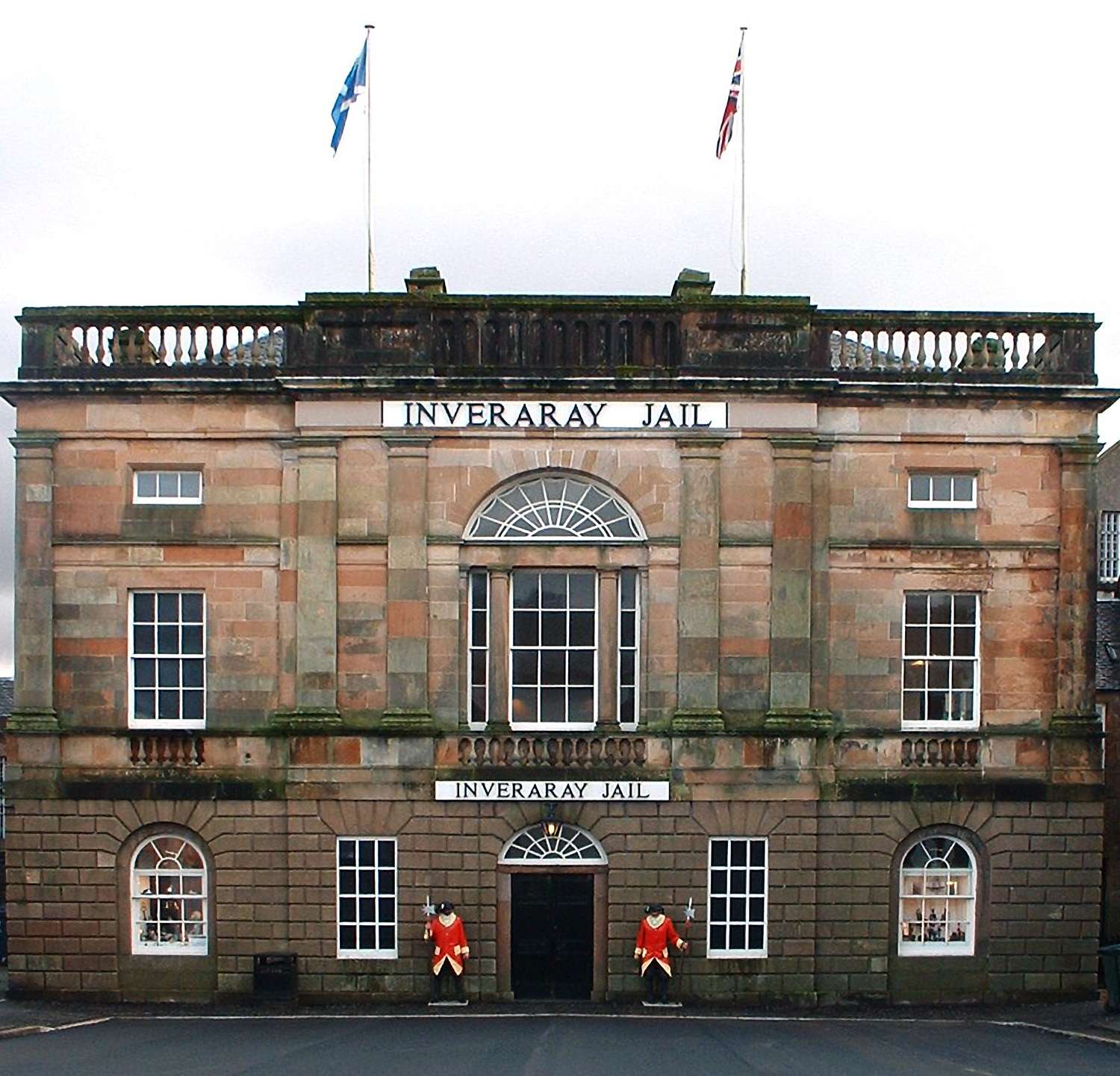
Inveraray Jail. Photo: Inveraray Jail Museum.
Their entries in the registers for Inveraray prison are among 4,600 for that jail now on Scotland’s People. Men, women and children were incarcerated at the jail in the 19th century. The youngest was seven-year-old James McCulloch who was caught stealing, the oldest 82-year-old Ann Kerr found guilty of “vagrancy”.
The newly published records also include 98,000 entries from Ayr Prison from 1841 to 1911. Notable prisoners included murderers Joseph Calabrese, Thomas Bone and Mary Boyd. All of them were sentenced to death and all spared.
James Lyon. Photo: Crown copyright National Records of Scotland.
Archivist Veronica Schreuder said: “Prison registers are a rich source of information for social researchers and family historians alike. While it can be a shock to find an ancestor in prison, it can sometimes lead to details that are unlikely to have been preserved for most people. Finding out the colour of their hair, details of their health or whether they could read or write can turn a name and some dates into a much more rounded person. And of course, if they have committed a serious crime, it can explain a lot about the decisions of other relatives such as moving area, changing a name or simply never talking about them.”
The new additions mean there are now over 400,000 historical prison records available to search on Scotland’s People. This includes the old Edinburgh prisons, Barlinnie, Perth and Largs.
Histories of both prisons and more on the cases highlighted in this story are available at Scotland’s People: www.scotlandspeople.gov.uk
Main photo: Eliza Thorpe and James Lyon. Photo: Crown copyright National Records of Scotland.
Do you enjoy our content?
Content on the Scottish Banner website remains free for users. Stories and events listed for the international Scottish community continue to be an important resource for many across the world. As advertising revenue remains a challenge, our readers can donate to help us produce unique Scottish content for global Scots. Every contribution counts and thank you for considering your support.
Support the Scottish Banner! To donate to assist with production of our publication and website visit: The Scottish Banner
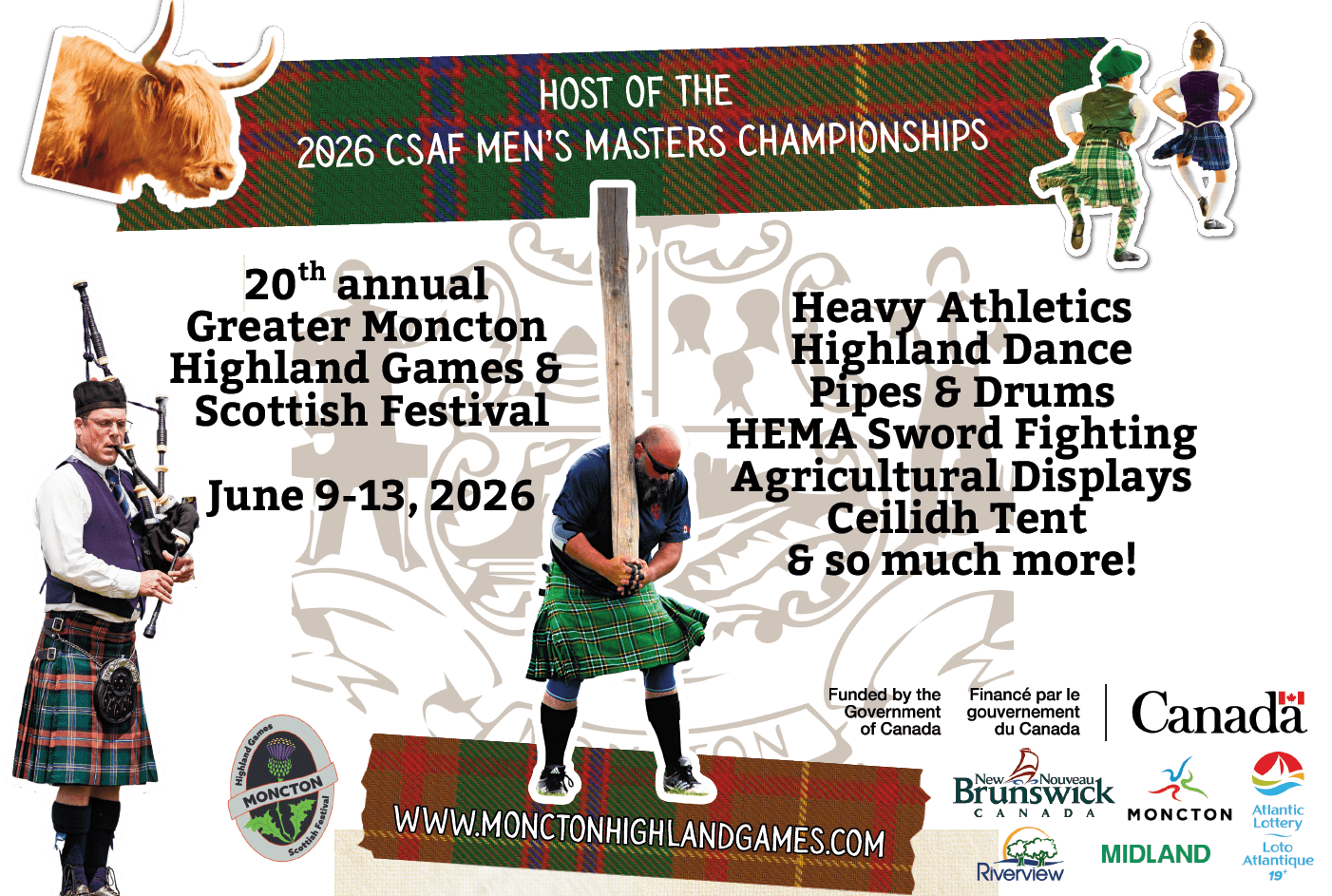
Twenty years isn’t a long tenure when hosting ancient events, but the Greater Moncton Highland Games & Scottish Festival has made its mark in just two decades. The event gained international acclaim in 2022, becoming only the second Canadian event to host the Masters World Championship in heavy athletics.
In 2026, as it marks its 20th annual event, the Greater Moncton Highland Games & Scottish Festival will again make its mark in the field of heavy athletics, becoming the first Highland Games in Canada to host every championship division of the Canadian Scottish Athletic Federation (CSAF).
The 20th annual Greater Moncton Highland Games & Scottish Festival takes place June 9 – 13, 2026, with a series of free community concerts throughout the region. It culminates on Saturday, June 13, with a day-long celebration that blends heritage sports, music, culture, agriculture, and community.
One of Atlantic Canada’s signature summer events
While elite competition will be a major draw, with the 2026 CSAF Men’s Masters Championship on site, the heart of the festival remains its support of local Scottish culture. The day includes highland dance competitions, pipe and drum solo events and pipe band competitions, HEMA sword fighting competitions, the growing 5K Tartan Fun Run, agricultural demonstrations, clan tents, bouncy castles, wagon rides, food vendors, and activities for all ages.
The Ceilidh Tent and community concerts showcase local performers, including Lupin, RCMP Pipes & Drums, Sons of Gael, Fingal’s Rant, Sara & James Nelson, Patricia Murray, Prosser Brook, Dahliah Ave, Farraige, and Corsa.
Organized by the Greater Moncton Scottish Association, the festival has grown into one of Atlantic Canada’s signature summer events. In 2025, attendance climbed to several thousand visitors, more than doubling previous numbers as families, competitors, and visitors from across the region and beyond took part.
For longtime supporters, it is a chance to celebrate how far the festival has come. For first-time visitors, it is an open invitation to discover why the Greater Moncton Highland Games has become a highlight of the region’s summer calendar.
Twenty years in, the tradition is only getting stronger, with some exciting plans for 2027.
Content on the Scottish Banner website remains free for users. Stories and events listed for the international Scottish community continue to be an important resource for many across the world. As advertising revenue remains a challenge, our readers can donate to help us produce unique Scottish content for global Scots. Every contribution counts and thank you for considering your support.
Support the Scottish Banner! To donate to assist with production of our publication and website visit: The Scottish Banner
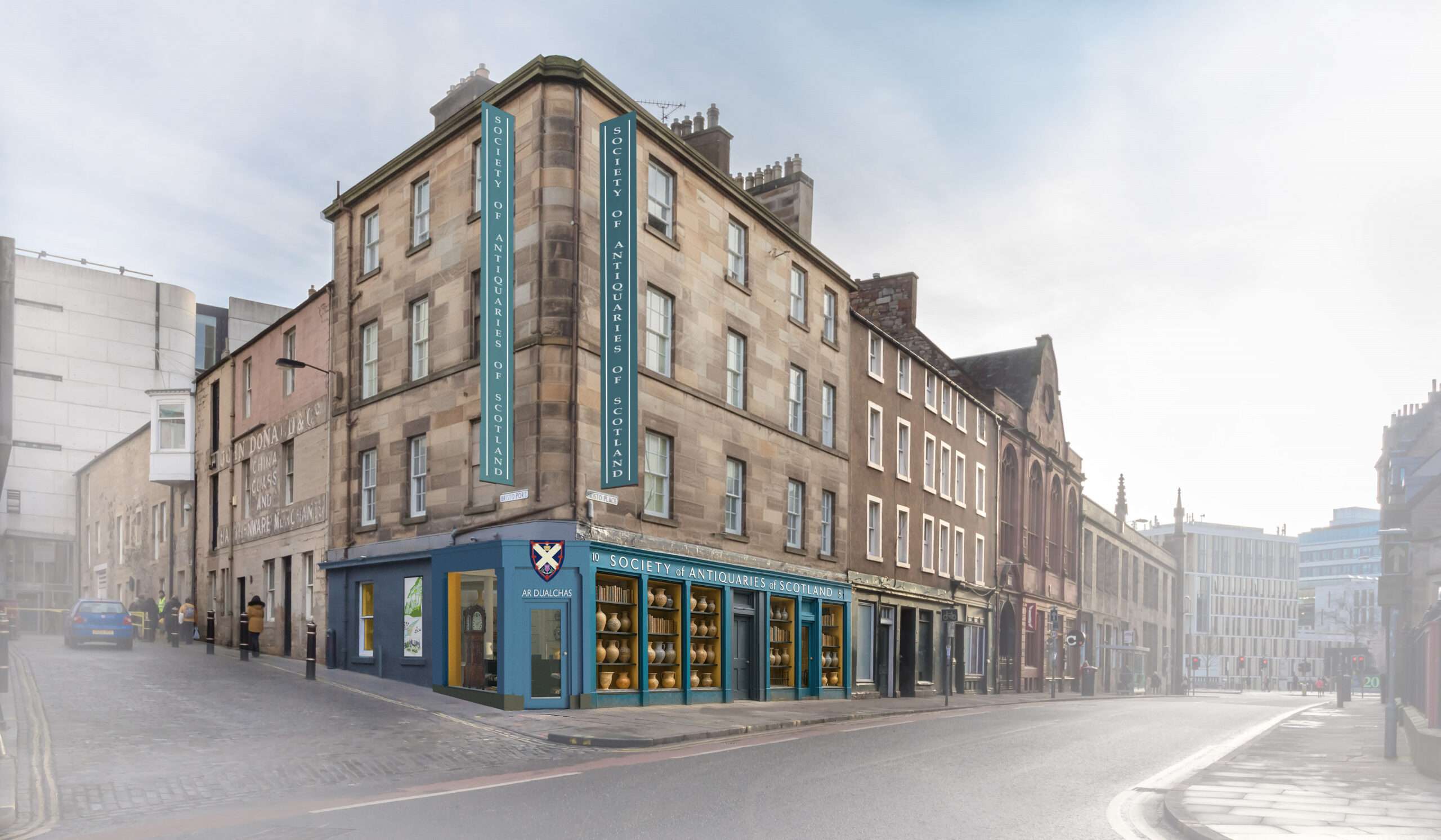
One of the UK’s oldest heritage societies has launched a global £1.5 million campaign to secure a permanent home in Edinburgh, with a deadline of January 2027 to complete the purchase. The Society of Antiquaries of Scotland, founded in 1780 and incorporated by Royal Charter in 1783, is seeking to buy a B-listed property on a site within Edinburgh’s UNESCO World Heritage Site that was once part of the historic southern gateway to the city. The building has been offered to the charity at a fixed price if purchased by January 2027. The Society is contributing £600,000 from its own investments and must raise the remaining £1.5 million.
For nearly 250 years, the Society has supported archaeological and historical research. Its early Fellows contributed collections that formed the foundation of the Scottish history and archaeology galleries for the National Museum of Scotland. Today it connects more than 2,700 Fellows across six continents and reaches millions of people annually through media and digital channels, including recorded lectures and open access publications.
Scotland’s first national heritage hub
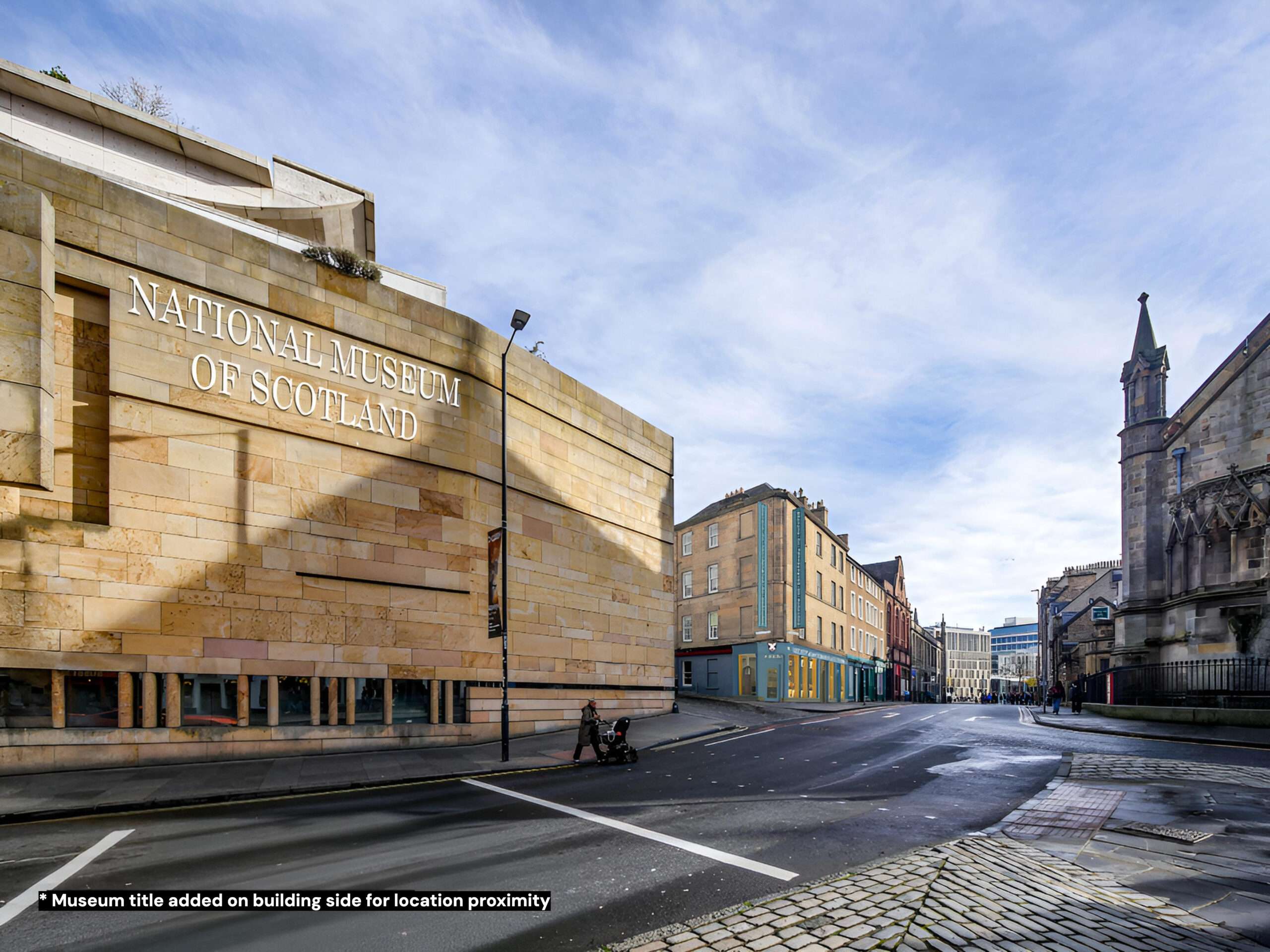
Despite this historic role, the Society currently operates from an inaccessible top-floor flat within the National Museum of Scotland complex which limits its ability to engage with the public and collaborate across the sector. The project would establish Scotland’s first national heritage hub. Here, academics, visitors and anyone curious about Scotland’s past can explore their heritage and engage directly with the work of protecting Scotland’s history.
The campaign carries added significance as the Society approaches its 250th anniversary in 2030. Diana Murray CBE HonFSAScot, President of the Society of Antiquaries of Scotland, said: ”For centuries, this small corner of Edinburgh has been a gateway to Scotland’s past. We now have a rare and time-limited opportunity to secure this building and open our doors properly for the first time in our modern history, ensuring that Scotland’s past belongs to everyone, at home and across the world.”
Dr Simon Gilmour FSAScot, Director of the Society of Antiquaries of Scotland, added: “This is a once-in-a-lifetime alignment of opportunity, affordability and historic significance. The building sits at the very heart of Edinburgh’s cultural quarter, beside the National Museum of Scotland, within a UNESCO World Heritage Site, in an area attracting more than ten million visitors a year. We invite everyone who cares about Scotland’s past to help us secure it.”
Architectural and historic significance
Located on the corner of Bristo Port and Bristo Place, this B-listed property holds special architectural and historic significance, standing on ground that has witnessed more than five centuries of Scottish history. Bristo Place was once the southern gateway into Edinburgh, entered through Bristo Port, a fortified arch built in 1515 as part of the Flodden Wall. In 1503, Margaret Tudor entered the city here through a grand Renaissance arch to marry King James IV, marking the Treaty of Perpetual Peace between Scotland and England. Nearby, in 1638, the National Covenant was signed at Greyfriars Kirk, another turning point in the nation’s story, and later the doomed Darien project was directed from a house on Bristo Place.
The Society of Antiquaries of Scotland is an independent membership charity which actively supports the study and enjoyment of Scotland’s past. The Society’s purpose is “to investigate both antiquities and natural and civil history in general, with the intention that the talents of humanity should be cultivated and that the study of natural and useful sciences should be promoted.”
Professor Ewan is Professor Emerita of Scottish Studies and History at the University of Guelph and one of Canada’s leading authorities on Scottish and medieval history and has been a Fellow of the Society since 1985. She said: “From Canada I have seen first-hand how deeply Scotland’s history runs in people across the world. The Society of Antiquaries of Scotland has been at the heart of Scottish historical scholarship for nearly 250 years, connecting researchers and heritage enthusiasts across the globe. A permanent home would transform what the Society can offer to that global community.”
Dr Lorna Barrow FSAScot, Fellow of the Society of Antiquaries of Scotland, editor of the Journal of the Sydney Society for Scottish History, former researcher on the Australian edition of Who Do You Think You Are?, and recipient of the Celtic Council of Australia’s Duine Urramach award for services to Scottish heritage, said: “Scotland’s story belongs to people on every continent and nowhere is that truer than here in Australia where Scottish heritage runs deep in our national story. Helping the Society of Antiquaries of Scotland secure a permanent home is something the global Scottish community should rally behind.”
Content on the Scottish Banner website remains free for users. Stories and events listed for the international Scottish community continue to be an important resource for many across the world. As advertising revenue remains a challenge, our readers can donate to help us produce unique Scottish content for global Scots. Every contribution counts and thank you for considering your support.
Support the Scottish Banner! To donate to assist with production of our publication and website visit: The Scottish Banner
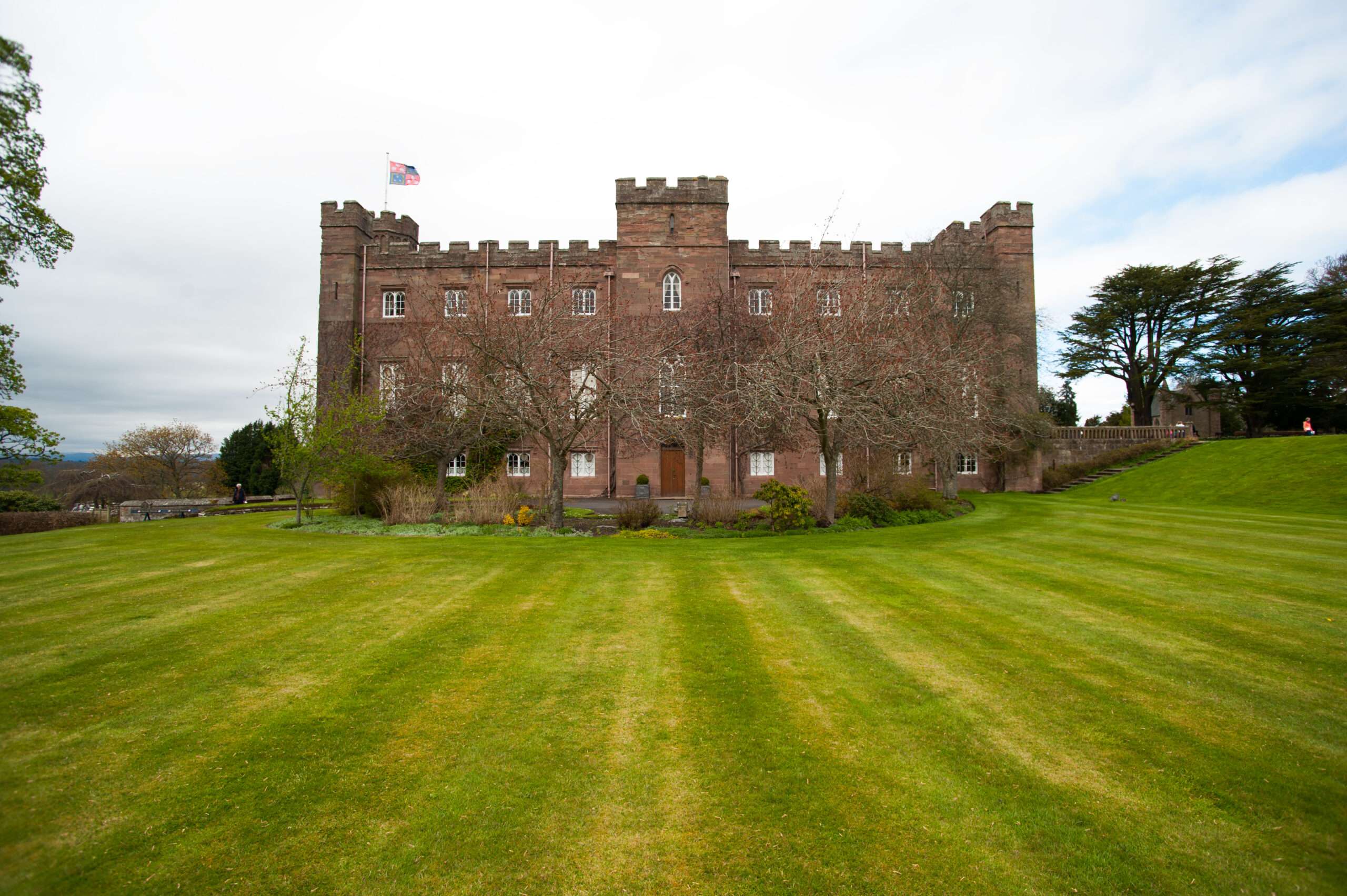
In June 2026, the grounds of Scone Palace—long regarded as the spiritual heart of Scottish kingship—will once again echo with the clash of arms. This time, however, history is not simply being remembered; it is being lived anew. Among those taking the field is Andrew McKinnon of New South Wales, Australia: an armiger of Clan MacKinnon, his arms granted by the Court of the Lord Lyon, and serving as Gillie Mòr (swordbearer) for the clan.
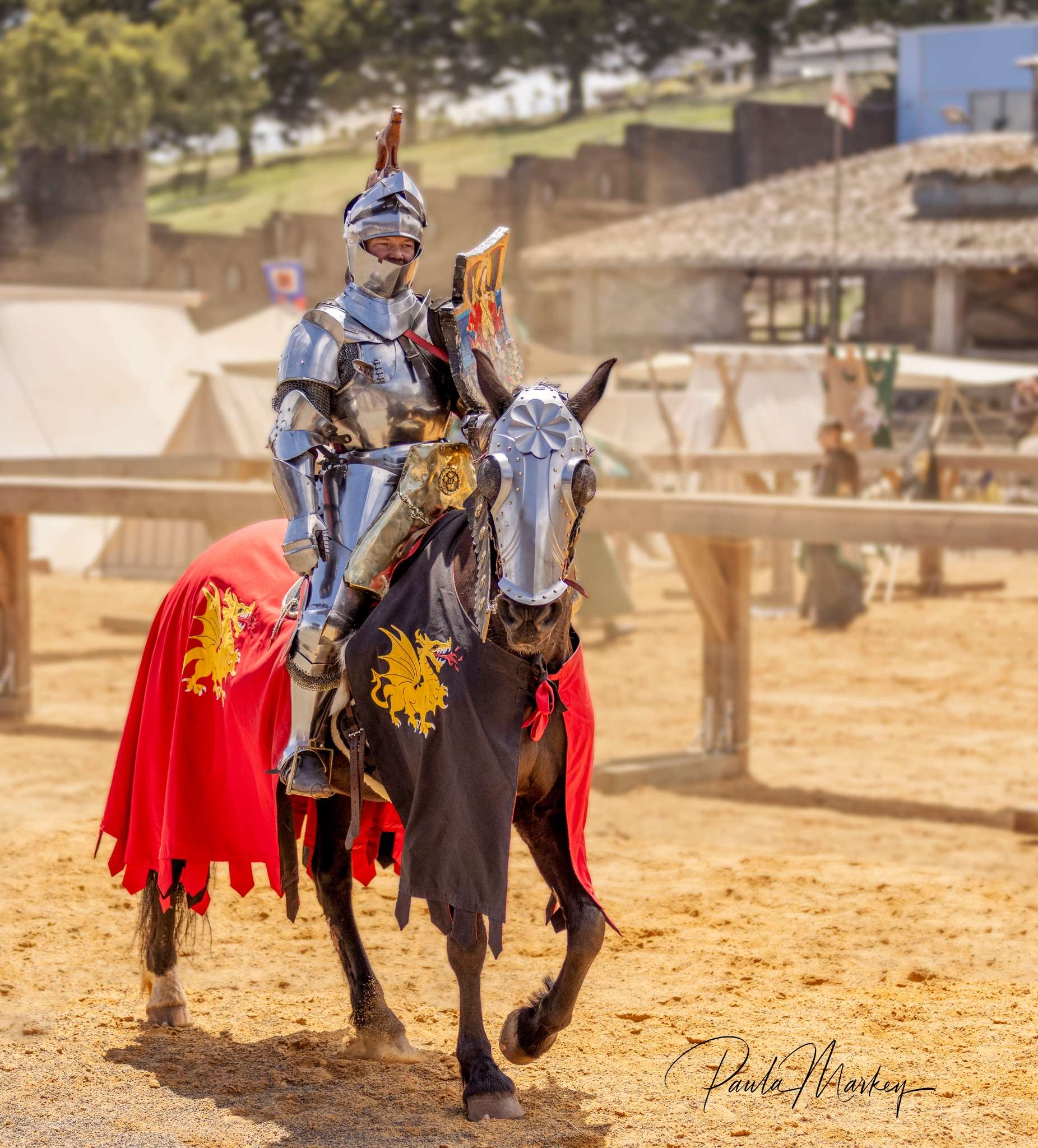
He has been invited to compete in a full-contact medieval tournament on 20–21 June, representing Australia alongside fellow New South Welshman Rodney Deaman. Their opponents are not merely other competitors—but history itself.
Where kings were crowned
Australian representative Rodney Deaman.
Few locations could be more fitting. Scone Palace stands near the ancient Moot Hill, where Scottish kings—including Robert the Bruce in 1306 and Charles II in 1651—were crowned upon the Stone of Destiny. Centuries later, the same ground will host a different kind of coronation: not of kings, but of courage, skill, and living tradition.
At the heart of the tournament lies something far rarer than sport: a true interclan contest. Not since the Battle of Mulroy in 1688—fought between MacDonald of Keppoch and Clan Mackintosh—have Scottish clans met in formalised combat. In that final clash of the old clan era, Clan MacKinnon stood alongside MacDonald of Keppoch.
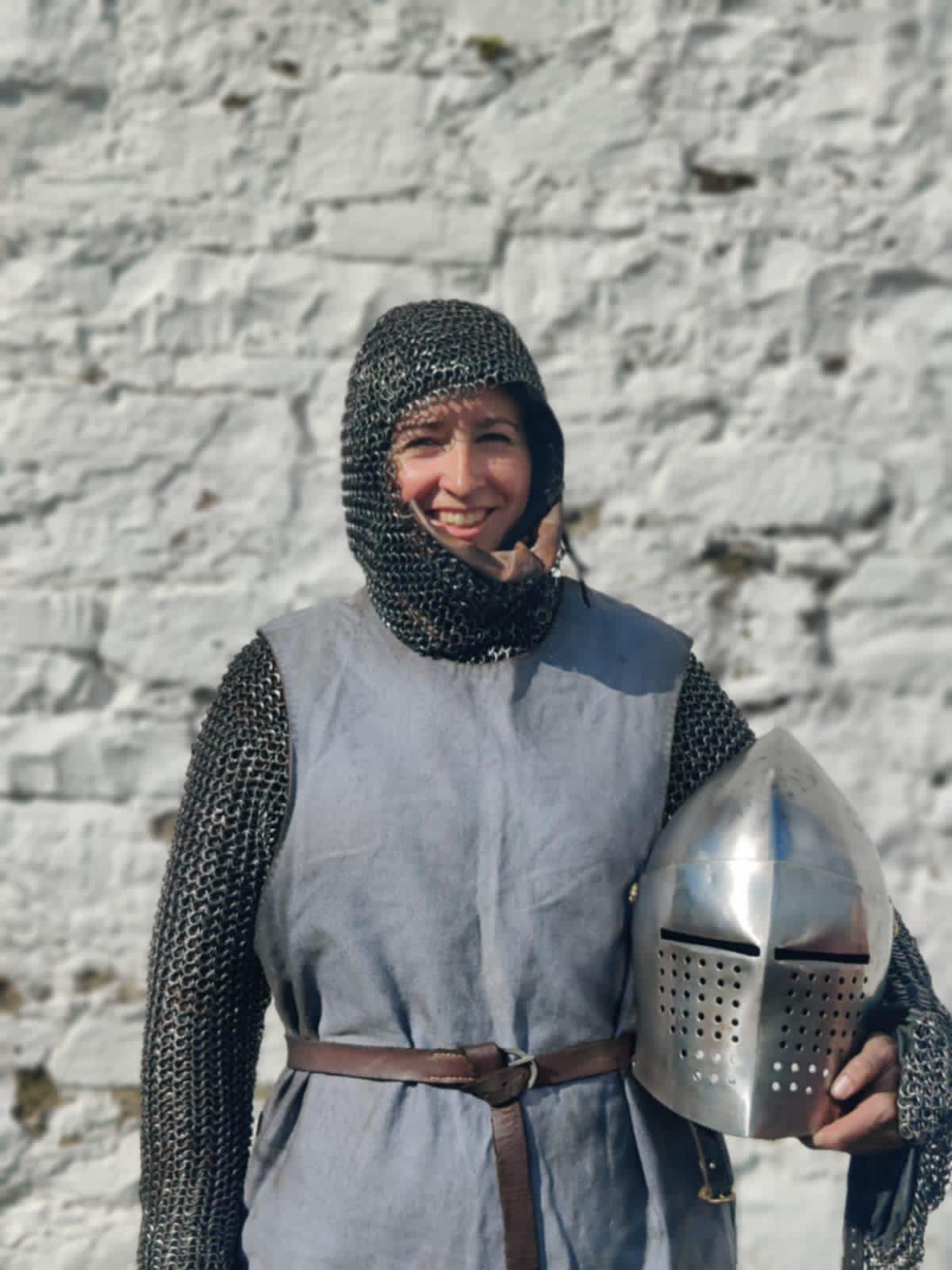
Representing Scotland Jane de Bleu.
Now, 338 years later, Clan MacKinnon once again takes the field—this time against Clan Murray. Representing Clan Murray is Roy Murray, serving as Gillie Mòr for his clan and fighting on home soil. Opposing him, Andrew McKinnon carries both the weight of his lineage and the distinction of representing Australia in what is believed to be the first international jousting contest between Australia and Scotland. Rounding out team Australia is Rodney Deaman, a highly experienced international competitor. Roy Murray’s teammate for Scotland will be experienced horsewoman Jane de Bleu. History, it seems, has come full circle.
The tournament will feature two principal disciplines:
The joust—the thunder of hooves, the splintering of lances, and the timeless test of nerve and precision.
Ground combat with poleaxes—a demanding and highly technical form of armoured fighting, requiring strength, control, and tactical awareness at close quarters.
For McKinnon and Deaman, this is not theatre, but the culmination of years of training in historical martial disciplines—where authenticity is matched by athleticism.
A clan story renewed
Andrew MacKinnon.
For Clan MacKinnon, the symbolism runs deep. To have stood in the last interclan battle of the old era, and now to take the field in the first of a new one, is a rare and powerful continuity. It speaks not only to heritage, but to resilience—the enduring identity of a clan whose story has crossed both centuries and continents. From the Hebrides to New South Wales, and now back again to the ancient seat of Scottish kings, the journey is as meaningful as the contest itself. “I am proud to represent both Australia and Clan MacKinnon. I feel a deep calling to serve the betterment of our Clan. Though small, we have achieved remarkable things throughout history, and I am in a unique position to win new renown for the MacKinnon name. Cuimhnich bàs Alpein.”
History, as the clans have always known, is not something left behind. It is something carried forward—into the field, and into the fight.
Beyond the tournament, this moment marks the beginning of a broader storytelling journey. Andrew McKinnon’s participation will form part of The Bard & the Blade, a developing series exploring Scottish history through lived experience—where scholarship meets steel, and where stories are not only told, but embodied. For history, as the clans have always known, is not something left behind. It is something carried forward—into the field, and into the fight.
Andrew McKinnon (gàidhlig – Anndra Mac Fhionghuin Nan Cath [Andrew McKinnon of the battles]) is an armiger of Clan MacKinnon and serves as Gillie Mòr (swordbearer) for the clan. Based in New South Wales, Australia, he trains in historical martial disciplines and represents both Australia and Clan MacKinnon in competitive medieval tournaments across the globe.
Do you enjoy our content?
Content on the Scottish Banner website remains free for users. Stories and events listed for the international Scottish community continue to be an important resource for many across the world. As advertising revenue remains a challenge, our readers can donate to help us produce unique Scottish content for global Scots. Every contribution counts and thank you for considering your support.
Support the Scottish Banner! To donate to assist with production of our publication and website visit: The Scottish Banner
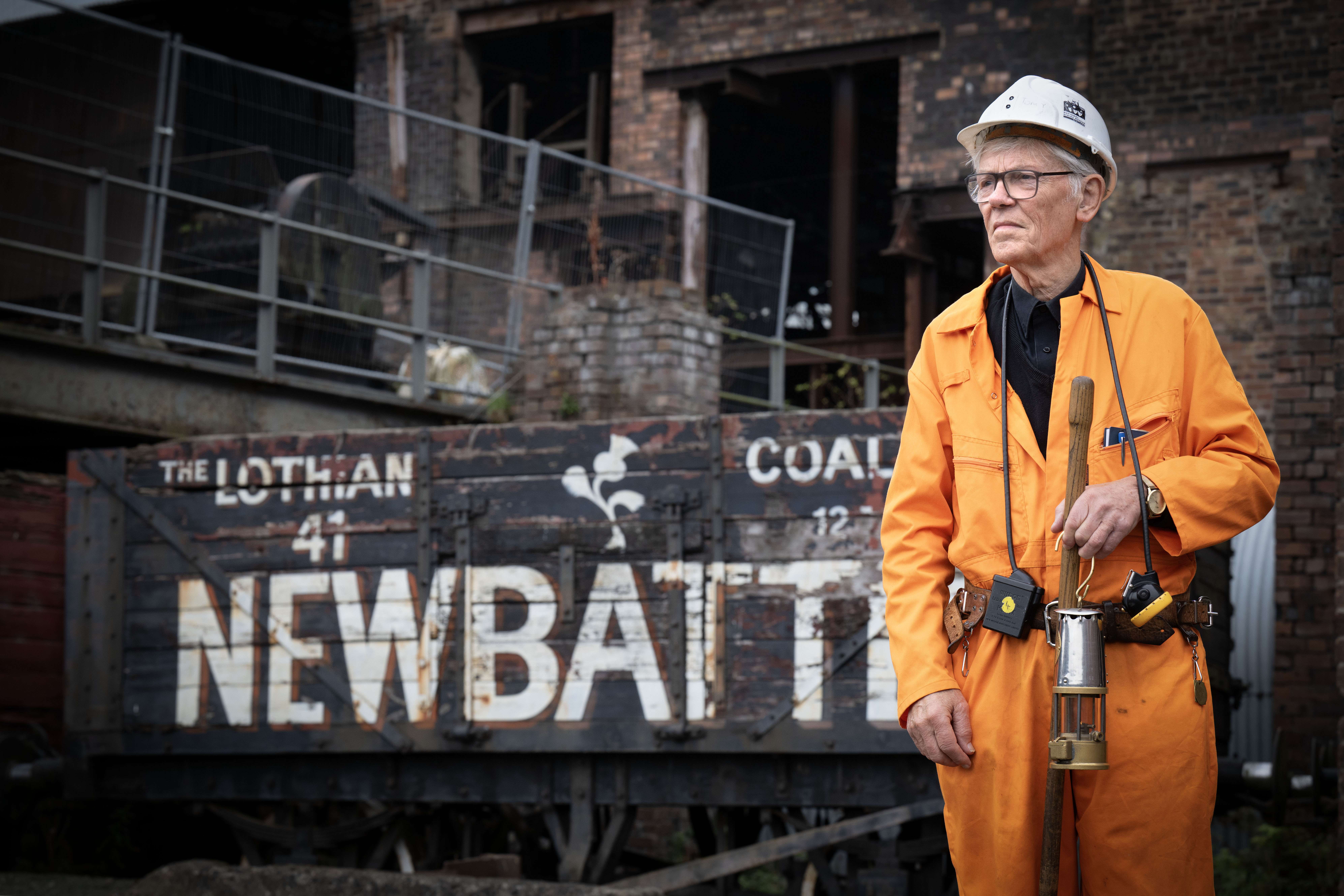
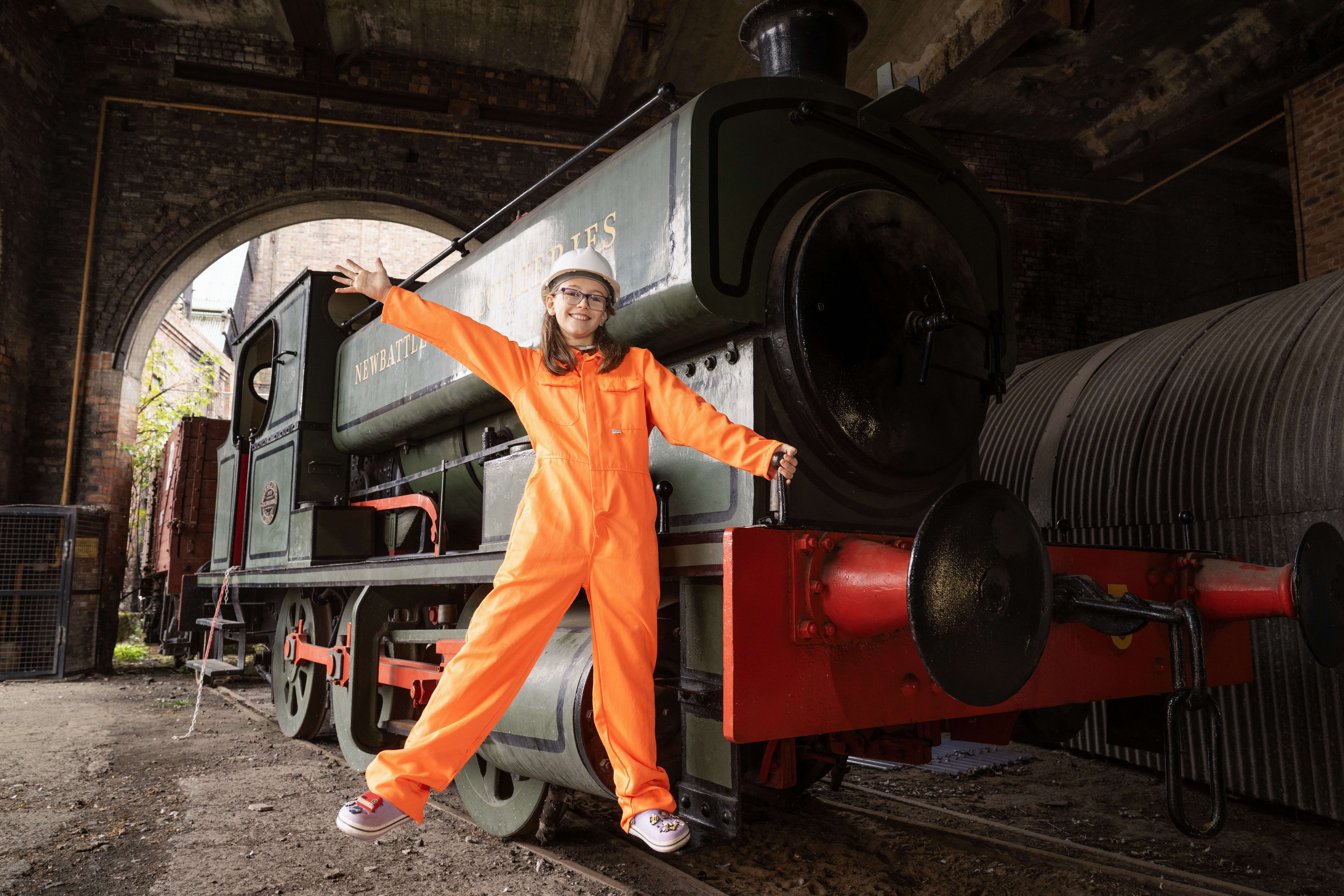
A public appeal has been formally launched to help safeguard and transform National Mining Museum Scotland, which is home to a Recognised Collection of National Significance, Scotland’s first ‘super pit’, and the country’s last surviving colliery built in 1895. The initiative aims to preserve the legacy of coal mining – an industry that powered the Industrial Revolution, drove innovation and social change, advanced workers’ rights, and shaped Scotland’s landscape. It has been designed to give everyone who has a passion for preserving Scotland’s national heritage an opportunity to ‘be part of’ the museum’s future.
The Be Part of Our Future appeal marks the launch of community centred, nationally significant initiative to preserve the memories of Scotland’s mining heritage. It is hoped it will support the museum in caring for and interpreting the nationally significant collections it houses, maintaining and repairing aspects of the A-listed colliery buildings and grounds; developing green energy and community initiatives; and enhancing the venue’s capacity to host community and cultural events across the site.
Launching the initiative, Mhairi Cross, CEO of National Mining Museum Scotland said: “This initiative is vital for the museum at this moment. This appeal brings together essential strands: raising financial support we need and gathering the stories and memories that keep Scotland’s mining heritage alive. Together, these strands strengthen our ability to honour the past while building the resilience the museum needs now, and in the years ahead. This is about preserving the experience of mining communities and ensuring that the museum remains strong enough to carry their stories forward.”
Living heritage site
Photo: Lesley Martin.
Former mine worker at the Lady Victoria Colliery and Kilmarnock Mine Rescue Station, from a long family line of coal miners, Sinclair Sutherland (age 75) is supporting the museum in engaging young people with the appeal by telling his stories through a new series of child-led video interviews. Now a volunteer and family history researcher at the museum, he said: “I’m very pleased to support National Mining Museum Scotland and would urge everyone to ‘Be Part of Our Future’ in whatever way you can to protect this national treasure. It is an incredible living heritage site which triggers memories and stories. It’s like our generation’s form of social media, allowing us to share the important learnings we had down the pits in a really visual and inspiring way. There are not many heritage sites where you can meet and learn from the people who were involved. It is a real honour to represent the pit community, but we also want to make sure that our legacy lives on in the next generation. Younger people will be the tour guides of the future, and sharing stories as part of conversations will enable us to continue to deliver a unique, authentic, and worthwhile experience.”
Fellow interviewee, former timekeeper, Marion Brown age 90 from Newtongrange, agrees: “Working for the coal mines was so much more than just a job. From the social clubs and our cooperative stores to the landscapes and monuments, the industry made so many of the communities we know today and it’s important to remember that. It’s not just been part of our family heritage, it’s our national heritage and we must do all we can to preserve it and the living memories we still have access today.”
The Lady Victoria Colliery was opened in 1895 as Scotland’s first super-pit. It ceased production in 1981 and now serves as an example of one of the best-preserved Victorian Collieries in Europe. The National Mining Museum Scotland was established to make Scotland’s mining heritage relevant to everyone by embracing the legacy of Scotland’s mining communities and found in Newtongrange, Midlothian.
For more information about the Museum’s ambitions for transformation or to donate to the Pithead Circle, visit www.nationalminingmuseum.com/ourfuture. To share a mining story or find out more about the museum’s Living Archive From the Depths of Coal, Rose the Scotland We Know, email: [email protected].
Do you enjoy our content?
Content on the Scottish Banner website remains free for users. Stories and events listed for the international Scottish community continue to be an important resource for many across the world. As advertising revenue remains a challenge, our readers can donate to help us produce unique Scottish content for global Scots. Every contribution counts and thank you for considering your support.
Support the Scottish Banner! To donate to assist with production of our publication and website visit: The Scottish Banner
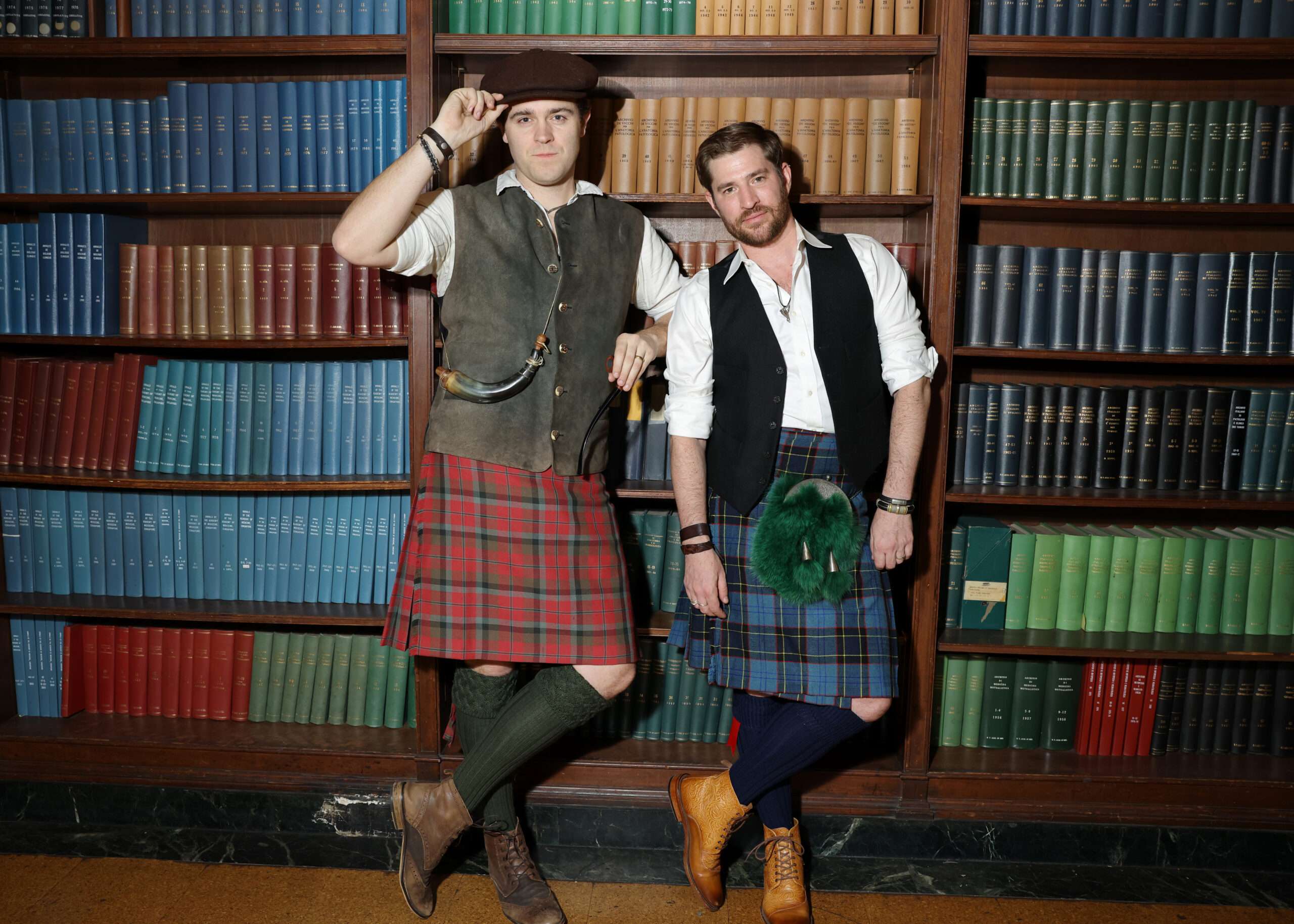
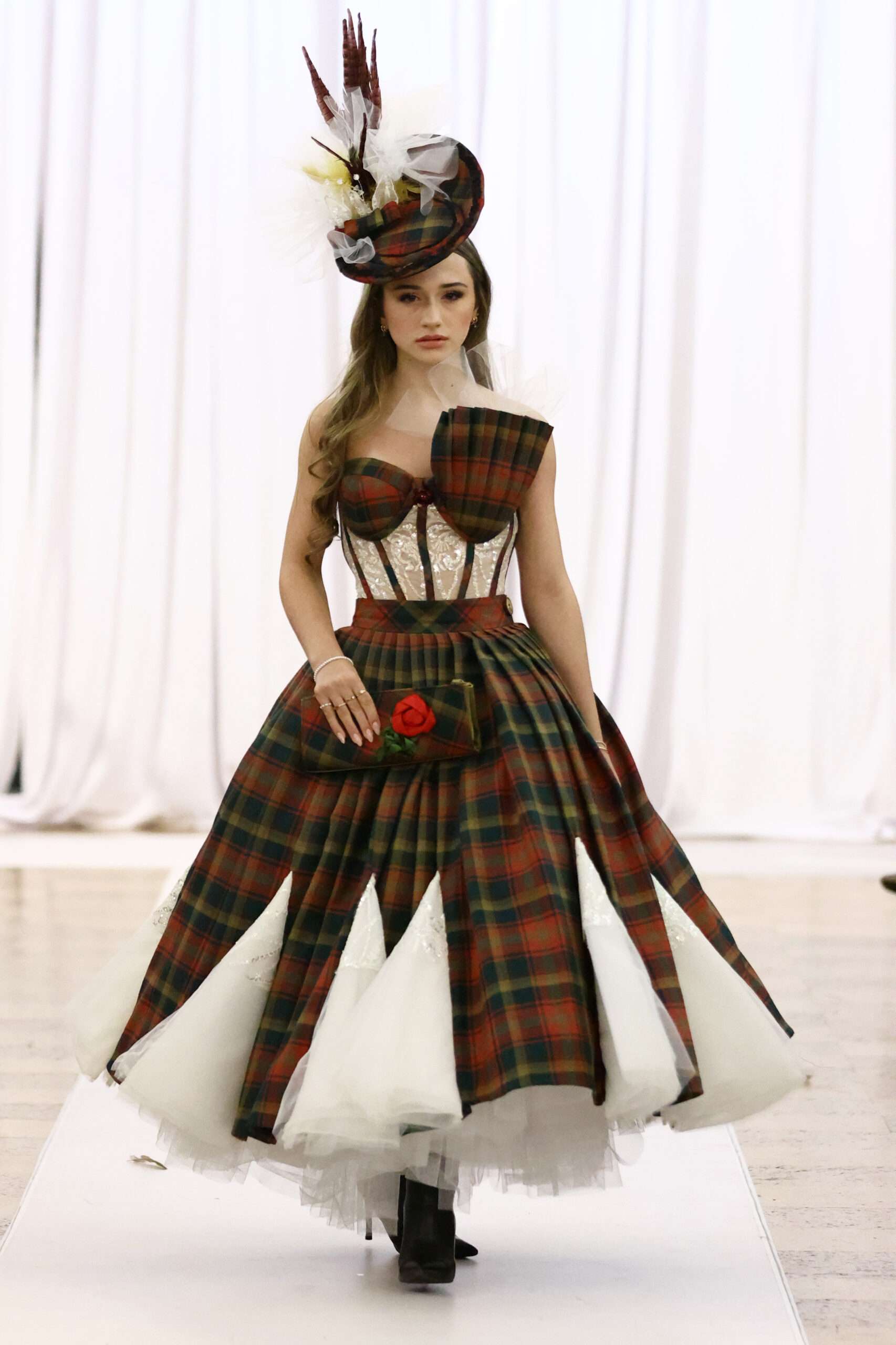
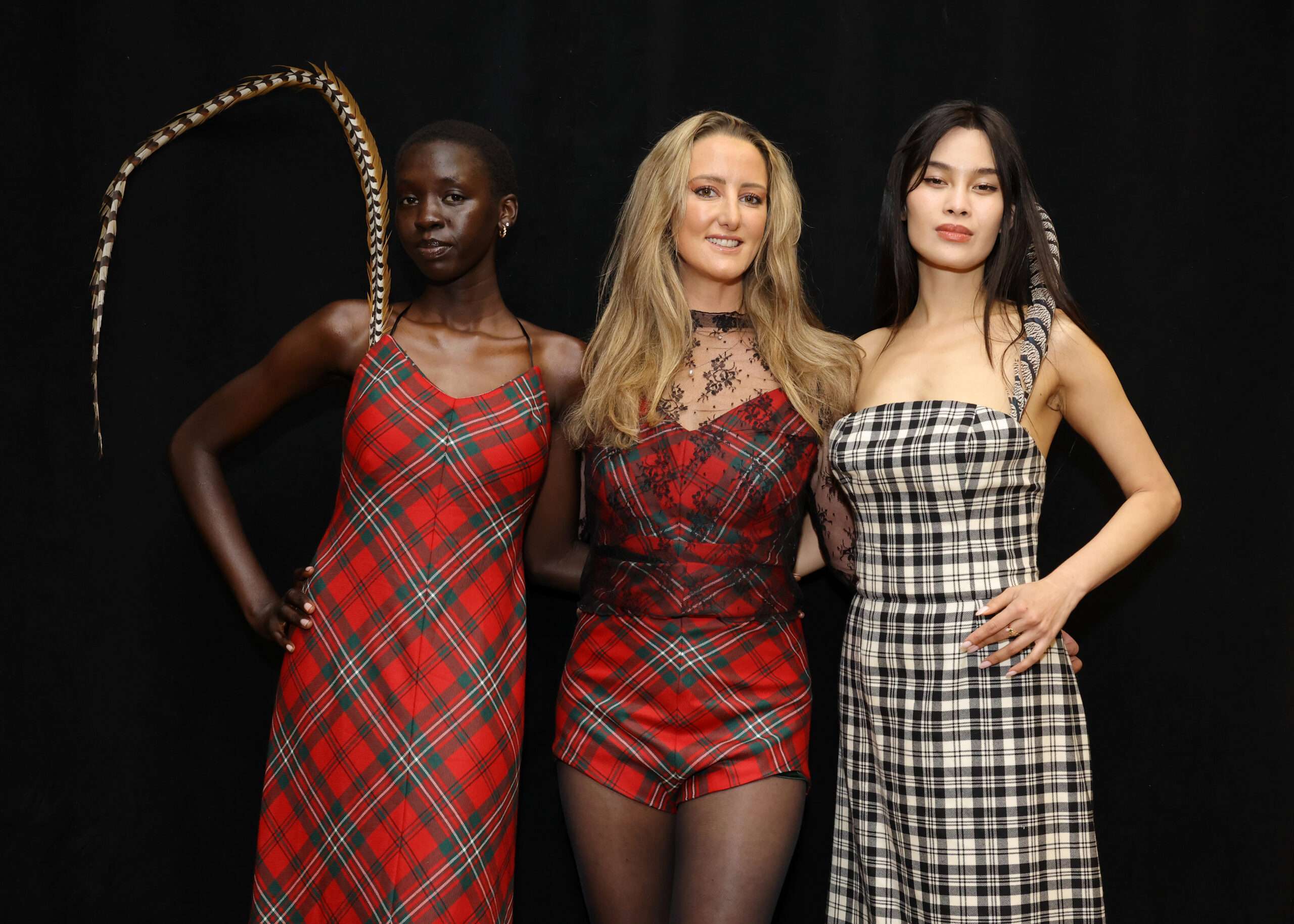
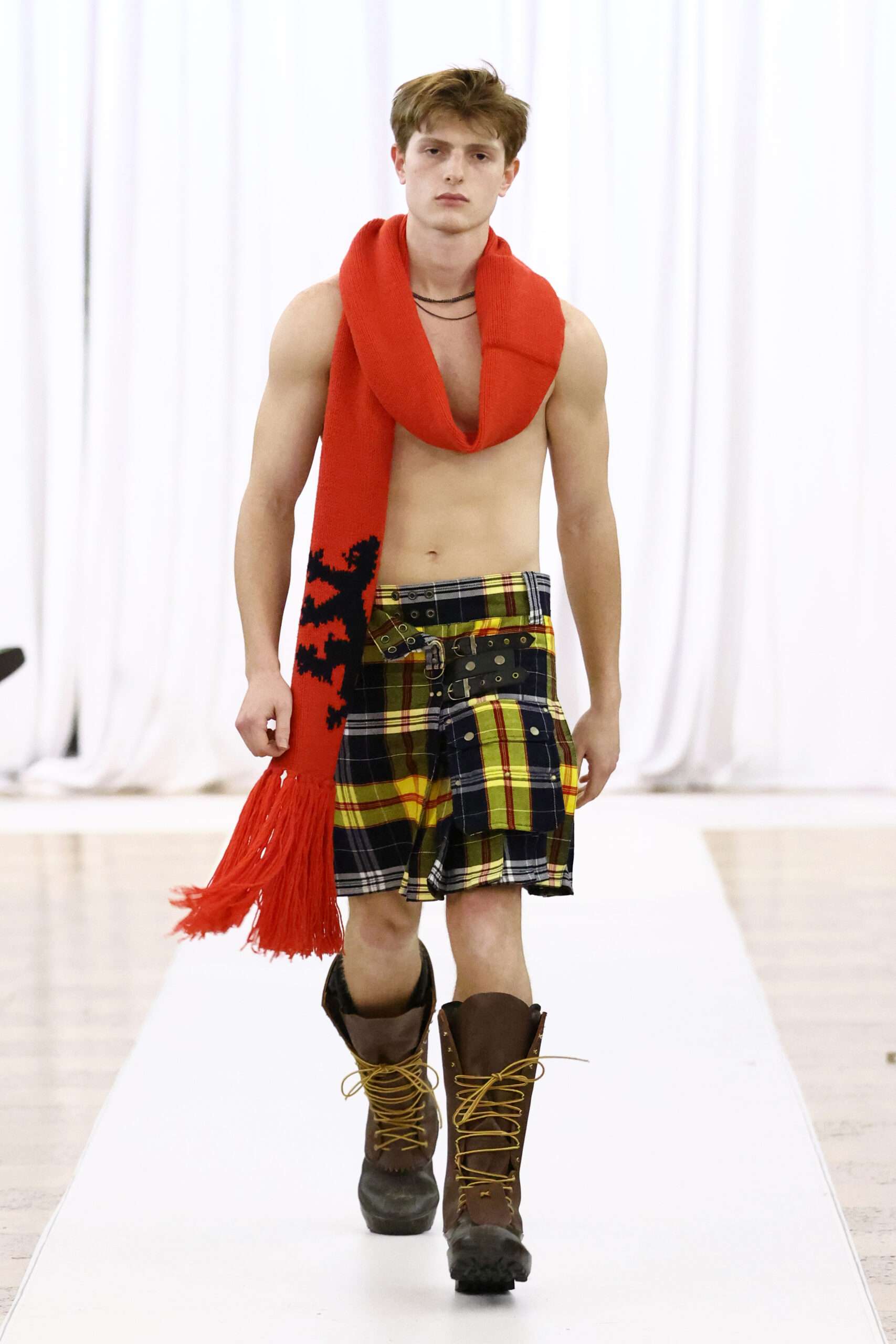
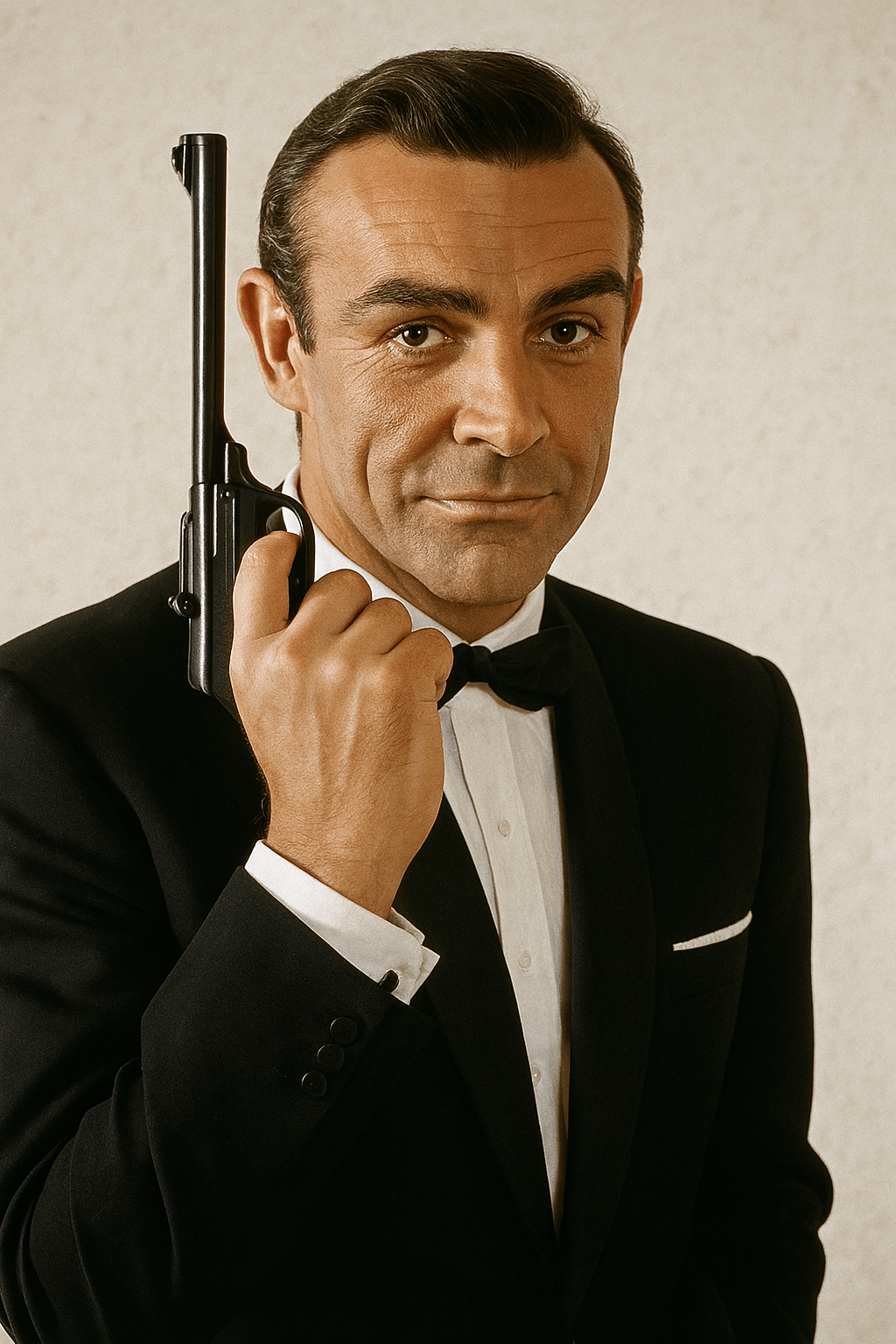
Dressed to Kilt, the internationally recognized celebration of Scottish fashion, culture, and philanthropy, returned to New York City on April 11 at the New York Academy of Medicine for an evening that brought together standout talent from across Scotland, the UK, and the U.S. Co-founded by Sir Sean Connery and Dr. Geoffrey Scott Carroll, the event once again delivered a dynamic runway experience in support of the Navy SEAL Foundation.
Hosted by Dr. Carroll alongside Scottish television personality Danni Menzies, the show highlighted this year’s theme, Scotland Cool: Braveheart to Outlander, with a mix of heritage tartans and contemporary design.
A standout moment included the appearance of Miss Scotland 2026, Eilidh MacDonald, who walked in a bespoke Gwen Russell gown representing the next generation of Scottish cultural ambassadors. Scottish football legend John Collins also took to the runway, marking Scotland’s highly anticipated return to the global football stage.
Fashion and performance
The evening featured a dynamic mix of fashion and performance, including a U.S. debut by award-winning Scottish jazz vocalist Georgia Cecile and a high-energy appearance by rising boy band Just The Brave. Designers from across Scotland and beyond showcased collections that blended craftsmanship with innovation, including Carolyn Baxter, Prophetik by Jeff Garner, Calzeat, Strathmore Woollen Company, Lorna Gillies, Sandra Murray, and Red Label Kilts of Canada, led by designer Deana Lloy, whose presence added an international dimension to the runway.
The evening was further elevated by support from the Scotch Malt Whisky Society, which offered guests exclusive access to its global whisky program and introduced a custom event label, “Kilty Pleasures.”
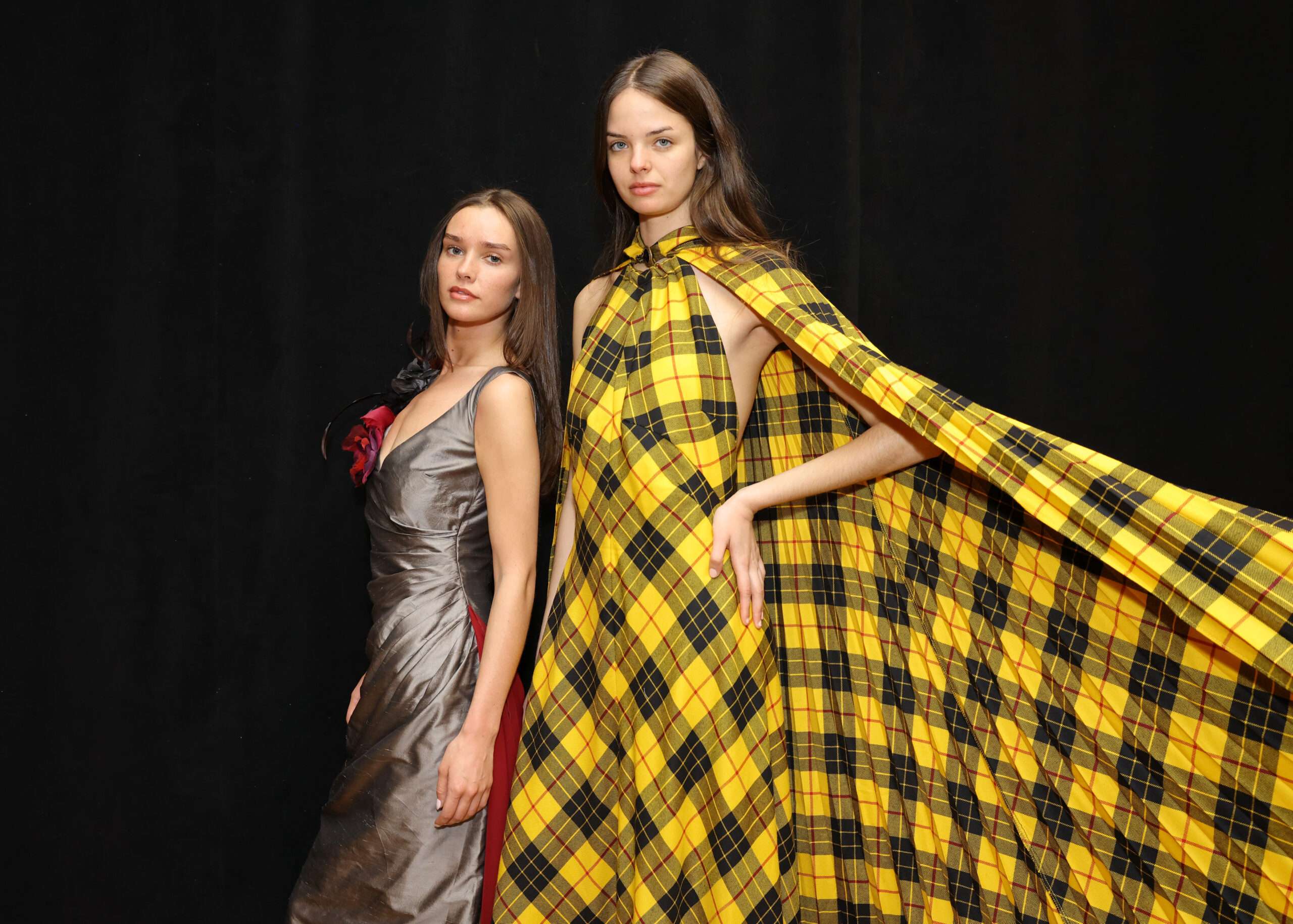
This year’s show also marked two significant commercial announcements. The first was the launch of a new bespoke women’s design brand, Redmond Harvey of Scotland, founded by designer Holly Harvey. Known for one-of-a-kind dresses and gowns, the brand debuted a series of striking long tartan gowns on the runway, signaling a fresh and elevated direction in Scottish womenswear.
The second announcement introduced a landmark collaboration between Strathmore Woollen Company and the Navy SEAL Foundation. Strathmore will curate a range of products in the official Navy SEAL Foundation tartan, designed primarily for the women of the Navy SEAL community—including wives, mothers, daughters, and supporters. Following the show, these pieces will be available via the Navy SEAL Foundation’s e-commerce platform. This partnership represents the first collaboration of its kind between the Foundation and a Scottish company, celebrating both Scottish craftsmanship and the legacy of the SEAL community with a distinctive Highland influence.
True to its mission, Dressed to Kilt continues to serve as a platform for philanthropy, with proceeds benefiting the Navy SEAL Foundation and several former Navy SEALs participating in the show. Blending culture, fashion, and purpose, the 2026 edition reinforced the event’s place as a distinctive and enduring highlight of New York’s cultural calendar.
Jerry Dixon performs during Dressed To Kilt.
All images courtesy of JP Yim/Getty Images for Dressed To Kilt.
Do you enjoy our content?
Content on the Scottish Banner website remains free for users. Stories and events listed for the international Scottish community continue to be an important resource for many across the world. As advertising revenue remains a challenge, our readers can donate to help us produce unique Scottish content for global Scots. Every contribution counts and thank you for considering your support.
Support the Scottish Banner! To donate to assist with production of our publication and website visit: The Scottish Banner
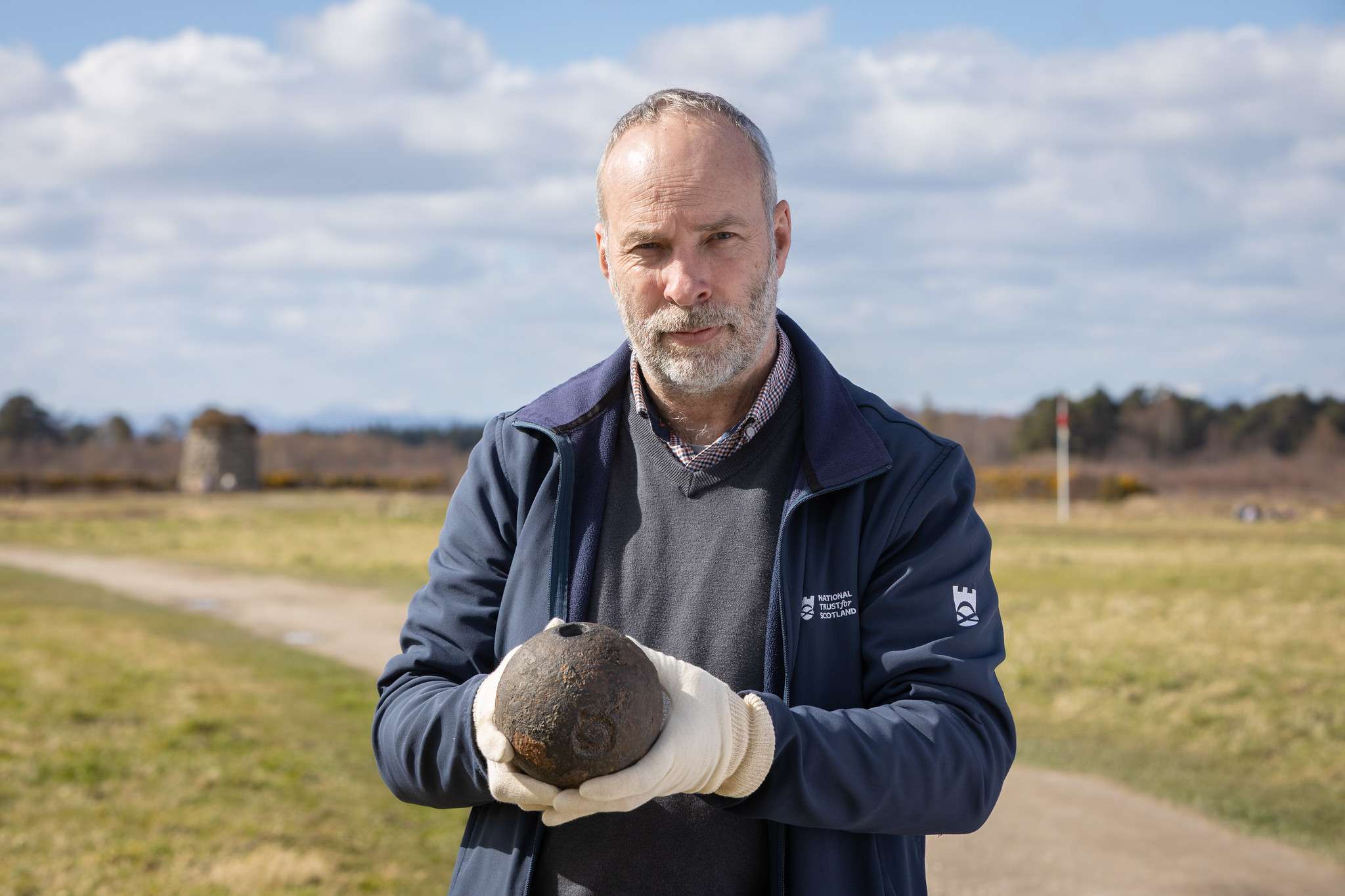
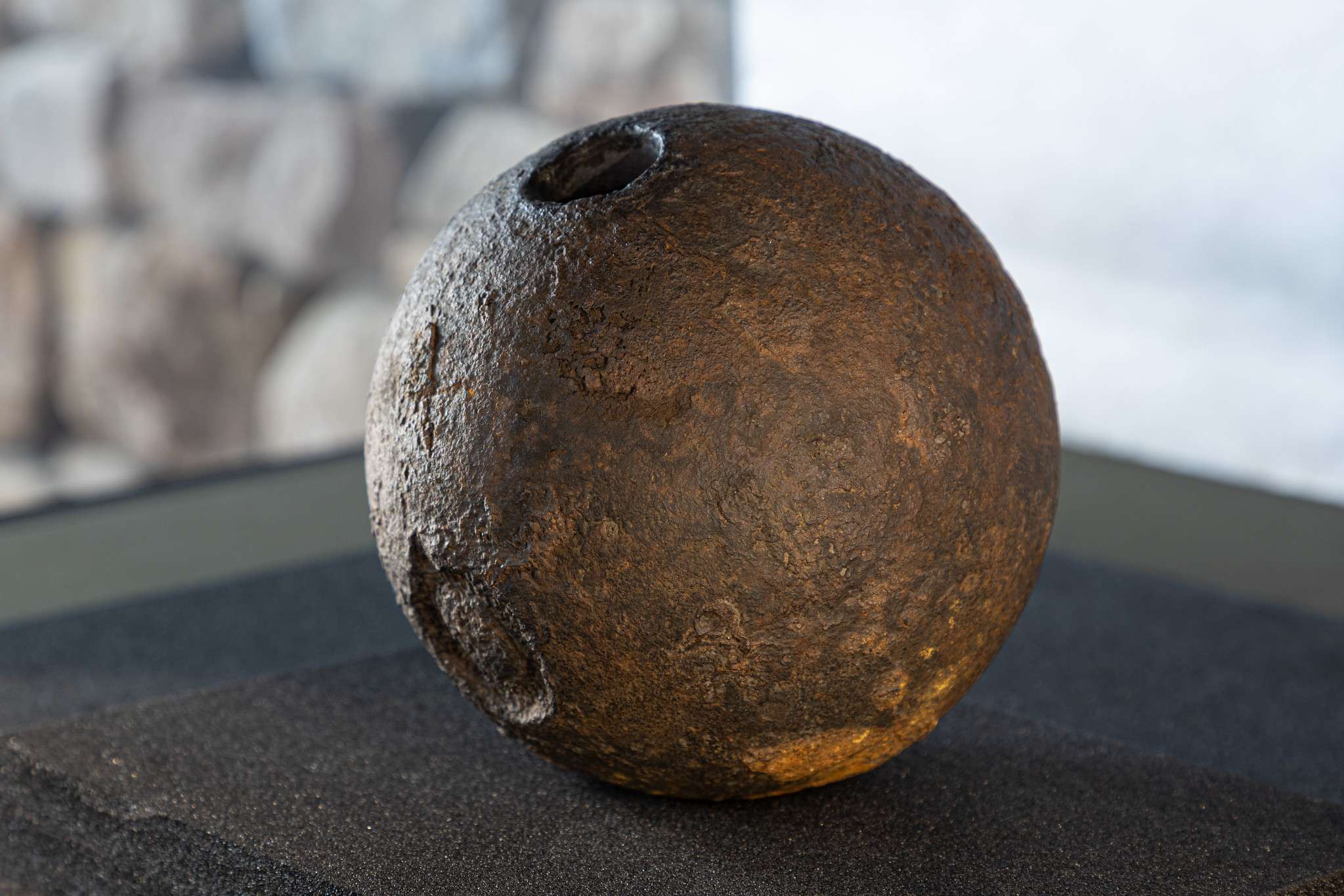
Archaeologists from the National Trust for Scotland have recovered an unexploded mortar shell, thought to have been fired by government artillery during the historic battle. The battle of Culloden on 16 April 1746 was a decisive defeat for the Jacobite army, led by Bonnie Prince Charlie, at the hands of the Duke of Cumberland’s government troops. Intact and gunpowder-packed when it was discovered, the 5.5-inch shell is the first piece of complete government ordnance found at Culloden battlefield and provides fresh evidence for the deployment and action of government and Jacobite forces at pivotal moments in the battle.
Many other projectiles, including cannon shot, musket balls and fragments of mortar shells, have been uncovered at Culloden, but never before has undetonated ordnance been found. Parts of the battlefield are on boggy ground, and it is thought the shell landed on wet ground and the fuse extinguished before it could ignite the powder. Weighing 8kg (17.5lb), heavier than the Jacobite’s three and four-pound cannonballs, the shell is thought to have been fired from one of the government army’s six Coehorn mortars. The Coehorn mortar was a lightweight, squat gun that shot explosive shells in high arcs over lines of troops. Fragments of other shells from Coehorn mortars have previously been found at Culloden and at Glen Shiel, where Coehorns were first used during a battle on British soil in June 1719, but the recent discovery is the first complete and unexploded example ever to have been recovered from a Jacobite battlefield.
The Culloden mortar shell was discovered in a field to the north-west of the Memorial Cairn by a team of archaeologists, metal-detectorists, and volunteers led by the National Trust for Scotland’s Head of Archaeology Derek Alexander and the University of Glasgow’s Professor Tony Pollard. The dig was part of a week-long programme of fieldwork, including digging test pits, machine trenching, metal detecting and mapping, at the Culloden Battlefield in October 2025. During the excavation, over 100 projectiles, including lead musket balls and pistol shot, were uncovered. Cleaning of the shell by conservator Will Murray at the Scottish Conservation Studio confirmed the presence of a bung, and digital x‑ray imaging demonstrated conclusively that the object was hollow with an internal chamber. The shell still retained part of its original plug, and plant fibres trapped in corrosion layers were also recovered for future analysis.
More secrets and stories to be uncovered at Culloden
The mortar shell.
Derek Alexander, The National Trust for Scotland’s Head of Archaeology, said: “This is a remarkable – dare I say, explosive – find of the kind archaeologists dream of, but never expect to encounter. Along with the other projectiles recovered, this discovery helps us better understand the formation of troops and concentration of fire during this brief, but brutal, battle. The mortars may have been aiming at the Jacobite artillery, so the place where the shell landed may mark the heart of the Culloden battlefield. The ground rises slightly in this area, providing a better vantage point, and it is adjacent to the old road along which artillery could’ve moved more easily, making it a plausible location for the Jacobite artillery positions. We have a more vivid image of how the battle played out, but the discovery also tells a human story. Mortar shells mark their path through the air with a smoke trail from the lit fuse, helping the government artillery officers to know how to adjust the length of the fuse to ensure maximum damage. This shell may have been a failed first shot. When it didn’t explode as expected, the Jacobite fighters standing nearby must have felt an immense relief. This is our fifth consecutive year of digging at Culloden, so it’s an ideal time to assess what we’ve found and consider how this work impacts on-site interpretation and the long-term management of the battlefield. We didn’t have high expectations for this previously unexplored area of the battlefield – acidic soil was thought to have impacted the preservation of artefacts, and the broken ground makes detecting difficult – so we’ve been invigorated by this unexpected discovery. It’s clear there are many more secrets and stories to be uncovered at Culloden. The mortar shell was found buried 30cm deep into the ground and items like these can only be found during professional excavations led by experienced archaeologists, so the battlefield remains safe to visitors. This shell has been cleaned and assessed now, making it safe to handle, and has ensured it is safe to go on display. These exciting finds are made possible by the work of our committed archaeology volunteers and team of local metal detectorists, and the continued generosity of our members and supporters. Professor Christopher Duffy not only made a lasting impact on the interpretation and protection of Culloden, but his hugely generous legacy donation has really expanded the range of our investigations.”
Cared for by the National Trust for Scotland, Culloden Battlefield was visited by over 366,000 people in 2025 and is a place of pilgrimage and remembrance for visitors from Scotland and beyond. The battlefield is central to Scotland’s cultural identity, and yet historic battlefields don’t enjoy the same protections as other historic sites, such as Scheduled Monuments or listed buildings. In its 2026 election manifesto, the Trust is calling for the next Scottish Government to commit to Conservation Management Plans that will give battlefields enforceable protection.
Derek Alexander added: “The importance of more rigorous protection for historic Scottish battlefields like Culloden and Bannockburn is underlined by finds like this one. Not only are such places symbolic of our national story, they also may hold many undiscovered artefacts that can tell us more.”
One of the most harrowing battles in British history
Cullodenn Battlefield Visitor Centre. Photo: Gary Anthony.
Professor Tony Pollard of the University of Glasgow said: “Artillery played a vital role at Culloden, particularly on Cumberland’s side, where the Royal Artillery’s cannon were well served by experienced gunners; after disabling the Jacobite guns in counter-battery fire, they delivered round shot, grape shot and canister shot at the Jacobite infantry, first as they were stationary and then as they charged across the wide expanse of open moor. “We have found evidence for all these types of shot, but our previous archaeological investigations have also recovered fragments from an exploded mortar shell. This was fired into the mass of Jacobites as they engaged in hand-to-hand fighting on Cumberland’s left, landing so close that their detonation risked friendly fire casualties. Their location is a clear indication that the impact of the Jacobite charge was taken extremely seriously and regarded as an immediate threat to Cumberland’s line.”
2026 marked the 280th anniversary of the Battle of Culloden. On 16 April 1746, the final Jacobite Rising came to a brutal head in one of the most harrowing battles in British history. Jacobite supporters, seeking to restore the Stuart monarchy to the British throne, gathered to fight the Duke of Cumberland’s government troops. It was the last pitched battle on British soil and, in less than an hour, around 1,600 men were slain – 1,500 of them Jacobites.
The National Trust for Scotland’s richly researched, stimulating and sensitive Culloden Visitor Centre stands beside the battlefield and features artefacts from both sides of the battle and interactive displays that reveal the background to the conflict. It is both a monument and a guide to a pivotal day in history. Culloden’s enduring legacy also persists in popular culture, including the book and television series, Outlander. Fans of the series are currently running a fundraiser in support of the Culloden Fighting Fund, which supports the Trust’s ongoing interpretation of the battle and enables it to create new displays, such as this one of the mortar shell. The fundraiser runs until 2 May 2026 and can be found online at www.justgiving.com/page/jesuisprest.
Main photo: Derek Alexander, The National Trust for Scotland’s Head of Archaeology. Images courtesy of the the National Trust for Scotland.
Do you enjoy our content?
Content on the Scottish Banner website remains free for users. Stories and events listed for the international Scottish community continue to be an important resource for many across the world. As advertising revenue remains a challenge, our readers can donate to help us produce unique Scottish content for global Scots. Every contribution counts and thank you for considering your support.
Support the Scottish Banner! To donate to assist with production of our publication and website visit: The Scottish Banner
Perth treated visiting bands to a warm welcome, turning on a sunny 29oC (84oF) day for the 2026 Australian Pipe Band Championships on Saturday April 11. An estimated crowd of 7,500 people came to Subiaco Oval to see 18 bands from around Australia and Singapore compete throughout the day.
Amongst the 500 pipers and drummers performing were guest players from around the world, including contingents of players from the USA, Scotland, and New Zealand.
Grade 3 winners, Perth Metro Pipe Band.
The quality of the school bands who came from Queensland, New South Wales, Victoria and Western Australia was very impressive and made the Juvenile Grades hotly contested events. Western Australia Police Pipe Band were the winners in Grade 2, the highest grade in the Championships.
Another local WA band, Perth Metro, won Grade 3. City of Melbourne Highland Pipe Band were the victors in Grade 4A, with Scotch College Melbourne No.2 winning Grade 4B. Scots College Sydney No.1 won Novice Juvenile A. Scotch College Melbourne No.2 won the Novice Juvenile B contest.
The highest level of pipe band competition in the country
Drumming for Haileybury Pipes & Drums (Victoria).
Interestingly, the local West Australian bands were the best dressed, with WA Police, Perth Metro, Perth Highland, Coastal Scottish, and PLC Perth each winning the dress inspection in their respective grades. There was also a Drum Majors Flourish contest during the day, which is always a crowd-pleaser.
The Drum Majors march along the course, displaying their skills ‘flourishing’ the mace and occasionally throwing it the air and catching it without missing a step. The winning Senior Drum Major was Dominic Anderson-Strudwick of the Australian Federal Police Pipe Band, based in Canberra. Winning the Juvenille Drum Major Flourish was Hamish Wiseman from The Scots College Sydney.
Sgt Ben Casey.
The day concluded with an impressive 500-strong massed band advancing across Subiaco Oval toward a capacity crowd in the Pavilion. Recognised as the highest level of pipe band competition in the country, the Championships are run by Pipe Bands Australia every two years. This is the first time in 30 years that the Championships have been held in Perth, with Pipe Bands WA hosting the event.
Following the presentation of trophies the President of Pipe Bands Australia, Ainsley Hart, announced that Brisbane will host the 2028 Australian Pipe Band Championships.
Singapore’s Lion City Pipe Band.
For updates on pipe band events, and for full results of the 2026 Championships, visit the Pipe Bands Australia website: www.pipebandsaustralia.com.au. The entire video stream of the 2026 Championships is available to watch online via the Pipe Bands Australia YouTube channel: www.youtube.com/live/VstUmu3C2ec.
Images courtesy of Louise Rowland.
Do you enjoy our content?
Content on the Scottish Banner website remains free for users. Stories and events listed for the international Scottish community continue to be an important resource for many across the world. As advertising revenue remains a challenge, our readers can donate to help us produce unique Scottish content for global Scots. Every contribution counts and thank you for considering your support.
Support the Scottish Banner! To donate to assist with production of our publication and website visit: The Scottish Banner
The Haddington Pipe Band flying the flag at Traprain Law, near Haddington. Photo: Nick Callaghan.
Ninety-three years ago, this month, the first newspaper article on a strange and massive, whale-like creature churning the water in the dark waters of Loch Ness was printed. It was May 1933 and The Inverness Courier featured an article of an unexplained creature in the cold and deep waters located just outside of Inverness. The author of the feature was Alex Campbell, a water bailiff and part-time journalist, and was titled Strange Spectacle on Loch Ness—What Was It?
This article would go on to gain national and international attention and change the course of the region, which is still being felt today. The article detailed how Aldie Mackay and her husband reported seeing an enormous animal rolling and plunging in the loch on April 15, 1933. Whilst this was not the first mention of a strange sighting on the loch, it was the first printed recollection and led to the story gaining far reaching appeal and curiosity.
One of Scotland’s most enduring mysteries
The legend of Loch Ness is one of Scotland’s most enduring mysteries — a blend of ancient folklore, modern myth, and scientific curiosity that continues to ripple across the world. At its heart lies Nessie, the elusive creature said to inhabit the deep, dark waters of Loch Ness in the Scottish Highlands. Loch Ness itself is a vast freshwater lake stretching about 23 miles (37 kilometres) and plunging to depths of over 750 feet. Its peat‑ stained waters are famously opaque, creating the perfect stage for tales of hidden beasts.
The earliest known account of a monster near the loch dates back to the 6th century, when Saint Columba reportedly confronted a “water beast” in the River Ness. According to Adomnán’s Life of St. Columba, the saint made the sign of the cross and commanded the creature to retreat — which it did, leaving witnesses awestruck. This story, though set in the river rather than the loch, became the first written record of what would later be called the Loch Ness Monster.
Nessie’s place in popular culture
For centuries, Scottish folklore spoke of kelpies — shape‑ shifting water horses said to lure travellers into the depths. Many historians believe these tales helped shape the Nessie legend. But the modern phenomenon began in 1933, when a new road along Loch Ness offered unobstructed views of the water. When Mrs Mackay, who was the manageress of the Drumnadrochit Hotel, reported seeing the massive creature it sparked a media frenzy.
There have been over 1,000 reported sightings since and so far just one this year, which took place in March. In 1934, the world was captivated by the so‑ called “Surgeon’s Photograph”, allegedly showing Nessie’s long neck rising from the water. Decades later, it was revealed to be a hoax — a toy submarine with a sculpted head. Yet the image cemented Nessie’s place in popular culture.
People who knew very little about Scotland had heard of this monster lurking deep in the waters. Over the following decades, sonar scans, underwater photography, and scientific expeditions sought proof of the creature. None found definitive evidence, though some readings hinted at large, moving shapes beneath the surface.
In this issue
One creature more accessible to the visitor to Scotland is without doubt the Scottish deer. Not to be just found in the Highland landscape but deer have been used throughout history in art, carving, architecture, stories and folkloric symbolism. This month we look at some of the symbolism of deer to Scotland, both in the natural and supernatural forms.
Pipe bands are located right across the world. Being part of a band is not just a musical ambition for many, but it also brings a unique life experience. Bands travel to many places to perform and take part in some incredible events. This month we feature the Haddington Pipe Band who are a community focused band, and we would love to hear from other bands on their story.
Alexander Wilson (1766–1813) was born in Paisley and was a poet, weaver, artist and pioneering ornithologist, celebrated as the Father of American Ornithology. His nine-volume American Ornithology, the first bird book with coloured plates to be published in America, transformed bird study in North America. He sadly died in poverty at just 47 but is remembered for introducing a new way to present nature writing and illustration.
The legend of Nessie
Despite scepticism from scientists, who attribute sightings to misidentified animals, floating logs, or optical illusions — the legend thrives. Nessie has become a symbol of mystery and wonder, drawing millions of visitors and contributing tens of millions of pounds to Highland tourism each year.
Modern studies, including DNA sampling of the loch’s waters, have found no trace of unknown species, but the myth endures. I visited the loch in 2025, and you bet I was watching the water…just in case!
Ultimately, the legend of Loch Ness is less about proving a monster’s existence than about celebrating imagination itself. In the Scottish Highlands, where history and myth intertwine in story, Nessie remains a living reminder that some mysteries are meant to be cherished — not solved.
Do you have you any comments from the content in this month’s edition? Share your story with us by email, post, social media or at: www.scottishbanner.com/contact-us
#ScottishBanner, #TheBanner #NewsForGlobalScots
The Scottish Banner is more reliant than ever on our readers helping us to provide you with our unique content by buying a copy of our publication, regardless if by print or digital subscription or at a retail outlet.
We appreciate your support and hope you enjoy this edition.
Support the Scottish Banner! To donate to assist with production of our publication and website visit: The Scottish Banner
Jupiter Artland is an odd and intriguing name for one of the Edinburgh area’s oddest visitor destinations. You can get there by car or bus but however you do so it feels strangely like arriving at a safari park. But animals are not the main attraction here. Instead of giraffes and lions there are works of art. It’s Jupiter Artland, after all.
The story starts a long time ago. Bonnington House was originally built in 1622, in the last years of James VI. It was much altered over the years and completely refurbished in, ironically, a Jacobean style, in 1858. The house had been owned by various noble Scottish families but the present owners, Robert and Nicky Wilson, acquired the property in 1999.
They have since spent a great deal of money refurbishing and adding to the house. However, early in their acquisition they saw the potential of the fields, meadows and woodland surrounding the property as an open-air art and sculpture gallery. They started acquiring works and laying out the site. Jupiter Artland finally opened in 2009 and over a million people have now visited.
Artworks
Gateway.
Many of the artworks are big but some are quite enormous, features of the landscape rather than objects set there. Some you can’t miss; others are almost hidden and you have to really look for them. The souvenir map is an excellent guide, however, and with it you should be able to track down the 33 numbered artworks.
Some of the artworks you look at and study, like traditional exhibits in a gallery. Most you can touch. Some of them you actually interact with, and none more so than Cells of Life by Charles Jencks.
If you arrived by car you’ll have driven through Jencks’ work on your way to the car park. If you arrived on foot after getting off the bus, you’ll probably stop and explore as soon as you see it. It’s a substantial artificial landform composed of several terraced mounds, like the remains of Iron Age hillforts, with spiral paths that climb to their summits. Between the mounds are still, clear, sky-reflecting pools. It’s mesmerising to watch the shapes of the mounds change as you follow the paths and take pictures of the clouds mirrored in the water.
It’s supposed to be, as its name suggests, an artistic response to the cell, the very basis of life in all its forms. I have to confess I don’t quite get that: to me it comes across more as a stylised celebration of landscape, hill and loch, with nods to humankind’s impact on the environment. Go and see and interact for yourself. What do you think?
Better felt than tellt
Cells of Life.
Near Cells of Life there are some paddocks where you many find the likes of ponies and donkeys. They may give a break from the art, if you or the children need one. If this is a safari park for art, there are at least a few genuine animals around.
It’s tempting to describe lots of the other artworks but I’m going to limit myself as it’s much better to go and see and prepare to be surprised. As the Scottish phrase has it, Jupiter Artland is better felt than tellt. However, there is a corner of the park that I particularly enjoyed. It’s near the hub of the park, The Steadings, where you’ll find the café and shop and indoor gallery. It’s quite near the main car park. Just to the west of The Steadings is the area known as Gala Hill, a pleasant and airy woodland which has a surprising number of intriguing, sombre and sometimes funny artworks.
If you have children with you, I can confidently predict that their favourite will be Firmament by the legendary artist Antony Gormley of Angel of the North fame. Firmament is in stark contrast to his usual slightly eerie standing human figures. It’s inspired by an old star map and is like a giant Meccano set gone mad. In recreating the night sky, the metal links actually almost take the shape of a sinister monster. Gormley recommends looking at the sky through the artwork. It’s in an elevated space at the edge of the wood with a fine view over the Forth bridges.
Gala Hill also features three works by the late Scottish artist Ian Hamilton Finlay, who was a pioneer of art designed to be experienced in the landscape, as at his famous garden of Little Sparta at Dunsyre in the Pentlands. I still remember Finlay’s exhibit at the 1988 Glasgow Garden Festival and there’s a faint whiff of that event about Jupiter Artland.
Signpost to Jupiter
Cells of Life.
Bonnington House itself is not open to the public and is a private home, but it often provides an attractive background as you explore the sculptures. Joana Vasconselos’ Gateway is an ornamental pool set amongst thousands of Portuguese tiles, amongst beautiful gardens with Bonnington House as a backdrop.
Perhaps surprisingly, Bonnington House was bombed during the Second World War causing some minor damage. One of the artworks commemorates this event; Henry Castle’s Hare Hill models one of the bombs that fell as well as the aircraft itself, linking the spot to Hare Hill, some six miles away in the Pentlands. A Luftwaffe bomber crashed there during the war, and its wreckage can still be seen.
Other artists you’ll probably have heard of, and who are represented in the park, include Andy Goldsworthy and even Tracey Emin. The park supports educational visits to the park for young people; going to visit, and paying the entrance fee, helps to support this important work.
On our visit, in the spring of 2025, we spent a couple of hours at Jupiter Artland, yet there were not only some artworks, but entire areas of the park that we didn’t get to. So, there’s always a reason for another visit. However, you might ask, why the name. Why Jupiter Artland? The honest answer is that I don’t know! However, there is an artwork by Peter Liversidge entitled Signpost to Jupiter which is, indeed, a signpost pointing (up the way!) to Jupiter. The sign points out that, depending upon orbits, Jupiter is between 893 and 964 million kilometres away.
So, now you know.
Do you enjoy our content?
Content on the Scottish Banner website remains free for users. Stories and events listed for the international Scottish community continue to be an important resource for many across the world. As advertising revenue remains a challenge, our readers can donate to help us produce unique Scottish content for global Scots. Every contribution counts and thank you for considering your support.
Support the Scottish Banner! To donate to assist with production of our publication and website visit: The Scottish Banner
Yes, that’s right. Move over, Glastonbury Festival. The massed pipes and drums have taken the crown. The Royal Edinburgh Military Tattoo has officially been named Britain’s No.1 most popular music festival in 2025, according to YouGov Ratings. This result places the Tattoo ahead of some of the UK’s biggest names in live music including The BBC Proms, Glastonbury Festival and Reading and Leeds Festivals.
YouGov Ratings, the largest and boldest attempt ever to measure what Britain thinks, analysed millions of responses from the public to determine the nation’s most loved music festivals which revealed the Tattoo was on top for all UK adults.
A Call To Gather
Photo: The Royal Edinburgh Military Tattoo.
Fresh from its victory in the UK festival rankings and near sellout shows in Brisbane and Auckland, it’s now full steam ahead for the 2026 Show, A Call To Gather in Edinburgh. A production that will invite audiences from across the globe to unite in a shared celebration of music, culture, and community.
Jason Barrett, CEO, The Royal Edinburgh Military Tattoo said: “For generations, the Tattoo has been woven into the fabric of our nation’s summer, and today, in the eyes of those surveyed, it stands not just as a tradition but as a global stage-setter. We are humbled and deeply grateful for this recognition. For more than 75 years, The Royal Edinburgh Military Tattoo has brought together world-class performers from every corner of the globe, uniting heritage, bold creativity, and unforgettable spectacle in a way only the Tattoo can. In 2026, we will once again open our gates to the world with our show A Call To Gather, and I have every confidence that our audiences – new and returning – will understand exactly why the Tattoo continues to be so loved.”
Looking ahead, A Call To Gather will continue to innovate while honouring tradition, bringing together allies and friends from home and abroad in a production that embodies the Tattoo’s unique ability to convene cultures.
The Royal Edinburgh Military Tattoo returns for their 2026 Show, A Call To Gather from 7-29 August. For details visit: www.edintattoo.co.uk
Do you enjoy our content?
Content on the Scottish Banner website remains free for users. Stories and events listed for the international Scottish community continue to be an important resource for many across the world. As advertising revenue remains a challenge, our readers can donate to help us produce unique Scottish content for global Scots. Every contribution counts and thank you for considering your support.
Support the Scottish Banner! To donate to assist with production of our publication and website visit: The Scottish Banner
When we think of revolutions, we think of mass social movements that reshape the political landscape of a state. Some revolutions, however, transformed the literal landscapes they took place within. The Industrial Revolution likely comes first to mind, or perhaps the age of enclosure which preceded it. Yet there is one revolution which arguably laid the foundations for all the rest that followed: the Neolithic Revolution.
Modern humans inhabited the British Isles on and off for the past 500,000 years, coming and going with the retreat and advance of the great glaciers that scoured all traces of these ancient settlers from the land. The first people to arrive in post-glacial Scotland walked here. Until approximately 6,000BC the British Isles were not isles at all, but linked by land to the rest of the European continent. Sea levels rose gradually, turning that land bridge into a boggy morass. The collapse of a colossal ice shelf in Norway is credited for its final inundation, creating a flood which was truly biblical in scale and suddenness. In its wake, any people who wanted to settle in, trade with, or invade Britain and Ireland had to do so by boat.
The basic patterns of life changed relatively little for the next several thousand years. Small kin-based communities survived by hunting and gathering. Some established semi-permanent camps, likely for safeguarding resources and for allowing children and the elderly among them some respite from the wilds. One such camp was discovered near Moffat in 2014, dating to between 9,000 and 8,000 BC. Another from a similar period was found at Cramond on the outskirts of Edinburgh, and yet another in the Isle of Rum.
By around 5,000 to 4,500BC, the way of life for over 100 prior generations began to fundamentally change. Farming practices from the Middle East made their way to Scotland, not – as was previously believed – due to some sweeping invasion or replacement of the locals, but very gradually and piecemeal. In some parts of Scotland agriculture was not significantly adopted until nearer 2,000BC, and well into the Middle Ages many Highland communities relied more on pastoralism than on agriculture.
Permanent settlements slowly popped up in low-lying, fertile areas such as the Lothians, Moray, and Ayrshire. Some emerged in places you might not expect – one of the oldest farming settlements yet discovered was the Knap of Howar in the small island of Papa Westray, Orkney, which was first established around 3,800BC. Most domestic buildings were small rectangular structures, often built partially of stone where stone was readily available. The majority of buildings were likely made mainly from timber, which does not survive the passing of ages. This is why stone houses like those at Skara Brae are so synonymous with the Neolithic, not because they were necessarily typical but because they are some of the very few which have endured.
Far more houses of the dead than the living survive from the Neolithic. Scotland has thousands of chambered cairns, interment places for a community’s dead, with remarkable clusters located in places like Kilmartin Glen, the Northern and Western Isles, and in the hinterlands of the Cairngorms. These extraordinary tombs were expertly crafted, featuring massive quantities of worked masonry, internal compartments, and – as in the famous case of Maeshowe – an alignment of their entrance passages to the light of the setting sun on the winter solstice.
Neolithic peoples raised standing stones, among the most iconic symbols of ancient Scotland. Sites like Machrie Moor in Arran include multiple stone circles and dozens of standing stones set within a landscape where hills, farmland, and waterways intersect. Such places were not developed all at once, but over the course of centuries. We will likely never understand exactly why they were raised, but the communal effort of doing so likely functioned to bring together disparate groups in a shared effort to strengthen bonds and revel in rituals.
Recent investigations have demonstrated that it was the stone circles of northern Scotland which inspired the raising of more southerly counterparts like Stonehenge, and not the other way around. Indeed, it appears that Orkney, particularly the area around the Ness of Brodgar which includes the Ring of Brodgar and the Stones of Stenness, was the closest thing to a cultural capital in the British Isles at the time.
Such specialised and communal endeavours were made possible by agricultural surplus. The earliest crops grown in Scotland were ancient strains of barley and wheat. Cattle, sheep, and goats were farmed alongside them, and diets were supplemented by harvests of wild nuts and tubers, herbs, shellfish, and game. Neolithic middens – organic rubbish piles – are invaluable sources of information for this period. Imagine what future archaeologists might conclude from the contents of our household rubbish bins!
Between 3,000 to 2,000BC significant changes in material culture appear in the record. New styles of pottery such as Beaker pots appear in grave goods, demonstrating an influx of people into Britain from the rest of Europe and occasionally beyond. Several Neolithic graves such as that of the ‘Culduthel archer’ in Inverness also contain increasingly sophisticated archery equipment. The vast majority of day-to-day items, however, are lost to time due to being made of organic materials, leaving us with tiny fragments to form our picture with.
All of these activities changed the very face of the land. To prepare arable ground for crops, Neolithic peoples undertook considerable deforestation. The earliest trees in Scotland were birch, elm, hazel, alder, and oak, and evidence from pollen samples taken from Scotland’s bogs show many were hewn and burnt away in the Neolithic. This, in turn, encouraged the development of the very peat bogs which attest to their existence, as deforestation can result in the spread of acidic boggy ground. In some places, bogs spread so thickly that standing stones were consumed by them. The Callanish Stones in Lewis, the tallest being 4.8 metres high, were completely submerged in peat bog for thousands of years until their rediscovery in 1857.
Some native species were hunted to extinction or near-extinction, likely in part to protect the herds belonging to permanent settlements from them. These include massive elk, brown bears, and lynx. Others were brought in, such as Soay sheep and pigs. The basic pattern of growing crops in lower, more fertile soils and having animals grazing on more upland, marginal ground was established. You will still see this arrangement in many parts of Scotland today.
The Neolithic Revolution profoundly changed humanity’s relationship with the land. Permanent settlements and monuments became fixed points in the cultural, social, and economic imagination. The ‘wilds’ were tamed, to a far greater extent than previously believed, by the clearance of trees, the sewing of crops, and the grazing of animals. Social hierarchies, more clearly defined than ever before, began to emerge. Stone buildings provided far greater protection from the elements, and a growing population nurtured by agriculture fanned out into every previously unreached corner of the country.
To someone alive in 5,500BC, the changes evident by 3,000BC would have rendered the world unrecognisable. The Neolithic Revolution set in motion basic patterns of life which are still with us today, and which will likely remain with us indefinitely unless some science fiction-worthy leap forward or apocalyptic lurch back occurs. Some revolutions transform society for a few years, while others create paradigm shifts that last for generations. More than 6,000 years later, the changes of the Neolithic still shape us. Now that’s a successful revolution.
Content on the Scottish Banner website remains free for users. Stories and events listed for the international Scottish community continue to be an important resource for many across the world. As advertising revenue remains a challenge, our readers can donate to help us produce unique Scottish content for global Scots. Every contribution counts and thank you for considering your support.
Support the Scottish Banner! To donate to assist with production of our publication and website visit: The Scottish Banner
The nation’s most iconic prankster has broken out of the pages and landed on an official UK collectable 50p. The Royal Mint in collaboration with Beano have unveiled a brand new 50p coin celebrating 75 years of Dennis the Menace – and knowing Dennis, he’s already planning what mischief to get up to next. Since bursting onto the scene on 17th March 1951 in Beano issue 452, Dennis has been giving Walter Brown a headache for three quarters of a century. Now, the spiky-haired, red-and-black jumper-wearing icon is making history as he and his trusty Abyssinian Wire-Haired Tripehound, Gnasher, appear on an official UK 50p coin.
The collectable 50p has been created in collaboration with Beano. The design showcases Dennis in his instantly recognisable striped jumper alongside his loyal, sausage-obsessed companion. A selection of coins will feature vibrant colour printing, bringing Dennis and Gnasher bursting to life straight from the pages of Beano and onto metal.
75 years of laughs
Rebecca Morgan, Director of Commemorative Coin at The Royal Mint, said: “Dennis the Menace is a true British icon who has been causing mayhem and bringing joy to readers for 75 remarkable years. There’s something wonderfully fitting about this legendary mischief-maker finally making his mark on a collectible 50p and I’m sure Dennis himself would see it as his greatest prank yet. This coin captures everything we love about him, that unmistakable mischievous grin, his furry pal Gnasher by his side and that irresistible spirit of rebellion that has made him a favourite across generations. We’re incredibly proud to bring Dennis to life in this way, and we know this coin will be treasured by Beano fans young and old.”
Rob Glenny, Executive Director of Growth and New Product Development, added: “Dennis has always had a knack for turning up where you least expect him, and we’re very excited that he has now landed on a 50p coin. With Gnasher by his side, this coin captures the unmistakable spark that has kept Dennis at the heart of childhood for generations. To see that mischief officially minted is a brilliant way to mark 75 years of laughs, pranks and unleashed imagination.”
Beano is Britain’s longest-running weekly comic, first published by DC Thomson on 30th July 1938. Over its 87-year history, the comic has entertained generations of children with its characters, humour, and rebellious spirit. Alongside Dennis the Menace, Beano has introduced readers to much-loved favourites including Minnie the Minx, The Bash Street Kids, and Roger the Dodger. Today, Beano continues to delight readers both in print and online, remaining a treasured part of British popular culture.
Do you enjoy our content?
Content on the Scottish Banner website remains free for users. Stories and events listed for the international Scottish community continue to be an important resource for many across the world. As advertising revenue remains a challenge, our readers can donate to help us produce unique Scottish content for global Scots. Every contribution counts and thank you for considering your support.
Support the Scottish Banner! To donate to assist with production of our publication and website visit: The Scottish Banner
Scotland Ice Hockey Cup is proud to announce what promises to be one of the most significant ice hockey events ever staged in the United Kingdom: the Scotland Ice Hockey Cup – NHL Alumni USA vs Canada Series, coming to Scotland April 20-27, 2026.
For the first time, professional players of the National Hockey League will take to the ice in Scotland as USA and Canada NHL Alumni go head-to-head in an unforgettable exhibition series. This landmark event will bring together some of the sport’s most iconic names for a showcase of elite talent, fierce rivalry, and world-class entertainment.
This historic series marks the largest NHL Alumni event ever hosted in the UK — delivering the intensity of international competition combined with the nostalgia of hockey’s golden eras.
A legendary rivalry comes to Scotland
The USA vs Canada rivalry is one of the most celebrated in global ice hockey history. Now, Scottish fans will experience that passion and pride live, as former NHL stars represent their nations in a thrilling exhibition showdown. This is more than a tournament — it is a celebration of hockey heritage, bringing together generations of fans to witness icons of the game in an electric international setting.
“This is shaping up to be the biggest ice hockey series ever staged in the UK,” said Robert Aldridge, Lord Provost of Edinburgh. “We’re proud to welcome everyone to the Scotland Ice Hockey Cup featuring USA vs Canada for what promises to be a fantastic matchup – perhaps a repeat of the thrilling Olympic final – and an unforgettable atmosphere. It’s a fantastic opportunity for fans to see true legends of the game compete right here in the capital. With the free youth hockey clinic being hosted alongside the event, I’m sure the next generation will be inspired to grow and strengthen the ice hockey community even further.”
The Scotland Ice Hockey Cup will further elevate Scotland’s growing presence on the international hockey stage and inspire the next generation of players across the country. As part of this commitment to growing the game, NHL Alumni players will host a free youth hockey clinic on Sunday prior to Game 3 of the Cup, giving young athletes a once-in-a-lifetime opportunity to learn directly from former National Hockey League legends. The clinic will focus on skill development, sportsmanship, and sharing the passion of the game — ensuring the legacy of this historic USA vs Canada series extends well beyond the ice.
The exhibition series will take place in Edinburgh, Scotland. Full event details, participating NHL Alumni players, venue announcements, and ticket information is available at: www.scotlandicehockey.com
Do you enjoy our content?
Content on the Scottish Banner website remains free for users. Stories and events listed for the international Scottish community continue to be an important resource for many across the world. As advertising revenue remains a challenge, our readers can donate to help us produce unique Scottish content for global Scots. Every contribution counts and thank you for considering your support.
Support the Scottish Banner! To donate to assist with production of our publication and website visit: The Scottish Banner
It’s often described as a little piece of England in the Mediterranean. But it would be just as accurate to describe the Rock of Gibraltar as a small chunk of Scotland in the sun, given the indelible mark the country and its people have made on Britain’s famous fortress in the Mediterranean over the past three centuries.
One of the first Scots to make his mark on Gibraltar was the 1st Earl of Portmore, David Colyear, whose family seat was in Perthshire. A Major-General in The Queen’s Royal Regiment, Colyear served as one of the first governors of Gibraltar, following its capture from the Spanish by an Anglo-Dutch force under Admiral Sir George Rooke in 1704.
After his tenure as governor ended in 1720, seven years later Colyear was despatched to Gibraltar with military reinforcements to take command of the garrison when Spanish forces under the Count de las Torres laid siege to the Rock. The siege was lifted, however, whilst Colyear was en route to Gibraltar.
Strategically vital territory
A portrait of Scots-born General George Augustus Elliott on Gibraltar’s £10 note. Image: Public Domain.
When Spain next attempted to wrest back the strategically vital territory from Britain, in the Great Siege of 1779 – 1783, Gibraltar was under the governorship of another Scotsman, General George Augustus Elliott. Born in Roxburghshire in 1717, Elliott served in the Engineers and as an aide-de-camp to King George II before being appointed governor in 1777. When the Great Siege commenced two years later, he set about strengthening Gibraltar’s defensive fortifications, which helped the garrison resist the repeated attacks from both land and sea launched by the Spanish and their French allies. Amongst the military units at Elliott’s disposal was the 2nd Battalion, the Highland Regiment, which distinguished itself in the fighting. The Great Siege finally ended in February 1783, with Britain retaining control of Gibraltar. In recognition of his successful defence of the Rock, General Elliott was knighted and later made a peer.
But the history of Scottish soldiers on the Rock has not always been so illustrious. On Christmas Eve 1802 simmering discontent with conditions in Gibraltar and the authoritarian rule of the newly appointed governor, King George III’s fourth son, Prince Edward, boiled over when armed (and, it was claimed, drunken) soldiers of the Royal Scots surrounded his residence at Line Wall Road. Complaining that they were “being treated worse than slaves”, the aggrieved Scottish soldiers demanded he be replaced as governor. A confrontation with soldiers from an English regiment that remained loyal to Prince Edward ensued, and, after an exchange of fire that left one Royal Scots soldier dead and several others wounded, the rebellion petered out.
Unrest broke out again just a couple of days later, however, and once again soldiers from a Scots regiment were involved. This time, it was men of the King’s Own Scottish Borderers who marched on the prince’s residence. Eventually, the mutiny was put down after more violent clashes with loyal units. The ringleaders of the mutiny were court-martialled and three executed by a firing squad drawn from their own regiment. Several others were exiled to Australia, then a penal colony. However, London felt it prudent to recall the unpopular prince to England soon after.
Although he continued to hold the title of governor until his death in 1820, Prince Edward would never return to Gibraltar. From 1814, the actual running of the territory fell to Lieutenant-General Sir George Don, a Scot born in Edinburgh, who held the post of Lieutenant-Governor of Gibraltar until his death in 1832. In contrast to Prince Edward, Don became one of the Rock’s most successful leaders, as popular with the military garrison as he was with the civilian inhabitants, the so-called ‘rock scorpions’, as the Royal Navy dubbed them.
Scottish influence
St Andrew’s Church pictured here in the 1950s. Photo: Courtesy of the Ministry of Heritage, HM Government of Gibraltar.
Don’s tenure began at a particularly difficult time, with an epidemic of yellow fever ravaging Gibraltar, which killed almost one thousand of its inhabitants. Upon his arrival, Don found Gibraltar to be in a sorry state of neglect – overcrowded, filthy, disease-ridden and poorly administered. Described by William Jackson, governor of Gibraltar between 1978 and 1982, as ‘a man of vision and political acumen’, Don immediately set to work on improving conditions and infrastructure. He introduced a proper sanitation and sewage system, oversaw construction of the Rock’s first civilian hospital – today called St Bernard’s – and overhauled law and order, establishing a civil judiciary and the Gibraltar Police Force. He also instigated sweeping political and social reforms, including addressing long-standing religious discrimination by abolishing a ban on Catholics owning property. During Don’s 18-year reign as de facto governor, Gibraltar began its transformation from simply a useful base for the Royal Navy to a town and community in its own right.
The Scottish influence in Gibraltarian society deepened further in 1854, when the Church of Scotland opened the St Andrew’s Church on Governor’s Parade, principally to cater for the large number of Scottish soldiers stationed on the Rock, but also the sizeable Presbyterian community. For the next few decades Gibraltar enjoyed relative peace and growing prosperity. A key figure in the economic development of Gibraltar during the latter part of the 19th century was John Mackintosh. The son of a Scots emigrant to Gibraltar, he was born in 1865 and made his fortune as a coal merchant. During his life he supported many causes, providing homes for the poor and elderly, and donating generously to the Rock’s civilian hospital, which named a wing after him. He died in 1940 and Gibraltar’s main plaza was named John Mackintosh Square in his honour.
But World War II brought more upheaval to Gibraltar and its people. In the run-up to the war, another Scotsman was serving as governor, the Edinburgh-born General Sir Edmund ‘Tiny’ Ironside, who helped prepare the colony for the titanic struggle that lay ahead by overseeing the beefing up of Gibraltar’s defences. Ironside’s spell as governor was cut short, however, when he was recalled to Britain upon the outbreak of war to take up the post of Chief of the Imperial General Staff – overall commander of the British Army.
The defensive preparations begun by Ironside were continued by another officer of Scottish descent, General Noel Mason-Macfarlane, who was appointed General Officer Commanding Gibraltar in July 1940, amid fears Hitler and his fascist Spanish ally General Francisco Franco were planning a joint invasion of the Rock. Although the feared invasion never materialised, most of Gibraltar’s civilian population was evacuated as a precaution. Some were sent to Jamaica and Madeira, others to various parts of the United Kingdom, including Glasgow, where several pregnant Gibraltarian women were sent to give birth after arriving by ship at Liverpool docks in August 1940, deemed at that time to be safer while the ‘Blitz’ was underway.
Post-War tragedy
A bust of Scots-Gibraltarian businessman and philanthropist John Mackintosh. Photo: Courtesy of the Ministry of Heritage, HM Government of Gibraltar.
After the war, the people of Gibraltar were gradually repatriated, a process only completed in 1951. That year, just as life was beginning to return to normal, the Rock experienced its greatest post-War tragedy, one which turned a Scots fireman into a local legend. On the morning of 27 April, whilst its cargo of depth charges was being unloaded at the dockyard, the Naval Armament Vessel Bedenham caught fire. Among the local firemen who responded to the emergency was Sub-Officer George Henderson. Born in Aberdeenshire in 1910, Henderson joined the Gordon Highlanders in 1931. While stationed in Gibraltar a few years later, he married a local woman and, after leaving the army, settled in Gibraltar, joining first the police force and later transferring to the Dockyard Fire Brigade.
As the fire on the Bedenham quickly spread, Henderson boarded the ship with his hose to fight the fire. Unfortunately, the fire set off the depth charges, causing an immense explosion that tore the ship apart, killing Henderson and twelve others, injuring more than fifty, and causing substantial damage throughout Gibraltar. An investigation later found that the fire was started due to faulty ammunition on the ship. For displaying “courage of the highest order in the face of almost certain death” in his efforts to control the raging inferno, Sub-Officer Henderson was posthumously awarded the George Cross in November 1951.
In the wake of the tragedy, another Scotsman was made governor, General Sir Gordon MacMillan, a highly decorated World War II veteran. Besides the damage caused by the Bedenham disaster, MacMillan also had to deal with renewed belligerency towards Gibraltar from General Franco, who now made the return of the territory to Spain a political priority. His increasingly aggressive policy towards the Rock eventually led to the sealing off of the border with Spain in 1969, effectively blockading Gibraltar.
During the 1982 Falklands conflict Gibraltar’s military usefulness was again demonstrated, serving as an important staging post for British ships of the naval task force heading to the South Atlantic to retake the Falkland Islands after the Argentine invasion. Serving as Flag Officer Gibraltar at the time – the overall commander of all military forces on the Rock – was Rear-Admiral John Mackenzie from Perthshire. Rear-Admiral Mackenzie had to contend with the possibility that rogue elements in the Spanish army might try to take advantage of Britain’s preoccupation with the Falklands situation by attempting a military move of their own against Gibraltar, fears that were shared by the Prime Minister, Margaret Thatcher.
“Mr Nott (the Defence Secretary) said that the Prime Minister was much concerned about the implications of this crisis for our position in Gibraltar,” a note of a Cabinet meeting, held two days after the Argentine invasion, stated. “(She) noted the jubilant reaction in the Spanish press to the Argentine seizure of the Falkland Islands, and was also clearly concerned that the move of the task force might leave us militarily exposed to a similar Spanish attempt against Gibraltar.”
To deter any planned Spanish aggression, Mackenzie requested the garrison be reinforced with an anti-aircraft unit equipped with surface-to-air missiles and RAF Jaguar strike aircraft, based at the airport. It later transpired that Gibraltar did indeed face the threat of attack during the Falklands War – not from Spain, as feared, but from Argentina. The chief of the Argentine Navy, Admiral Jorge Anaya, dispatched a team of commando divers to the southern Spanish city of Algeciras, from where they were to swim out into the Bay of Gibraltar and attack British shipping in the harbour using limpet mines. Fortunately, the Argentine team was arrested by Spanish police before they could execute the plan and swiftly deported.
The diminishing military presence in Gibraltar over subsequent decades has meant that the Scottish presence has also inevitably waned. In 2022, the St Andrew’s Church was closed due to dwindling attendance and the building sold to developers, bringing an end to the Church of Scotland’s presence in Gibraltar after 168 years. But from the local ten pound note, which features a portrait of General Sir Augustus Elliott, to the numerous statues, plaques and street names scattered throughout the territory commemorating distinguished Scottish governors and business leaders, the profound impact Scots have had on the history of the Rock is still very evident to this day.
Steven Taylor is the author of Rock Scorpion, a thriller set in Gibraltar during the Falklands War. Now available to buy from Amazon in paperback and ebook format. Visit: www.steventayloronline.co.uk
Content on the Scottish Banner website remains free for users. Stories and events listed for the international Scottish community continue to be an important resource for many across the world. As advertising revenue remains a challenge, our readers can donate to help us produce unique Scottish content for global Scots. Every contribution counts and thank you for considering your support.
Support the Scottish Banner! To donate to assist with production of our publication and website visit: The Scottish Banner
The Edinburgh Tartan Parade returns on Saturday 9 May 2026 for its second year, celebrating Scotland’s rich heritage, tartan, and global cultural connections in the heart of the nation’s capital. Following a highly successful & spectacular inaugural parade in 2025, which welcomed 1,600 participants, this year’s event is set to grow to approximately 2,500 participants, with thousands of spectators expected to line the route. The parade will step off from the Royal Mile at 1pm, winding down Cockburn Street, across Waverley Bridge, and concluding at the Mound Precinct.
The Parade will be followed by a Participant Ceilidh in the Gardens at the Ross Bandstand in Princes Street Gardens. Please note, this event is exclusively for participants, volunteers, and special guests, and is not open to the general public. In the evening, a Post-Parade Celebration Concert will take place at the Usher Hall, headlined by the Red Hot Chilli Pipers and Ally the Piper (USA), with Gail Porter joining as MC.
The Edinburgh Tartan Parade is organised by a six-member team voluntary group, Tartan Parade Scotland and in part, inspired by the long-established New York Tartan Day Parade. In 2026, the Parade aligns with US 250 commemorations, marking 250 years of shared history between Scotland and the United States. American performers, including Ally the Piper and her band, will travel from the USA to take part in the celebrations. The event also coincides with Europe Day and World Fair Trade Day, providing an opportunity to highlight Scotland’s European and global relationships.
The Edinburgh Tartan Parade is a non-political, inclusive, civic celebration with a focus on heritage, culture and community.
The Edinburgh Tartan Parade takes place on Saturday 9 May 2026. For more details visit: www.tartanparade.scot
Main photo: Leading the way, The Edinburgh Tartan Parade committee. Photos: Tommy Slack.
Do you enjoy our content?
Content on the Scottish Banner website remains free for users. Stories and events listed for the international Scottish community continue to be an important resource for many across the world. As advertising revenue remains a challenge, our readers can donate to help us produce unique Scottish content for global Scots. Every contribution counts and thank you for considering your support.
Support the Scottish Banner! To donate to assist with production of our publication and website visit: The Scottish Banner
In 1959, my grandfather, W.S. “Shakes” Morrison, made the decision to retire from Parliament and step down as Speaker of the House of Commons. As a former Speaker, he was then raised to the peerage and became Viscount Dunrossil and as a new peer he would need a new coat of arms. Shakes was a Scot, a native Gaelic speaker from Argyll, whose parents had moved there from the Outer Hebrides. He therefore approached the Lord Lyon, King of Arms, the chief heraldic authority in Scotland, to help design the arms.
Morrison is one of the larger clans in Scotland. It’s the 18th most common name in Scotland, the 8th or 9th most common in the Highlands and Islands and the third most common in the Outer Hebrides. But they hadn’t had a chief in 350 years, not since the last Brieve or hereditary Judge of the Isles had been murdered by Macleods in the early 1600s. Without a chief, they could not be recognized as a clan, a “noble community”, under the law.
As a result, a clan society was formed in 1909 to try to identify possible candidates for chief, suitable to the Lyon Court. Various suggestions had been rejected, either because they were not armigers (people with their own coat of arms) or because they were not from the Outer Hebrides, where the main center of clan activity had been.
Who gets to decide who’s a chief?
Shakes (the author’s Grandfather and first Viscount Dunrossil) as the 14th Governor General of Australia.
This was an impasse. Generally speaking, heraldry and titles were a feature of Lowland, Anglo-Norman culture. The sets of Hebrideans and armigers just didn’t intersect! So, as Shakes recited his ancestry (orally, in Gaelic, as he’d learned it), Lyon felt he’d solved a 50 year—even a 350-year problem. Shakes must be the chief! “Not so”, said Shakes. He had older brothers. “Then the oldest must be chief!”
And so it happened. Shakes died in 1961, in Australia, where he was Governor-General. A few years later his brother, Dr. John Morrison, Morrison of Ruchdi, was acclaimed by the clan and by Lyon as chief. Today, Dr. John’s great grandson, Alasdair, is the fourth chief in this new line. Alasdair is studying Robotics and Artificial Intelligence at the University of Glasgow – a very modern chief! The Morrisons are not alone in setting out to find a chief and be accepted as a clan. There are many other surname groups which have recently formed societies.
The arms of the Viscount Dunrossil.
This raises lots of questions. Should they be recognized as a clan, should one of them be accepted as chief? Who gets to decide who’s a chief and what names are clans? What’s the role of the Lord Lyon and the Standing Council of Scottish Chiefs? What’s the role of a clan chief today? And who really cares about this? I have attempted to answer these questions—and more—in the first half of my new book, The Making of a Scottish Chief: Shakes and the Morrisons of Ruchdi. What are my qualifications for writing this book, you might ask?
Though not actually a chief myself, I serve as the vice convenor (vice chairman) of the Standing Council and on the Advisory Board of the Council of Scottish Clans and Associations in the US. I am not, however, a lawyer, just an informed amateur in these matters, and nothing I say in this book should be seen as representing the official position of any of the august organizations with which I have the honor to be associated. Nevertheless, this does represent the way I see the consensus moving.
The second half of the book is all about Morrisons. There are some characters there! John Wayne, for instance (whose birth name was Marion Morrison), was a proud paid-up life member of the Clan Society. There have been other weird and wonderful Morrisons too worth hearing about, Clan Morrison includes among its membership such notables as Van Morrison, Jim Morrison and David Gilmour among many others. The book concludes with accounts of the lives of my father and grandfather.
Leadership and honour
I hope that anyone with even a hint of Scottish ancestry—not just Morrisons—will find this part interesting, not just because of their individual accomplishments, but because of how they illustrate the way a modern chiefly family can still bring honor to the name they bear. I have also endeavored to explain how the duties, functions and privileges of a chief have changed over the centuries, but leadership and honour remain core values.
We live in a time when hereditary titles have lost much of their luster, when the word “entitled” has come to have strongly negative associations. Hereditary peers are no longer able to participate in the Parliamentary chamber which bears their name. Even a Prince has been stripped of his titles and roles, for having brought dishonor to his country. If a chief is to mean anything and the institution of chiefs is to survive and have value for future generations, it is imperative that we see it as an office, a job, not just a title. As I say in the book, you can be a lord, even a duke, without anyone to lord it over. But you can’t be a chief without a clan.
Author Andrew Morrison, the current Viscount Dunrossil, is the Vice Convenor (vice chairman) of the Standing Council of Scottish Chiefs and serves on the Advisory Board of the Council of Scottish Clans and Associations in the USA. The Making of a Scottish Chief is a must-have for anyone with even a hint of Scotland in their ancestry—it is insightful, informative and laced with wonderful anecdotes reflecting a rich and fascinating history.
This book was released on April 6th (National Tartan Day) and is available from all good online booksellers (Amazon, Barnes and Noble, Waterstones etc) or directly from the publisher: Elm Grove Publishing: www.elmgrovepublishing.com.
Main photo: The author (left) with Lord Lyon King of Arms and the late Dr. Ru. Morrison, Chief of Clan Morrison.
Do you enjoy our content?
Content on the Scottish Banner website remains free for users. Stories and events listed for the international Scottish community continue to be an important resource for many across the world. As advertising revenue remains a challenge, our readers can donate to help us produce unique Scottish content for global Scots. Every contribution counts and thank you for considering your support.
Support the Scottish Banner! To donate to assist with production of our publication and website visit: The Scottish Banner
As Scotland’s men’s football team makes plans for the 2026 World Cup and Scottish football sits top of mind for many across the country, we have added our voice to those seeking assurances about the preservation of the first ever Hampden Park in Glasgow.
The site, at Kingsley Avenue in Glasgow’s southside, is where Scottish and International Football played out its formative years. It was home to the Queen’s Park club from 1873–1883, and hosted Scottish Cup finals, including the very first final between Queen’s Park and Clydesdale in 1874, as well as Scotland internationals.
The story of Scottish football
Importantly, it was also where modern football as we know it was created. Scottish teams are considered the first to start passing the ball between teammates, which went on to inspire the game in South America and beyond. Since 1905, the grounds have been leased by the Hampden Bowling Club, but with the club winding up in this month, there has been a considerable level of community and public concern that the site will be lost and subject to development. Football’s Square Mile, the world’s largest open-air football museum sharing the story of Scottish football and the impact of the earliest matches in Glasgow on the modern game, is leading the call for the site to be saved.
Philip Long, the National Trust for Scotland’s Chief Executive, said: “Scotland’s recent win was a glorious moment in the game’s history, so let’s not sully that by the potential obliteration of the very first Hampden Park. The site is intrinsic to the development of the game of football as we know it, so it makes a vital contribution to Scotland’s culture and modern identity. A place of such significance needs to be protected and respected. It is vital that our country’s cultural history is preserved, and we continue to tell the stories that have made Scotland the place it is today. We urge all parties concerned, as well as Historic Environment Scotland and the Scottish Government, to come together to find a way forward that will ensure this pivotal site is saved and its historic role shared and celebrated.”
The first purpose-built international football stadium
An archaeological excavation at the site discovered the remains of what has been described as ‘the first purpose-built international football stadium’, and it is considered the template for the countless pitches and stadia that followed it worldwide. Eventually, because of the construction of the now adjacent railway line, Queen’s Park and Scottish Cup and International fixtures moved to a new site – ‘Hampden Two’ – 150 yards away in Crosshill in 1884. However, this was not before Scotland beat England 5–1 in 1882, an event commemorated in a mural on the back of the bowling pavilion, visible daily to commuters on the very railway line that led to the move. The third Hampden Park was built on land acquired in Mount Florida in 1899, and play began there in 1903. This is the stadium that is still in use today.
Football’s Square Mile and the Glasgow Building Preservation Trust have been working together to devise a feasibility study that can design a viable future for the site of the first Hampden Park. Funding has been secured for the study, and a design team is ready to start once a small amount of gap funding is found.
Ian McLelland, the National Trust for Scotland’s Regional Director for the South & West, added: “Over the last 150 years, football has become synonymous with Scotland and Hampden Park synonymous with Scottish Football. We’re aware of the valiant efforts being made by Football’s Square Mile and the Glasgow Building Preservation Trust to find a viable way forward for the very first incarnation of Hampden Park so that it is not lost. While as a charity, we are not in a position to take over the site, we are keen to support the interpretation of this cultural legacy and work with partners to tell the story of Scottish football and its impact on the world. Football’s Square Mile fulfils an important need in Glasgow, ensuring that this intangible history is not lost. Intervention at national and local authority level will be necessary, and we believe this site and the heritage it represents certainly justifies that.”
Text and images are courtesy of the National Trust for Scotland. For more information on the Trust or to help them protect Scotland’s heritage see: www.nts.org.uk
Do you enjoy our content?
Content on the Scottish Banner website remains free for users. Stories and events listed for the international Scottish community continue to be an important resource for many across the world. As advertising revenue remains a challenge, our readers can donate to help us produce unique Scottish content for global Scots. Every contribution counts and thank you for considering your support.
Support the Scottish Banner! To donate to assist with production of our publication and website visit: The Scottish Banner
It is no surprise to see Americans celebrating St. Patrick’s Day and honoring their Irish roots. Likewise, it is not surprising to see the proliferation of Scottish Games and festivals where kilts and bagpipes represent the diaspora of Scots to America as well. The Celtic influences on America are unmistakable and widely celebrated—and in some cases, elevated to large-scale international performances such as the Virginia International Tattoo, held each year in Norfolk.
This event, one of the largest of its kind in the United States, brings together military bands, massed pipes and drums, Irish dancers, Highland dancers, and performers from across the Celtic world and beyond. Notably, pipe bands from Canada, the United Kingdom, and the United States regularly perform side by side, while both Irish and Highland dancers add a vibrant visual expression of Celtic tradition through precise footwork and centuries-old choreography.
Ulster-Scots
There were Irish and Scots emigrants in the United States as early as the 17th century. Irish indentures and some prisoners from Cromwell’s wars in Ireland were among the earliest from that nation. Between 1720 and the coming of the American Revolution in 1775 it is estimated that roughly 250,000 Irish – mainly Protestants from Ulster whose ancestors were planted in that region during the Tudor dynasty from lowland Scotland and northern England made their way to America due to social and economic hardships. Scottish merchants prospered in port cities and population centers up and down the Eastern seaboard while other Scots predominated the trade being established with Native American tribes on the frontiers.
Highland Scots, many being affected by the social, economic, agricultural, and cultural changes in the years following the failed Jacobite Rebellion of 1745–46 settled in organized parties – sometimes recruited by colonial governors and led by former tacksmen of Highland estates. They established notable settlements, the largest of which was in the Cape Fear Valley of North Carolina. Ulster-Scots were the predominant pioneers who settled the colonial “backbone” of the early American colonies pushing toward and across the Appalachian mountains and beginning the nation’s westward expansion.
Emigration was renewed again following the American Revolution, with further Scots and Ulster-Scots being influenced by the “push” of economic and social factors such as the continued rises in land rents, while the “pull” of favorable accounts of settlements sent home by neighbors and kinsmen who had improved their conditions in America. The beginnings of the “Highland clearances” where estate owners found it more financially beneficial to turn lands over to sheep and deer forests than have rent paying tenants with only limited means led further Highland Scots to settle among the regions already pioneered by their kin.
The largest numbers of Irish emigrants to America came during the famine years of the late 1830’s through the early 1850’s where as many as 2 million Irish settlers came primarily to the cities of Boston and New York City with many dispersing further afield as well. The promise of riches which were offered by news of the discovery of gold in California was also another motivator for many who were in dire straits and seeking better opportunities in America.
Celebration of their uniqueness and identity
Rhodes Academy of Irish Dance.
While Scots and Ulster Scots in the South proliferated and continued the expansion of settlement into lands cleared of Native American threats as well as those formerly occupied by the French and Spanish, Irish emigrants also expanded along growing westward trails as well as providing labor for factories, the expansion of roads and canals, and the beginnings of rail transportation. Place names taken from Ireland and Scotland as well as the surnames of prominent settlers can be found from their original places of settlement and along their routes westward throughout the expanding United States. Presbyterian Scots as well as the Catholic Irish placed high regard on education, and early schools as well as colleges which were established based on those values were among the earliest in many regions, with many still existing from those pioneering efforts.
The hearty fighting spirit of both Scots and Irish –drawn as some suggest from long struggles in their homelands – led many to become military as well as political leaders from their earliest years in America. A romantic attachment to their homeland, perhaps in some cases influenced not only by family tradition but also by images created by writers such as Sir Walter Scott, Jane Porter, and Robert Burns led many to not only hold on to their concept of ethnicity but to celebrate it through the establishment of St. Andrews and Hibernian Societies nationwide as well as military units with Scottish and Irish themes which reflected the unity of their ethnic communities as well as celebration of their uniqueness, identity and echo of the martial traditions carried to America by Scottish and Irish immigrants.
The cultural representations of these Celtic communities are relatively easy to find through the years. Newspapers were published in America in the native languages of the Gaelic speaking Irish as well as Highland Scots, as well as in the native Welsh of those lesser-known settlers even up into the early 20th century. Emigrations of Celts from Brittany in France to New York City in particular from the late 19th century into the mid-20th century also brought that lesser known culture into the Celtic-American mix. Celebrations of St. Patrick’s Day in Irish communities, St. Andrews Day and Burns’ Nights in Scottish communities, and even St. David’s Day in Welsh communities are recorded from the 18th century until the present. Irish music clubs and sessions, Irish dance schools and Feis events, as well as the founding of pipe bands, Highland games, and fiddler’s gatherings represent efforts to keep traditional music and culture flourishing.
Large-scale events like the Virginia International Tattoo serve as a modern culmination of these traditions—bringing together not only Celtic performers but also international military ensembles, reinforcing how these once-immigrant traditions have become part of a broader American cultural and ceremonial identity. Meanwhile, the ballads and fiddle tunes preserved in isolated regions such as the Appalachian mountains represent the last vestiges of traditions which have had no outside influences to disturb them. They represent the strength of the oral traditions which were so prevalent among these Celtic peoples and served as the inspiration and roots of our own American traditional music.
Celtic roots
Pride in these ethnic connections has become quite mainstream in modern America. The “Roots movement” of the mid-1970’s – inspired in part by the release of Roots: The Saga of an American Family by Alex Haley, as well as the Bicentennial of 1976 seemed to inspire many Americans to delve into their own family stories and backgrounds – with many “discovering” their Celtic roots for the first time. Others who were aware of their ethnic roots had celebrated these connections for much longer. For many years, host Fiona Ritchie’s The Thistle and Shamrock brought an awareness of Celtic music and culture to millions through her widely broadcast National Public Radio show, and the release of the Outlander series of novels and its resulting television adaptation by Diana Gabaldon has launched a new interest and curiosity among mainstream America.
So, whether you celebrate with traditional music in a pub on St. Patrick’s Day, attend a Highland gathering, or experience the spectacle of the Virginia International Tattoo, know that the Celtic roots of America are quite deep. This history, these stories, and their associated lore are an important part of the American story. They are woven together into America’s history just as threads are woven together to make a colorful Scottish tartan or a rugged Irish tweed.
Text by Bill Caudill, a native of Waxhaw, North Carolina, is a historian, folklorist, and award-winning professional Scottish bagpiper known for his expertise in Highland Scots heritage in the American South. The 2026 Virginia International Tattoo runs April 16–19 at Scope Arena in Norfolk as part of the Virginia Arts Festival. Learn more at: vafest.org/tattoo.
Do you enjoy our content?
Content on the Scottish Banner website remains free for users. Stories and events listed for the international Scottish community continue to be an important resource for many across the world. As advertising revenue remains a challenge, our readers can donate to help us produce unique Scottish content for global Scots. Every contribution counts and thank you for considering your support.
Support the Scottish Banner! To donate to assist with production of our publication and website visit: The Scottish Banner
The American Scottish Foundation (ASF) announces the presentation of the 2026 Young Scot Wallace Award for Piping. Growing upon the American Scottish Foundation’s recognition of the great talent of Young Scots, the American Scottish Foundation expanded its Wallace Awards to include Young Scot Awards in various categories.
The ASF Youth Bursary program begun by the Foundation’s founder Lord Malcolm Douglas Hamilton 70 years ago, expands and builds upon his vision of support and helping Scottish and Scottish American youth in their experiences.
Pipes and Drums on the Fountain Terrace.
During New York Tartan Week 2026, the ASF will recognize award winning and celebrated piper, Craig Weir, who has advised and helped the American Scottish Foundation in the development of the ASF Pipes and Drums on the Fountain Terrace at Bryant Park.
The Pipes and Drums at Bryant Park is now in its 12th year and a leading element is the opportunity it offers to Scottish Youth Pipe Bands to build upon taking part in the New York Tartan Day Parade by performing on the Fountain Terrace of the Park – in the shadow of Andrew Carnegie’s New York Public Library.
Connecting the diaspora in its love of Scotland and the pipes
Craig with The Dalai Lama.
The award will be presented during the Pipes and Drums on the Fountain Terrace on Saturday April 11 at 12pm mid the performance taking place that day. “I am so grateful for Craig’s help and commitment to seeing the young Scottish pipe bands involved in New York Tartan Week and helping us develop Bryant Park Pipes and Drums into such an amazing part of New York Tartan Week – and we are looking to build on that with spotlighting Highland Games opportunities too,” noted Camilla Hellman, President, American Scottish Foundation.
Craig Weir grew up in Dundee and from the age of 8 the pipes have been a part of his life. The pipes have led to Craig travelling the world playing from Europe, China, Canada and the US where he has performed in 12 States to date. Craig has performed for many dignitaries including the various members of the Royal Family; fulfilling several performances for Queen Elizabeth II most notably at Balmoral in August 2022, and as part of Dundee funeral cortege farewell.
Craig pipes have greeted His Holiness The Dalai Lama and First Lady Michelle Obama. From royal visits to rock and roll, Craig has taken the stage connecting the diaspora in its love of Scotland and the pipes. From Queen to Bay City Rollers and to his own band with roaring horn section, Gleadhraich. In 2025 Gleadhraich performed in Tulsa, Oklahoma for Scotfest and will play later this year at the New Hampshire Highland Games and Festival as well as performing internationally.
Content on the Scottish Banner website remains free for users. Stories and events listed for the international Scottish community continue to be an important resource for many across the world. As advertising revenue remains a challenge, our readers can donate to help us produce unique Scottish content for global Scots. Every contribution counts and thank you for considering your support.
Support the Scottish Banner! To donate to assist with production of our publication and website visit: The Scottish Banner
The Bundanoon Highland Gathering have announced the following competitors for the events being run by the Kilted Warriors under the direction of Dr. Lance Holland-Keen and Aaron Monks. The Brigadoon committee would like to express their deep appreciation and congratulate the Kilted Warriors for their continual support at Bundanoon. At 3.10pm, on the oval The Kilted Warriors will be lifting the Bundanoon Stones. Incredible feats of strength, speed & stamina will be the order the day when the Brigadoon pays tribute to a traditional Scottish coming-of-age ritual in April.
This is a must see event as the weight of the stones are 100kgs, 110kgs, 120kgs, 145kgs and 165kgs.This should be an outstanding event this year as these are the top athletes in the games at the present time. Competitors for Bundanoon Stones include Tyler Helm, Defending Champion, Aiden Canini, Andrew Frazer and Bradman Houston.
History of the Stones
Modelled on the MacGlashen Stones from Scotland. Only five of the stones are used at any one time with the current competition set comprising the 100kgs, 110kgs, 120kgs, 145kgs and 165kgs. The stones vary in size from 43 centimetres to a massive 50 centimetres or half metre in a diameter. The history of the stones goes back over one thousand years to the highlands of Scotland when a boy was considered to have reached manhood when he could lift two stone in weight from the bare ground onto the top of a stone dyke or fence as we know it.
Most villages took part in this exercise and the stones varied from village to village. In the late 1970’s the lifting of the stones was brought back to life in Scotland with the introduction of the MacGlashsen Stones. The five round stones range in weight from 100 kg through to 165 kgs. The stones are laid out five metres apart lightest to heaviest with each competitor having to lift all five stones on top of a wooden barrel four feet in height. The person who can lift all five stones on top of the barrels in the fastest time is declared the champion of the day.
Also taking place on the field at Brigadoon is the Australian Highland Heavy Weight Events Championships. This is an outstanding field of heavy weight competitors, so the competition should be fierce which include: Rob Melin-Defending Champion, Jamie Muscat, Lance Holland Keen, Kurt Livins, Luke Reynolds, Nigel Skurrie, Lachlan Page, Shane Carstairs and MacaSuley Tinker. This event will start from 11am and finish at 2.30pm. There will be five events with one Australian Highland Heavy Weight Events Champion.
Bundanoon Highland Gathering also features solo piping and pipe band performances, Scottish dancing, fiddlers, clan and Scottish community groups, a unique range of stalls and more throughout the day.
The Bundanoon Highland Gathering will take place on Saturday, April 18th in Bundanoon in the NSW Southern Highlands. For more details visit: www.brigadoon.org.au
Do you enjoy our content?
Content on the Scottish Banner website remains free for users. Stories and events listed for the international Scottish community continue to be an important resource for many across the world. As advertising revenue remains a challenge, our readers can donate to help us produce unique Scottish content for global Scots. Every contribution counts and thank you for considering your support.
Support the Scottish Banner! To donate to assist with production of our publication and website visit: The Scottish Banner
The Puffer Preservation Trust, the charity that has managed the ongoing restoration and cruising operations of Clyde Puffer S.L. VIC 32 since 2002, has been awarded a grant by The National Lottery Heritage Fund (NLHF) of £245,537 to support a programme of essential restoration to enable the vessel to continue steaming through West Coast waters into the future.
A regular sight in Scottish waters
All images courtesy of Samuel Callen.
S.L. VIC 32 is one of the last iconic Clyde Puffers to operate on steam. Once a regular sight in Scottish waters delivering crucial supplies to Islanders on the West Coast of Scotland. VIC 32 was commissioned by the Admiralty, as part of a fleet of over 100, and built to carry provisions to naval vessels and depots during WWII. Unlike most of her sister ships, VIC 32 was not scrapped and was purchased by Nick and Rachel Walker in 1975. They undertook an extensive renovation to carry passengers resulting in a unique example of a steamboat that has been almost continuously cruising in West Coast waters for 45 years.
Whilst the money generated from carrying passengers over the past 20 years has allowed the charity to fund the necessary maintenance and restoration of the vessel, the COVID years and a following dip in tourism on the West Coast made it challenging to complete the final parts of this works programme.
This National Lottery Heritage Fund award will enable the Puffer Preservation Trust to complete many of these final parts, including a replica wheelhouse and completion of replacement steel hull plating throughout the hold area of the vessel. The funding will also support investment in a steam turbine powered by VIC 32’s biofueled boiler to generate on board electricity. Replacing a diesel generator and further reducing the carbon footprint of the vessel which was already ahead of its time in converting to Biofuel in 2022.
Scottish seagoing icon
The project will also expand on the opportunities for people to get involved with VIC 32. Including workshops for volunteers to take part in the project and learn some of the traditional skills associated with maintaining a heritage vessel. In the long-term the works funded by this grant will allow the Puffer Preservation Trust to keep the boat steaming and educating future generations on the workings of steam power, as well as a continuing educational role demonstrating how these boats were entwined in the lives of Scots along the West Coast.
Phil Robinson, Trustee of Puffer Preservation Trust said: “The trustees of The Puffer Preservation Trust are extremely grateful to the NLHF for providing the financial assistance to support and sustain VIC 32’s much needed works over the coming 18 months. The Clyde Puffer is a Scottish seagoing icon, and this NLHF award will enable VIC 32 to operate into the foreseeable future.”
Caroline Clark The National Lottery Heritage Fund Director for Scotland added: “The Clyde Puffer is a hugely evocative symbol of way of life that has become a part of Scotland’s shared heritage. With our support, thanks to National Lottery players, the Puffer Preservation Trust will continue to care for and operate Vic 32 for many years to come. A living reminder of these hard-working little boats, their crews and their vital role in the communities they served.”
Built – 1943 at Dunstons Shipyard, Yorkshire for the Admiralty.
Launched – 3rd July 1943.
Carried – She is known to have carried cement, ammunition, and naval stores as far away as Scapa Flow and Devonport.
Weight – 163 TONS.
Speed – 6 knots.
Max no. of personnel – 10 passengers , and 5 crew.
Do you enjoy our content?
Content on the Scottish Banner website remains free for users. Stories and events listed for the international Scottish community continue to be an important resource for many across the world. As advertising revenue remains a challenge, our readers can donate to help us produce unique Scottish content for global Scots. Every contribution counts and thank you for considering your support.
Support the Scottish Banner! To donate to assist with production of our publication and website visit: The Scottish Banner
On 8 March 2026, Oor Wullie and The Broons, two of Scotland’s most beloved cultural icons, celebrated 90 remarkable years of mischief, family humour and unmistakably Scottish storytelling. To mark the milestone, a year-long programme of events, publications and community activities will honour Scotland’s favourite schoolboy and best-loved family, whose adventures have helped shape the nation’s identity for generations.
Woven into Scotland’s cultural DNA
First appearing in The Sunday Post on 8 March 1936, Oor Wullie and The Broons created a uniquely Scottish universe that has endured for nine decades. Their stories chronicled working-class life with warmth, humour and a deep sense of community, becoming woven into Scotland’s cultural DNA. Since then, Oor Wullie has spent nine decades perched on his famous bucket, getting up to no good with his pals Bob, Wee Eck and Soapy Soutar, girlfriend Primrose Paterson and dodging his nemesis PC Murdoch around the fictional town of Auchenshoogle.
Meanwhile, The Broons has portrayed the joys, chaos and heart of family life in 10 Glebe Street, from Maw’s wisdom to Paw’s blustering and from the antics of the bairns to the romances and mishaps of Hen and Daphne. The Broons and Oor Wullie were an instant hit, and the country quickly became enamoured with the comics’ cast of characters. Readers were particularly charmed by the distinctive Scots language in the strips.
For many, these comics weren’t just entertainment, they were a window into everyday Scottish life, reflecting everything from changing fashions and technologies to shifts in society across the decades. Few cultural exports capture the Scottish experience as honestly, or as affectionately, as Oor Wullie and The Broons.
Lived vividly in Scotland’s imagination
Thomas Hawkins, Editor of The Sunday Post, said: “Very few fictional characters have lived as vividly in Scotland’s imagination as Oor Wullie and The Broons. For 90 years they’ve mirrored Scotland back to itself – its humour, its grit and its sense of community. This anniversary is a chance to celebrate where they’ve come from, and the new stories still to be told. From boosting morale during the Second World War to putting a smile on readers’ faces during the Covid pandemic, Oor Wullie and The Broons have been a reassuring constant in a world in flux. Throughout this anniversary year, we have fun activities and events planned plus a national competition to help find the next budding comic artist. So, get involved, we can’t wait to see what you will come up with.”
Martha Burns Findlay, Head of Public Programmes at the National Library of Scotland, added: “The National Library of Scotland is proud to preserve and champion Scots language as an integral part of our nation’s cultural heritage. We care for rich collections in Scots dating back centuries, from the likes of Robert Burns and Sir Walter Scott to Oor Wullie and The Broons, including the first ever Broons annual which was published in 1939. Oor Wullie and The Broons are truly national treasures, and we’re delighted to be working with DC Thomson to celebrate this special birthday.”
Do you enjoy our content?
Content on the Scottish Banner website remains free for users. Stories and events listed for the international Scottish community continue to be an important resource for many across the world. As advertising revenue remains a challenge, our readers can donate to help us produce unique Scottish content for global Scots. Every contribution counts and thank you for considering your support.
Support the Scottish Banner! To donate to assist with production of our publication and website visit: The Scottish Banner
The American Scottish Foundation 2026 Supper Club will bring together an array of performers for an evening of Scottish musical celebration – culminating in a performance for the first time of the award winning Atlantic: A Scottish Story, an unforgettable live performance of the award-winning podcast series and the hit Edinburgh Fringe production.
Set against the backdrop of the remote island of St Kilda, Atlantic weaves original and traditional Scottish music with true stories and rich characters to tell a deeply moving tale of a community on the edge of the world. Atlantic: A Scottish Story is part of the Carnegie Hall Festivals – United in Sound: America at 250 programing. Join creators Scott Gilmour and Claire Mckenzie (Noisemaker), alongside acclaimed artist Kirsty Findlay (The List Hot 100 Artists 2024) who will lead in bringing this powerful celebration of life. Alongside performances from some of Scotland’s most exciting new musical voices. Atlantic was developed in association with Royal Conservatoire Scotland and Noisemaker will continue development with Carnegie Mellon – four young performers from Carnegie Mellon.
Atlantic highlights the rich musical traditions that have influenced American music folk, bluegrass and country music, creating a powerful bridge across cultures.
Experience Atlantic: A Scottish Story at the ASF Supper Club, Thursday April 9th, 2026. For details visit: www.americanscottishfoundation.com
Do you enjoy our content?
Content on the Scottish Banner website remains free for users. Stories and events listed for the international Scottish community continue to be an important resource for many across the world. As advertising revenue remains a challenge, our readers can donate to help us produce unique Scottish content for global Scots. Every contribution counts and thank you for considering your support.
Support the Scottish Banner! To donate to assist with production of our publication and website visit: The Scottish Banner
The Lower Clarence Scottish Association is proud to announce that Willie MacCallum, a generational talent in the world of the Great Highland Bagpipe, will be visiting Maclean for the 2026 Maclean Highland Gathering. The recital will be held at the Former Maclean Services Club 36-38 River Street, Maclean from 7.30 pm on Saturday 4 April 2026. The event is free, and no bookings are required. Do not miss this unique opportunity to hear one of the world’s best in person.
A native of Campbeltown, Kintyre, Willie received his main tuition from his uncles Ronald and Hugh and also came under the guidance of another relation, his second cousin P/M Ronald McCallum, MBE – all champion pipers. The McCallum family can trace their piping directly back to John McAlister who won the prize pipe in 1782 at the Falkirk Tryst. Willie has been competing in piping competitions since 1973.
Piping Champion
Upon turning to open piping in 1979, he won his very first professional contest, the Piobaireachd event at Inveraray Highland Games against some of the finest competitors in Scotland. His solo prize winning list is incomparable and includes: Glenfiddich Invitational Piping Championship – Overall Champion, a record nine times, Glenfiddich Invitational Piping Championship – MSR Winner – eleven times, Glenfiddich Invitational Piping Championship – Piobaireachd Winner – four times, Inverness Gold Medal – Winner – 1989, Oban Gold Medal – Winner – 1995, Silver Chanter – Dunvegan, Skye – Winner – three times, Bratach Gorm – Scottish Piping Society of London – Winner – four times, Argyllshire Gathering – Senior Piobaireachd – three times, Argyllshire Gathering – Former Winners MSR – five times, Argyllshire Gathering – Open Marches – 1987, Argyllshire Gathering – Open Strathspey & Reel – 1987
He was a member of the successful Grade One Pipe Bands Babcock Renfrew, British Caledonian Airways, Scottish Power and Spirit of Scotland. During that time, he enjoyed several Pipe Band Championship wins and worked with some of the most successful Pipe Majors in the history of pipe bands. He has played for HM Queen Elizabeth at Balmoral Castle, as well as regularly for HM King Charles.
Chief Peter Smith, of the Lower Clarence Scottish Association, said “We are extremely excited to have a piper of Willie McCallum’s calibre coming to Maclean for Easter. We would like to acknowledge the assistance of Andrew & Amy Roach in arranging Willie’s visit to Maclean and to Riverview Funerals for their generous support.”
The Maclean Highland Gathering takes place over the Easter weekend April 3-4 in Maclean, NSW. For further details visit: www.macleanhighlandgathering.com.au
Do you enjoy our content?
Content on the Scottish Banner website remains free for users. Stories and events listed for the international Scottish community continue to be an important resource for many across the world. As advertising revenue remains a challenge, our readers can donate to help us produce unique Scottish content for global Scots. Every contribution counts and thank you for considering your support.
Support the Scottish Banner! To donate to assist with production of our publication and website visit: The Scottish Banner
The setting sun shines through a preciselyplaced hole in a Neolithic standing stone in North Ronaldsay, Orkney. Photo: David C Weinczok.
Just prior to this issue being released some very tragic news came out of Scotland’s largest city. A major fire struck the area around Glasgow Central Station on March 8th, triggering one of the most disruptive incidents in the station’s long history.
Iconic building
The blaze began in a vape shop on Union Street, rapidly spreading through a connected 175-year-old Victorian-era commercial building. Flames climbed toward the roofline and reached the corner of Union Street and Gordon Street, where part of the historic structure—including a dome—partially collapsed under the intense heat. The building known as Union Corner, dates back to 1851, pre dating the station itself which opened in 1879.
The iconic building which was destroyed may be remembered by some readers for the adverts for Irn Bru and Bells Whisky that were displayed on its rooftop. More than 200 firefighters battled the inferno for hours, they even pumped water from the River Clyde to help battle the blaze, as thick smoke drifted across the city centre. Although Glasgow Central Station itself avoided major structural damage, the proximity of the blaze, falling debris, and the scale of the emergency response forced the complete closure of the high‑ level station, with all services suspended while safety inspections were carried out.
Sadly, council have decided that total demolition of what remains of the building must happen in the interests of public safety. The disruption brought Glasgow’s transport network to a standstill, affecting thousands of passengers. Thankfully no casualties have taken place during this tragic event, however most Glaswegians will now be coming to terms with the loss of such an iconic part of their city. There are businesses now lost and others who will be greatly impacted by the temporary closure of the station and surrounding streets. This is a hit to the city who is still getting over the catastrophic fires of the Glasgow School of Art and is preparing to welcome the world this summer for the Commonwealth Games.
Glasgow’s beating heart
Glasgow Central Station is not just Scotland’s busiest railway hub, but also the city’s beating heart. Its origins lie in the fierce railway rivalries of the 19th century. Before the station existed, Glasgow’s main rail terminus sat south of the River Clyde at Bridge Street and was opened in 1841 as Glasgow’s first purpose-built passenger railway jointly operated by the Glasgow, Paisley, Kilmarnock & Ayrshire Railway and the Glasgow, Paisley and Greenock Railway. As passenger numbers surged and Glasgow’s industrial power grew, it became clear that a larger, more centrally located station was essential.
The Caledonian Railway Company, eager to dominate routes into the city, secured permission to build a new station on the north bank of the Clyde. Construction began in the late 1870s, and Glasgow Central Station officially opened on 1 August 1879, serving as a grand terminus for trains arriving from the south and west. Its strategic location quickly made it indispensable.
Demand grew rapidly. To accommodate increasing traffic, a Low Level station was added beneath the main platforms in 1896, creating a vital cross‑ city link. The early 20th century brought even more ambitious expansion: between 1901 and 1905, chief engineer Donald A. Matheson and architect James Miller oversaw a major redevelopment. This project extended the station over Argyle Street, added new platforms, and introduced the iconic glassroofed train shed that still defines the station’s appearance. The result was a striking Edwardian structure which is still today widely regarded as one of Scotland’s grandest railway buildings.
Throughout the 20th century, Glasgow Central evolved with the times. The Low Level station closed in 1964 during widespread rail cutbacks but was revived in 1979 as part of the new Argyle Line, restoring vital east‑ west connectivity. Modernisation continued with resignalling in 1960 and major refurbishments between 1984–86 and 1998–2005, ensuring the station could meet the demands of a modern transport network.
Citizen Firefighter
The Citizen Firefighter statue. Photo: The Scottish Banner.
One of the both iconic and ironic images that was seen during the fire was the Citizen Firefighter statue which stands outside the station on the corner opposite to the fire. Created by Scottish artist Kenny Hunter and unveiled in 2001. The bronze figure honours firefighters past and present, depicting a responder in full gear returning from duty. The statue was not damaged and has become a symbolic tribute to bravery and public service of fire fighters and this was shown ten-fold on this sad occasion.
Glasgow Central is not just a train station to get somewhere from, it is celebrated not only for its architectural grandeur, but also for its role in the city’s social history. Its incredible marble floors, soaring glass roof, and bustling concourse have witnessed wartime departures, daily commutes, and countless personal stories.
The Glasgow spirit
Central Station is a special place, and I always go to the station on a visit to Glasgow, whether I am catching a train or not as I love the place. The station itself is my favourite in not just Scotland but all of the UK and it holds a special place for many. Now the 2026 fire will be added to its history. This station is so much more than a transport hub, it remains a living monument to Glasgow’s industrial heritage, civic ambition, and part of the Glasgow spirit.
That Glaswegian spirit will now be called upon to rebuild the adjoining Union Street building and showcase the city’s resilience, which unlike the fire cannot be extinguished.
Do you have you any comments from the content in this month’s edition? Share your story with us by email, post, social media or at: www.scottishbanner.com/contact-us
#ScottishBanner, #TheBanner #NewsForGlobalScots
The Scottish Banner is more reliant than ever on our readers helping us to provide you with our unique content by buying a copy of our publication, regardless if by print or digital subscription or at a retail outlet.
We appreciate your support and hope you enjoy this edition.
Support the Scottish Banner! To donate to assist with production of our publication and website visit: The Scottish Banner
Funds will support vital conservation work at Ben Lawers National Nature Reserve—protecting rare alpine habitats, native wildlife, and the long-term health of one of Scotland’s most important mountain landscapes.
The National Trust for Scotland Foundation USA (NTSUSA) has met a challenge set by the Connecticut-based Jeniam Foundation, resulting in a gift of $75,000 to the National Trust for Scotland in recognition of the 75th anniversary of its acquisition of Ben Lawers National Nature Reserve. The gift comprises individual donations from more than 70 NTSUSA supporters across the United States, which were matched by the Jeniam Foundation.
The National Trust for Scotland purchased Ben Lawers in 1950 to protect its rare population of arctic-alpine plants, the largest in the United Kingdom. Since then, the Trust has embarked on a long-term program to understand the pressures affecting species and habitats by monitoring changes to the 11,000-acre landscape. These insights have helped reverse nature loss over the past 75 years. Successes on Ben Lawers include forty years of regular footpath maintenance, allowing open access to the landscape for more than 40,000 annual visitors. Updated wayfinding and interpretation highlight the significance of the cultural landscape (which dates back thousands of years) as well as the biodiverse natural habitat.
The Trust also has purchased grazing rights at market rate to enable the natural regeneration of the countryside, using GPS collars to create virtual fences, and pioneered the restoration of montane scrub, planting more than 400,000 montane willows.
Scotland’s natural beauty
In September, the Jeniam Foundation issued a challenge to NTSUSA, the American friend’s group of the National Trust for Scotland, offering to match all donations to Ben Lawers dollar-for-dollar up to $30,000. With this important leverage, NTSUSA sent an appeal to its members that was met with tremendous enthusiasm. In just two months, the Jeniam Foundation’s match was met and exceeded.
“Ben Lawers is a special place in part because it was the first property the National Trust for Scotland purchased specifically for nature conservation,” said Kirstin Bridier, executive director of The National Trust for Scotland Foundation USA. “The Trust not only cares for castles and country houses but also protects nearly 200,000 acres of wild countryside across Scotland. The success of this fundraising appeal demonstrates that Americans are interested in conserving Scotland’s natural beauty as well as its cultural heritage for the benefit of future generations.”
NTSUSA’s $75,000 grant to the National Trust for Scotland not only marks the 75th anniversary of the Trust’s acquisition of the landscape, but also recognizes the recent retirement of Helen Cole, who worked on the mountain as property manager and senior ranger for 35 years.
Ben Lawers is located north of Loch Tay in the Scottish Highlands. It is the 10th highest Munro (mountain over 3,000 feet) in Scotland. The National Trust for Scotland is that country’s largest independent conservation charity. In addition to wild landscapes like Ben Lawers, the Trust looks after ancient houses, battlefields, castles, mills, gardens, coastlines, islands, and all the communities, plants and animals which depend upon them.
In the US, The National Trust for Scotland Foundation USA has raised nearly $12 million for the Trust’s conservation priorities since its founding in 2000.
Do you enjoy our content?
Content on the Scottish Banner website remains free for users. Stories and events listed for the international Scottish community continue to be an important resource for many across the world. As advertising revenue remains a challenge, our readers can donate to help us produce unique Scottish content for global Scots. Every contribution counts and thank you for considering your support.
Support the Scottish Banner! To donate to assist with production of our publication and website visit: The Scottish Banner
Scotland has contributed a great deal to the James Bond phenomenon, both the books and, especially, the films. Bond’s creator, Ian Fleming, was English but he had a notable Scottish family background. When the long-running film series began, former Edinburgh milkman and footballer turned actor Sean Connery made the role of Bond his own to the extent that in the later books, Fleming gave Bond a Scottish background not unlike his own.
Actors like Robbie Coltrane, Robert Carlisle and Alan Cumming have appeared in the films, while Lulu, Sheena Easton and Shirley Manson-fronted Garbage have all provided theme songs (The Man with the Golden Gun, For Your Eyes Only and The World is Not Enough, in case you are wondering). And of course, Scottish locations have featured in several of the films, most notably From Russia with Love, The World is not Enough and Skyfall.
Geoffrey Boothroyd
But right near the beginning of the Bond phenomenon, a Glasgow resident helped to shape Bond’s profile and even inspired one of the most popular recurring characters in the film series. Geoffrey Boothroyd was not actually Scottish, though. He was born in Blackpool in 1925, but by 1956 was living in Strathbungo, near Queen’s Park, in the quietness of 17 Regent Park Square, as douce and prosperous then as it is now. He worked for the now vanished British chemicals giant ICI in their armaments division. In his private life he was also a firearms expert and enthusiast.
Boothroyd enjoyed the early Bond books but was not happy that Fleming had armed 007 with a .25 Beretta. Boothroyd wrote to Fleming and advised him (trigger warning – 1950s attitudes coming up!) that the Beretta was ‘…really a ladies’ gun and not a really nice lady at that…’. Fleming was always keen to get the detail in his books correct and entered into a correspondence with Boothroyd. Boothroyd recommended a .38 Smith and Wesson or a Walther PPK. In the end, Bond was armed with the Walther right up to the present day in both films and books.
At the time Boothroyd and Fleming were making their acquaintance, the author was busy editing the book of From Russia with Love. Fleming had wanted a cover picture that juxtaposed a Beretta pistol with a rose. Somehow, Berettas proved hard to find. Fleming wrote to Boothroyd asking if he knew how he could get hold of a Smith and Wesson instead. As a gun enthusiast, Boothroyd actually owned one, and sent it off to Fleming in London (special delivery, you would hope). The Glasgow weapon was duly illustrated alongside a rose on the cover of the first edition.
Meanwhile, in the usually quiet Glasgow Southside suburb of Burnside, a horrible triple murder had taken place. The victims had been shot, and the weapon used was a Smith and Wesson. The local police had Boothroyd registered as possessing the exact same weapon so they came knocking on his door in the quiet surrounds of Regents Park Square. Boothroyd was able to immediately demonstrate his innocence by proving that his weapon had an alibi; he showed the police a telegram from Ian Fleming – yes, that Ian Fleming – conforming receipt. (The murderer was later identified as the notorious Glasgow criminal Peter Manuel, who was captured, tried and hung in 1958).
The Glasgow firearms expert
Desmond Llewelyn as Q promoting Octopussy. Photo: Towpilot – Ain wirk, CC BY-SA 3.0.
Fleming’s next Bond novel, in 1958, was Dr No and it features an armourer who supplies Bond with a Walther PPK; the armourer’s name is Major Boothroyd. Before he gets the Walther, though, the fictional Boothroyd removes 007’s Biretta telling him ‘Ladies’ gun, sir.’ Geoffrey Boothroyd had been immortalised in fiction
Fleming did not actually come face to face with the real Boothroyd until he travelled to Glasgow in 1961, in a meeting arranged by Scottish Television. By then Boothroyd had been engaged as an advisor on the first of the Bond films, Dr No (the films did not follow the order of the books). The film retains the character of Major Boothroyd, played by Peter Burton. In subsequent films, Bond’s weapons and gadgets are supplied by ‘Q’, played by the much-loved character actor Desmond Llewellyn, but if you watch carefully you’ll notice that in one or two films he is still addressed as ‘Boothroyd’, a long-lasting tribute to the Glasgow firearms expert.
Fleming died of a heart attack in London in 1964. His final novel, The Man with the Golden Gun was in the pre-publication stages and Boothroyd (the real one from Glasgow) was the obvious choice to advise on the book’s weaponry and he even helped with the editing of the book.
A lasting contribution
Boothroyd was now living in 11 Regent Park Square, having moved there from No. 17 on his marriage. He appears in a short film, The Guns of James Bond, made in 1964, in which he discusses his choice of weapons for Bond. Sean Connery introduces the film which was mostly shot inside No. 11. The film is available on the BBC archive on YouTube, so you can easily view it, and the remarkable Mr Boothroyd, online.
Boothroyd had been a lodger in No. 17 with the family of Mr Harold Skaife. Skaife ran a business called Glasgow Cine Services that supplied film and sound recording services. He built a sound recording studio in Wishaw, Lanarkshire, where Glasgow songstress Lulu recorded her very first songs. And Lulu, of course, would go on to record a Bond theme. It really is a small world.
Geoffrey Boothroyd sold his house, 11 Regent Park Square, in 1971. He went on to publish a number of books about guns, and eventually died in 2001. Perhaps you are as uncomfortable reading about guns and gunsmithery as I am writing about them, but Boothroyd seems to have been a good egg. And he made a lasting contribution to one of the most lucrative expressions of British popular culture.
Do you enjoy our content?
Content on the Scottish Banner website remains free for users. Stories and events listed for the international Scottish community continue to be an important resource for many across the world. As advertising revenue remains a challenge, our readers can donate to help us produce unique Scottish content for global Scots. Every contribution counts and thank you for considering your support.
Support the Scottish Banner! To donate to assist with production of our publication and website visit: The Scottish Banner