
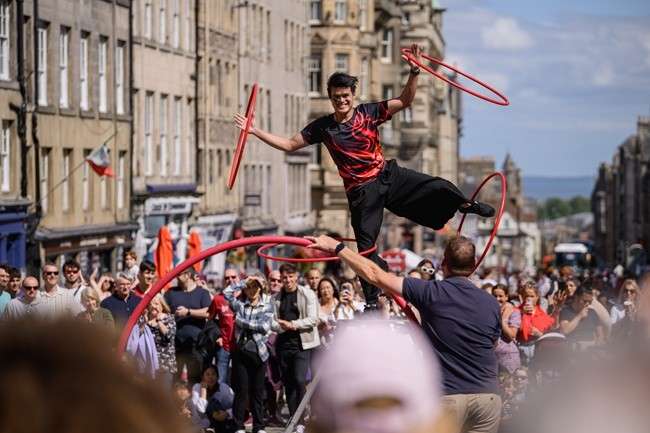
A new study will look at the economic and social impact of the Edinburgh Festival Fringe. Professor Murray Pittock, Pro-Vice-Principal at the University of Glasgow, has been commissioned to carry out the research. It will examine how the Edinburgh Festival Fringe supports jobs and businesses and contributes to Scotland’s wider cultural economy. While there have been previous studies of Edinburgh’s major festivals, this is the first time in many years the Fringe will be looked at on its own.
The Fringe is the largest arts festival in the world. It issued over 2.6 million tickets in 2025, attracts about 750,000 attendees and supports an estimated 3,000 jobs. In 2025, more than 3,800 shows took part, with artists travelling from Scotland, across the UK and overseas. The Edinburgh Fringe is also widely seen as a starting point for many performers. Over the years the Fringe has provided a launch pad for a huge range of performing artists, including John Byrne, Susan Calman, Sir Billy Connolly, Alan Cumming, Karen Dunbar, Franz Ferdinand, Idlewild and Snowpatrol. It has also been a performance platform for many stars including Rowan Atkinson, Dame Judi Dench, Stephen Fry, Suzy Eddie Izzard, Graham Norton, Alan Rickman, Emma Thompson and Victoria Wood.
Shaping how people connect with culture
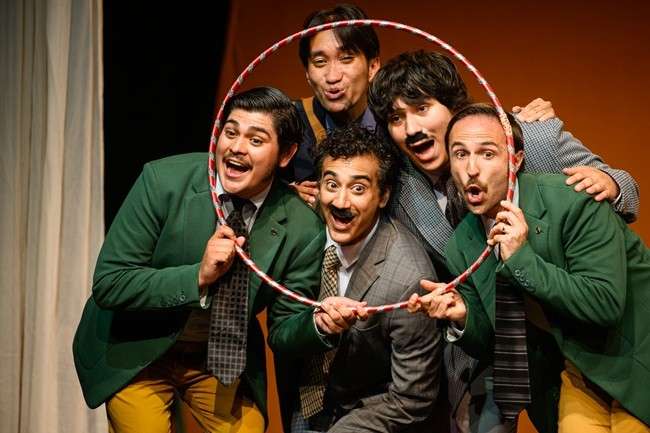
The study, supported by the Arts & Humanities Research Council, will look at how this kind of cultural impact connects to economic outcomes, including tourism, job creation and the longer-term value of careers that start at the festival. Professor Pittock previously led a major study on the economic impact of Robert Burns. That work continues to inform policy around the promotion of the poet, particularly in Dumfries and the south of Scotland. Professor Pittock said: “This study will be an important opportunity to articulate the extent of the Fringe’s value to Edinburgh and Scotland as a distinctive global offer and core brand, and it is great news to have the support of the Arts and Humanities Research Council in carrying out this work.”
Tony Lankester, Chief Executive of the Edinburgh Festival Fringe Society, who operate the performing arts festival, said: “The Fringe is a remarkable example of what can happen when artists are given the freedom to create and audiences the freedom to discover. Its impact reaches far beyond the performances themselves, supporting artistic careers and shaping how people connect with culture and new ideas. Work like this is vital in helping us better understand and articulate that value, ensuring the Fringe continues to thrive as an open and accessible space for creativity.”
This year’s Edinburgh Festival Fringe includes over 2,000 shows across the city and will run from 07 – 31 August 2026. For further details visit: www.edfringe.com
Main photo: Edinburgh Festival Fringe street scene. Photo: David Monteith-Hodge Photographise.
Do you enjoy our content?
Content on the Scottish Banner website remains free for users. Stories and events listed for the international Scottish community continue to be an important resource for many across the world. As advertising revenue remains a challenge, our readers can donate to help us produce unique Scottish content for global Scots. Every contribution counts and thank you for considering your support.
Support the Scottish Banner! To donate to assist with production of our publication and website visit: The Scottish Banner