
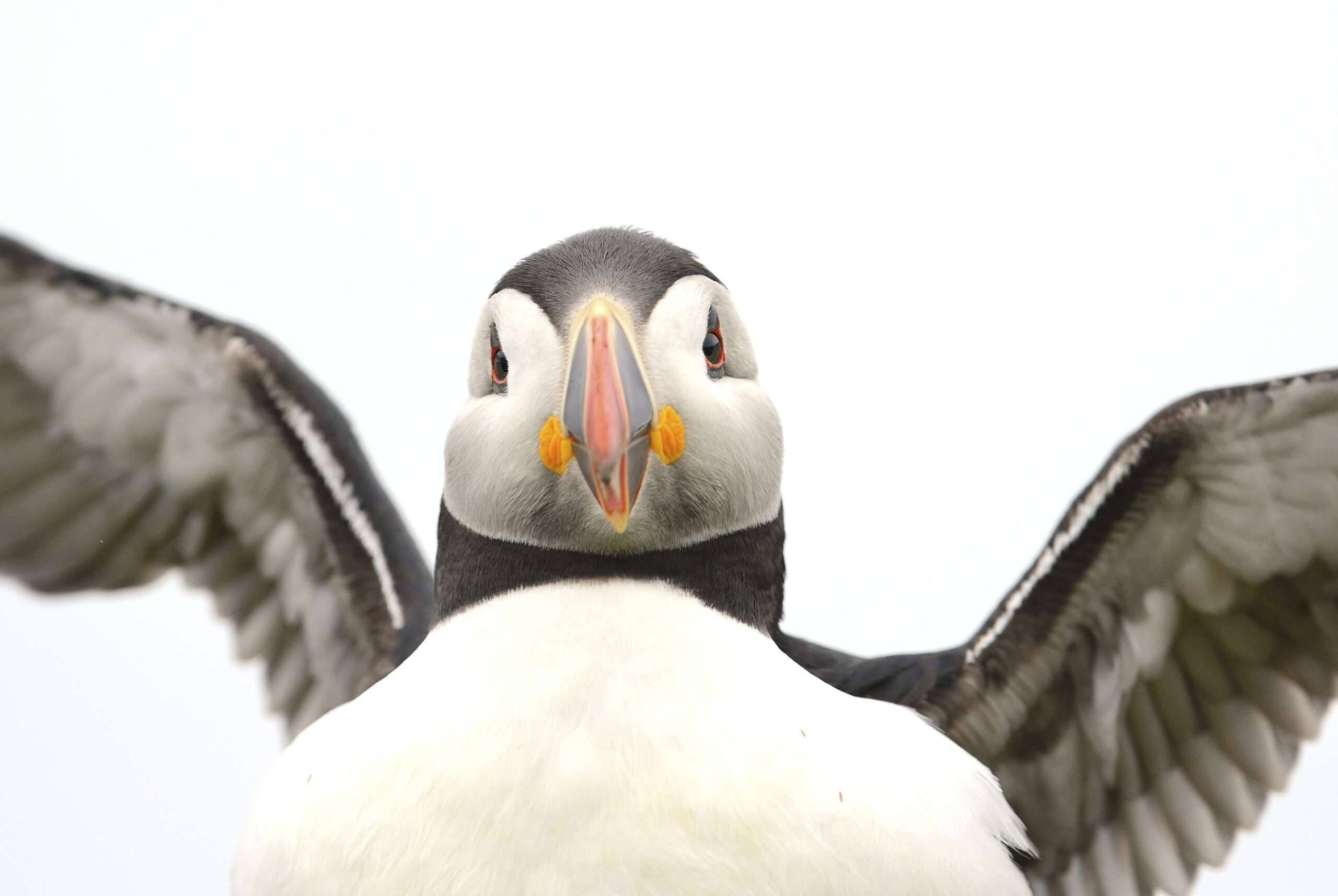
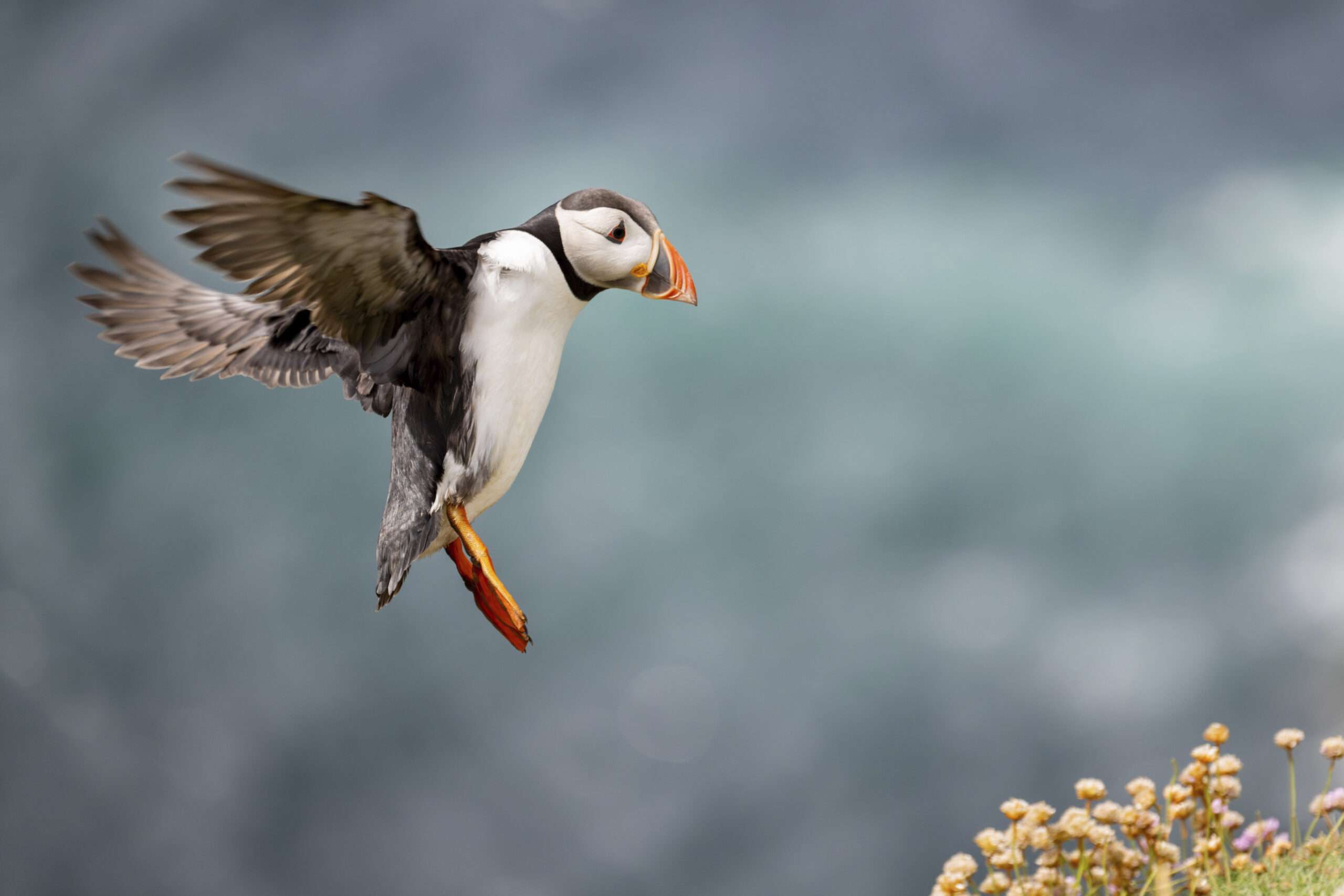
In the Firth of Forth, it is a time of new beginnings. As breeding season peaks for Bass Rock’s around 100,000 strong gannet population and neighbouring Craigleith’s 10,000 puffins, a new chapter for the islands and its feathered residents has begun.
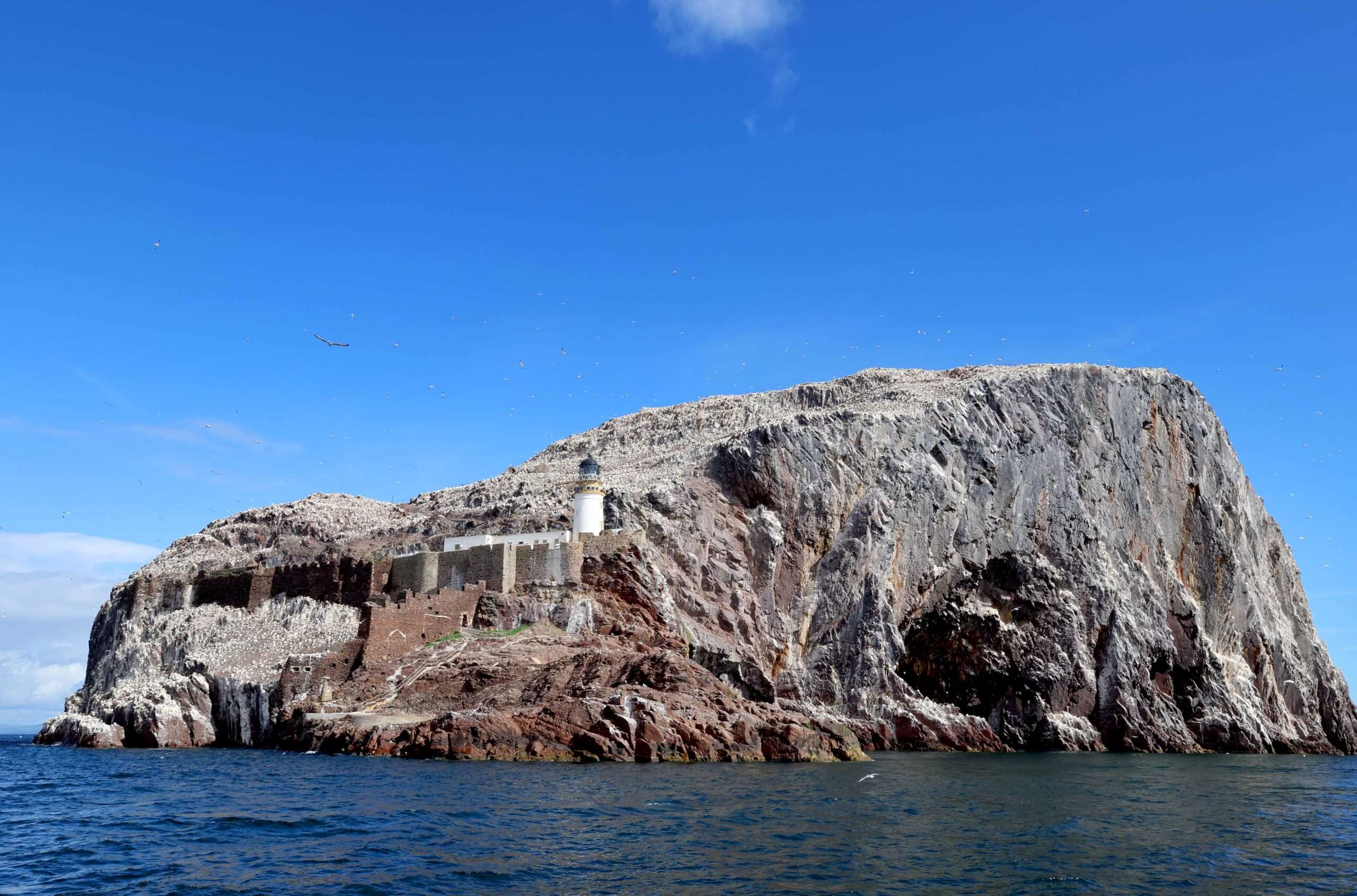
Thanks to £586,000 funding from the National Heritage Memorial Fund, Bass Rock and Craigleith islands have been acquired by RSPB Scotland from the Dalrymple family, including funds for the most immediate maintenance needs. This will bring the islands into charitable ownership for the first time in 320 years and ensure nature is at the heart of their futures for generations to come.
Advocate for Scotland’s seabirds
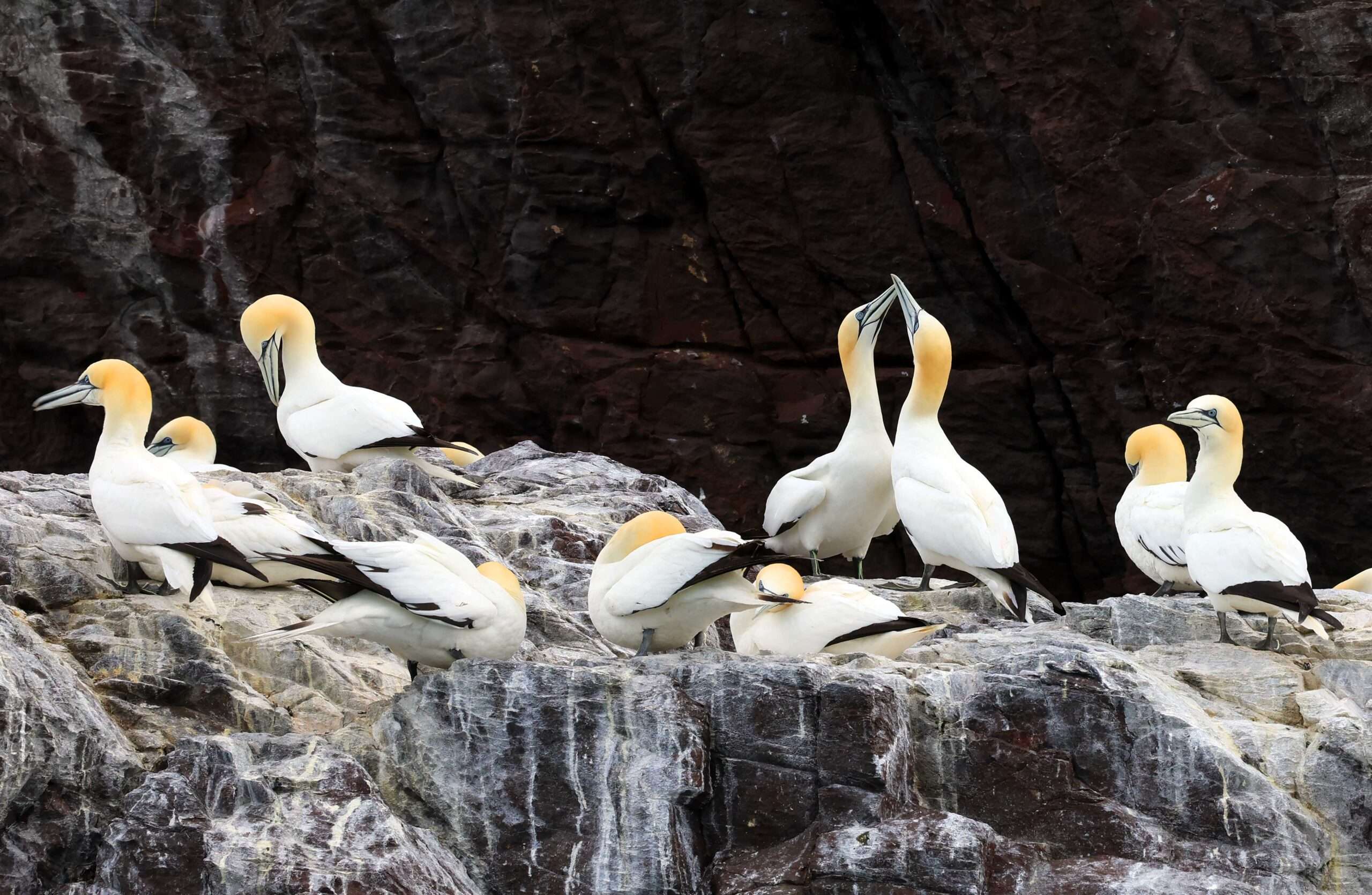
Bringing the islands into RSPB Scotland stewardship comes at a crucial time. More than 70% of Scotland’s seabirds are in decline and facing unprecedented threats from climate change, food scarcity, invasive species and the impact of human activity. On Bass Rock and Craigleith, the spread of invasive tree mallow and the spread of Avian Flu (HPAI) in 2022 made a significant impact on the gannet populations. In partnership with the Scottish Seabird Centre, RSPB Scotland has ambitious plans to save, safeguard and celebrate the natural heritage and history of the islands. The future plans are supported by £372,000 of development funding from The National Lottery Heritage Fund with the potential to unlock a further £589,000 of money raised by National Lottery players. Plans include an immersive new viewing theatre in the Scottish Seabird Centre, inclusive boat trips and community outreach.
RSPB Scotland and the Scottish Seabird Centre will deliver a crucial coordinated conservation plan across both islands, carrying out monitoring and research and working with volunteers to help species and habitats survive and thrive. The partnership will advocate for Scotland’s seabirds, building a greater understanding of their needs and challenges and aiming to increase support and investment for seabird conservation and Scotland’s marine environment.
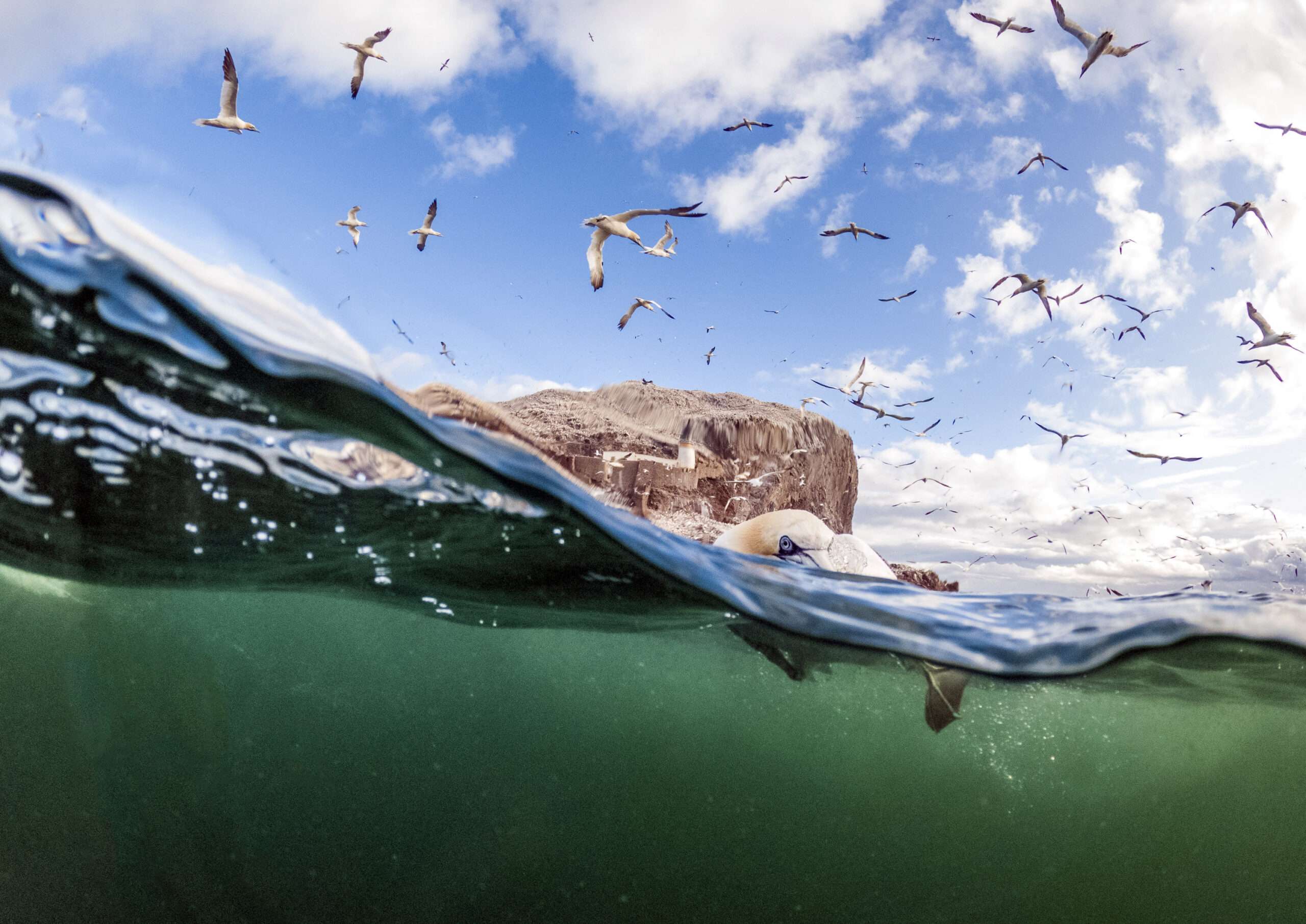
Strengthening public connection to Bass Rock, Craigleith and its species are integral to their future. A 360-degree viewing theatre will be built in the Scottish Seabird Centre, enabling people to watch the puffins, gannets and other marine species in real time without disturbing their habitats. This will be welcome news for birdwatchers, whose numbers have increased by 47% overall since 2018 and by 1,088% for 16 to 29 year olds, according to a report published by RSPB.
Future engagement work will include inclusive boat trips, school workshops and compiling community memories of the islands which are an imposing and iconic part of the Firth of Forth seascape, not just for their role as seabird strongholds but for their rich histories and their depictions in art and literature.
Anne McCall, Director, RSPB Scotland said: “We’re thrilled to be taking on stewardship of Bass Rock and Craigleith, expanding the RSPB nature reserve network around the Firth of Forth thanks to the National Heritage Memorial Fund and National Lottery Heritage Fund. With the pressures facing Scotland’s seabirds intensifying, we have a responsibility to act. This partnership gives us the opportunity to drive forward seabird recovery at this crucial time. Through management, research, community engagement and advocacy, we can secure a brighter future for species like Puffins and Gannets.”
Among the world’s most awe-inspiring natural wonders
Harry Huyton, CEO, Scottish Seabird Centre said: “Bass Rock and Craigleith are among the world’s most awe-inspiring natural wonders, and their integration into the RSPB’s nature reserve network is a historic day for Scottish nature. This ambitious partnership between the Scottish Seabird Centre and the RSPB builds on years of dedicated stewardship, where our volunteers, local communities, and the Dalrymple family have worked tirelessly to restore these islands—most notably quadrupling Craigleith’s puffin population despite national declines. Together with RSPB Scotland, we will ensure these vital sanctuaries are conserved forever, deepen public connection to these incredible places, and inspire collective action to protect Scotland’s iconic seabirds for generations to come.”
Sir Hew Dalrymple, former landowner, added: “The Dalrymple family have been fortunate to have been custodians of the Bass for over three hundred years. During my lifetime the Gannet population has quadrupled. However, it is clear the seabird colonies of the Forth now face unprecedented challenges, most notably from wind turbines, pollution, over-fishing and disease. I believe that RSPB Scotland is the organisation best equipped to take up this challenge on their behalf, so I am delighted to pass on to them stewardship of Craigleith and the Bass.”
Bass Rock was home to Saint Baldred, an early Christian hermit who settled there in around 600 AD, the remains of a chapel dedicated to him still exist. Legend has it that the island was granted to the Lauder family by King Malcolm III in the 11th century. The Lauders held the island for nearly six centuries, during which it became a site of royal visits, including those from King James IV and King James VI. The remains of the 15th century castle exist today which is a Scheduled Monument. In the 17th century Bass Rock was transformed into a prison, often referred to as Scotland’s Alcatraz. It housed political prisoners and was a significant site during turbulent times in Scottish history.
In 1706, the Dalrymple family acquired Bass Rock. Under their stewardship, the lighthouse was built in 1902 by David Alan Stevenson and has helped ships navigate the Firth of Forth ever since. The engineer’s cousin and renowned author, Robert Louis Stevenson, wrote of the Bass Rock in his 1893 novel, Catriona, “It was an unco place by night, unco by day; and there were unco sounds; of the calling of the solans (gannets), and the plash (splash) of the sea, and the rock echoes that hung continually in our ears.”
The islands have also been depicted by artists including JMW Turner in his painting ‘The Bass Rock’ c.1824.
Main photo: Adult Puffin. Photo: Ben Andrew RSPB.
Do you enjoy our content?
Content on the Scottish Banner website remains free for users. Stories and events listed for the international Scottish community continue to be an important resource for many across the world. As advertising revenue remains a challenge, our readers can donate to help us produce unique Scottish content for global Scots. Every contribution counts and thank you for considering your support.
Support the Scottish Banner! To donate to assist with production of our publication and website visit: The Scottish Banner