
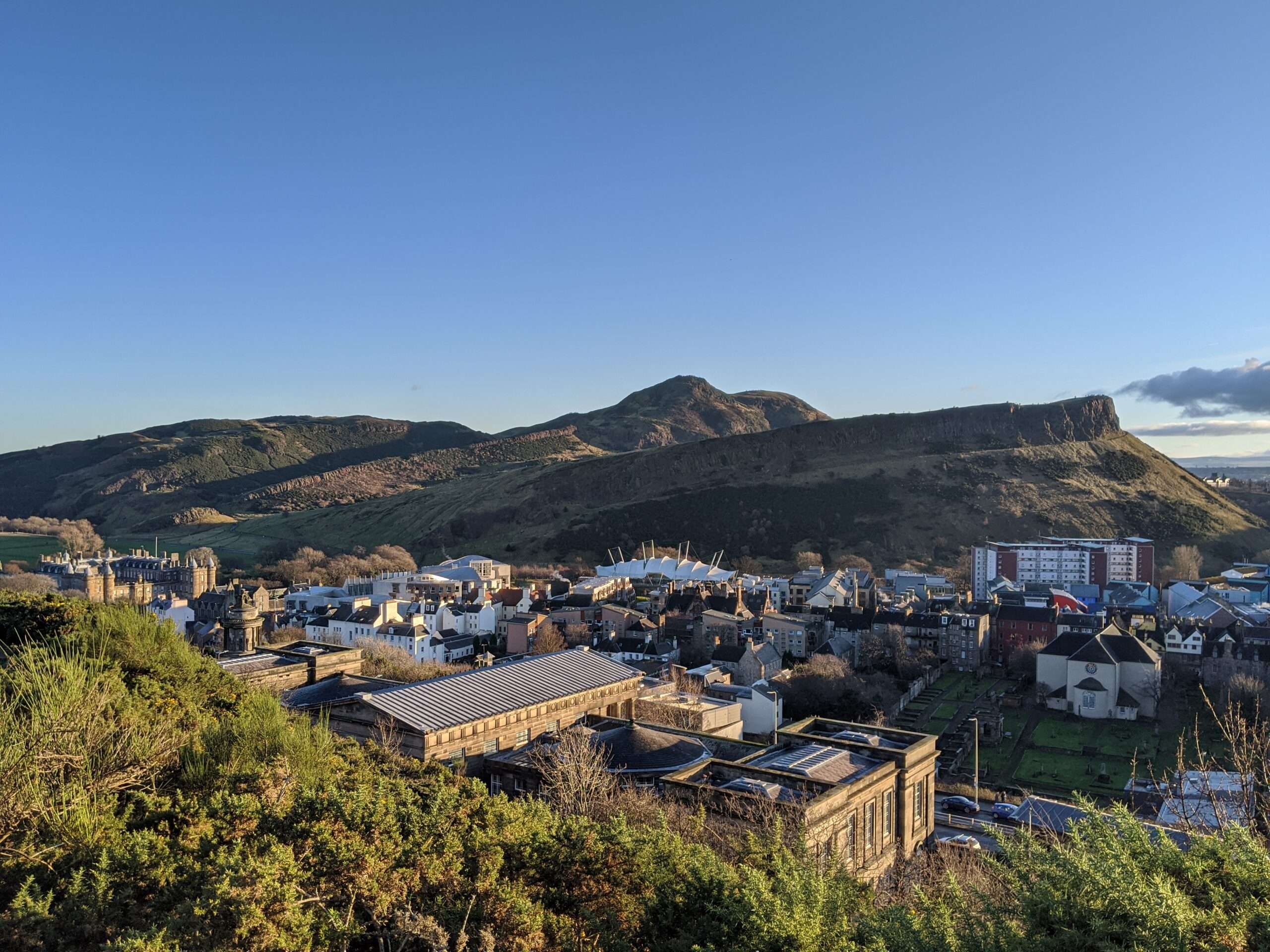
The tales from Holyrood Park have filled many books, from murder mysteries and trysts with the devil to dances with the fairy folk and waters that preserve eternal beauty. It never ceases to amaze me that such a place stands at the heart of the city I call home, open to all who seek it.
Even after thousands of walks within Holyrood Park there are still aspects of it that surprise me and paths I realise I have yet to explore. What follows are three of the old tales of the park of which no single, universally accepted versions exist. I have amalgamated the various tellings here along with a few variations of my own, for every story changes with the teller.
The dragonslayer
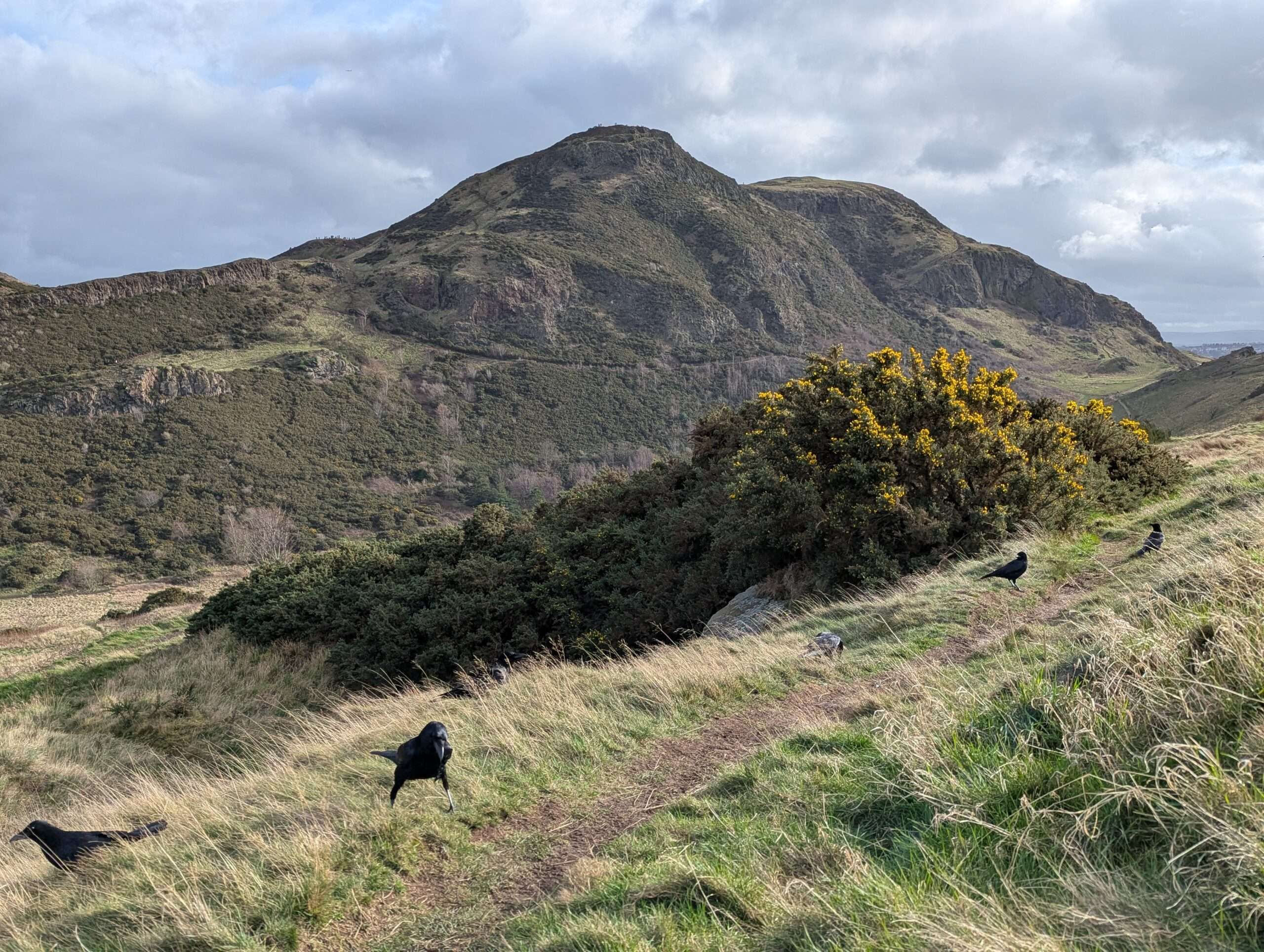
Fittingly for a hill which once breathed fire across the land, a very old tale tells of a dragon who dwelt atop Arthur’s Seat. Hundreds of feet long with a maw that could swallow whole herds of cattle at once, it was ravenous and a terror to any who dwelled too close to its eyrie. Nothing but ashes were left to the people who felt its wrath.
At the brink of starvation and ruin, a hero emerged among the people. He was no great warrior or cunning hunter, but a young and slight boy barely larger than a lamb. His name is not given, but I like to imagine that he was called Etin. Etin possessed the greatest strength of all – wits, and the courage to put them to the test.
Etin told the people his plan. The dragon had recently feasted so much that it could no longer fly and was curled round the summit of Arthur’s Seat sleeping off its meals. Etin instructed the villagers to quietly construct a great wooden ramp leading up to the summit. Beneath the ramp they planted huge, sharpened wooden spikes. Etin himself would lead some sheep up the hill as lures, wake the dragon, then run down the ramp with the serpent in pursuit.
So he did, leading three rather reluctant sheep steadily higher until he came face to face with the dragon. The smell and bleating of the sheep woke it, for even in its gluttonous state it could not resist another morsel. Just by breathing in the dragon pulled the first sheep into its jaws, while Etin and the others began racing down the ramp.
Endlessly greedy, the dragon pulled itself across the rocks with its claws and slithered down the ramp after Etin. Before long the second sheep fell behind and into its fangs, and then the third. Just when it seemed it would devour Etin too, he leapt off the side of the ramp and landed safely in a plume of heather. ‘NOW!’ he shouted, and the villagers chopped at the ramp’s supports.
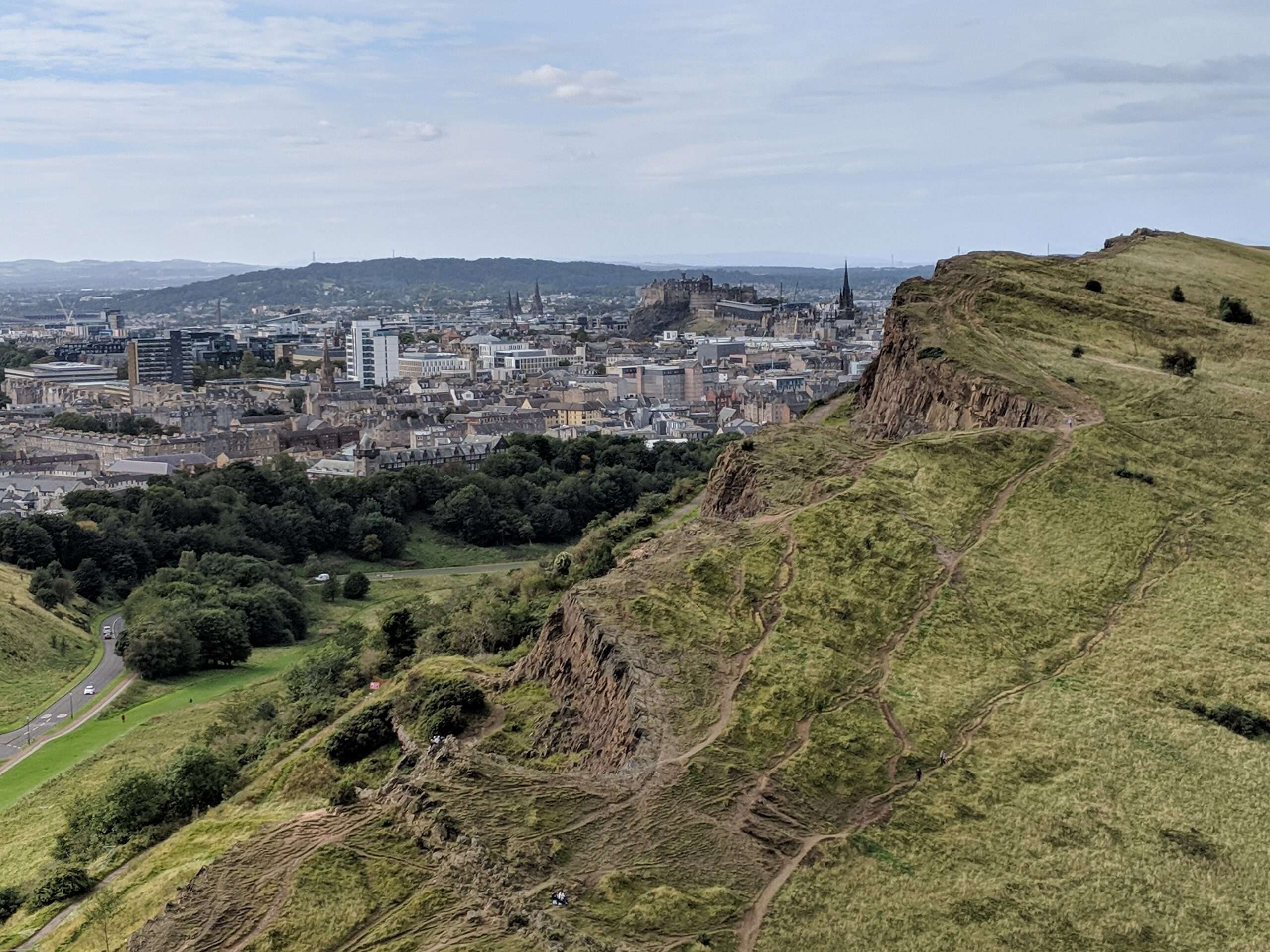
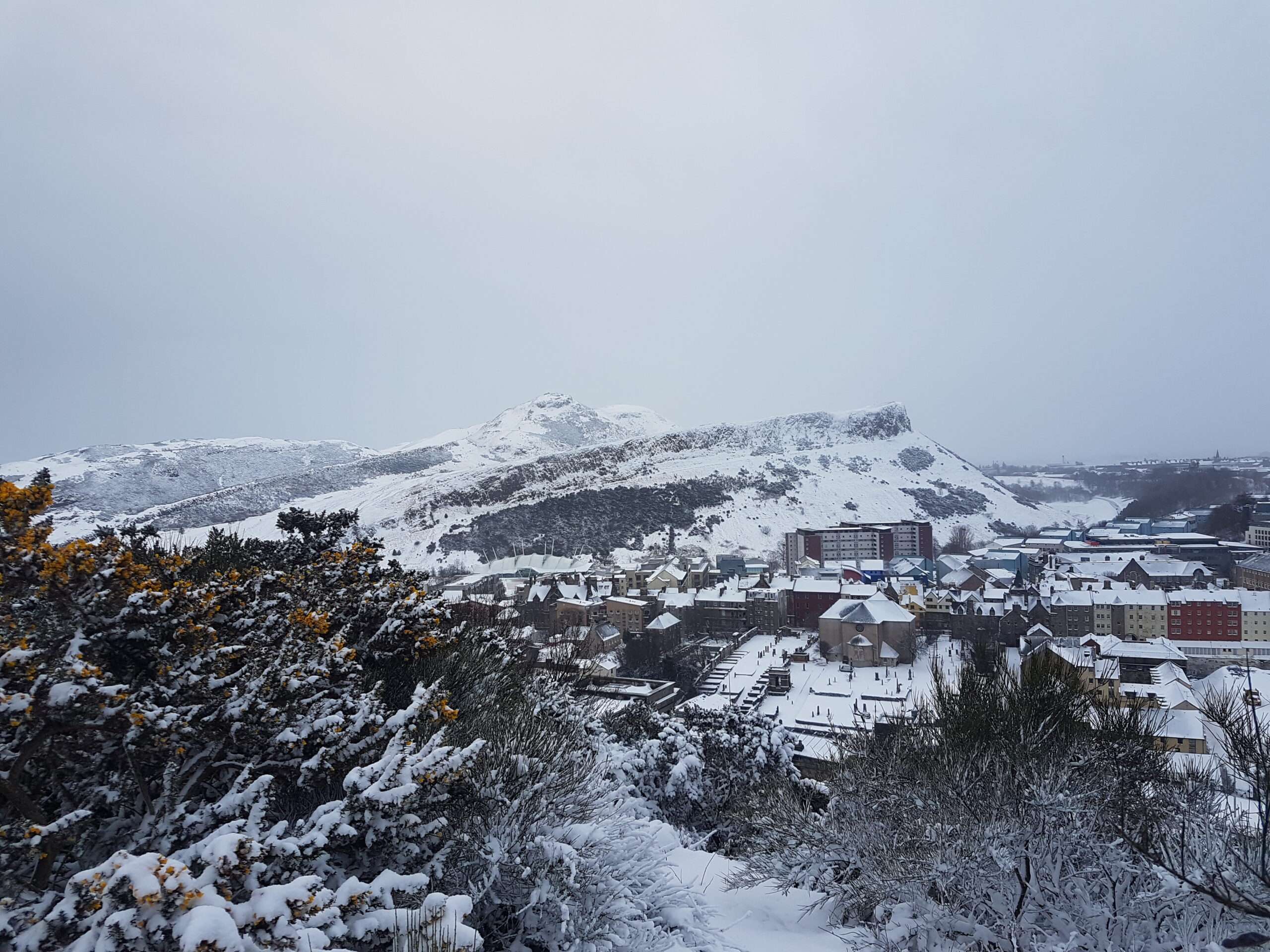
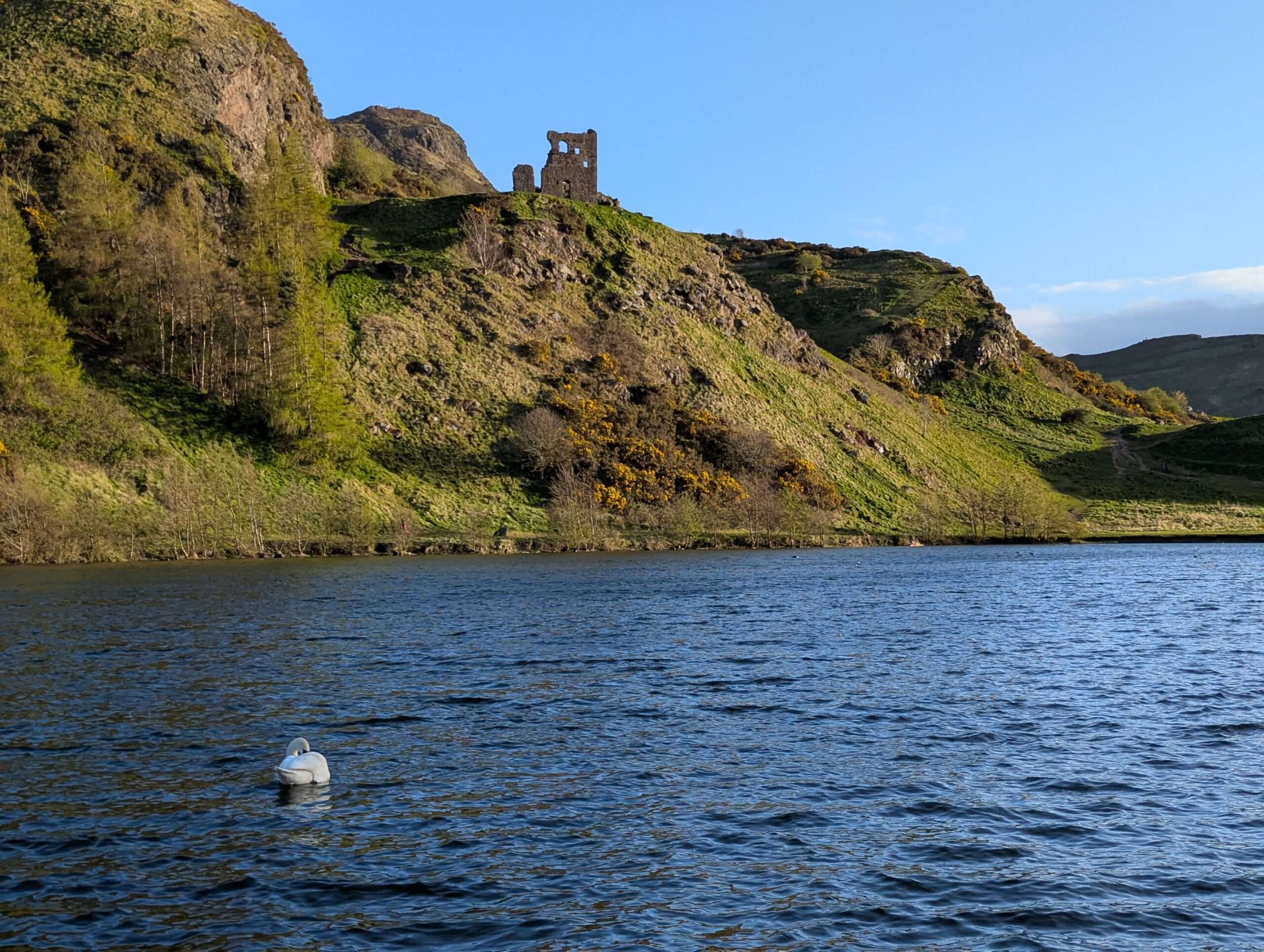
The dragon’s own weight did the rest. The ramp collapsed, the dragon fell onto the spikes, and breathed its last furnace-like breath. Its body was so vast that even while its tail was still wrapped around the summit, its head and ridged spine extended a mile to the west. Many years passed and the dragon’s bones became the foundation for what we now call the Royal Mile. The line of crags leading up Arthur’s Seat from near St Margaret’s Loch are the remnants of its tail. Thanks to Etin the people could finally live in peace. He grew to be a wise and noble man and was made the chieftain of his people. They built a great town atop the dragon’s bones and called it Etin’s Burgh.
King Arthur in the hollow hill
Places named for King Arthur and his deeds are many across southern Scotland, Wales, and England, yet their provenance will always be something of a mystery. Little about Arthur is known with any certainty – indeed, historians can’t even agree if he was real at all – but one Edinburgh connection is undeniable.
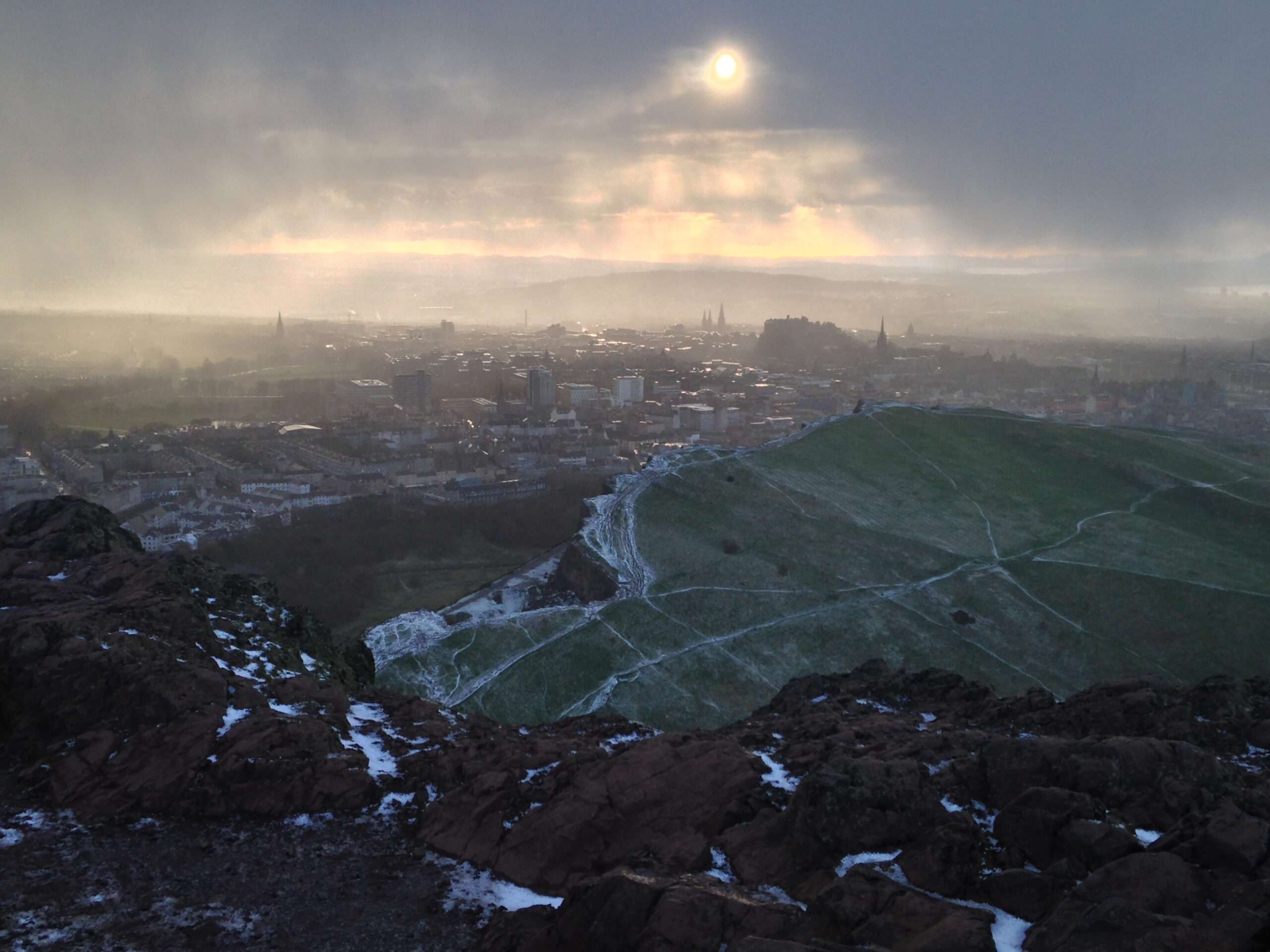
The highest point in Holyrood Park is Arthur’s Seat, the plug of the 340-million-year-old volcanic system which gave Edinburgh its seven hills. In folklore it is known as a ‘hollow hill’, with a hidden realm beneath it. Others include the Eildon Hills near Melrose, Schiehallion in Perthsire, and Ben Cruachan in Argyll. It is beneath Arthur’s Seat that Arthur and his heroes are said to sleep, awaiting the hour of our greatest need to rise again and save us. But why here?
In the 6th century AD, long before there was such thing as Scotland, the people here were the Gododdin. These Britons ruled from their hillfort of Dun Eidyn, where Edinburgh Castle now stands. Yet, the Germanic Angles of Northumbria were pressing northwards into Gododdin lands. Something had to be done.
King Mynyddawg Mwynfawr held a year-long feast in Dun Eidyn to prepare for the showdown. Meat and ale were consumed in huge quantities. At last, the Gododdin mounted their steeds and rode out to battle. It was a brutal clash. The epic poem recounting it tells of “…the crashing of shields loud as thunder / Ripped and pierced with spear-points”.
Due in no small part to the effects of the ale, the Gododdin were defeated. Just three warriors returned to Dun Eidyn, among them the bard Aneirin who wrote the poem, Y Gododdin. In the poem he tells of a fallen hero, Gwarrdur, “who though he was no Arthur, made his strength a refuge, the front line’s bulwark.”
This is the earliest known reference to Arthur in any work of literature. It survives in the 13th century Book of Aneirin but was originally written in the last decade of the 6th century. Its author was a native of the place we now call Edinburgh. Am I saying that the mythic Arthur was from here, or even that he came here? No. Yet, the people of Dun Eidyn clearly revered him and compared their great warriors to him, since they were part of the Brittonic culture which Arthur fought to defend from the Saxons. That cultural connection is how Arthur’s Seat got its name.
David I and the white hart
Across the Celtic world, the white hart – a stag with white fur – was a symbol of the pre-Christian Otherworld. It brought favour to those it appeared to, a good omen that was later appropriated by Christians as a sign from God. In 1128 AD King David I was celebrating the feast of Holy Cross Day, 14 September, in Edinburgh Castle. Ever restless, he was keen for a royal hunt in the vast parkland one mile to the east. Being a feast day, his nobles and clergy bristled at the idea but he could not be dissuaded.
David mounted his favourite white stallion and led the grand hunting party down the Royal Mile. He was such a skilled rider that by the time they reached the bottom, he was well ahead of the rest and already stalking the forest.
Almost immediately he saw the hart. Wishing to capture it to demonstrate his divinely-blessed nobility, he charged straight for it. He did not expect for it to charge back at him! The king was thrown from his mount with no one near to help him. The hart, angered by his arrogance, tried to gore him with its antlers. David seized its antlers in a desperate grapple, but his strength was not equal to the hart’s.
Just as the hart was about to impale him, a glowing cross appeared between his hands and frightened it away. Shaken but alive, he withdrew to the castle to recover. That night he was visited in a dream by St Andrew, patron saint of Scotland, who scolded him and instructed him to build an abbey near the site of his encounter as penance.
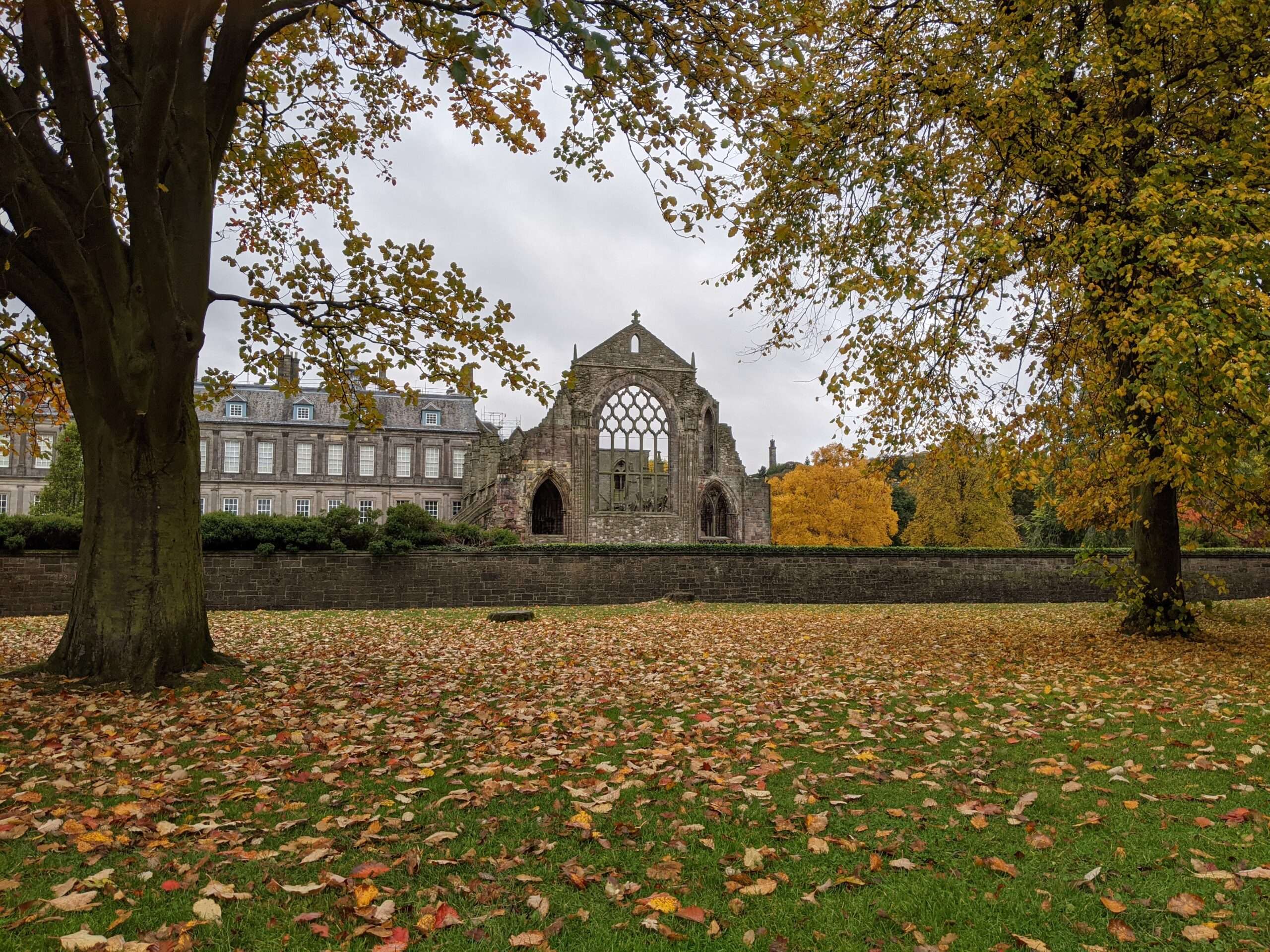
This he did, establishing Holyrood Abbey. It is named for the Holy Rude, the fragment of the True Cross which David’s mother, St Margaret, had brought to Scotland. This name was also given to Holyrood Park where the hart had bested him.
Text and images: David C. Weinczok.
Do you enjoy our content?
Content on the Scottish Banner website remains free for users. Stories and events listed for the international Scottish community continue to be an important resource for many across the world. As advertising revenue remains a challenge, our readers can donate to help us produce unique Scottish content for global Scots. Every contribution counts and thank you for considering your support.
Support the Scottish Banner! To donate to assist with production of our publication and website visit: The Scottish Banner