
May 2026 (Vol. 49, Number 11)
Strange Spectacle on Loch Ness—What Was It?
-
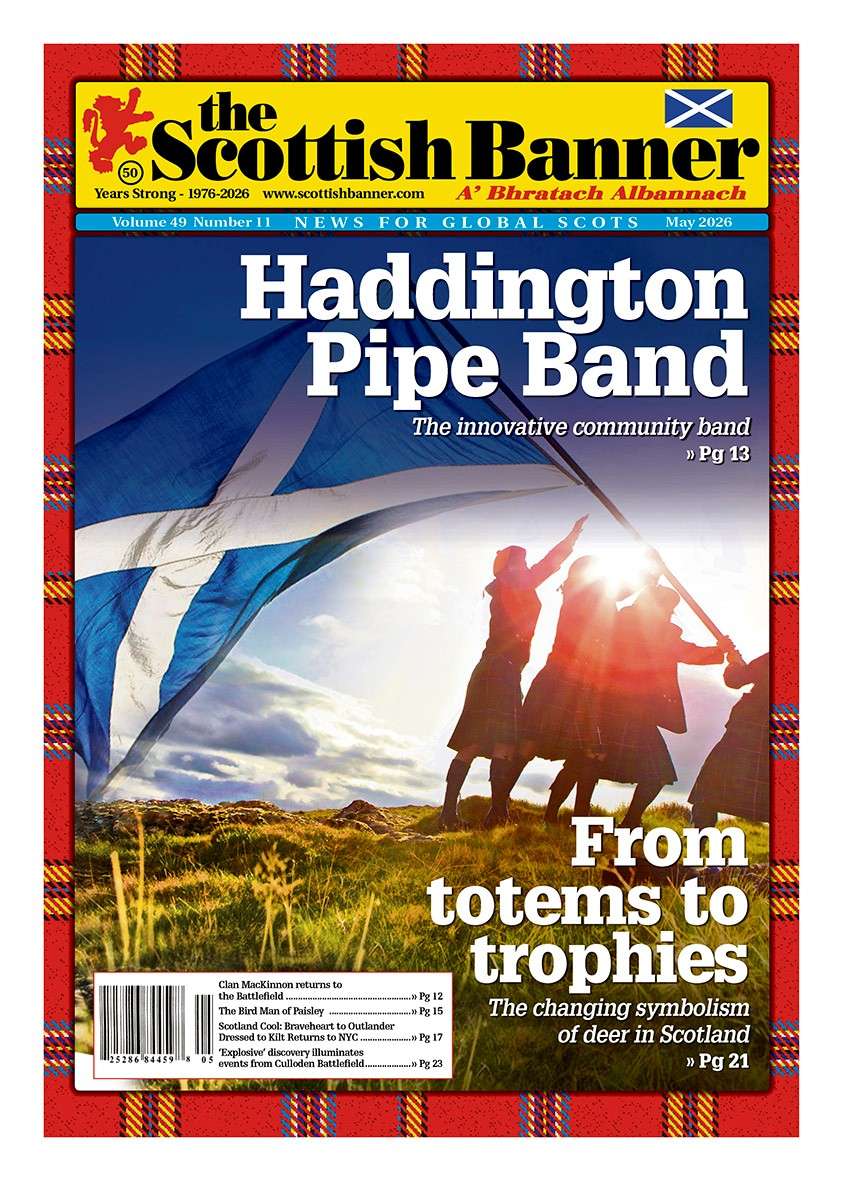
The Haddington Pipe Band flying the flag at Traprain Law, near Haddington. Photo: Nick Callaghan.
Ninety-three years ago, this month, the first newspaper article on a strange and massive, whale-like creature churning the water in the dark waters of Loch Ness was printed. It was May 1933 and The Inverness Courier featured an article of an unexplained creature in the cold and deep waters located just outside of Inverness. The author of the feature was Alex Campbell, a water bailiff and part-time journalist, and was titled Strange Spectacle on Loch Ness—What Was It?
This article would go on to gain national and international attention and change the course of the region, which is still being felt today. The article detailed how Aldie Mackay and her husband reported seeing an enormous animal rolling and plunging in the loch on April 15, 1933. Whilst this was not the first mention of a strange sighting on the loch, it was the first printed recollection and led to the story gaining far reaching appeal and curiosity.
One of Scotland’s most enduring mysteries
The legend of Loch Ness is one of Scotland’s most enduring mysteries — a blend of ancient folklore, modern myth, and scientific curiosity that continues to ripple across the world. At its heart lies Nessie, the elusive creature said to inhabit the deep, dark waters of Loch Ness in the Scottish Highlands. Loch Ness itself is a vast freshwater lake stretching about 23 miles (37 kilometres) and plunging to depths of over 750 feet. Its peat‑ stained waters are famously opaque, creating the perfect stage for tales of hidden beasts.
The earliest known account of a monster near the loch dates back to the 6th century, when Saint Columba reportedly confronted a “water beast” in the River Ness. According to Adomnán’s Life of St. Columba, the saint made the sign of the cross and commanded the creature to retreat — which it did, leaving witnesses awestruck. This story, though set in the river rather than the loch, became the first written record of what would later be called the Loch Ness Monster.
Nessie’s place in popular culture
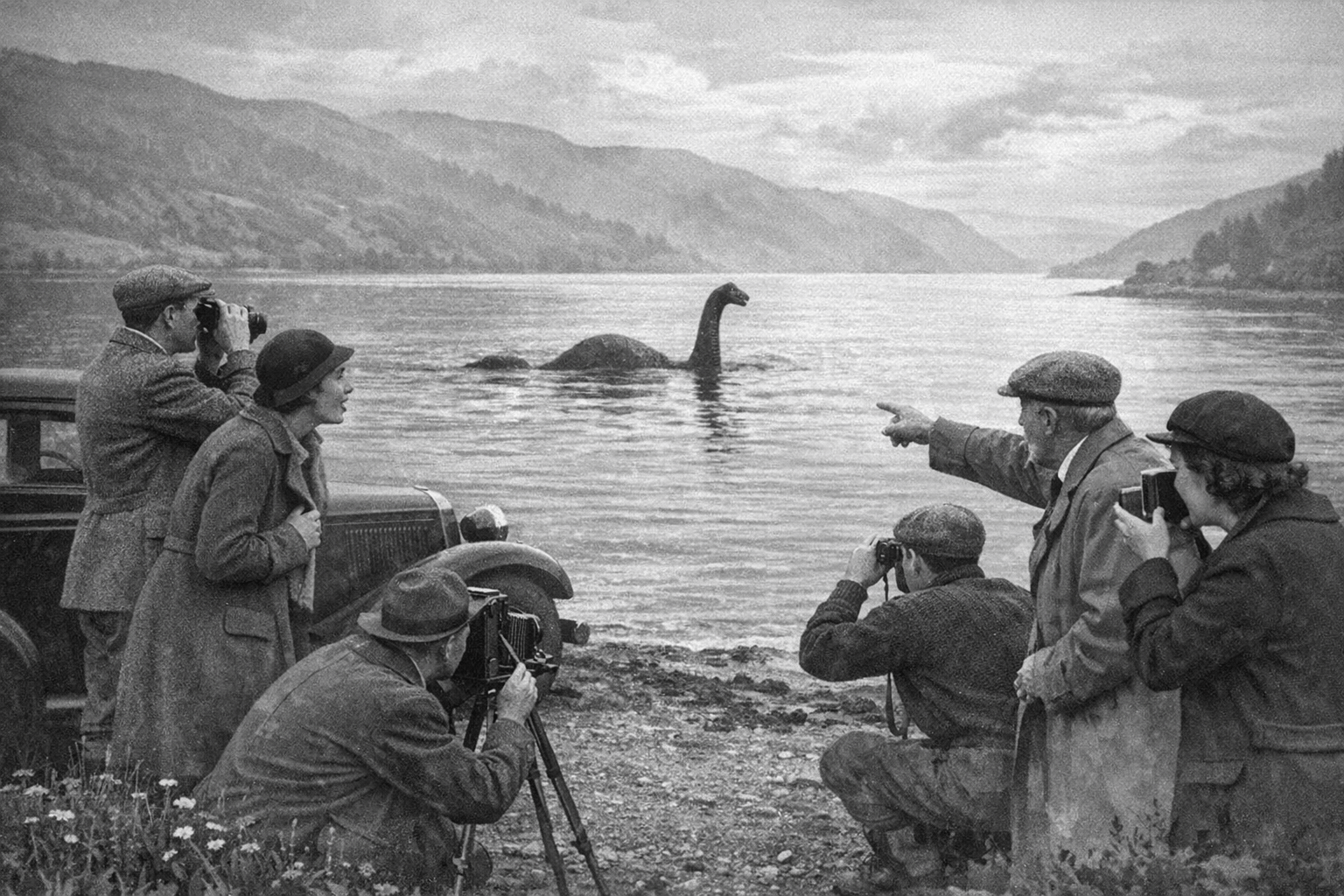
For centuries, Scottish folklore spoke of kelpies — shape‑ shifting water horses said to lure travellers into the depths. Many historians believe these tales helped shape the Nessie legend. But the modern phenomenon began in 1933, when a new road along Loch Ness offered unobstructed views of the water. When Mrs Mackay, who was the manageress of the Drumnadrochit Hotel, reported seeing the massive creature it sparked a media frenzy.
There have been over 1,000 reported sightings since and so far just one this year, which took place in March. In 1934, the world was captivated by the so‑ called “Surgeon’s Photograph”, allegedly showing Nessie’s long neck rising from the water. Decades later, it was revealed to be a hoax — a toy submarine with a sculpted head. Yet the image cemented Nessie’s place in popular culture.
People who knew very little about Scotland had heard of this monster lurking deep in the waters. Over the following decades, sonar scans, underwater photography, and scientific expeditions sought proof of the creature. None found definitive evidence, though some readings hinted at large, moving shapes beneath the surface.
In this issue
One creature more accessible to the visitor to Scotland is without doubt the Scottish deer. Not to be just found in the Highland landscape but deer have been used throughout history in art, carving, architecture, stories and folkloric symbolism. This month we look at some of the symbolism of deer to Scotland, both in the natural and supernatural forms.
Pipe bands are located right across the world. Being part of a band is not just a musical ambition for many, but it also brings a unique life experience. Bands travel to many places to perform and take part in some incredible events. This month we feature the Haddington Pipe Band who are a community focused band, and we would love to hear from other bands on their story.
Alexander Wilson (1766–1813) was born in Paisley and was a poet, weaver, artist and pioneering ornithologist, celebrated as the Father of American Ornithology. His nine-volume American Ornithology, the first bird book with coloured plates to be published in America, transformed bird study in North America. He sadly died in poverty at just 47 but is remembered for introducing a new way to present nature writing and illustration.
The legend of Nessie
Despite scepticism from scientists, who attribute sightings to misidentified animals, floating logs, or optical illusions — the legend thrives. Nessie has become a symbol of mystery and wonder, drawing millions of visitors and contributing tens of millions of pounds to Highland tourism each year.
Modern studies, including DNA sampling of the loch’s waters, have found no trace of unknown species, but the myth endures. I visited the loch in 2025, and you bet I was watching the water…just in case!
Ultimately, the legend of Loch Ness is less about proving a monster’s existence than about celebrating imagination itself. In the Scottish Highlands, where history and myth intertwine in story, Nessie remains a living reminder that some mysteries are meant to be cherished — not solved.
Do you have you any comments from the content in this month’s edition? Share your story with us by email, post, social media or at: www.scottishbanner.com/contact-us
#ScottishBanner, #TheBanner #NewsForGlobalScots
The Scottish Banner is more reliant than ever on our readers helping us to provide you with our unique content by buying a copy of our publication, regardless if by print or digital subscription or at a retail outlet.
We appreciate your support and hope you enjoy this edition.
Support the Scottish Banner! To donate to assist with production of our publication and website visit: The Scottish Banner