
When we think of revolutions, we think of mass social movements that reshape the political landscape of a state. Some revolutions, however, transformed the literal landscapes they took place within. The Industrial Revolution likely comes first to mind, or perhaps the age of enclosure which preceded it. Yet there is one revolution which arguably laid the foundations for all the rest that followed: the Neolithic Revolution.
Modern humans inhabited the British Isles on and off for the past 500,000 years, coming and going with the retreat and advance of the great glaciers that scoured all traces of these ancient settlers from the land. The first people to arrive in post-glacial Scotland walked here. Until approximately 6,000BC the British Isles were not isles at all, but linked by land to the rest of the European continent. Sea levels rose gradually, turning that land bridge into a boggy morass. The collapse of a colossal ice shelf in Norway is credited for its final inundation, creating a flood which was truly biblical in scale and suddenness. In its wake, any people who wanted to settle in, trade with, or invade Britain and Ireland had to do so by boat.
The basic patterns of life changed relatively little for the next several thousand years. Small kin-based communities survived by hunting and gathering. Some established semi-permanent camps, likely for safeguarding resources and for allowing children and the elderly among them some respite from the wilds. One such camp was discovered near Moffat in 2014, dating to between 9,000 and 8,000 BC. Another from a similar period was found at Cramond on the outskirts of Edinburgh, and yet another in the Isle of Rum.
Permanent settlements
By around 5,000 to 4,500BC, the way of life for over 100 prior generations began to fundamentally change. Farming practices from the Middle East made their way to Scotland, not – as was previously believed – due to some sweeping invasion or replacement of the locals, but very gradually and piecemeal. In some parts of Scotland agriculture was not significantly adopted until nearer 2,000BC, and well into the Middle Ages many Highland communities relied more on pastoralism than on agriculture.
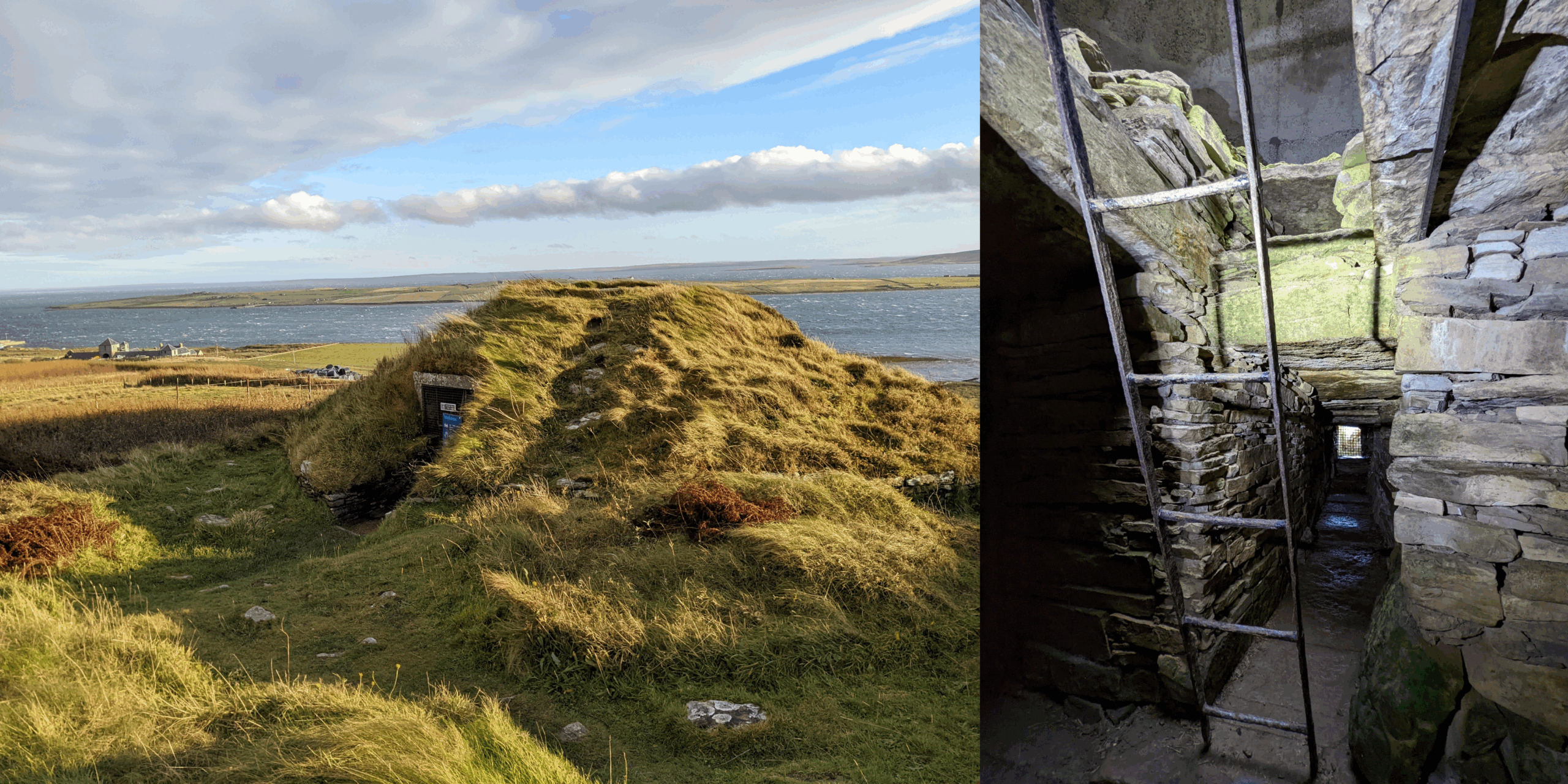
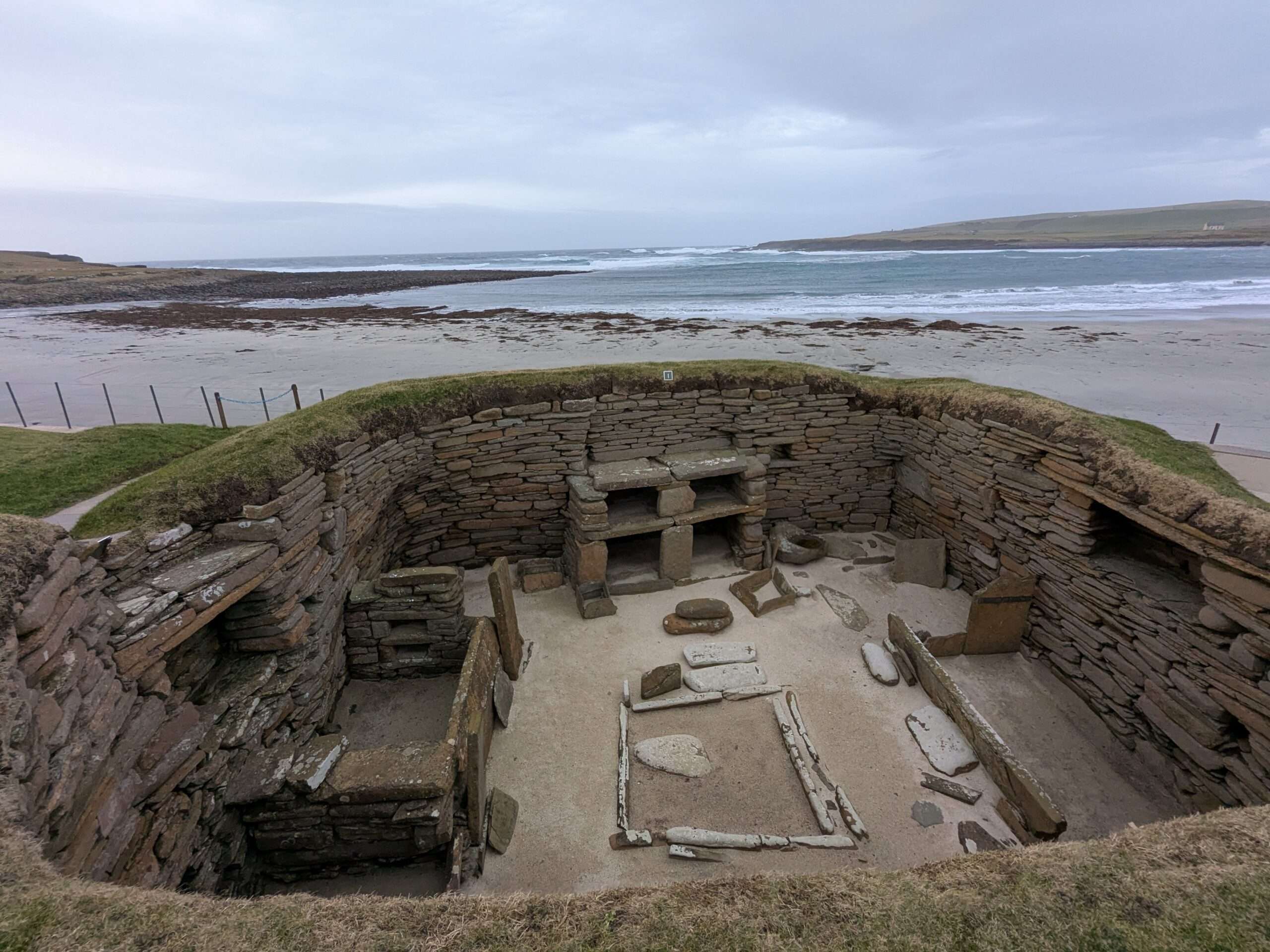
Permanent settlements slowly popped up in low-lying, fertile areas such as the Lothians, Moray, and Ayrshire. Some emerged in places you might not expect – one of the oldest farming settlements yet discovered was the Knap of Howar in the small island of Papa Westray, Orkney, which was first established around 3,800BC. Most domestic buildings were small rectangular structures, often built partially of stone where stone was readily available. The majority of buildings were likely made mainly from timber, which does not survive the passing of ages. This is why stone houses like those at Skara Brae are so synonymous with the Neolithic, not because they were necessarily typical but because they are some of the very few which have endured.
Far more houses of the dead than the living survive from the Neolithic. Scotland has thousands of chambered cairns, interment places for a community’s dead, with remarkable clusters located in places like Kilmartin Glen, the Northern and Western Isles, and in the hinterlands of the Cairngorms. These extraordinary tombs were expertly crafted, featuring massive quantities of worked masonry, internal compartments, and – as in the famous case of Maeshowe – an alignment of their entrance passages to the light of the setting sun on the winter solstice.
Iconic symbols of ancient Scotland
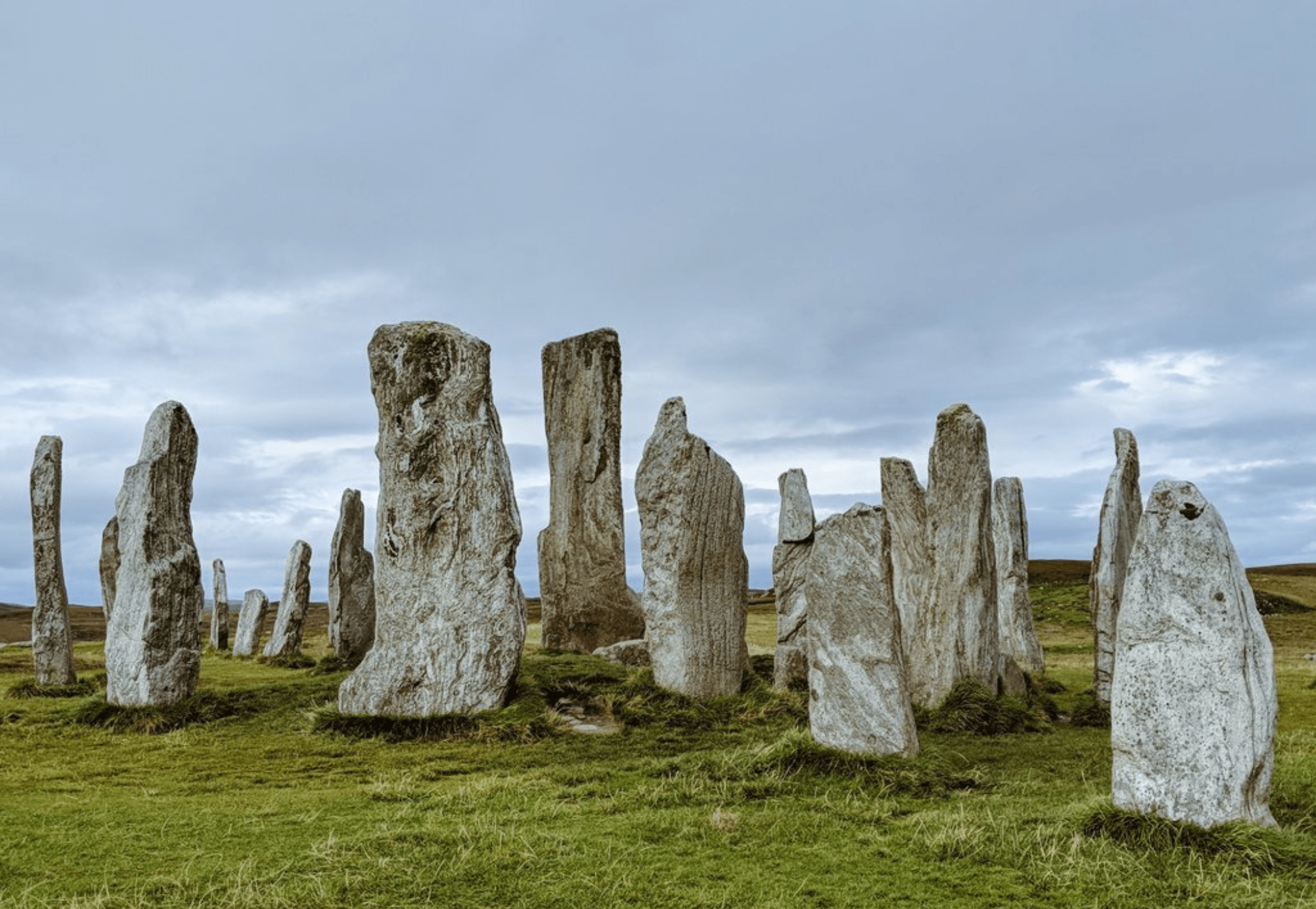
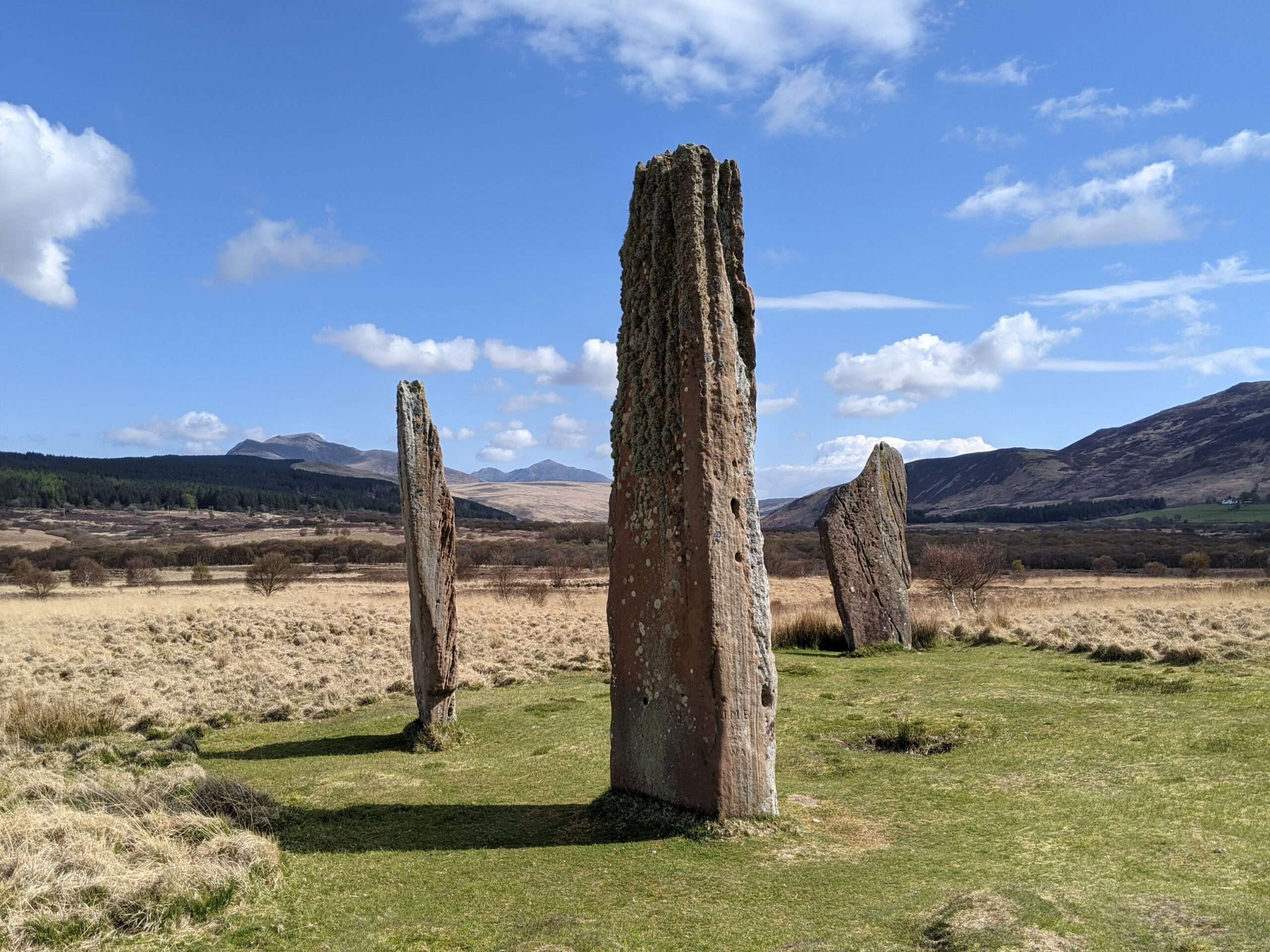
Neolithic peoples raised standing stones, among the most iconic symbols of ancient Scotland. Sites like Machrie Moor in Arran include multiple stone circles and dozens of standing stones set within a landscape where hills, farmland, and waterways intersect. Such places were not developed all at once, but over the course of centuries. We will likely never understand exactly why they were raised, but the communal effort of doing so likely functioned to bring together disparate groups in a shared effort to strengthen bonds and revel in rituals.
Recent investigations have demonstrated that it was the stone circles of northern Scotland which inspired the raising of more southerly counterparts like Stonehenge, and not the other way around. Indeed, it appears that Orkney, particularly the area around the Ness of Brodgar which includes the Ring of Brodgar and the Stones of Stenness, was the closest thing to a cultural capital in the British Isles at the time.
Such specialised and communal endeavours were made possible by agricultural surplus. The earliest crops grown in Scotland were ancient strains of barley and wheat. Cattle, sheep, and goats were farmed alongside them, and diets were supplemented by harvests of wild nuts and tubers, herbs, shellfish, and game. Neolithic middens – organic rubbish piles – are invaluable sources of information for this period. Imagine what future archaeologists might conclude from the contents of our household rubbish bins!
Between 3,000 to 2,000BC significant changes in material culture appear in the record. New styles of pottery such as Beaker pots appear in grave goods, demonstrating an influx of people into Britain from the rest of Europe and occasionally beyond. Several Neolithic graves such as that of the ‘Culduthel archer’ in Inverness also contain increasingly sophisticated archery equipment. The vast majority of day-to-day items, however, are lost to time due to being made of organic materials, leaving us with tiny fragments to form our picture with.
All of these activities changed the very face of the land. To prepare arable ground for crops, Neolithic peoples undertook considerable deforestation. The earliest trees in Scotland were birch, elm, hazel, alder, and oak, and evidence from pollen samples taken from Scotland’s bogs show many were hewn and burnt away in the Neolithic. This, in turn, encouraged the development of the very peat bogs which attest to their existence, as deforestation can result in the spread of acidic boggy ground. In some places, bogs spread so thickly that standing stones were consumed by them. The Callanish Stones in Lewis, the tallest being 4.8 metres high, were completely submerged in peat bog for thousands of years until their rediscovery in 1857.
A successful revolution
Some native species were hunted to extinction or near-extinction, likely in part to protect the herds belonging to permanent settlements from them. These include massive elk, brown bears, and lynx. Others were brought in, such as Soay sheep and pigs. The basic pattern of growing crops in lower, more fertile soils and having animals grazing on more upland, marginal ground was established. You will still see this arrangement in many parts of Scotland today.
The Neolithic Revolution profoundly changed humanity’s relationship with the land. Permanent settlements and monuments became fixed points in the cultural, social, and economic imagination. The ‘wilds’ were tamed, to a far greater extent than previously believed, by the clearance of trees, the sewing of crops, and the grazing of animals. Social hierarchies, more clearly defined than ever before, began to emerge. Stone buildings provided far greater protection from the elements, and a growing population nurtured by agriculture fanned out into every previously unreached corner of the country.
To someone alive in 5,500BC, the changes evident by 3,000BC would have rendered the world unrecognisable. The Neolithic Revolution set in motion basic patterns of life which are still with us today, and which will likely remain with us indefinitely unless some science fiction-worthy leap forward or apocalyptic lurch back occurs. Some revolutions transform society for a few years, while others create paradigm shifts that last for generations. More than 6,000 years later, the changes of the Neolithic still shape us. Now that’s a successful revolution.
Text by: David C. Weinczok
Main photo: One of several sets of standing stones at Machrie Moor, Arran. © David C Weinczok.
Do you enjoy our content?
Content on the Scottish Banner website remains free for users. Stories and events listed for the international Scottish community continue to be an important resource for many across the world. As advertising revenue remains a challenge, our readers can donate to help us produce unique Scottish content for global Scots. Every contribution counts and thank you for considering your support.
Support the Scottish Banner! To donate to assist with production of our publication and website visit: The Scottish Banner