
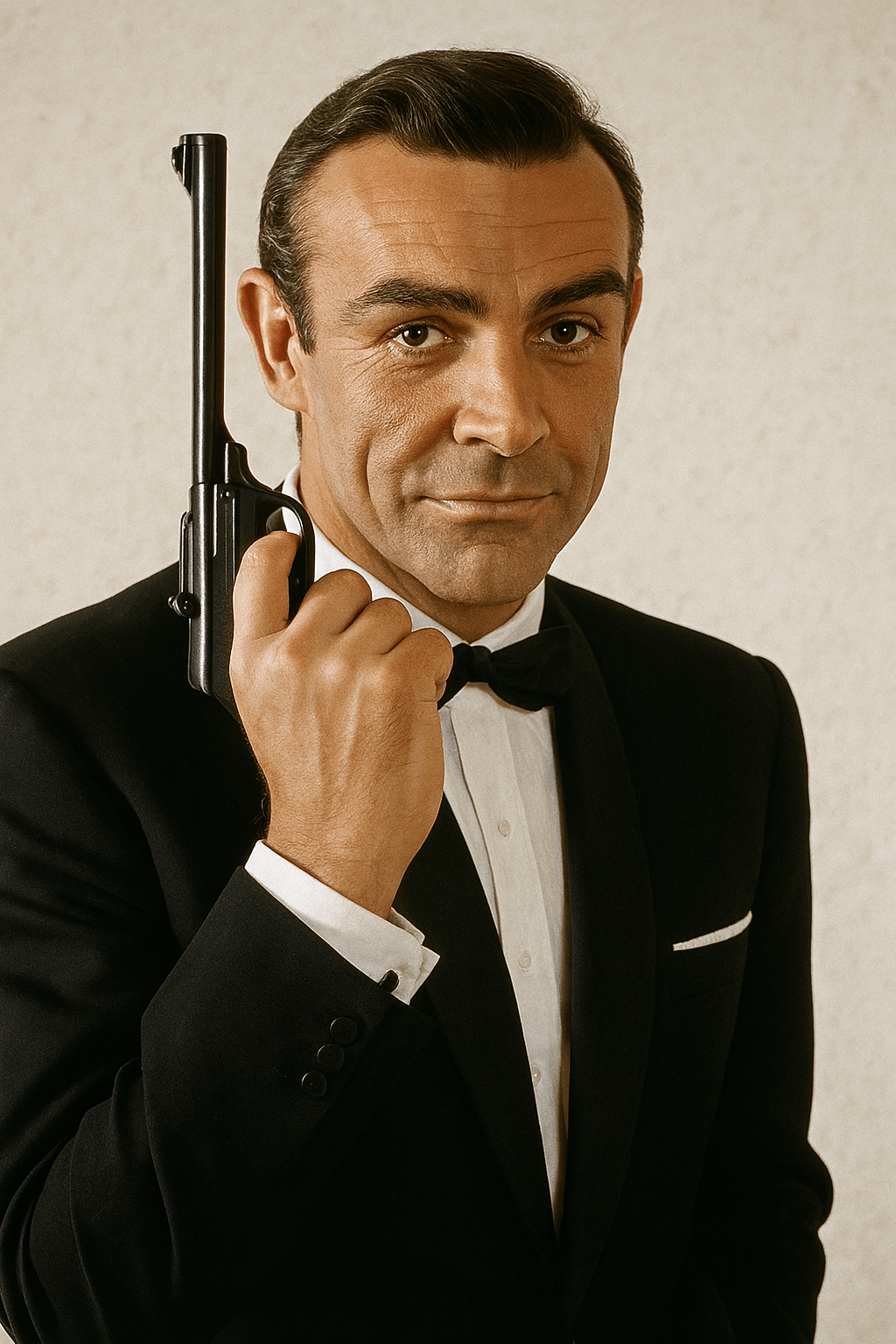
Scotland has contributed a great deal to the James Bond phenomenon, both the books and, especially, the films. Bond’s creator, Ian Fleming, was English but he had a notable Scottish family background. When the long-running film series began, former Edinburgh milkman and footballer turned actor Sean Connery made the role of Bond his own to the extent that in the later books, Fleming gave Bond a Scottish background not unlike his own.
Actors like Robbie Coltrane, Robert Carlisle and Alan Cumming have appeared in the films, while Lulu, Sheena Easton and Shirley Manson-fronted Garbage have all provided theme songs (The Man with the Golden Gun, For Your Eyes Only and The World is Not Enough, in case you are wondering). And of course, Scottish locations have featured in several of the films, most notably From Russia with Love, The World is not Enough and Skyfall.
Geoffrey Boothroyd
But right near the beginning of the Bond phenomenon, a Glasgow resident helped to shape Bond’s profile and even inspired one of the most popular recurring characters in the film series. Geoffrey Boothroyd was not actually Scottish, though. He was born in Blackpool in 1925, but by 1956 was living in Strathbungo, near Queen’s Park, in the quietness of 17 Regent Park Square, as douce and prosperous then as it is now. He worked for the now vanished British chemicals giant ICI in their armaments division. In his private life he was also a firearms expert and enthusiast.
Boothroyd enjoyed the early Bond books but was not happy that Fleming had armed 007 with a .25 Beretta. Boothroyd wrote to Fleming and advised him (trigger warning – 1950s attitudes coming up!) that the Beretta was ‘…really a ladies’ gun and not a really nice lady at that…’. Fleming was always keen to get the detail in his books correct and entered into a correspondence with Boothroyd. Boothroyd recommended a .38 Smith and Wesson or a Walther PPK. In the end, Bond was armed with the Walther right up to the present day in both films and books.
At the time Boothroyd and Fleming were making their acquaintance, the author was busy editing the book of From Russia with Love. Fleming had wanted a cover picture that juxtaposed a Beretta pistol with a rose. Somehow, Berettas proved hard to find. Fleming wrote to Boothroyd asking if he knew how he could get hold of a Smith and Wesson instead. As a gun enthusiast, Boothroyd actually owned one, and sent it off to Fleming in London (special delivery, you would hope). The Glasgow weapon was duly illustrated alongside a rose on the cover of the first edition.
Meanwhile, in the usually quiet Glasgow Southside suburb of Burnside, a horrible triple murder had taken place. The victims had been shot, and the weapon used was a Smith and Wesson. The local police had Boothroyd registered as possessing the exact same weapon so they came knocking on his door in the quiet surrounds of Regents Park Square. Boothroyd was able to immediately demonstrate his innocence by proving that his weapon had an alibi; he showed the police a telegram from Ian Fleming – yes, that Ian Fleming – conforming receipt. (The murderer was later identified as the notorious Glasgow criminal Peter Manuel, who was captured, tried and hung in 1958).
The Glasgow firearms expert
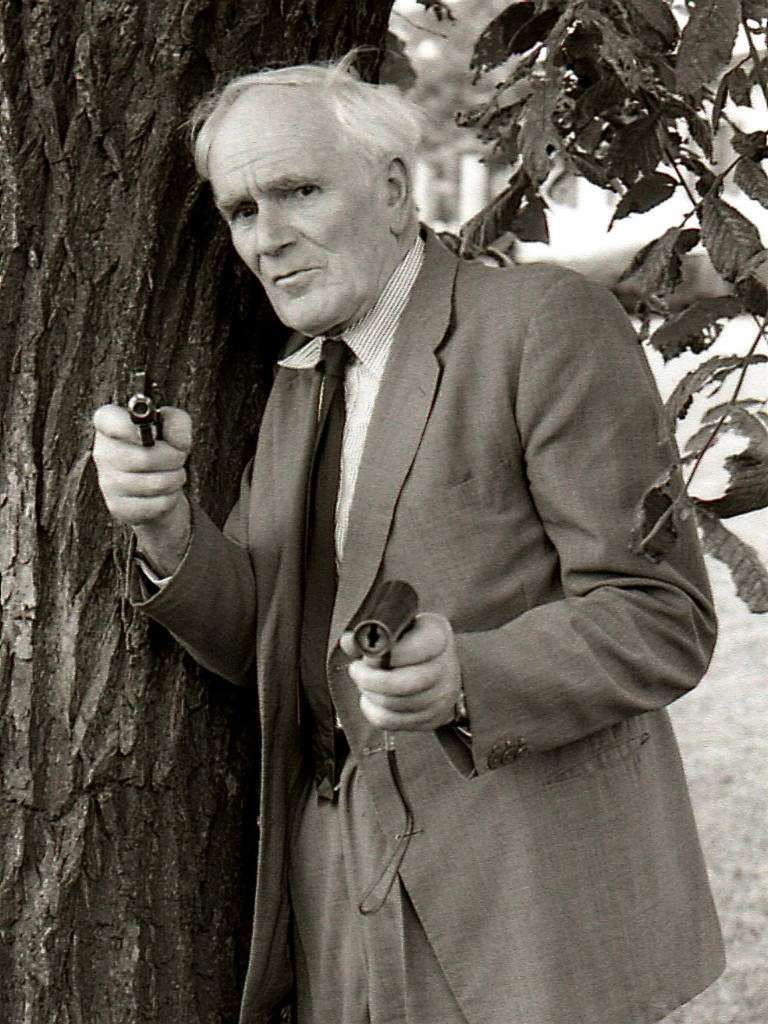
Fleming’s next Bond novel, in 1958, was Dr No and it features an armourer who supplies Bond with a Walther PPK; the armourer’s name is Major Boothroyd. Before he gets the Walther, though, the fictional Boothroyd removes 007’s Biretta telling him ‘Ladies’ gun, sir.’ Geoffrey Boothroyd had been immortalised in fiction
Fleming did not actually come face to face with the real Boothroyd until he travelled to Glasgow in 1961, in a meeting arranged by Scottish Television. By then Boothroyd had been engaged as an advisor on the first of the Bond films, Dr No (the films did not follow the order of the books). The film retains the character of Major Boothroyd, played by Peter Burton. In subsequent films, Bond’s weapons and gadgets are supplied by ‘Q’, played by the much-loved character actor Desmond Llewellyn, but if you watch carefully you’ll notice that in one or two films he is still addressed as ‘Boothroyd’, a long-lasting tribute to the Glasgow firearms expert.
Fleming died of a heart attack in London in 1964. His final novel, The Man with the Golden Gun was in the pre-publication stages and Boothroyd (the real one from Glasgow) was the obvious choice to advise on the book’s weaponry and he even helped with the editing of the book.
A lasting contribution
Boothroyd was now living in 11 Regent Park Square, having moved there from No. 17 on his marriage. He appears in a short film, The Guns of James Bond, made in 1964, in which he discusses his choice of weapons for Bond. Sean Connery introduces the film which was mostly shot inside No. 11. The film is available on the BBC archive on YouTube, so you can easily view it, and the remarkable Mr Boothroyd, online.
Boothroyd had been a lodger in No. 17 with the family of Mr Harold Skaife. Skaife ran a business called Glasgow Cine Services that supplied film and sound recording services. He built a sound recording studio in Wishaw, Lanarkshire, where Glasgow songstress Lulu recorded her very first songs. And Lulu, of course, would go on to record a Bond theme. It really is a small world.
Geoffrey Boothroyd sold his house, 11 Regent Park Square, in 1971. He went on to publish a number of books about guns, and eventually died in 2001. Perhaps you are as uncomfortable reading about guns and gunsmithery as I am writing about them, but Boothroyd seems to have been a good egg. And he made a lasting contribution to one of the most lucrative expressions of British popular culture.
Do you enjoy our content?
Content on the Scottish Banner website remains free for users. Stories and events listed for the international Scottish community continue to be an important resource for many across the world. As advertising revenue remains a challenge, our readers can donate to help us produce unique Scottish content for global Scots. Every contribution counts and thank you for considering your support.
Support the Scottish Banner! To donate to assist with production of our publication and website visit: The Scottish Banner