
The Scottish Banner speaks to Randy “Gil” Waugh
Author, musician and Gaelic scholar.
Randy ‘Gil’ Waugh is based in Ottawa, Canada and is closely linked to Scottish and Gaelic culture. Gil is an author, musician and Gaelic scholar who takes inspiration from Scotland’s history, music and culture. Randy ‘Gil’ Waugh took the time to speak to the Scottish Banner on his passion for Gaelic, his latest release and what it was like touring with a Celtic rock band.

Randy you have been a private investigator, an IT architect and a commercial pilot. What drew you to writing, music and Gaelic teaching?
RW: Writing and music have always been integral to who I am. I’ve been writing since I first learned how—it was my way of understanding and interpreting the world. Looking back, not having a television in my early years was a blessing, not a curse. While many of my friends can still recite cartoon dialogue from memory, I spent that time writing plays, which my siblings and I would act out for our parents—or anyone willing to watch. I recently found one of those early scripts, titled The Lost Flight. It was horrendous, of course—but everyone was a good sport about it, and their encouragement meant the world.
Poetry was my first love. I wrote tomes of it—not because I was particularly good at it, but because it felt magical and cathartic. In fact, poetry was the first kind of writing I had published as a teenager, and to this day, each of my books includes an original theme poem. Music was always present in our home. My father performed on radio and television with his country band when I was young. After we moved to Ottawa, he continued to play—right up until the day before he passed in 2013. His passion left a lasting impact on me. I fell in love with the trumpet at a young age and lobbied relentlessly to learn it. Eventually, my parents gave in, and I took it up. After Fiùran folded in 2023, I returned to the trumpet and now play with the Concert Band of Kanata (CBoK), a wonderful local ensemble that brings me great joy.
I’m also a PDQB-certified tutor (Piping and Drumming Qualifications Board, Scotland) and have taught the Great Highland Bagpipe for many years. I had a particularly special group of young students about a decade ago and formed a band with them. We played gigs and competed regularly, and in 2018, we had the incredible honour of competing at the World Pipe Band Championships in Glasgow.
In 2014, I was invited by Pawl Birt, Chair of Celtic Studies at the University of Ottawa, to become a part-time professor of Scottish Gaelic language and culture. It felt like a dream come true. Eleven years later, I still feel the same way. I continue to teach with passion and love seeing our regular flow of students engaging with the language and the culture—proof that interest in Gaelic remains strong and vibrant. Gaelic has always been part of my heritage, though I only became consciously aware of it in adulthood. When my children were born, I began to explore our family’s roots. That’s when certain things about my maternal grandfather started to make sense—his lilting accent, his expressions, and certain behaviours. I discovered that Scottish Gàidhlig was his first language, though he never passed it on. I used to think this was a rare story, but I’ve since learned it’s far more common than I imagined. Learning about the deliberate and long-standing efforts to suppress our language and culture—both in Scotland and here in Canada—lit a fire in me. I felt compelled to pick up the torch, to do what I could to help reverse the loss, or at the very least, to better understand who we were as a people.
So, to answer your question more succinctly: being a private investigator, IT architect, pilot, and all the other “left-brain” ventures I’ve pursued were primarily to earn a living and support my family. I’ve been fortunate to find success in multiple careers, but those roles, while creative in their own right, never nourished me the way the arts do. Now that I’m retired from working as an IT specialist, I’ve returned to where I began—completely immersed in the creative world. Ironically, those more traditional career paths now provide rich fodder for my writing.
You are not only a Gaelic speaker but also a Professor of Scottish Gaelic Language and Culture, at the University of Ottawa. Can you tell us what drew you to the Gaelic language and any advice for those thinking about learning?
RW: As I mentioned earlier, once I became aware that Scottish Gaelic was part of my family’s heritage—something that had been actively suppressed—it became a passion. I needed to understand why this had happened. What was our story? Where had we come from in Scotland? I’ve since found answers to many of those questions. While it saddens me that our language and culture weren’t deemed valuable enough to pass down, I now understand why that was the case. I’ve spent a great deal of time and energy trying to reclaim that part of our story—not only for myself, but for my children. When it comes to learning the language itself—it’s absolutely achievable. What’s needed is an open mind, a desire to learn, and the tenacity to figure out how you best absorb information—and then to keep going.
The second language I learned was French, which likely won’t surprise anyone from my generation. I was part of Pierre Trudeau Sr.’s era and believed in his dream that every Canadian should speak both official languages (Scottish Gaelic, by the way, almost became Canada’s third official language—but that’s a story for another day.) I didn’t truly learn French until I was immersed in it during stays in northern Québec. Full immersion is, without a doubt, the best way to learn any language. That said, immersion is hard work—and not everyone has the opportunity to live in a Gaelic-speaking region of Scotland or Nova Scotia. Most learners have to find other pathways to the same goal.
For beginners, I often recommend starting with Duolingo. It’s a good introduction and helps users begin forming sentences. Its main drawback is that it doesn’t explain much about why the language works the way it does. I suggest supplementing it with more structured learning—such as courses offered by The Gaelic College in Cape Breton, or by Sabhal Mòr Ostaig on the Isle of Skye (my alma mater). If formal study isn’t possible, there are excellent online resources like LearnGaelic.scot and other organizations devoted to helping learners engage with the language.
Personally, I’m a big believer in a multi-media approach to language learning. Even if you can’t spend time in the Gàidhealtachd, you can still immerse yourself in the language and culture. Listen to Radio nan Gàidheal, watch programming from BBC Alba or MG Alba, read Gaelic books or periodicals (the Gaelic Books Council in Glasgow offers a wide selection), take online classes—and most importantly, practice speaking!
This last point can’t be emphasized enough. In every learning environment I’ve been part of, conversation has been a central focus. I speak weekly with a fluent Gaelic conversation group based at Ionad Chaluim Chille Ìle on Islay. Until recently, I also had weekly chats with my good friend John Morrison, the former CEO of the Royal National Mòd in Scotland. John sadly passed away this past July. I miss him dearly, and the profound connection we shared through our language and culture. Speaking Gaelic regularly—with a group or even a partner—encourages you to think in the language. It pushes you to discuss everyday topics, and gradually, it becomes second nature. That’s the essence of fluency. Yes, it can feel uncomfortable at first—but it’s a vital step on the path to mastering the language.
Should anyone be interested in getting started with their Gàidhlig language learning journey, I would encourage them to reach out. I would be happy to share my thoughts.
Scottish Gaelic has enjoyed a revival in recent years with platforms such as Duolingo, as well as a number of initiatives being supported by the Scottish Government in Scotland. As an active member of the international Gaelic community what would like to see available to international Scots who are interested in the language?
RW: There have been tremendous initiatives supported by the Scottish Government to promote the Gaelic language, including several that are accessible to the diaspora and learners around the world. One standout is LearnGaelic.net, launched in Stornoway at MG Alba in 2011—a fantastic resource for beginners and advanced learners alike. However, one of the greatest missed opportunities, in my view, is the lack of access to Scottish Gaelic programming on BBC Alba for those of us outside the UK. Due to licensing agreements and broadcasting rights, much of this rich content is geo-blocked. For learners, ex-pats, and members of the diaspora, this is a real frustration.
People are creative, of course—and many find workarounds. But rather than relying on that, why not develop a mutually beneficial streaming agreement? BBC knows we’re out here, and I would hazard a guess that most of us would gladly pay a subscription fee to access this content legally. Not only would that generate revenue, but it would also help expand the reach and impact of the language globally. This isn’t just a matter of convenience—it’s about connection. BBC Alba programming is a wonderful learning resource, and restricting access to it limits one of the most engaging and immersive tools available to language learners and cultural advocates abroad.

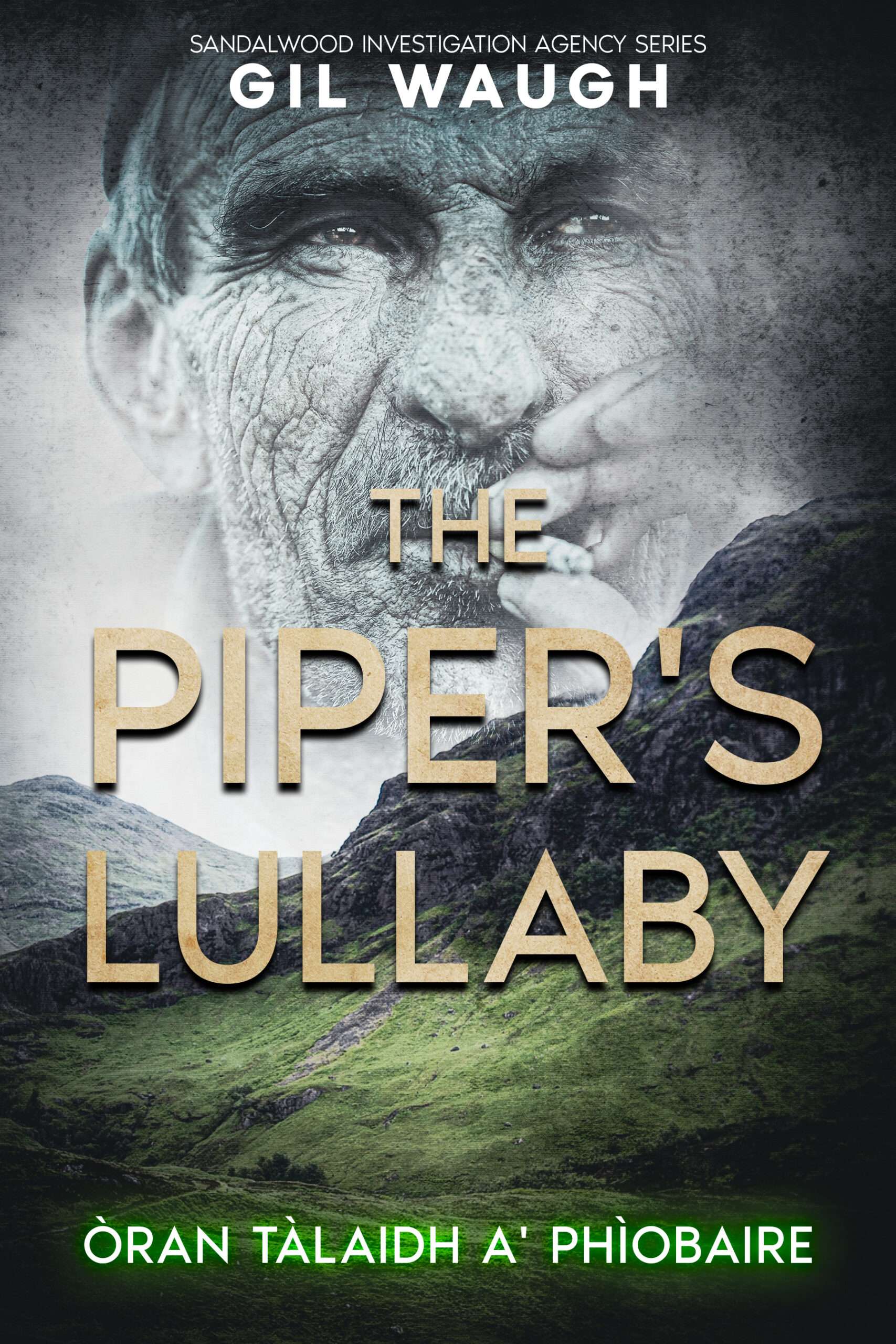
Your latest book The Piper’s Lullaby: Òran Tàlaidh a’ Phìobaire involves murder and bagpipes and is set on the Isle of Islay. Can you tell us more and why you have chosen Islay as the setting for this historical thriller?
RW: Well, let me tell you a story. Twenty-five years ago, when I wrote my second novel, Evening Song – Òran Feasgair, I did only light research before choosing Islay as the setting for the Gaelic portions of the story and the climax of the thriller—specifically, Rhinns Lighthouse on Orsay. At the time, I chose it almost at random. I had no idea that this was, in fact, the very place my ancestors had come from. The real twist? Evening Song is a story about genetic memory—about messages passed through generations via poetry, story, and song. So, you can imagine the shiver that ran up my spine when I later discovered that I had instinctively set the novel in the land of my forebears. I had, quite literally, lived the very theme I had written about.
Now I know that Islay was the primary origin of my maternal ancestors—the Gaels of Gartnatra and Corrary farm, who eventually emigrated to Canada near Burnstown, Ontario, under a crooked land scheme orchestrated by Alexander McNabb. Many from that line are now buried in Goshen Cemetery, just minutes from Burnstown. This discovery left me with an undeniable urge—to read more, to learn more, to write more about the land of my ancestors. It felt like a return to the origin, as if reconnecting to that place might somehow offer a kind of reset—a re-grounding of identity.
And of course, the kinds of twists and turns I write about would likely never happen on Islay—but maybe that’s all the more reason to set them there. Perhaps it adds a little extra spice to go along with the island’s legendary malt whisky.
Are there any plans to release any of your books in a Scottish Gaelic edition?
RW: In short—yes, absolutely. During the COVID-19 pandemic, I wrote a short story in Gaelic to entertain my online students. It centred around a mysterious pen and evolved into a creative twist on traditional Scottish folklore. I hadn’t originally intended to publish it, but it soon became clear that it could stand alone—either as a resource for learners or, as it was recently released, in English for young adults. The Gaelic version is currently being edited and will be published in the near future. As for the Sandalwood Investigation Agency series—translating the books into Scottish Gaelic would be an absolute dream.
My late friend John Morrison and I spoke at length about this. He believed the series would make a valuable contribution to existing Gaelic literature and thought it could be an excellent project for translation students at Sabhal Mòr Ostaig or through Bòrd na Gàidhlig. I agreed wholeheartedly and would still be willing to offer the books royalty-free for such an initiative—perhaps under a limited-time licensing agreement, with proceeds supporting a Gaelic organization in either Canada or Scotland, and rights reverting back to me later. My only stipulation would be the preservation of intellectual property and author credit. John and I also discussed the possibility of securing grants for translators. I’m not sure how to move that idea forward, but I remain very open to conversations with anyone who might help bring this to fruition. And once the translations are complete and edited, if any Gaelic publishers were interested, I would ensure they are published. So yes—bringing The Sandalwood Series into Scottish Gaelic is more than a hope. It’s a long-standing dream.

You were also involved with the Celtic rock band Fiùran. How does it feel to have been able to create and share Celtic stories musically with audiences?
RW: To understand how fulfilling Fiùran was, it’s helpful to share a bit of the backstory. In 2009—roughly twelve years into my Gaelic learning journey—I founded Comunn Gàidhlig Ottawa (The Ottawa Gaelic Society) and organized and ran Mòd Chanada (A Scottish Gaelic event modelled after The Royal National Mòd in Scotland). To help raise awareness and support for our activities, I also formed and directed the award-winning Gaelic choir Ar n-Òran, as well as a children’s choir, Na Cuileagan-lasrach (The Dragonflies). Both groups saw many successes, performing and competing across Canada, the United States, and Scotland. Ar n-Òran was especially popular and helped build a vibrant Gaelic cultural presence in Ottawa.
As Ar n-Òran began to wind down, I felt myself being drawn back to something I had done in my youth—writing and performing in a rock band. That pull became Fiùran, a Celtic rock project I hoped would be well received by fans. Krista, the lead tenor from Ar n-Òran, stepped in as our lead vocalist, and I reached out to former musical colleagues to round out the lineup. I never imagined we’d go on to record four studio albums, or that our music would eventually be heard around the world. Fiùran became a wonderful platform for sharing both original songs and reimagined Celtic stories through music. We started gaining momentum late in life, but the response was exciting—we won a fan favourite indie award in the heavy metal category in New York City and were lining up promising gigs and tours. Then the COVID-19 pandemic hit.
A Japanese tour was in the works, but priority understandably went to more established acts whose tours had also been delayed. One by one, opportunities dried up. In 2023, after countless setbacks, Fiùran quietly folded—death by a thousand cuts. It was heartbreaking, and I mourned that loss deeply. Even so, I remain proud of what we achieved. Our music is still being played around the globe. I still hold onto the hope that the phone might ring someday, and we’ll hit the road again—but if not, I have countless good memories, and a deep sense of gratitude for what we created.
Just recently, I watched Zach Stuckey—our youngest member and Fiùran’s original guitarist—absolutely light up the stage on The Tonight Show with Jimmy Fallon. The band he’s currently playing with is selling out arenas around the world. Maybe it’s time for the next generation to take the torch. I believe Fiùran has left a formidable legacy that will stand the test of time.
Your books have blended Scottish language, history and music within the characters and storylines. What is it about Scotland’s setting and Scottish stories and themes that you feel make for such great reading?
RW: It’s certainly not a new idea to use the setting, history, language, and culture of Scotland as the backdrop for historical mysteries or thrillers. But it endures for a reason—Scotland is a land of breathtaking scenery and a rich, complex heritage shaped by thousands of years of folklore, legend, and lived experience. These elements offer storytellers an incredibly vivid and versatile palette to work with. If one takes a look at pop culture, music, art, and literature consumed around the world, it’s clear there’s an enduring global appetite for Scottish themes and settings. But for me, it goes much deeper than trend or aesthetics.
Scotland is where my ancestors came from. On my mother’s side—from the Isles of Islay and Tiree, and from Alloa in Clackmannanshire. On my father’s side—from South Queensferry, Cramond and Linlithgow. Though I was born in Canada, am most definitely Canadian and can’t call myself a Scot, I was raised with strong Scottish cultural mores and values. And over the years, one thing has become abundantly clear to me: I come from a long line of Gaels. I am a Gael.
For many years, I was a Gael with no Gaelic. But now, after much effort and discovery, I can say with conviction: ‘S e Gàidheal a th’ annam! I am a Gael.
For more information see: www.gilwaugh.com
Support the Scottish Banner! To donate to assist with production of our publication and website visit: The Scottish Banner