
In 1980 a packed crowd gathered for a gig in the University of Strathclyde’s Student Union, a renowned music venue back then. Tonight, in one of the smaller rooms, it was standing room only. A huge cheer welcomed the main act – a little round man in his late 60s with a beefy face, a prominent red nose and a tiny grey moustache. He didn’t sing or play; he just gave a talk and slide show about his life as mountaineer and naturalist. This was Tom Weir.
I first encountered Weir when he presented short filmed segments about hills, legend and history on STV’s Scotland Today news programme. Later, they were edited into the first series of Weir’s Way, a programme that was a huge hit in Scotland and was picked up by some English ITV regions. Weir was an experienced mountaineer who had climbed in the Himalaya, in Kurdistan and Norway, yet he could find things worth seeing just down the road.
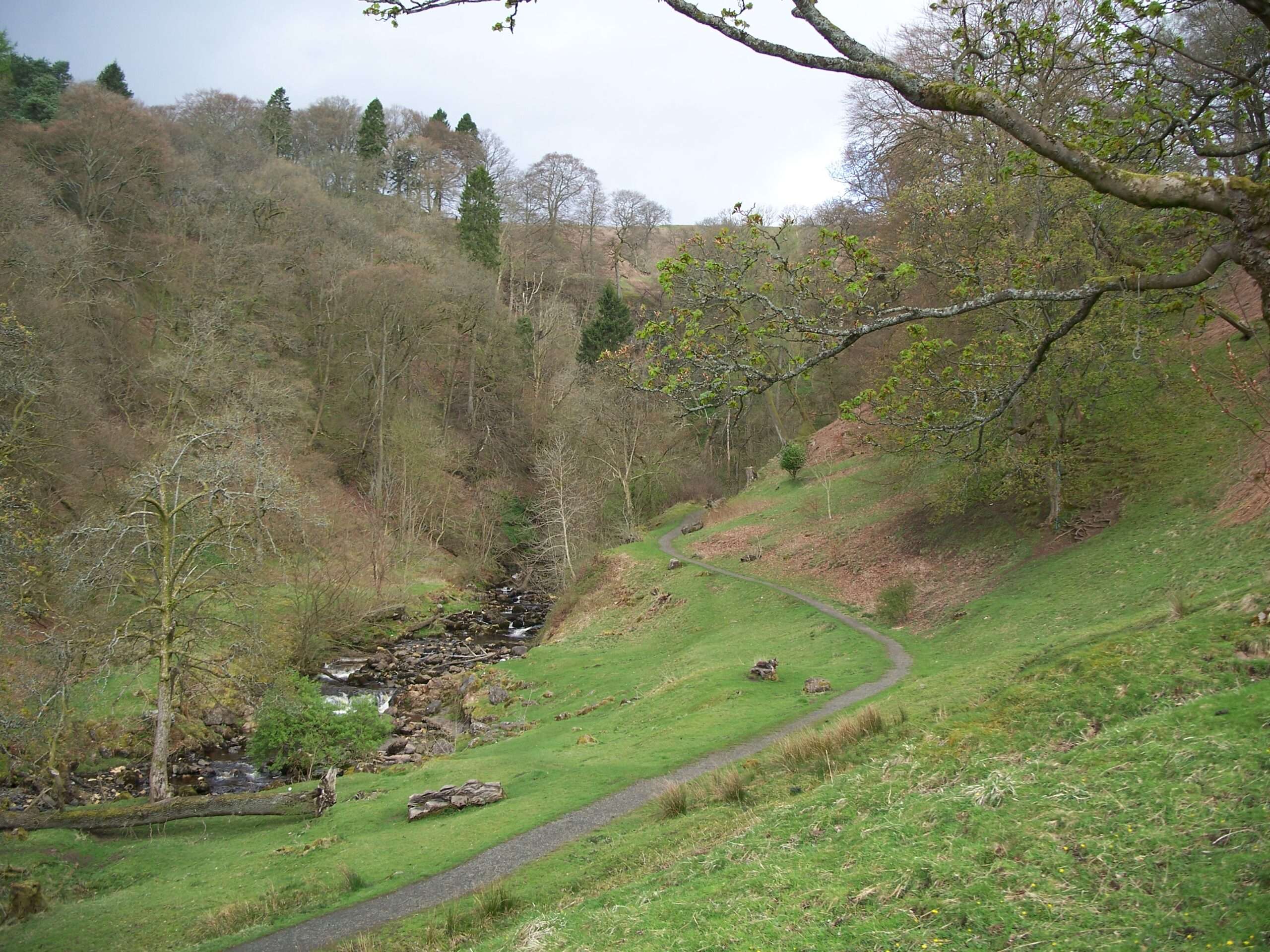
Later, I got to know Weir’s writing; he was a regular in the Glasgow Herald and The Scots Magazine but from his books I learned that Weir, like me, had been born in Springburn in northern Glasgow; like me, he had started his outdoor life in the Campsie Fells, getting there, like me, on the Campsie Glen bus. Mountaineers and explorers were often Old Etonians or ex-Sandhurst types. Tom Weir was one of us.
He was born in 1914. His father died in 1916, a victim of the First World War in Mesopotamia, and in his early teens Weir had to leave school and work as a Co-operative delivery boy. When he found a full-time job in the local Co-op grocery, his mother happily described it as ‘a job for life’. Tom, though, dreaded a lifetime in a shop; ‘born a man,’ he summed up his likely fate, ‘and died a grocer.’
The world was opening up
In the 1930s, Weir became part of the first wave of working-class people to discover outdoor leisure. After Saturday’s half-shift, thousands of Glasgow people flocked to the countryside, joining those unemployed people who had already decided to walk the hills rather than the streets. There he met his early outdoor companions including John McNair, a railwayman on the West Highland Line (still the best way to reach the hills from Glasgow), and Matt Forrester, a Glasgow butcher. Matt was a gifted writer who encouraged Tom to take an Art of Writing class and to submit his work to magazines and newspapers. By the outbreak of war, much of his work was being published. ‘The world was opening up,’ he later wrote, ‘just as Hitler was shutting it down.’
During the Second World War Tom served in the Royal Artillery and trained as a gunnery surveyor. This experience helped him to get a job with the Ordnance Survey (OS) in 1946. He left the OS in 1950 to join the Scottish Himalayan Expedition, the first to be allowed into Nepal after the Second World War.
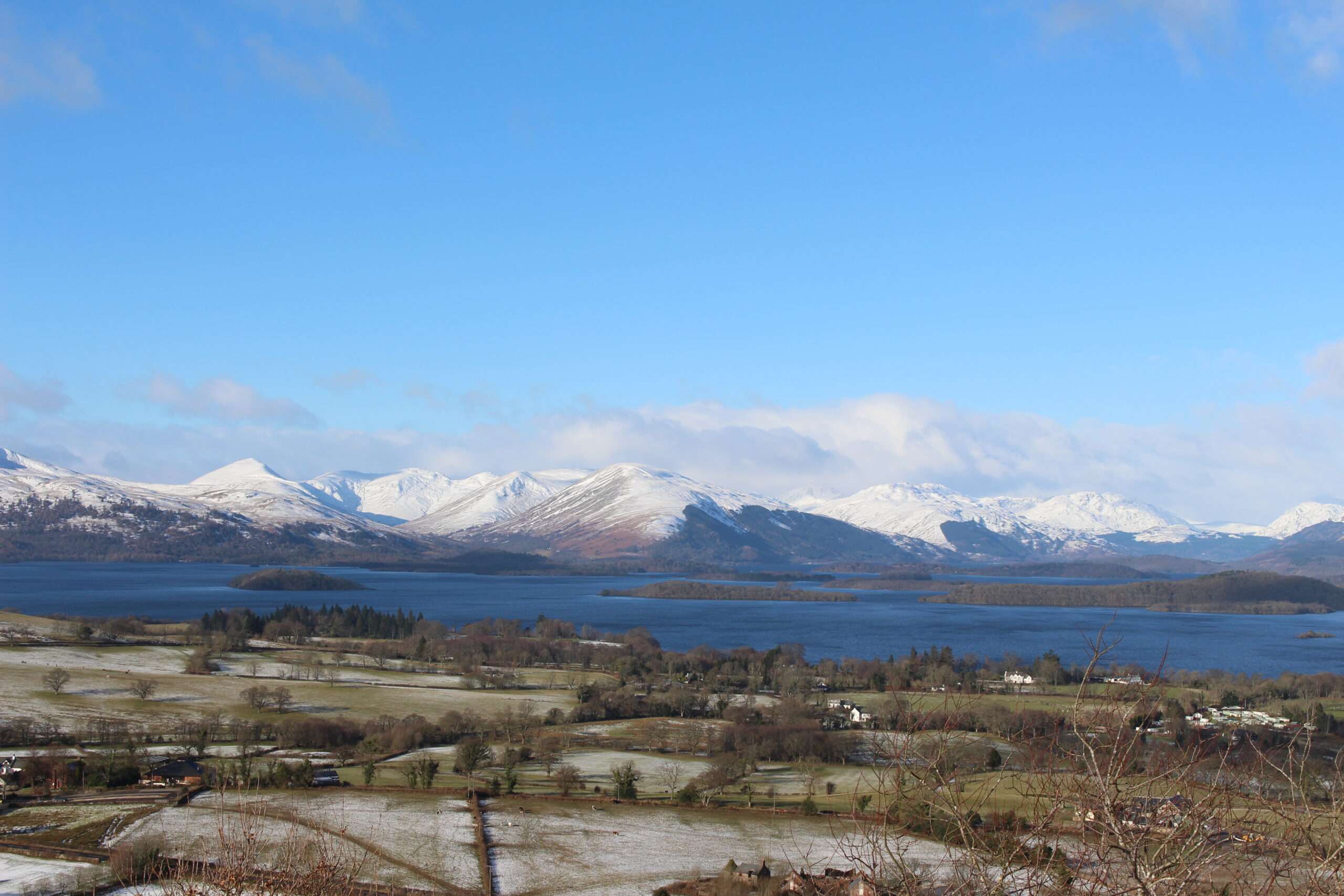
Later, Tom would walk and climb in many countries and expand his writing and photography. He married and settled in Gartocharn, a quiet village near Loch Lomond’s southern shore. He often wrote about Duncryne, a tiny 463ft summit near his home that he climbed every day. For its puny height, Duncryne offers a quite jaw-dropping panorama of Loch Lomond and the surrounding peaks.
His first book was Highland Days, written during the war and published in 1948. It’s a moving record of his 1930s wanderings in the Highlands and is now a valuable historical document, describing meetings with local families in homes now vanished and trips to glens and straths now flooded by hydro schemes. It also captures the experience of tramping through the Highlands before the domination of the motor car. Weir wasn’t one of those outdoorsmen indifferent to the people of the countryside; he did not want to see the glens become unpopulated wildernesses.
Tom Weir’s Scotland (1980), a collection of previously published articles, is my favourite of his books. His pieces were unlike those you found in climbing magazines. Yes, he wrote about hills and mountaineering, but his enthusiasm carried him over into ornithology, wildlife and history. ‘Taste the History Before the Climb’, is an article in the book (about Criffel, the peak on the Solway shore); he was always true to that advice and demonstrated a welcome curiosity about how the countryside and its people had come to be.
Weir had the writerly knack of evoking a sense of place, but his deeper personality and feelings rarely broke through. In 1994 he published Weir’s World, subtitled ‘an autobiography of sorts’ – apt since it gave little away beyond the mere facts of his life, wandering off instead to celebrate companions, conservation, mountains and wildlife. However, when Weir did write with passion – for example, in the 1990s when railing against a bulldozed track that had despoiled the Loch Lomond shore – the effect was powerful, even devastating.
A yearning for green places that would not be denied
I never actually met Tom Weir to speak to, but after hearing his talk at Strathclyde Union, I had two more encounters with him. In 1994 The Scots Magazine published Jock, my short story about the working-class Scottish walkers of the 1930s. I was delighted to receive a kind letter from him praising the story. It’s one of the daftest things I’ve ever done, losing that letter…
Then, in 2004, I was waiting for a bus at Balmaha on Loch Lomondside after a day’s walking. Ahead of me in the queue were Weir and his wife Rhona. By now nearly 90 and frail, he could no longer explore the hills, but was still able to enjoy a bus trip along his beloved Loch Lomondside. He was chatting to a West Highland Way walker who was travelling back to his bed and breakfast in Drymen. He was from Germany and couldn’t possibly know how revered a figure he had met.
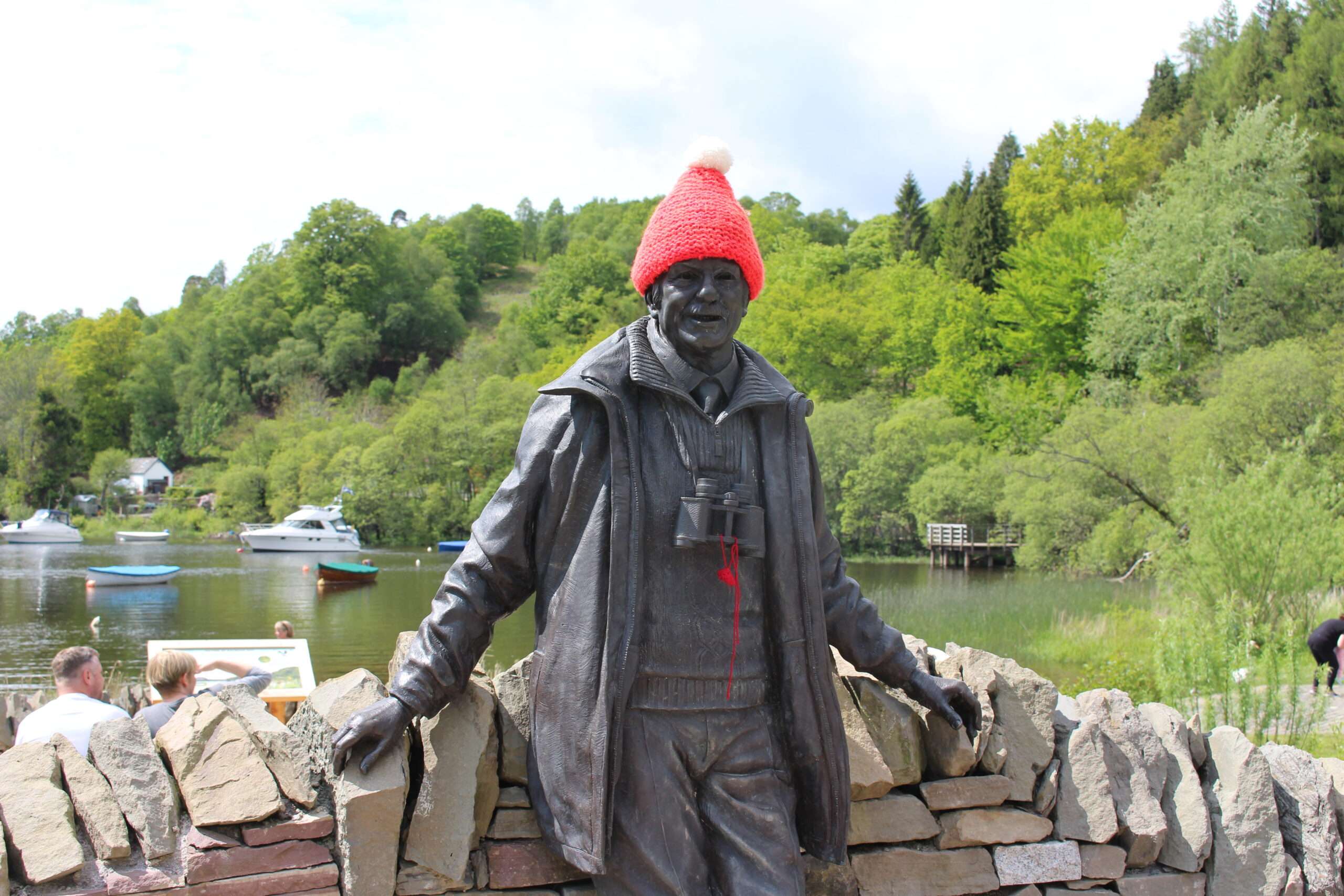
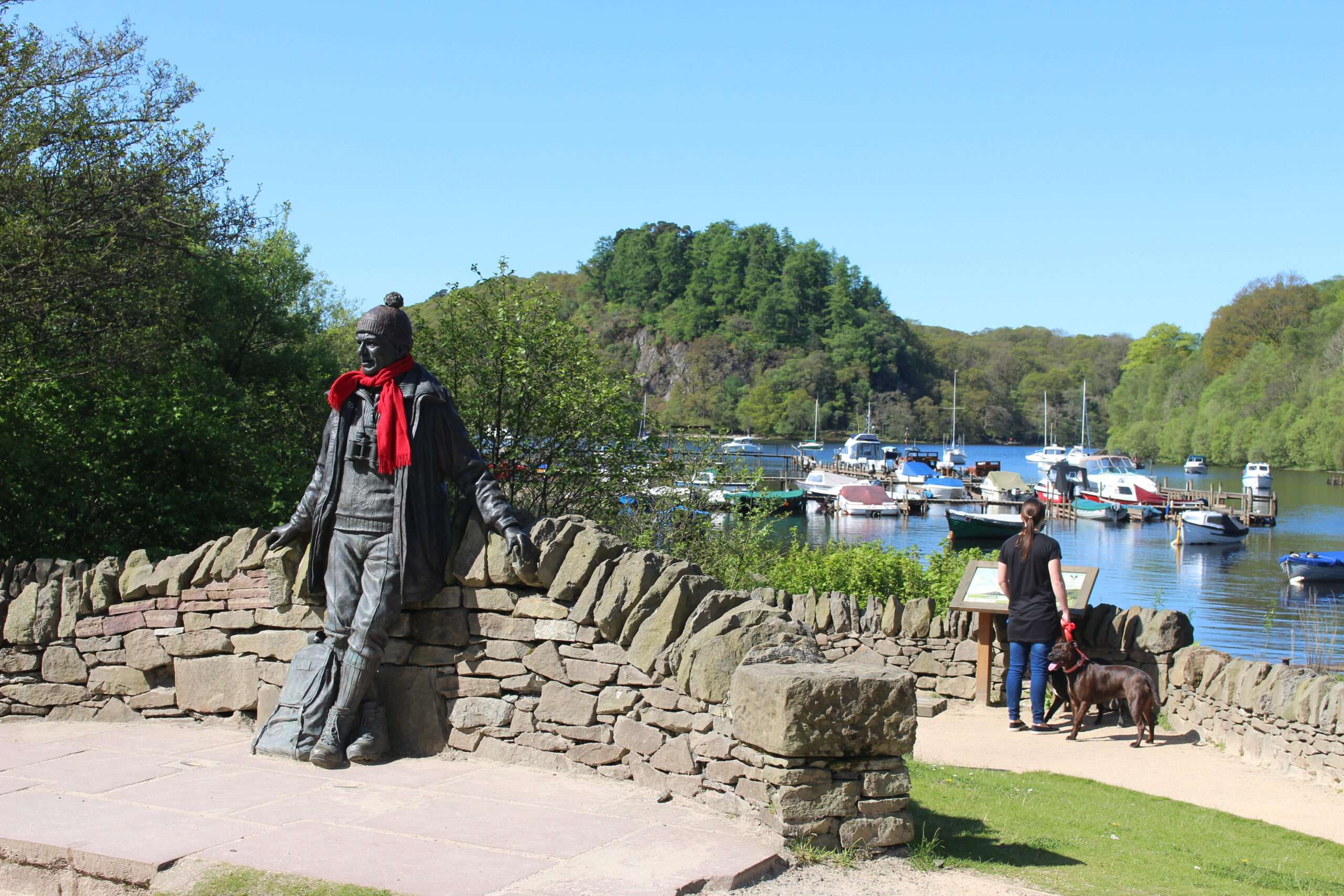
Tom Weir died in 2006. A plaque commemorates him in Campsie Glen, and in 2014 a statue, sculpted by Sean Hedges-Quinn, was unveiled at Balmaha, barely a hundred yards from the bus stop where I’d seen him a few years earlier. He’s portrayed wearing his trademark bobble hat and it’s becoming a tradition for an actual woolly hat to adorn the statue. Balmaha is a tourist honeypot and the statue no doubt puzzles many overseas visitors, but it has become a place of pilgrimage for outdoor enthusiasts from all over the UK. In inspiring us, Tom Weir pulled off quite a trick: he made TV programmes that encouraged people to go outside and experience fresh air and exercise.
In Highland Days Weir described how, after his first adventure in the Campsie Fells, he returned home; …with a yearning for green places that would not be denied. Mountains and birds seemed the most important things in life. The search for fulfilment in these things is the story of this book.
He inspired many others to do the same.
Words and photos: David McVey.
Support the Scottish Banner! To donate to assist with production of our publication and website visit: The Scottish Banner