
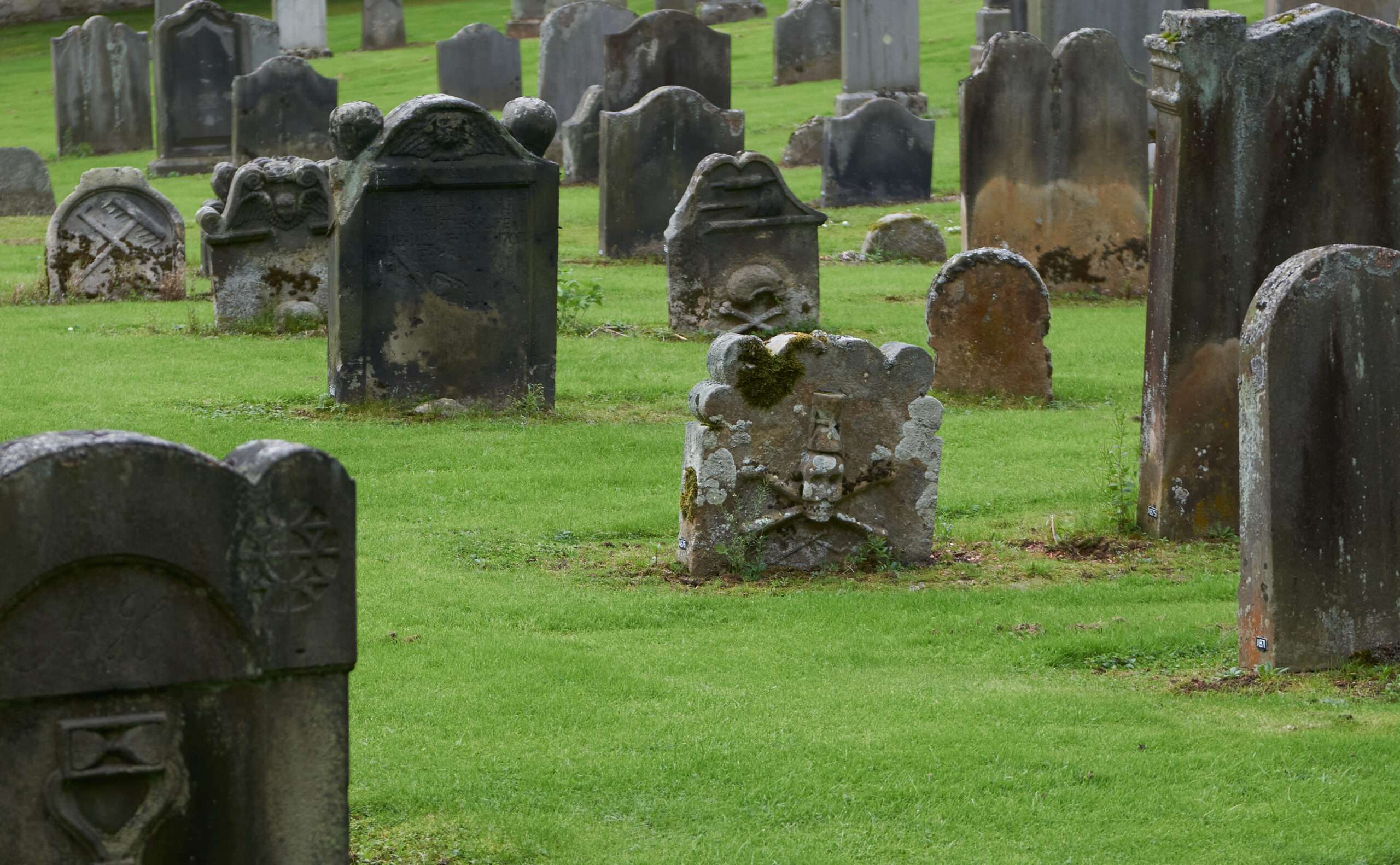
As thoughts turn to Hallowe’en and all things spooky and supernatural, what could be more sinister than that horror movie favourite location – a graveyard? But while many of Scotland’s cemeteries and churchyards teem with ghosts and grisly tales, many are also places of beauty and tranquillity, reflecting the changing times of the country’s history in their tombs, carvings and mausoleums.
There’s no doubt though that some of the most chilling features of Scotland’s cemeteries, particularly those around Edinburgh, date from a dark period in its history. The body snatchers who dug up freshly deceased cadavers to sell to medical schools for anatomical study in the 18th and 19th centuries have left a physical mark on the cemeteries they tried to plunder.
Watch over the graves
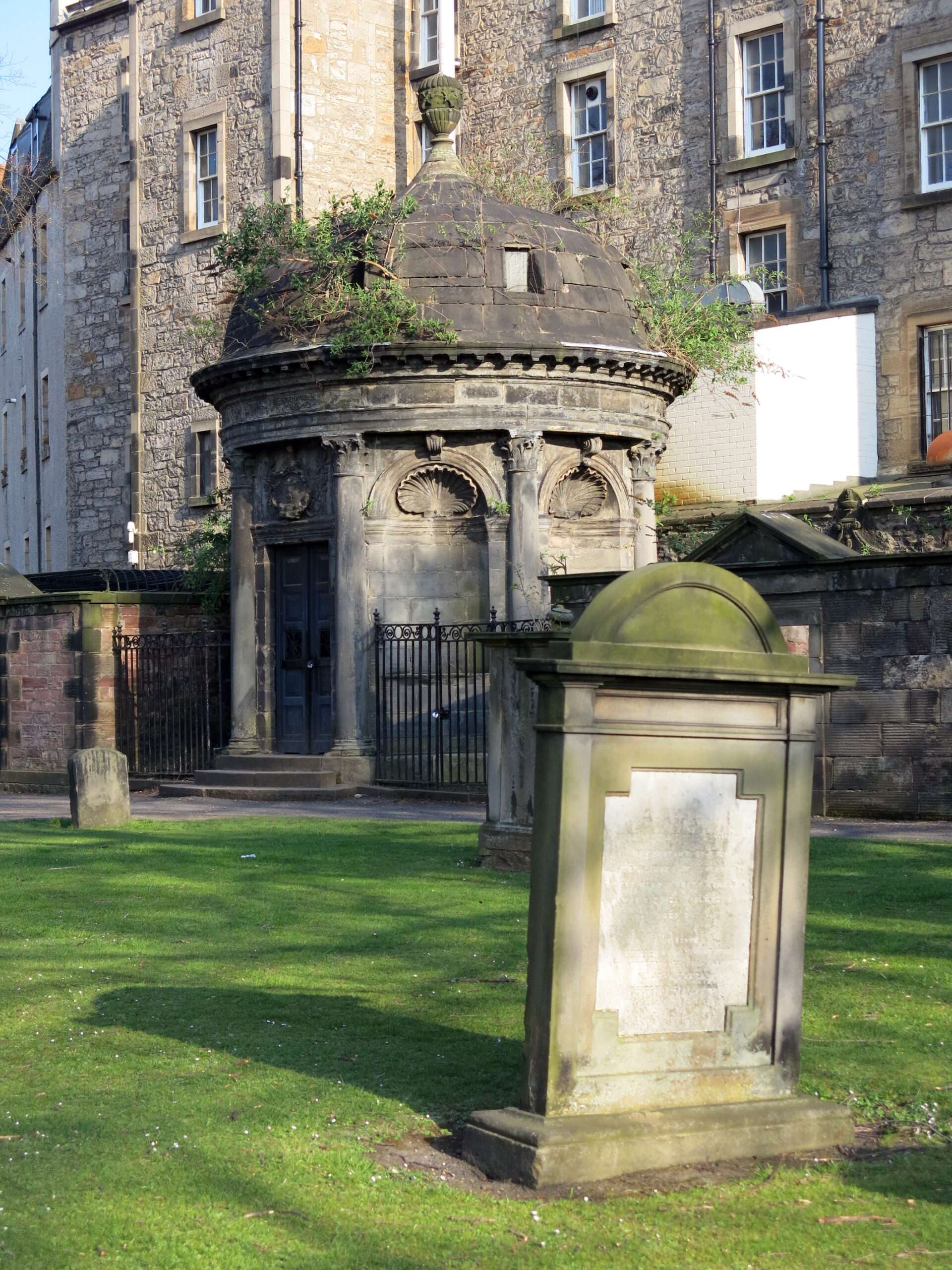
Watch houses were often erected either at the entrance or within the kirkyard, built for the family or the community to literally keep a watch over the graves at night when the graverobbers would be most likely to commit their illegal acts. Unsurprisingly Edinburgh, with its famous medical school, has several examples including the magnificent three-storey circular watch tower at New Calton Burial Ground in the city’s centre. Most watch houses are circular or square but there is a quirkier example at St Kessogs graveyard in Callander on the banks of the River Teith. The old medieval church that was the kirk for this kirkyard is long since gone but the picturesque cemetery – which has been restored over the summer by the community – has a small 19th century octagonal watch house.
Mort safes were another method of trying to thwart the body snatchers – metal cages put over the graves to stop them being dug up. As they were re-used once bodies were no longer fresh and therefore no use to the medics, or melted down for the metal at later dates, they are quite rare. Logierait Churchyard in Perthshire has three, two adult and one child, but the most famous are two in what is probably also Scotland’s most famous kirkyard, Greyfriars in Edinburgh. Located in the heart of the capital city’s Old Town, just yards from the National Museum, the churchyard is a favourite with tourists, mostly due to the grave of Greyfriars Bobby, the faithful dog who kept watch over his master’s grave for 14 years, and the tombstone of Thomas Riddell, supposedly the inspiration for the Harry Potter villain.
But deeper into the kirkyard is the site of the Covenantors Prison, a gated area, now lined with 18th century tombs, where hundreds of Covenantors – religious rebels – were kept prisoner after being defeated by the king’s forces in battle. For four months they were held without shelter and only a meagre ration of bread. Many died. The ghost of Lord Advocate George Mackenzie, the man responsible for the king’s policy of persecuting the Covenantors, is said to haunt the place, his poltergeist biting and scratching visitors – his grave, known as the Black Mausoleum, is one of the more ornate out of the 700 graves dating as far back as the 16th century.
Final resting place
The most famous names associated with Scotland’s resurrectionists are William Burke and William Hare, although the pair bypassed the business of waiting for someone to die and digging them up by murdering their victims and selling their bodies to Edinburgh surgeon Dr Knox. When they were caught in 1828, Hare turned King’s evidence against his former partner – Burke was hanged while Hare went free, whisked out of the city by mail coach to Dumfries. There he was recognised – pamphlets with gory details of the case and sketches of the villains were best-sellers – and set on by a mob. He was extricated by the authorities but there the trail goes cold.
The most popular legend is that he ended up in London, was recognised again and quicklime thrown in his face, ending his days as a blind beggar. There are also stories that he sailed for Canada or Australia but one story has him living in the remote Applecross peninsula under the name William Maxwell. He is said to have appeared there in 1840 and lived in the hamlet of Camusteel, working as a weaver. His house became the local “ceilidh house” and he became known as breabadair teine or the fiery or fire weaver – perhaps because he was said to have burns from a work accident. He married a local woman and was said to be an upstanding member of the community. And when he died in 1864 he was buried in Clachan cemetery, next to a drowned tramp called Clochan. It would be fitting if was Hare who found refuge in Applecross as the church and graveyard are said to be on the site where Irish saint Maelrubha established a monastery in 673 AD and the six-mile area around the church became a holy sanctuary, safe for anyone fleeing from pursuit.
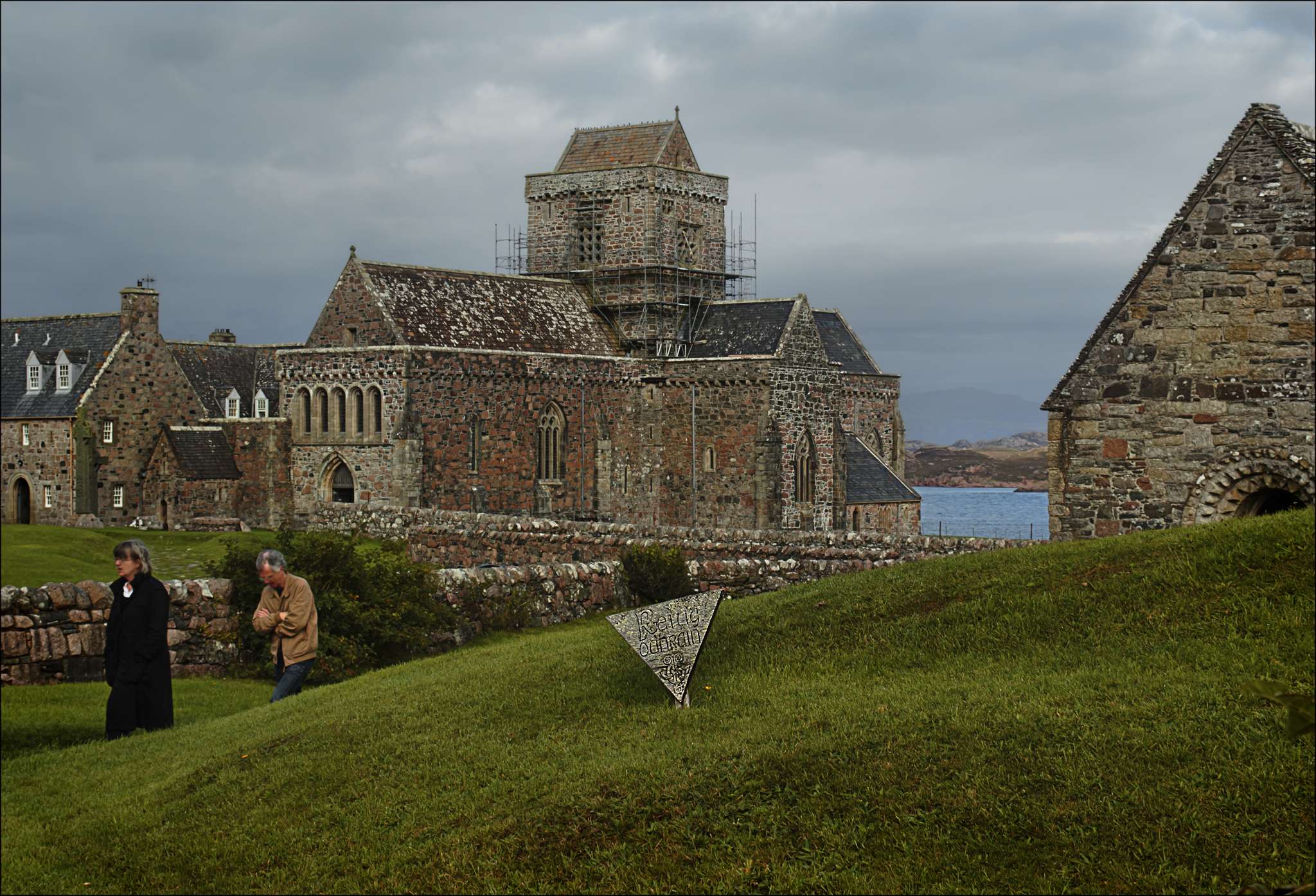
More noble notable figures have found their final resting place at Reilig Odhráin (St Oran’s Graveyard), the cemetery next to Iona Abbey on the sacred island off Mull. It is reputed to hold the bones of 60 kings, including the real MacBeth, and was a royal burial ground between the 9th and 11th centuries. While there are no markers for the kings’ graves, visitors can still walk along Sràid nam Marbh – the Street of the Dead – where the pallbearers would have processed with their royal burdens. Another sacred island is Eilean Munde in Loch Leven, where several Highland clans – Camerons of Callart, MacDonalds of Glencoe and Stewarts of Ballachulish and Ardsheal – buried their dead.
The island is uninhabited by the living; among its 300 or so deceased residents are Alastair MacIain, 12th Chief of Glencoe, who was killed during the massacre of 1692, and Big Duncan MacKenzie, a Jacobite fighter from Ballachulish. Each clan had its own “port of the dead” when they arrived with a body and legend has it that the island is guarded by the spirit of the last person buried there.
Symbols of eternal life
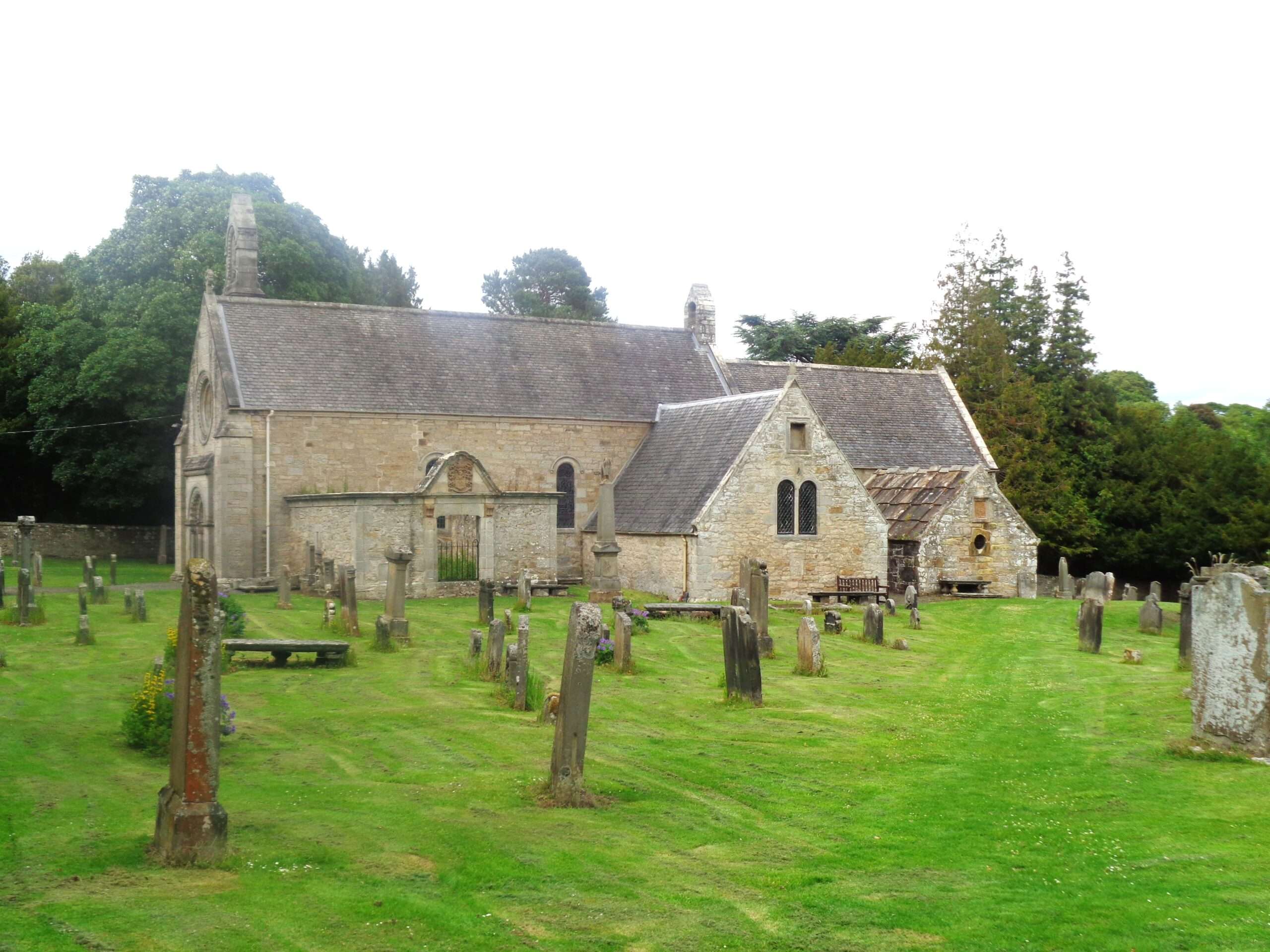
And not all famous connections are real. Abercorn graveyard, near South Queensferry and just a mile from Midhope Castle which stood in for Lallybroch, featured in Outlander as the site of Frank Randall’s grave in season 4 of the hit show. You have to time travel a fair way further back to the origins of this beautiful spot – St Ninian is said to have visited in the 400s and a church was established on the spot sometimes afterwards.
The gravestones date back to the 1600s and have some great examples of carvings, such as skull and crossbones, and hourglasses, reminding us that life is fleeting and death comes to us all. There are also yew trees in grounds, trees that, because of their longevity, became symbols of eternal life. They’re often found in graveyards, with the most famous in one of Scotland’s most beautiful churchyards at Fortingall in Perthshire. The yew tree there is believed to be between 3,000 and 8,000 years old and is one of the oldest living things in Europe.
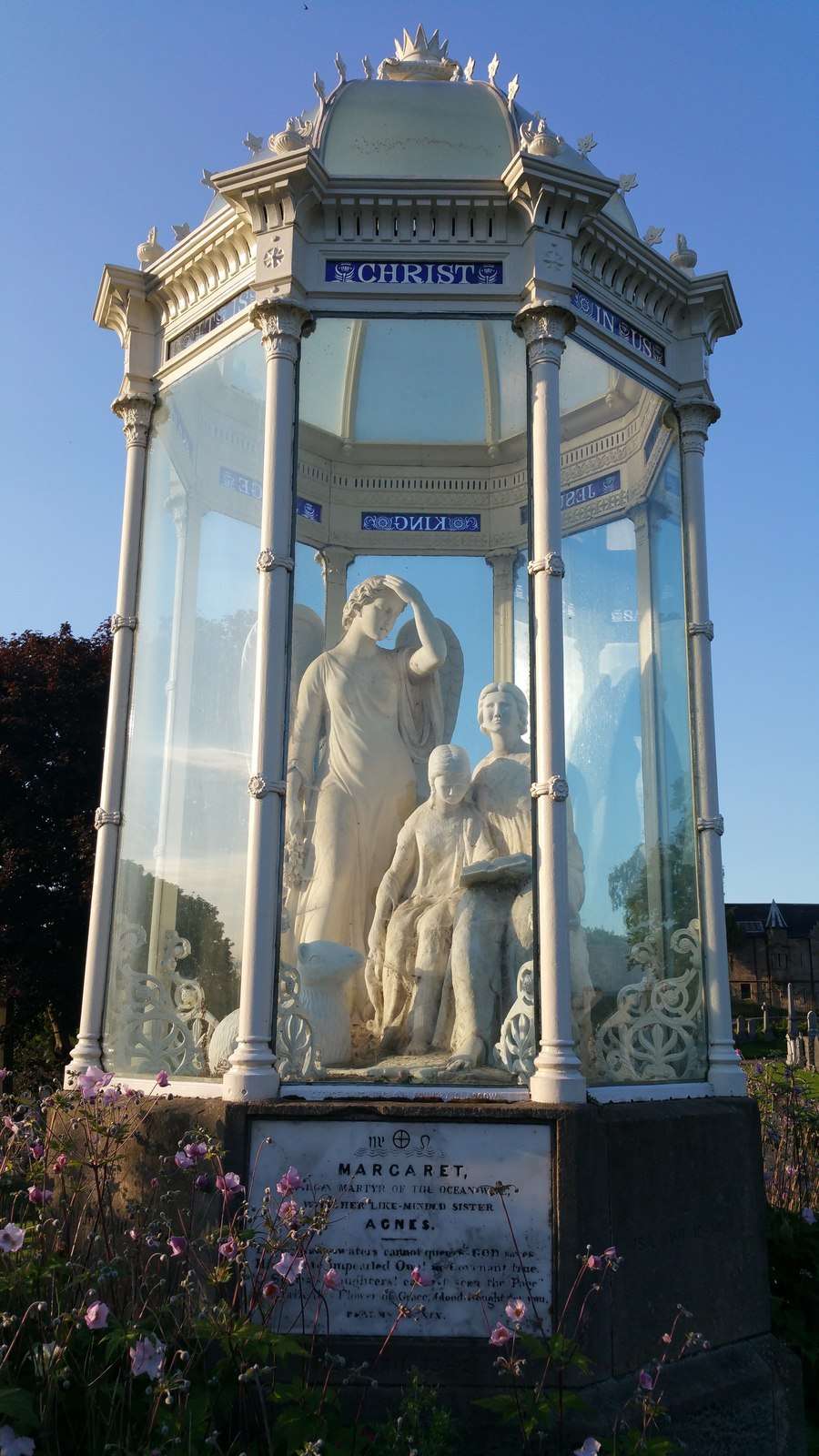
And for the plain and simply quirky, Old Town Cemetery in Stirling is hard to beat. The Star Pyramid, built in 1863, is a memorial to martyrs for civil or religious liberty and the Martyrs Monument contains an angel looking over two girls, Margaret and Agnes Wilson.
Both were arrested for their Covenantor beliefs and sentenced to death by drowning in 1685. Agnes was saved but Margaret died. The cemetery also contains the elaborately carved Service stone, dating from 1636 and complete with musket ball dents thanks to Cromwell, and the reinterred remains of a Dominican monk who died 700 years ago.
Text by: Judy Vickers.
Main photo: Abercorn Church Graveyard. Photo: Wilmm, CC BY-SA 4.0, via Wikimedia Commons.
Support the Scottish Banner! To donate to assist with production of our publication and website visit: The Scottish Banner