
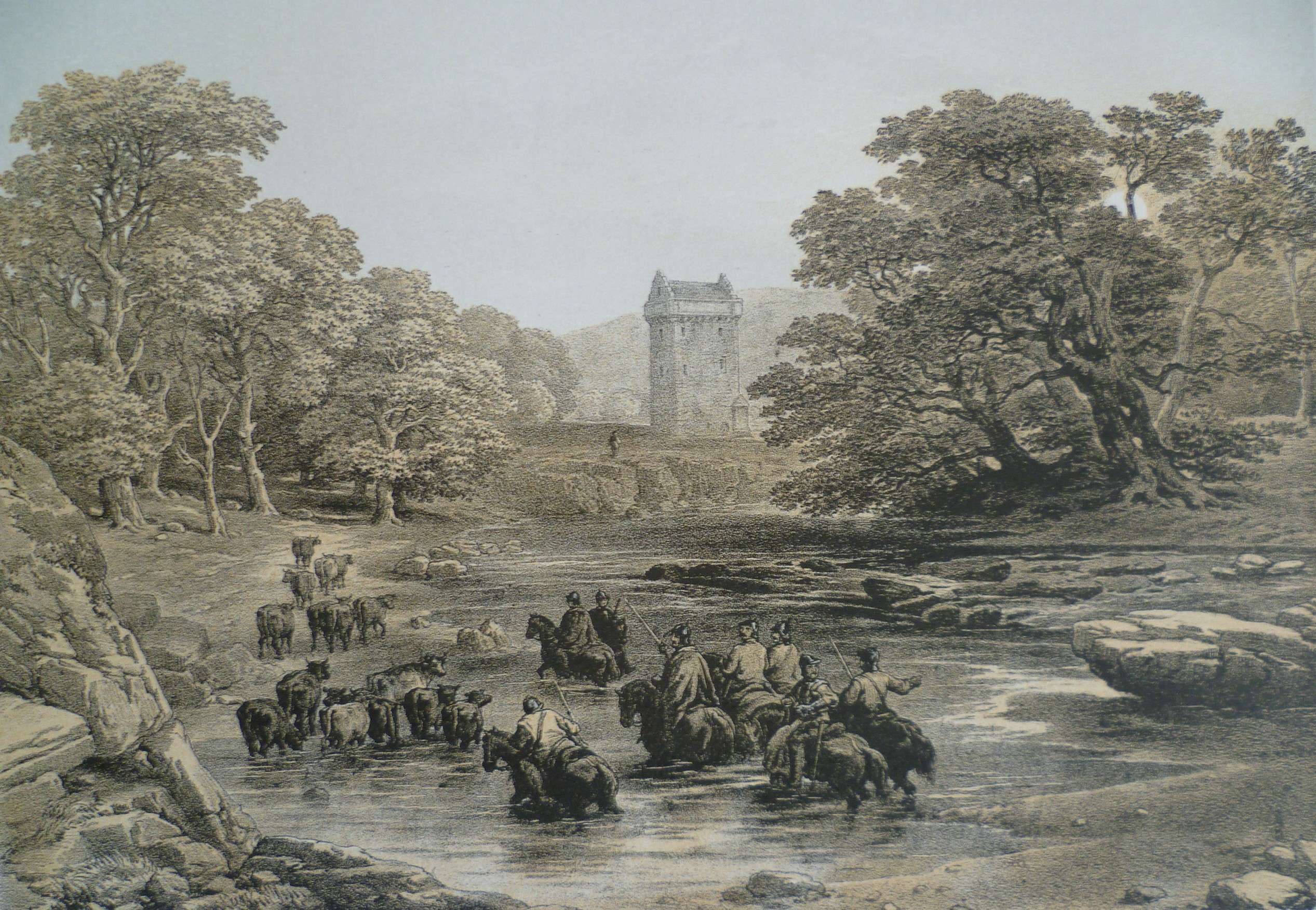
500 years ago this year, the Archbishop of Glasgow Gavin Dunbar issued the most extraordinary curse against the lawless reivers – the gangs who raided across the Scots/ English border and who wreaked havoc on the lives of ordinary folk. The 1069-word curse in Scots was designed to be read out by priests in churches in the border lands and is amazingly thorough, cursing everything from their body parts to their animals and vegetables, as Judy Vickers explains.
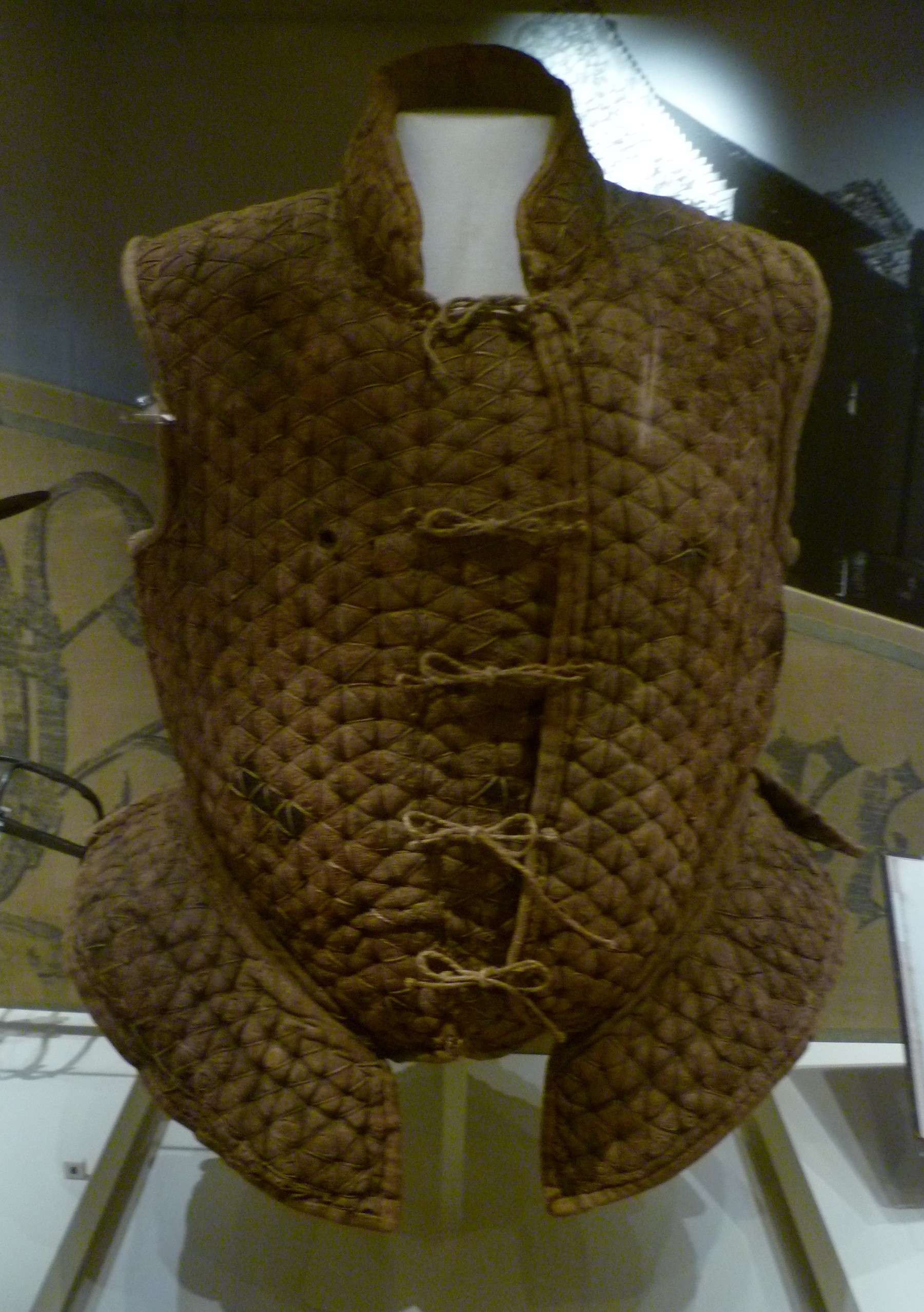
The early 16th century was not a good time to be living on the lands on either side of the Scottish-English border. True, there was no point in the previous few centuries – ever since the Scottish-English border had started to form its modern route in the 11th century – where life had exactly been easy. Murder, theft, rape, kidnap and blackmail were part and parcel of everyday life. Cattle raids across the border could involve anything from a handful of men to 3,000 – a mini army, all armed and in their “steel bonnets” or helmets.
Reivers ruled
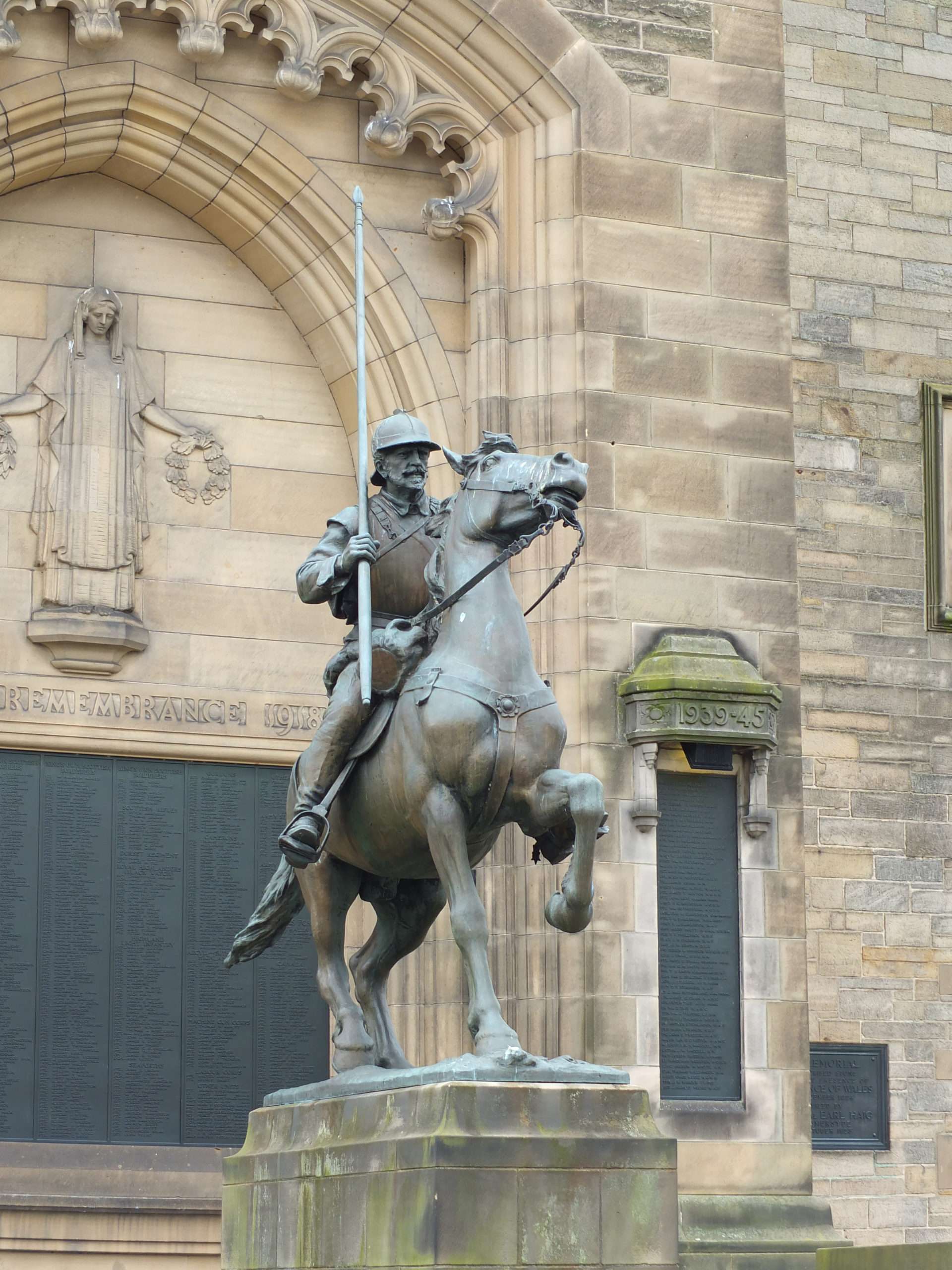
Reivers ruled – clans with more loyalty to family than distant king or country – and their colourful nicknames reveal the brutality of their existence – such as Jock “Half-Lugs” (Half-ears) Elliot, “Fingerless” Will Nixon and “Nebless” (Noseless) Clem Crozier. Many were killed in these cross-border skirmishes, including children, and clergy on both sides were not immune – a fine price could be raised by holding a man of the cloth ransom. Perhaps understandable then that 500 years ago this year, in 1525, an exasperated Archbishop of Glasgow, Gavin Dunbar, lost all patience with the lawless gangs and issued a spectacular and remarkably thorough 1069-word curse in Scots designed to be read out by priests in churches in the border lands.
It starts with their body parts, moving from head to toe – “I curse thair heid and all the haris of thair heid [I curse their head and all the hairs on their head] . . . to the soill of their feit [sole of their feet]” – then curses them whatever they are doing – sleeping, walking, riding, sitting, standing, drinking and eating. It then includes their wives, children, servants, their pigs, hens and geese, their barns, stables, ploughs and even their cabbage patches.
He then calls for a range of Biblical horrors, including the flood of Noah, the fires of Sodom and Gomorra and the plagues of Egypt, to be rained down on them. “May the waters of the Tweed and other waters which they use, drown them, as the Red Sea drowned King Pharaoh and the people of Egypt . . . May the earth open, split and cleave, and swallow them straight to hell,” he went on, forbidding any Christian to have anything to do with them, and concluding: “And, finally, I condemn them perpetually to the deep pit of hell, to remain with Lucifer and all his fellows, and their bodies to the gallows of the Burrow moor, first to be hanged, then torn apart with dogs, swine, and other wild beasts, abominable to all the world.”
The growl of a toothless lion
It is the longest recorded curse in the English language but sadly failed to have little effect. It was “the growl of a toothless lion” according to Robert Borland, a Borders minister, in his book about the raids written in 1898. This was an area semi-detached from the rule of law in either Scotland or England, ever since the border had started to form its modern route in the 11th century as Lothian – the area around and south of Edinburgh – was absorbed into the Scottish kingdom. Kings on both sides needed to keep Border lords sweet – they had a habit of changing side if they thought they could get a better deal. And government-appointed wardens were either ignored if they came from outside the area or stuck to family loyalties if local.
The border roughly followed the same line as it does now but there were many disputed sections – in the 13th century, six knights from Scotland and the same number from England attempted to walk the route but failed to agree, nor was a second attempt with double the number of knights any more successful. At the time of the curse, an area at the western end of the border was known as the Debatable Land – a lawless no man’s land, a haven for outlaws – with several other “disputed lands” along its length. At Ba’ Green, for instance, the land was said to be held for the year by whichever side – Scotland’s Coldstream or England’s Wark – won an annual game of football. Few places had such civilised contests though; Berwick on Tweed, at the east end of the border, changed hands several times over the centuries, often bloodily – in 1296 much of the town was destroyed and many inhabitants massacred by the English king Edward I.
The area even had its own special legislation. The Law of the Marches ran in the Borders, allowing for Days of Truce where each side was given safe conduct in a chosen town while wardens attempted to sort out murder, theft and other disputes. The unique border law also allowed for the “hot trod”, where wronged parties pursued cattle rustlers (complete with burning turf on the end of a lance) and executed summary justice if they came across the perpetrators red handed.
Notorious reiver families
And while the lives of the reivers (the name comes from the Old English meaning to rob) could sometimes be romanticised – the ballad of Johnnie Armstrong about the capture and execution of the leader of one of the most notorious reiver families has him squaring up bravely to the king – the preamble of the Archbishop’s curse or monition makes it clear how horrific times must have been for ordinary folk. “We hear how that men, wiffis and bairs, redeamed by the precious blood of our Saviour Jesus Christ, and living in his laws, are innocently part murdered, part slain, burned, hurt, spoiled and ripped, openly by daylight and under silence of the night, and their farms and lands laid waste, and their self banished therefor.”
Dunbar, a fierce opponent of the new Protestant religion who oversaw the burning of heretics, was from an influential figure. His uncle was Archbishop of Aberdeen, he was tutor to the young James V and was made Lord Chancellor in 1528. But he was cursing at a bad time – the Battle of Flodden just 12 years earlier in 1513 had seen the death of the Scottish king James IV and the political situation between the two nations was unstable and volatile.
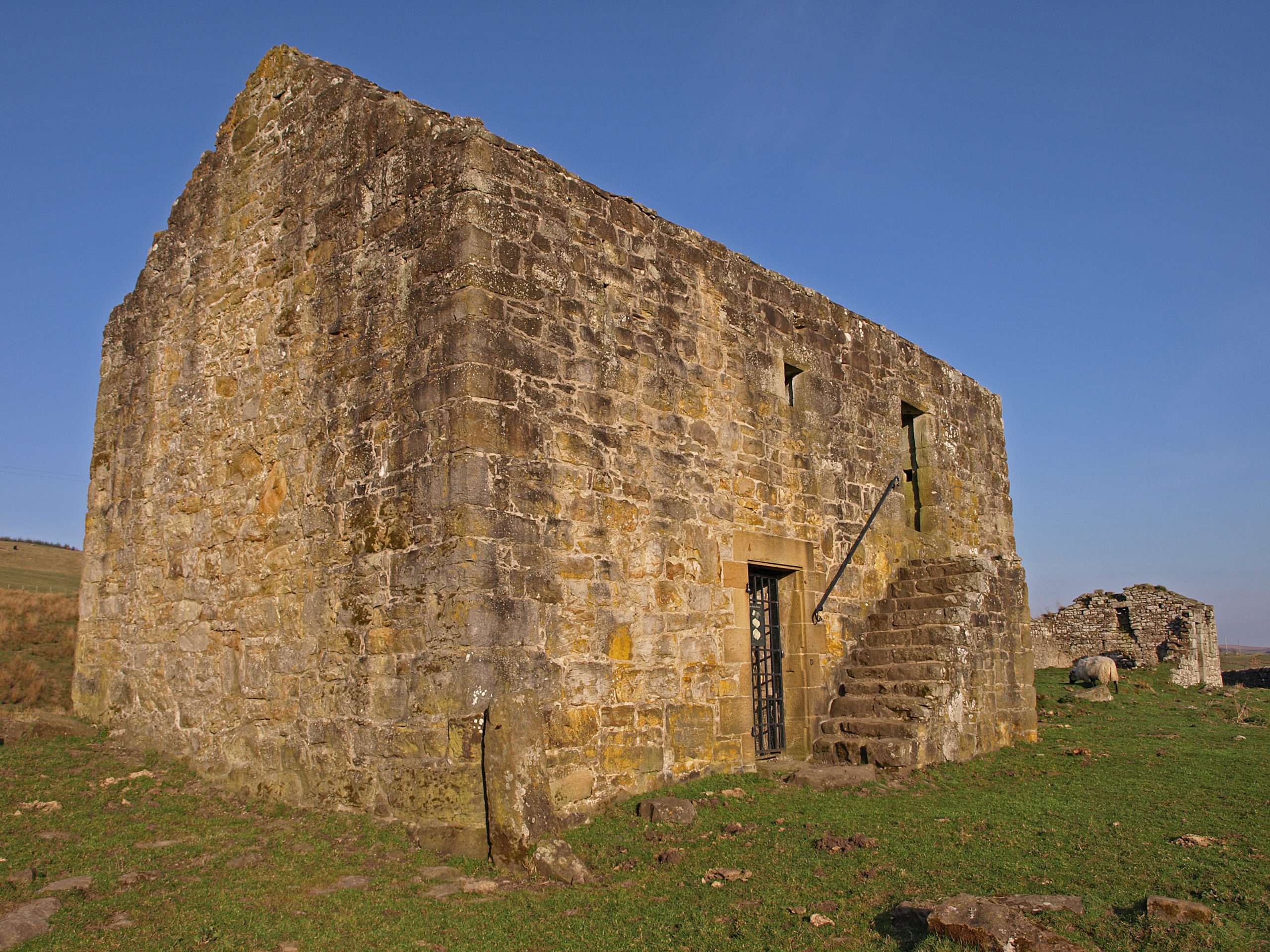
The reivers continued in their lawless ways then – during the reign of the English queen Elizabeth I later in the century there was even talk of rebuilding Hadrian’s Wall to contain the violence. Bastle houses – with the living quarters on the upper floor with any attackers having to climb a single defendable staircase – were common on both sides of the border. But it was only when the Scottish king James VI also took the crown of England that the reivers’ days were numbered. No longer were there two sides to play off against each other and eventually the reivers were clamped down on with many hanged or banished to Ulster.
Main photo: Reivers raid on Gilnockie Tower. Credit: G Cattermole, Public domain, via Wikimedia Commons.
Support the Scottish Banner! To donate to assist with production of our publication and website visit: The Scottish Banner