
Oh, the summertime has come
and the trees are sweetly bloomin’
the wild mountain thyme
grows around the blooming heather
will ye go, lassie, go?
So opens the classic folk song Wild Mountain Thyme, based on poet Robert Tannahill’s early 19th century composition, The Braes of Balquhither. In just a few lines this love song paints a vivid picture of the promise and plenty of summer in the Scottish Highlands. It is a scene inextricably tied to a way of life long lost — the annual migration of people and their cattle to the summer shielings where such wonders awaited them.
Until the very time when The Braes of Balquhither was composed, from springtime through summer people from rural communities across Scotland left their permanent homes and accompanied livestock into the hills where they could be grazed on open, common ground. The notion of uprooting for several months of the year may seem unthinkable to modern people unless for a holiday, but for most of human history across much of the globe this was the norm.
Different communities varied the exact timings, but in general the typical shieling season went like this: upland grazing lasted from April through August, with animals accompanied into the hills categorically by age and desired output. Each group would graze for around a month before being brought back to the settlements and another led away in turn. Young animals – mostly cattle, horses, and sheep – would be brought out first in April, followed by dairy producing animals in May.
Shieling season
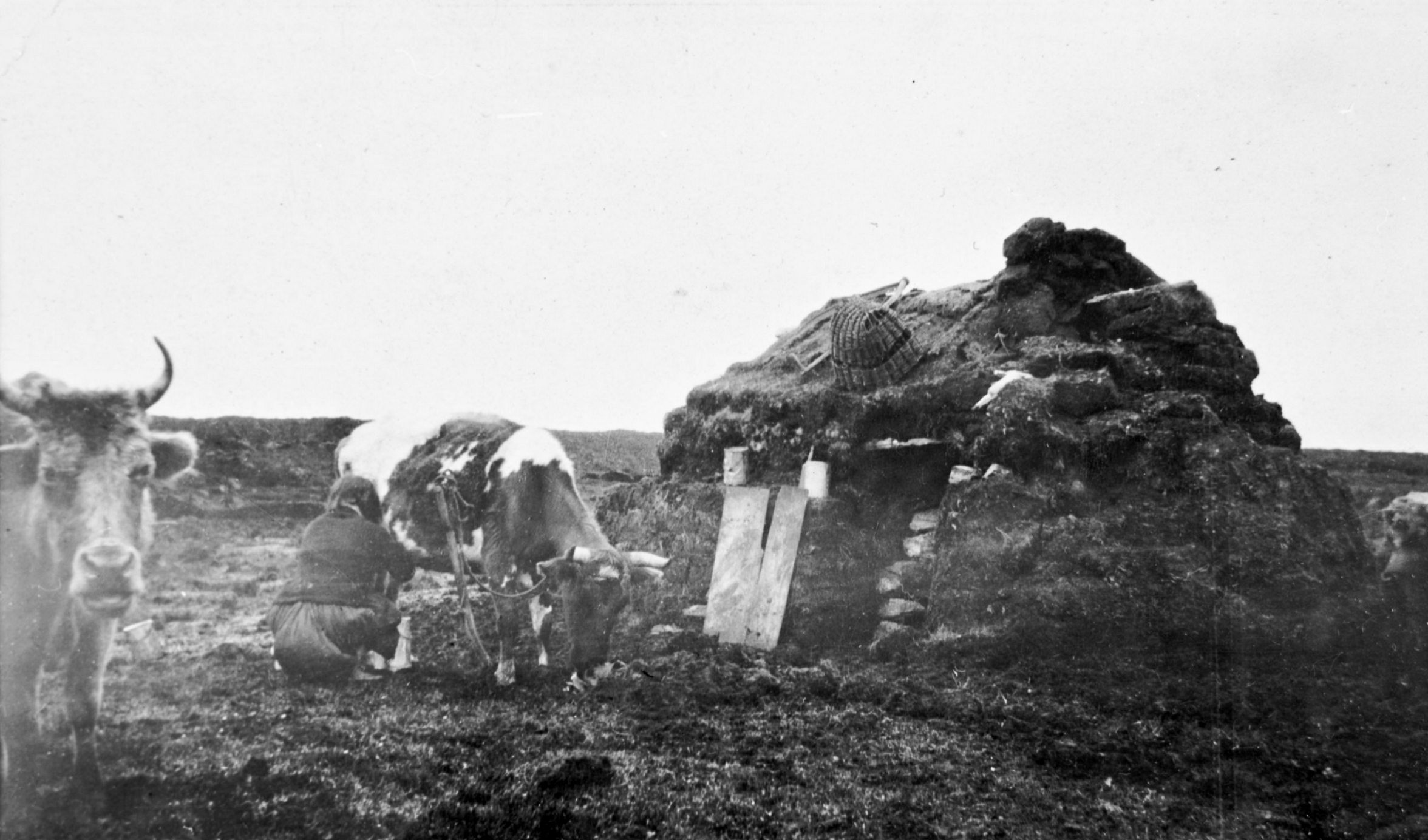
Since dairy cattle needed to be milked daily, dairymaids accompanied them and lived with them in shielings all through the summer. This meant that a sizeable portion of any given community, mainly girls and women, were away in the shielings, returning only occasionally. It was a time of great merriment when they rejoined their villages in August with groups of fattened, productive livestock in tow.
This movement of livestock and attendant people into the upland shielings was at the heart of the ancient practice of transhumance. It is the seasonal movement of people away from their permanent residences into a wider landscape of habitation and productivity, known to anthropologists as a ‘task-scape’. Transhumance was and still is practiced by cultures around the world and was designated as part of the ‘Intangible Cultural Heritage of Humanity’ by UNESCO in 2023.
If one were to walk into the hills in summer you would likely hear singing coming from the shielings as the women set their work to a rhythm. Boys would often bring flutes or fiddles and, as you might imagine, many a romantic pairing blossomed among the shielings. The shielings and transhumance system were not separate from community life, but a fundamental part of it.
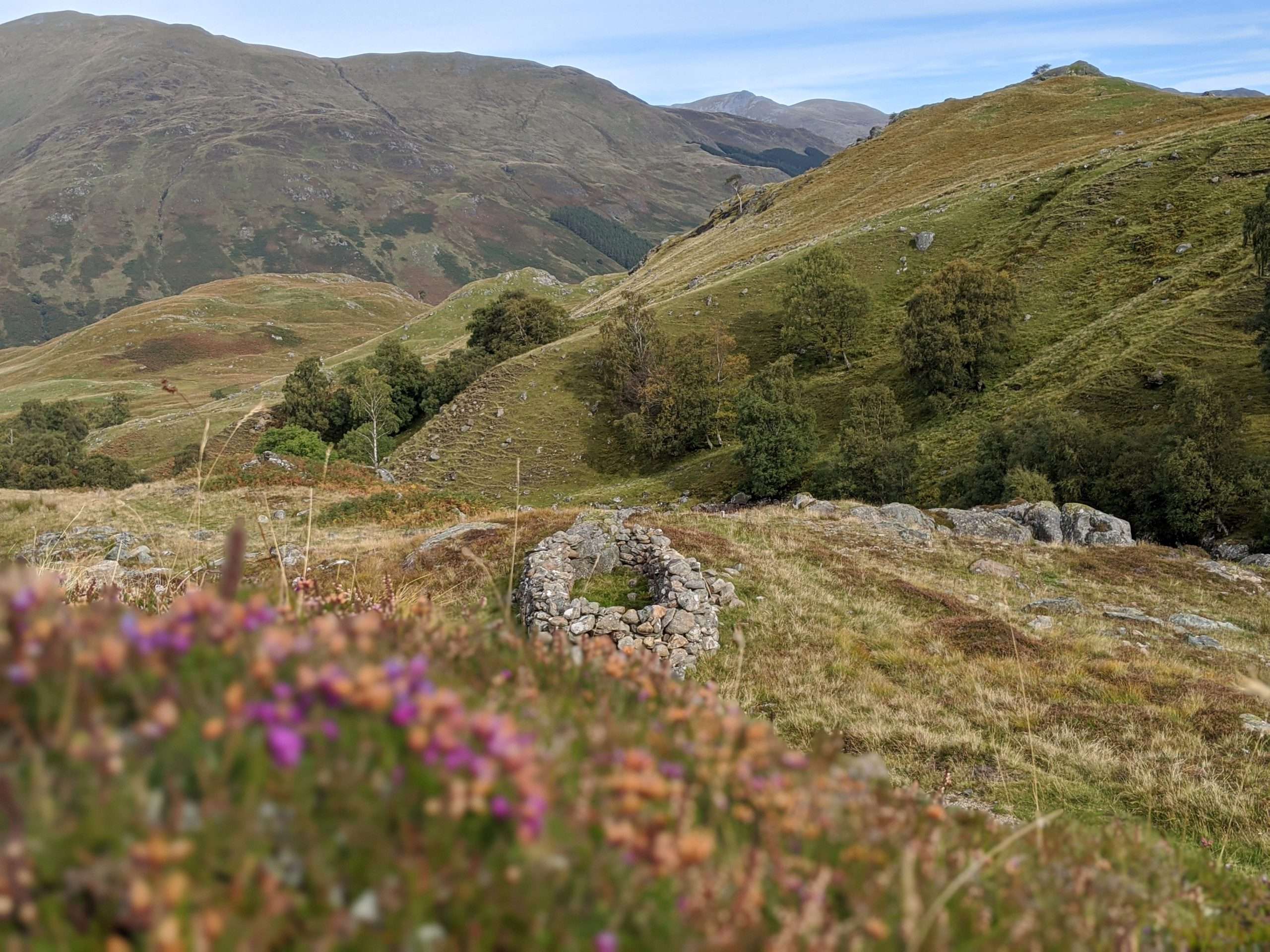
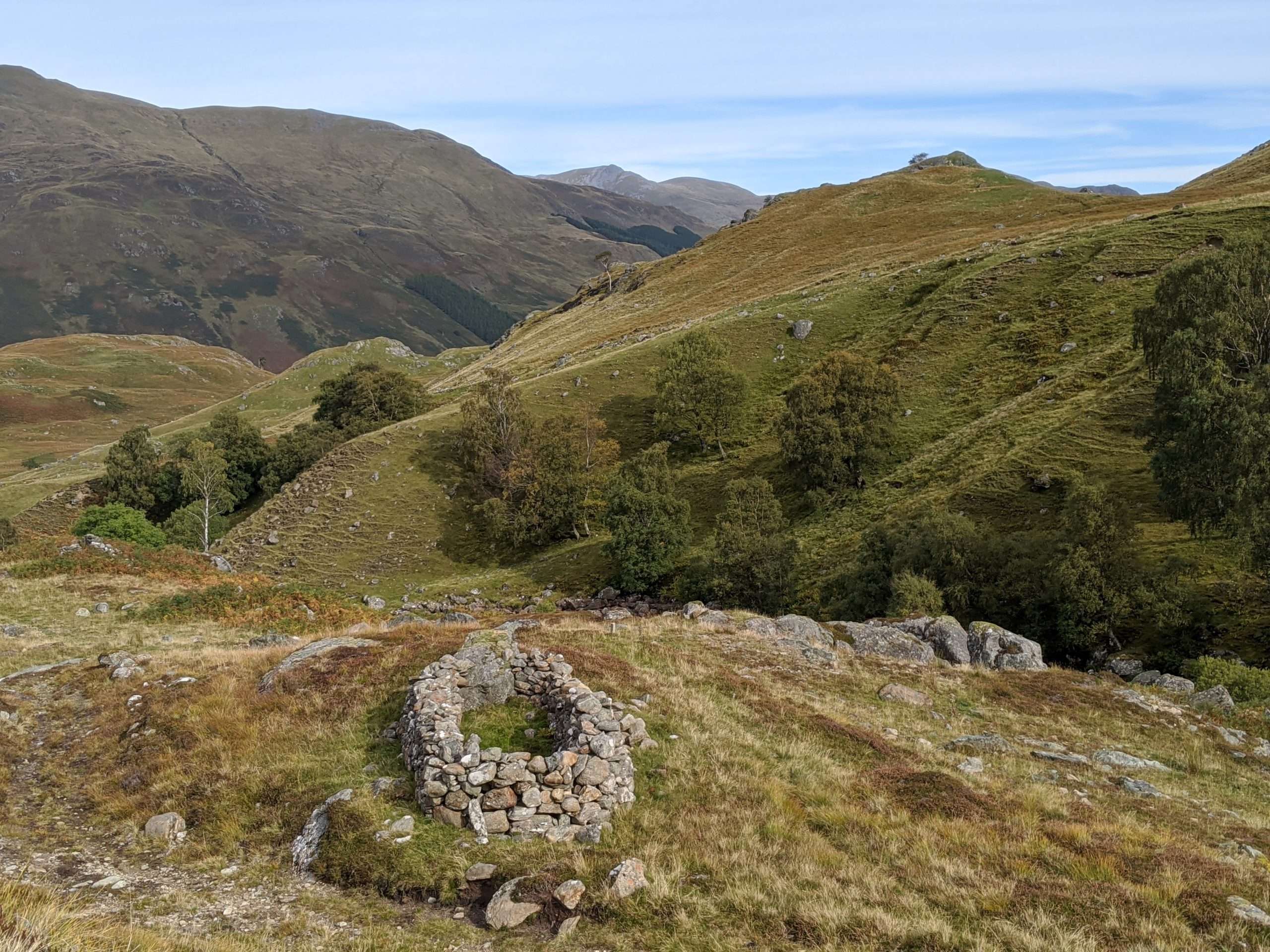
The shielings themselves are still with us. The remains of thousands of small drystone structures dot the upland slopes of Scotland, often in small clusters near burns and under the shelter of hillocks or rock faces. Some shielings, especially in the Outer Hebrides and Northwest Highlands, were made from dried peat and earth and have vanished altogether. Some, in a fascinating interplay with the far more distant past, were raised atop and within Bronze Age and Iron Age structures like hillforts, duns, and wheelhouses. Many place names in Scotland are derived from this practice. Places incorporating ‘shiel’ as in Loch Shiel, ‘airigh’ as in Gleann Airigh in Argyll, and ‘ruighe’ as in Portree (Port Ruighe) in Skye all harken back to it.
Source of much folklore
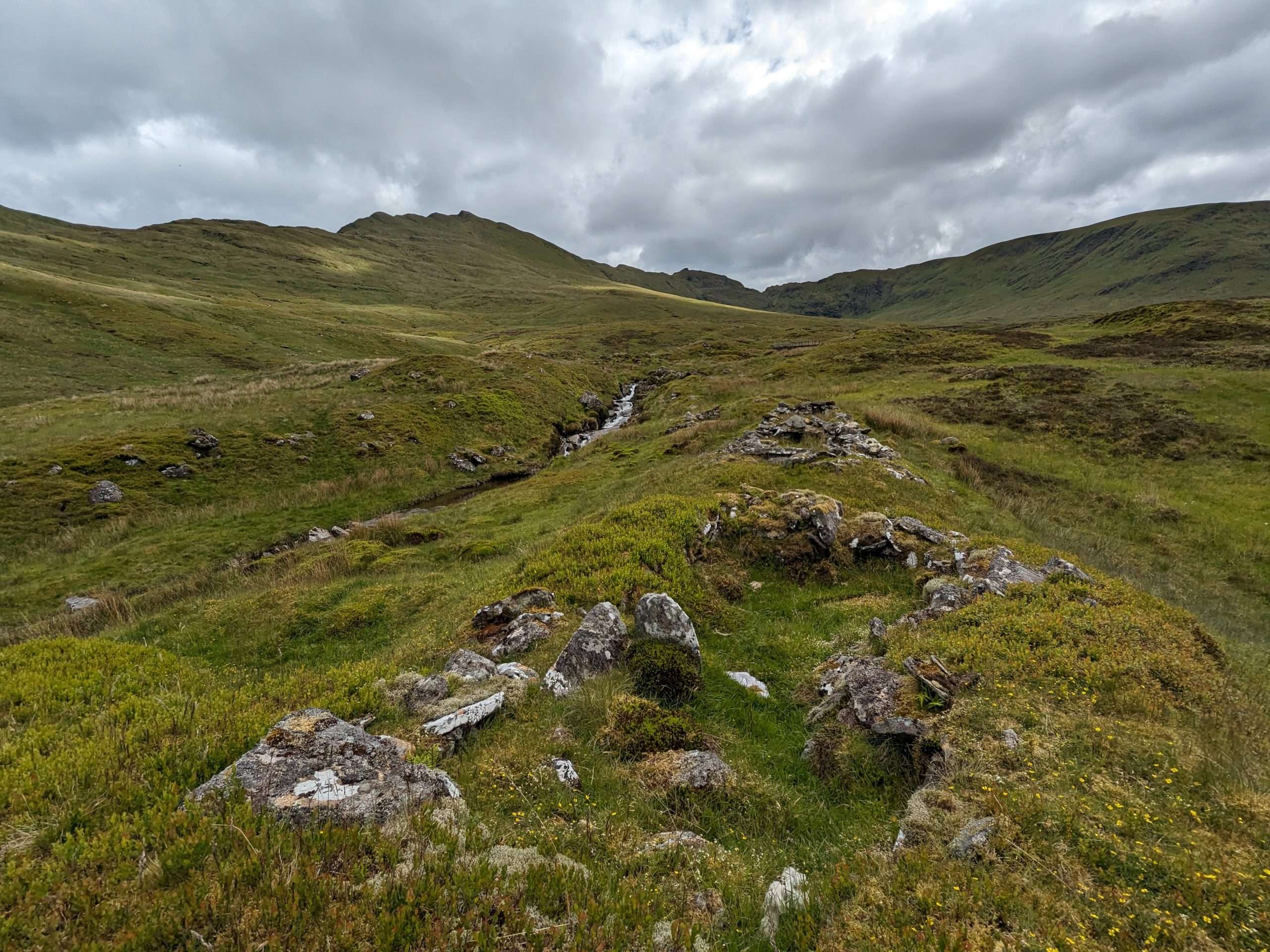
Often situated in isolated, windswept areas far from the lights of villages, it’s no wonder that shielings were the source of much folklore – much of it sinister. By definition, shielings existed beyond the well-trodden, cultivated areas of human settlement, on the other side of the turf dykes which demarcated the boundaries of many rural communities. Upland areas are now, and were then, perceived as ‘liminal places’ straddling the line between civilisation and wilderness, between the known and the unknown. They are often replete with pools and lochans as well as caves, rock shelters, and glacial mounds. This makes such areas the perfect environment for entities like trows, giants, fairy folk, and water-horses.
On the Orcadian island of Rousay, the upland Loch of Knitchen is home to a water-horse who blends in with the herds brought up to graze by the shore-dwellers. When the hapless attendant, often a young man or woman, lays their hand on it to return it to their village they are dragged into the water and devoured. A similar tale haunts Loch an Eich Uisge – the Loch of the Water-horse – in Barra, where a young dairymaid narrowly avoided a gruesome fate by cleverly escaping a water-horse who took the form of a dashing young man. Nearby that loch is the Shieling of the One Night, so-called because shieling-dwellers refused to stay in it for more than a single night. Disturbances were attributed not just to the water-horse but to devils in a nearby cave which is said to lead into the centre of the island.
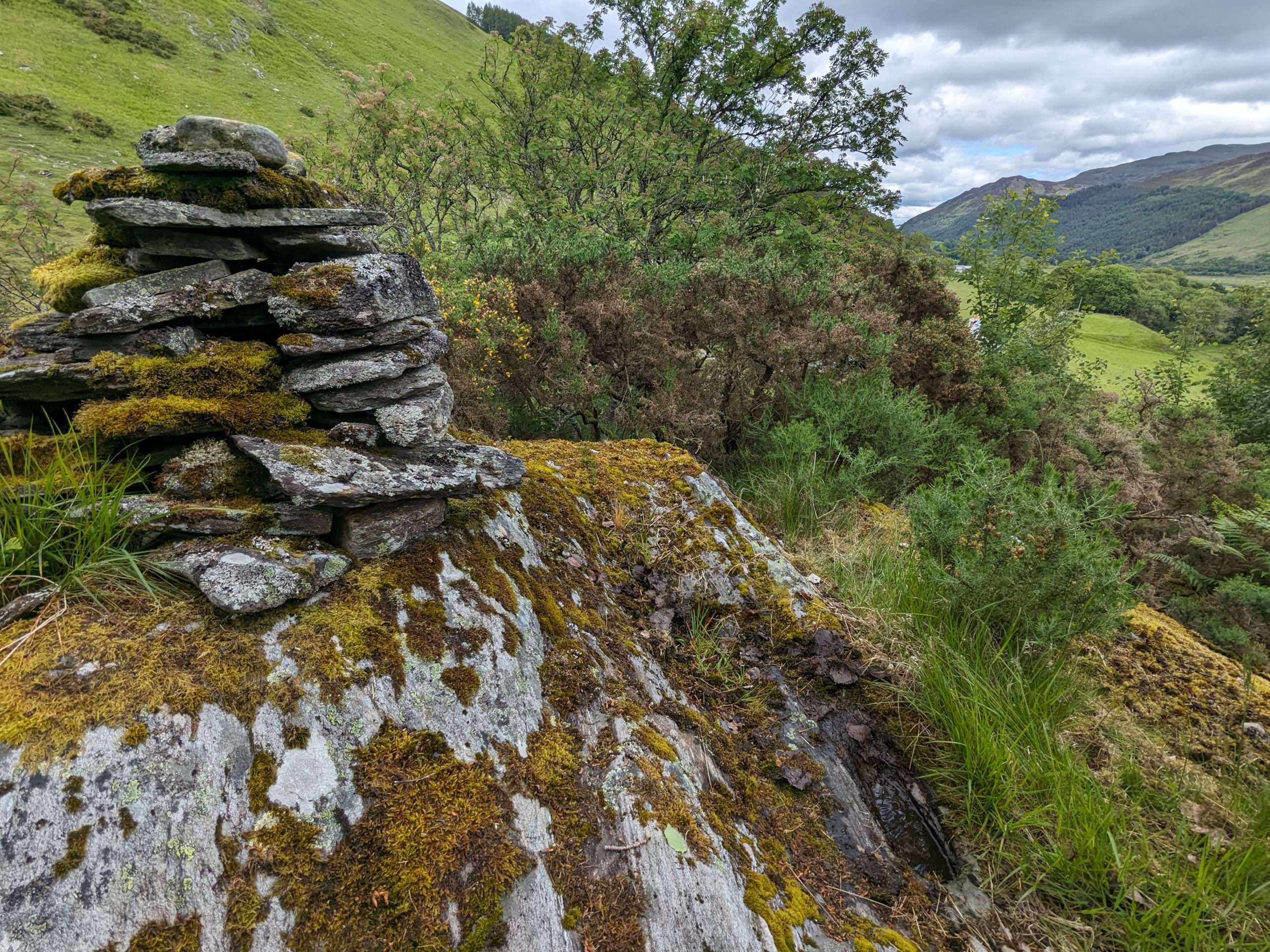
Some beings even had shielings of their own. Pallaidh, the king of the úruisgean (also known as brownies or broonies), had his summer dwelling at Ruighe Pheallaidh in Glen Lyon while living for the rest of the year along the waterfalls above the town named after him, Aberfeldy (Obar Pheallaidh). He even left a footprint in a stone outcrop in Glen Lyon which is sometimes also attributed to Saint Palladius from the 5th century.
A major factor that ended transhumance and shieling culture in Scotland was the arrival of the Cheviot and Blackface sheep breeds. As discussed in my May article on How sheep conquered Scotland, these breeds required extensive and intensive access to lower, fertile grazing grounds, shifting communal priorities away from the uplands. The 18th and 19th centuries were also times of land enclosure, consolidation, and clearance, leading to the emptying of entire communities and the abandonment of huge swathes of upland areas once home to hundreds of seasonal shielings.
Back in vogue
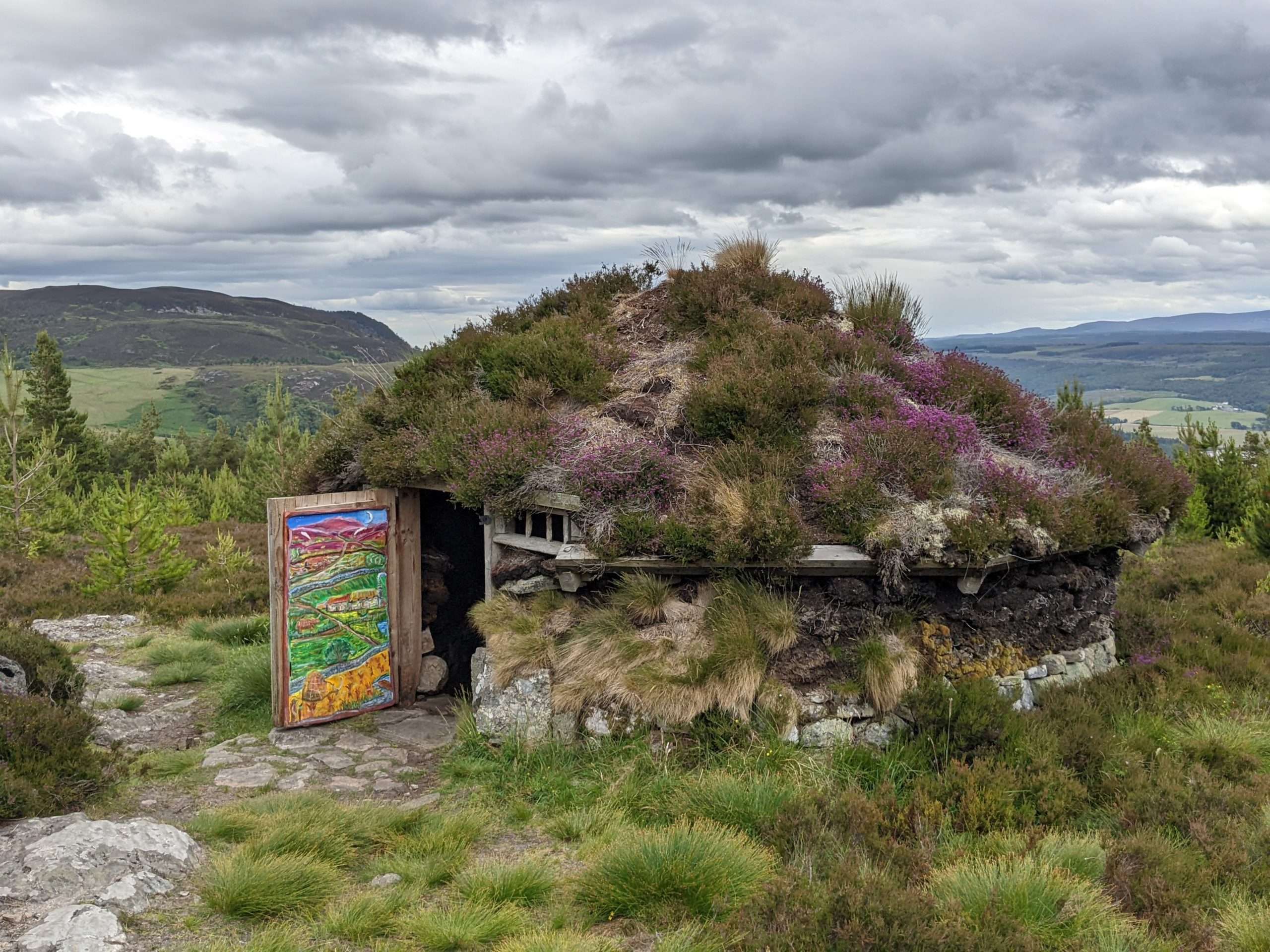
Today, shielings are coming back in vogue. Modern architects have used shielings as the inspiration for new homes built across the Highlands and Islands, and several conservation areas – such as Abriachan Wood near Loch ness – have reconstructed shielings to use as arts spaces. I fondly recall the sense of calm and community fostered by the Abriachan shieling while on a writing retreat with Moniack Mhor, during which we read poems and warmed ourselves in its shelter.
So, as the summertime comes and the trees are sweetly bloomin’, cast your mind back to a time when the lasses led the cows to the hills, the shielings rang out with music, and the circle of community life among Scotland’s rural landscapes gained another golden notch.
By: David C. Weinczok
Support the Scottish Banner! To donate to assist with production of our publication and website visit: The Scottish Banner