
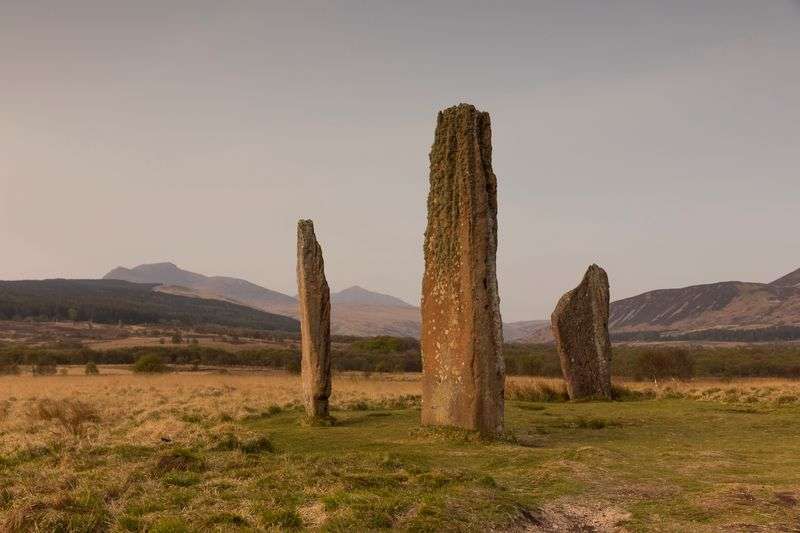
Ancient stone structures can be found across Scotland, dating back thousands of years, offering the visitor an insight into Scotland’s incredible ancient communities. Steeped in history and surrounded by legends these mystical megalithic monuments tell us a story of civilizations long before us, who celebrated their most important ceremonies and rituals amongst them, and the importance these mysterious monuments have had for generations.
While thousands flock to Stonehenge each year, Scotland’s ancient standing stones offer a more peaceful alternative, with the added bonus of spectacular scenery and fewer crowds. Online searches for “standing stones” in Scotland has risen by 101% over the past quarter.
Tapping into this growing trend, VisitScotland has launched a refreshed guide to the country’s most atmospheric stone circles, helping travellers experience these ancient places that feel truly off the beaten path. Each year, more people are drawn to these ancient sites to watch the sunrise, honour seasonal change, or simply find a moment of connection and calm. From weathered stone circles on remote islands to mysterious alignments in wild glens, these make for the ideal locations for those looking to welcome the sun in a more reflective way. Here we look at just some of the incredible historical sites you can find on your next visit to Scotland.
Kilmartin Glen, Argyll
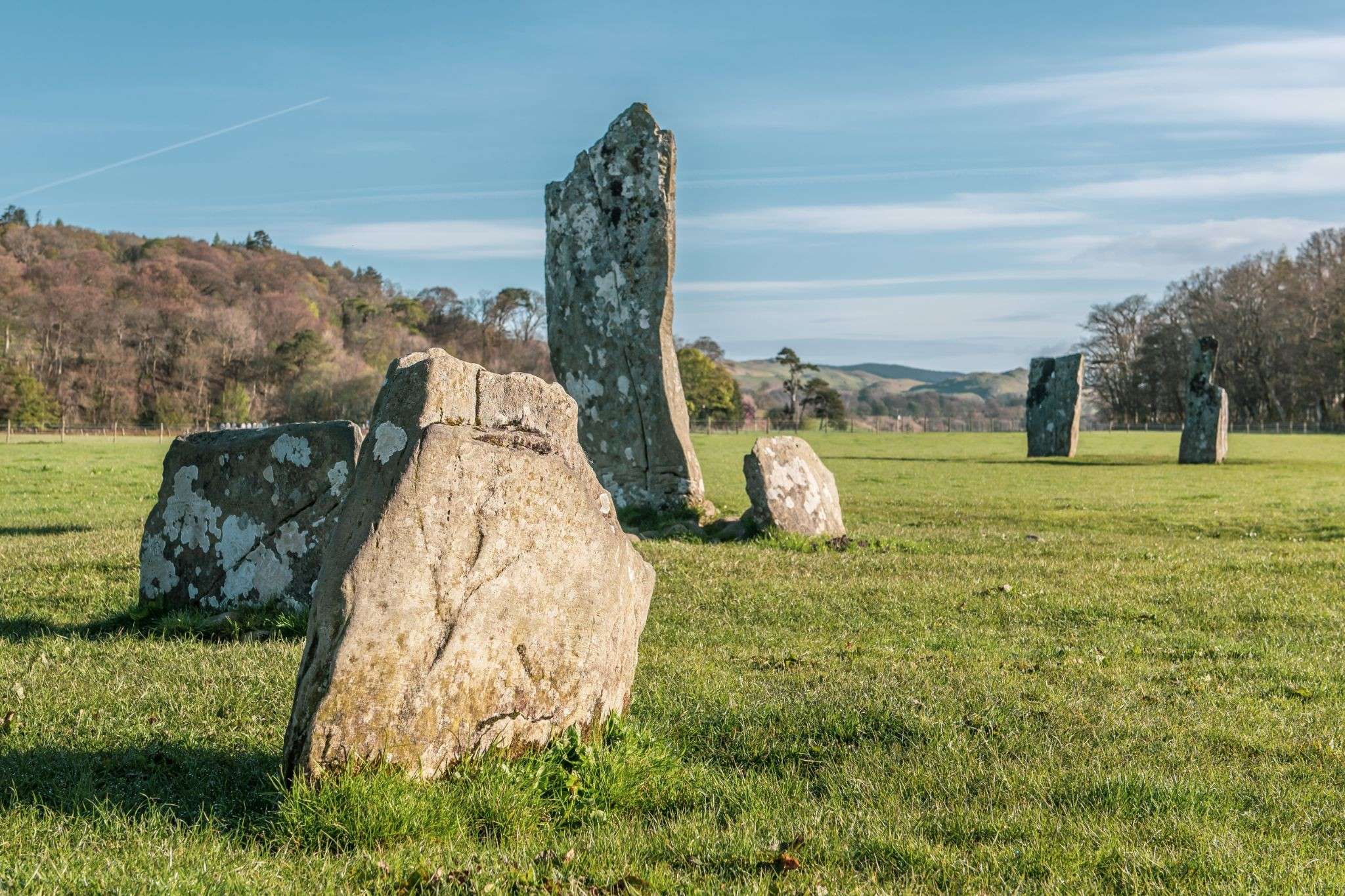
The ancient area of Kilmartin Glen in Argyll is home to more than 350 ancient monuments, including both the Nether Largie Standing Stones and the Temple Wood Stone Circle. The Nether Largie Stones are among the most significant prehistoric monuments in Scotland. Believed to be over 5,000 years old, the stones are thought to align with key astronomical events, including the midsummer sunrise. Set against a backdrop of green hills and misty moorland, the site offers an evocative space to experience the Solstice.
Temple Wood’s 13 standing stones form one of the best-preserved stone circles in the area. The site’s use began before 3000 BC and continued into the Bronze Age, with evidence of an earlier timber circle predating the stones by nearly 2,000 years. It’s a quietly evocative place that adds even more depth to the glen’s rich prehistoric landscape. To begin your journey, Kilmartin Museum is an essential first stop. Recently redeveloped, the museum provides fascinating context on the area’s archaeological heritage and offers a self-guided trail map linking many of the glen’s key sites by foot.
Machrie Moor Standing Stones, Isle of Arran
Recently named as an official UNESCO Global Geopark, the Isle of Arran boasts one of the most remarkable ancient landscapes in Britain. Situated on the west coast of the Isle, Machrie Moor is home to six stone circles, each with its own formation, age and story. The tallest stones, some rising over four metres, create a striking silhouette against the open sky. Reached via a one-mile path across moorland, this wild and windswept setting offers an atmospheric experience. As the sun dips or rises over the hills, the scale and symmetry of these ancient stones take on an otherworldly glow.
Sueno’s Stone, Moray Speyside
Towering at nearly 7 metres tall, Sueno’s Stone is Scotland’s tallest and most intricately carved Pictish monument. Situated on the eastern edge of Forres in Moray Speyside, this monumental cross-slab dates from the late 9th or early 10th century and was most likely designed to be a landmark, visible from a great distance. The stone still remains in its original location, a rarity among early medieval carved stones.
Enclosed within a protective glass structure, Sueno’s Stone is accessible year-round and free to visit. Its proximity to other landmarks, such as Brodie Castle, a grand 16th century castle that was the ancestral home of the Brodie clan for over 400 years, and Macbeth’s Hillock, where Shakespeare’s Macbeth is said to have met the three witches, makes it a great choice for those interested in Scotland’s history, both factitious and historical.
Clava Cairns, Inverness
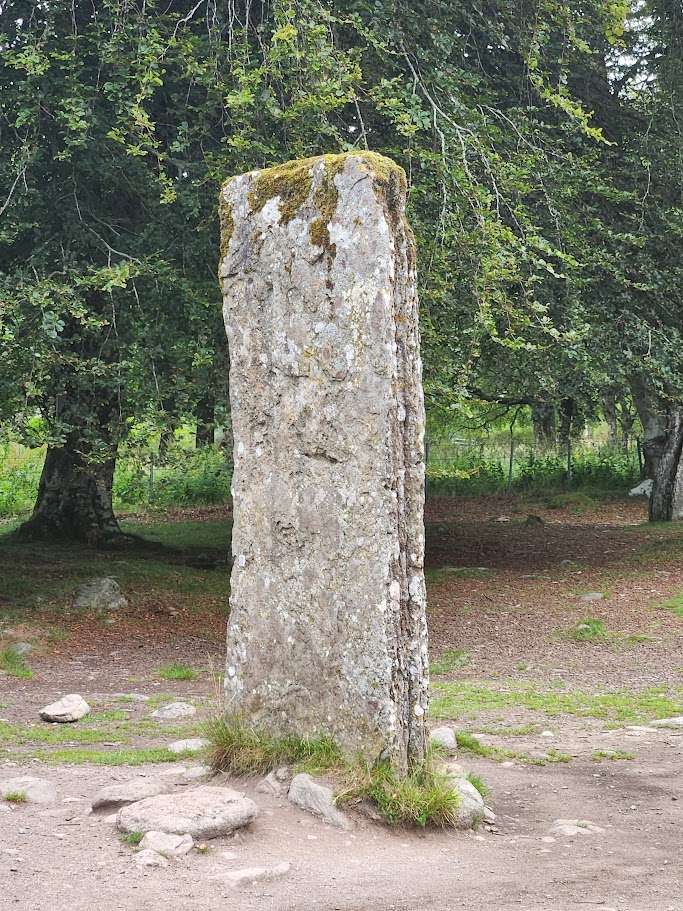
Only a 20-minute drive from Inverness, Clava Cairns is one of Scotland’s most hauntingly beautiful prehistoric sites. This well-preserved Bronze Age cemetery complex features ring cairns, passage graves and standing stones, nestled in a quiet woodland setting. Built over 4,000 years ago, it’s thought the site may have been aligned with the midwinter sunset, but its spiritual atmosphere makes it a special place to visit at any seasonal turning point, including the Summer Solstice.
Steeped in myth and mystery, Clava Cairns has inspired everything from archaeological theories to fictional tales; it’s even said to have influenced the Craigh na Dun stones in the Outlander series. Visiting offers a chance to reflect, recharge, and experience a powerful sense of continuity between past and present. Just a short distance away you can also find the Culloden Battlefield Visitor Centre, offering powerful insight into one of Scotland’s defining historic moments and providing an added layer of context for those exploring the area’s deep cultural roots.
Achavanich, Caithness
In the far North Highlands lies Achavanich, one of the country’s most enigmatic and distinctive prehistoric sites. Dating back over 4,000 years, this unusual horseshoe shaped arrangement sees its stones positioned with their broadest faces turned inward toward the centre, an orientation rarely seen in other stone circles across Scotland or beyond. Perched on a plateau near Loch Stemster, Achavanich offers a sense of scale and solitude that’s hard to match. Its remote location, dramatic skies, and curious construction make it an immersive place to reflect. With minimal light pollution and few visitors, it’s one of the most peaceful places in the country to mark the turning of the seasons.
The site lies within the Flow Country, the UK’s newest UNESCO World Heritage Site and the world’s first Peatland World Heritage Site. Considered the most outstanding example of an actively accumulating blanket bog landscape, the peatland ecosystem has been accumulating for the past 9,000 years. Nearby, you can visit the scenic Loch Rangag, which offers sweeping views across the peatlands, and the remains of Rangag Broch, one of many ancient landmarks that speak to Caithness’s remarkable archaeological past.
Ring of Brodgar, Orkney

The Ring of Brodgar is believed to have been constructed sometime between 2600 and 2400 BC. The surrounding burial mounds and stone setting likely date from between 2500 and 1500. The stone ring was built in a true circle, 104 metres wide and originally contained sixty megaliths; today only twenty-seven of these stones remain.
The reason for the creation of the Ring of Brodgar, which would have been a considerable amount of work in that time, is not known for sure, perhaps as an astronomical observatory, religious shrine or rituals. The Ring of Brodgar along with Stones of Stenness, Maeshowe and Skara Brae make up the Heart of Neolithic Orkney, awarded UNESCO World Heritage status in 1999.
Ballochroy Standing Stones, Kintyre Peninsula
Located near the western shore of the Kintyre Peninsula, the Ballochroy stones are thought to be aligned with distant mountain peaks and possibly even midsummer sunsets. The three tall stones sit in a line with views across to the island of Jura, creating a natural observatory that links sky, sea and stone. It’s an ideal place for those seeking a raw, elemental Solstice experience.
The stones form part of the scenic Kintyre 66 route, which loops around the peninsula and highlights its natural beauty and heritage. Nearby, you can explore the harbour town of Campbeltown, known for its distilleries and historic waterfront, or take a short ferry to the peaceful island of Gigha, home to white-sand beaches and views across to Islay and Jura. It’s a corner of Scotland where ancient landscapes and island calm come together.
Calanais Standing Stones, Isle of Lewis
The Calanais Standing Stones were erected between 2900 and 2600 BC – before the main circle at England’s Stonehenge. Ritual activity at the site may have continued for 2000 years. The area inside the circle was levelled and the site gradually became covered with peat between 1000 and 500 BC. Peat cutting around the site in 1857 revealed the true height of the stones. It’s possible that there’s plenty more archaeology sealed beneath the peat that covers much of the Western Isles.
There are at least 11 smaller stone circles surrounding Calanais. Some of these date from much later than the central circle, which indicates the complex was in use for several centuries. These are crucial to help with the understanding of the significance of this area, and how the landscape was used by prehistoric people. The stones are set on a prominent ridge, easily visible from land and sea for miles around.
To find out more about Scotland’s standing stones, please visit: www.visitscotland.com/things-to-do/attractions/historic/standing-stones
Main photo: Machrie Moor Standing Stones. Photo: VisitScotland.