
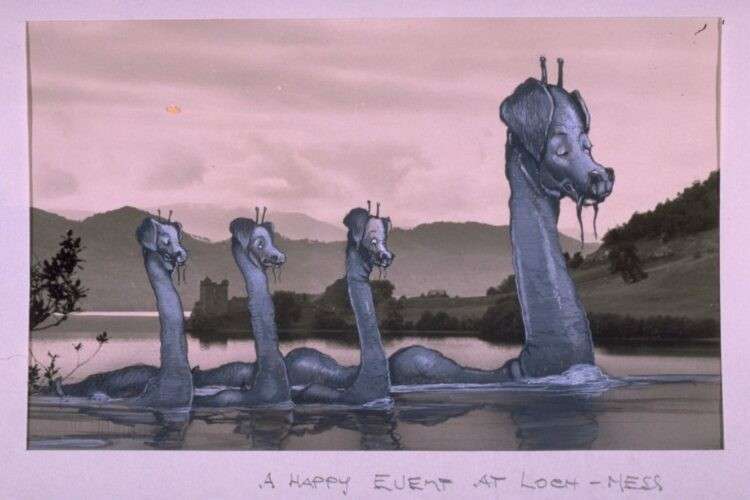
New research from the University of St Andrews has shown that those who claim to see the Loch Ness Monster are not influenced by traditional depictions of what she looks like. Throughout history, people have drawn serpentine aquatic monsters that undulate vertically at the surface of the water with visible humps. Even today Nessie memorabilia depicts the monster as having three humps.
In a new paper, published in the history of science journal Endeavour, Dr Charles Paxton of the University of St Andrews and Adrian Shine of the Loch Ness Centre looked at the history of hooped sea monster imagery and considered its current cultural prevalence. They investigated the frequency of such imagery in postcards, finding that around 25-32% of all Nessie postcards have hooped imagery. However, this swimming method would be very inefficient, so no real animals would swim this way at the surface.
Portrayals of monsters
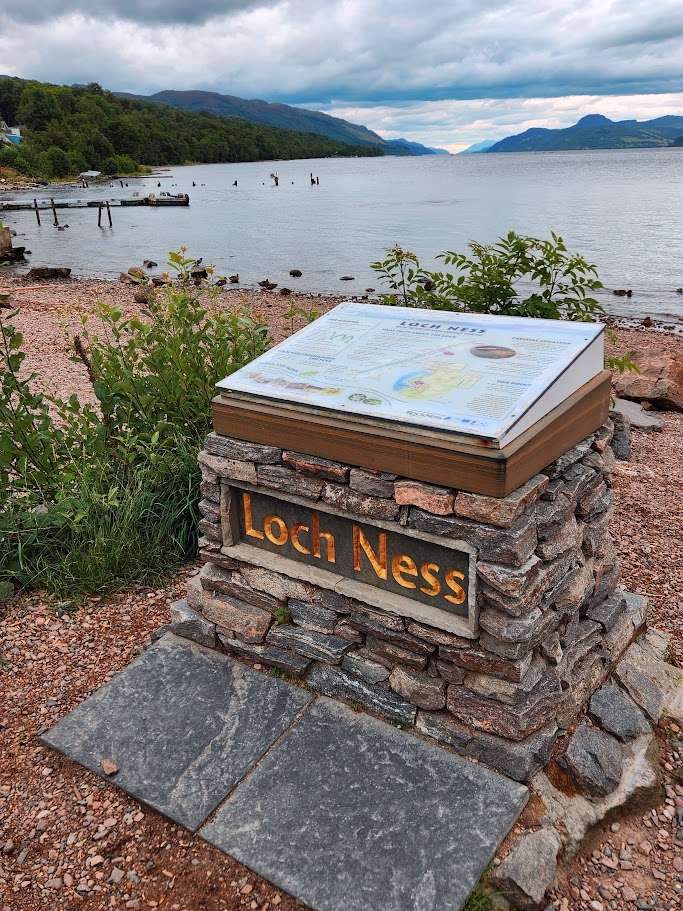
Those who claim to have seen Nessie seldom report hoops or humps – such description only occurs in around 1.5% of Nessie reports, implying that witnesses are not influenced by all the souvenirs and postcard imagery. This result goes against previous work which suggests witnesses are quite often influenced by media and other portrayals of monsters.
In the Nessie case, witnesses may not have seen a real monster, but these recent results do suggest that most witnesses do try to report what they experienced. Dr Paxton, from the University’s Centre for Research into Ecological and Environmental Modelling (CREEM), said: “Scholars often assume that monsters are generated by cultural expectations, but it is always useful to test obvious hypotheses. In this case it really seems witness do not generally report the impossible, even though the hooped monster is a common portrayal of Nessie.”