
August 2025 (Vol. 49, Number 02)
The Banner Says…
The evacuation from the ‘Edge of the World’
-
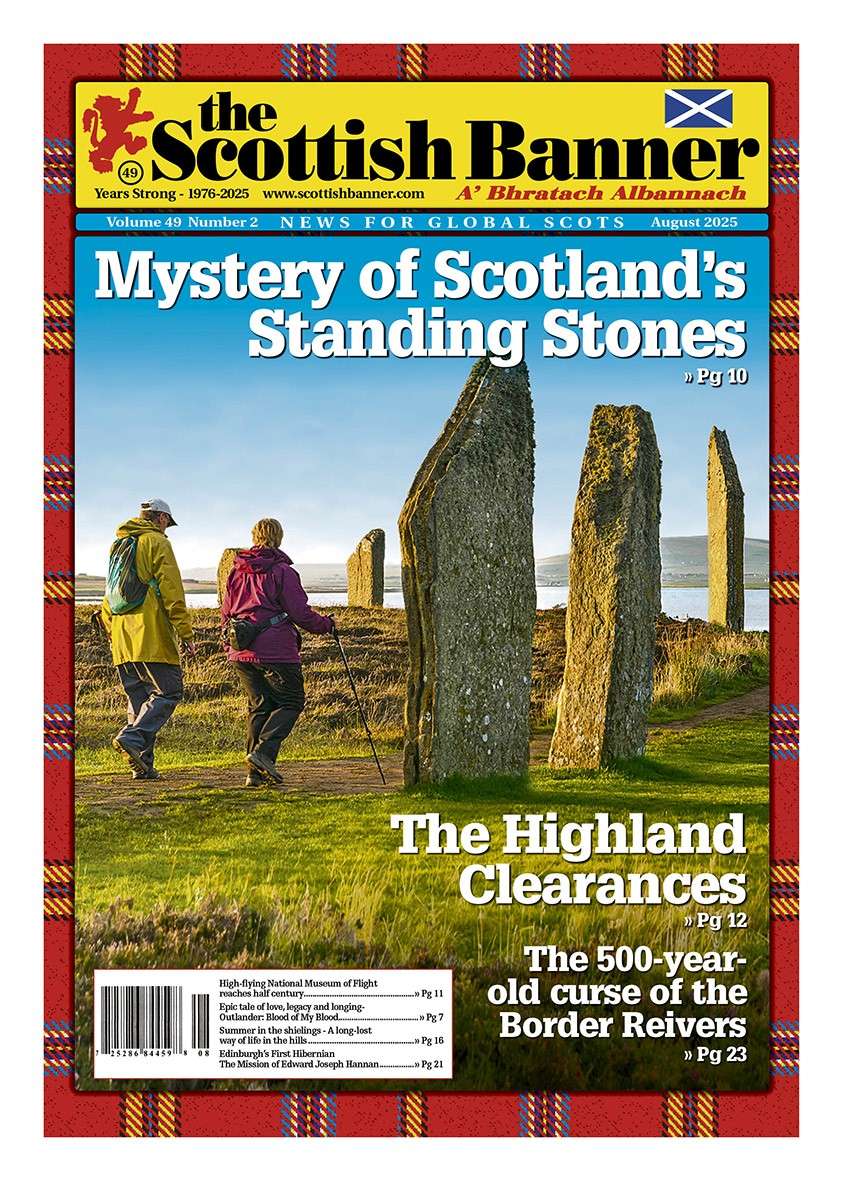
Ring of Brodgar, Orkney. Photo: VisitScotland/Kenny Lam.
Ninety-five years ago this month one of Scotland’s most famous island stories took place as the last St Kildans took their final steps across the island of St Kilda. The evacuation of St Kilda on 29 August 1930 remains one of the most poignant episodes in Scottish history. This remote archipelago, located 40 miles west of the Outer Hebrides, had been inhabited for over two millennia. Its evacuation marked not just the end of a community, but the conclusion of a distinctive way of life shaped by isolation, resilience, and a deep connection to nature.
For centuries, the people of St Kilda lived in near-total seclusion. The islanders developed a unique culture, language dialect, and set of traditions adapted to their environment. Life was dictated by the rhythm of the sea, the availability of birds and fish, and the limited arable land. They harvested seabirds, built stone houses resistant to Atlantic storms, and used bartering with passing vessels to acquire basic necessities.
Hirta, the largest island, was the site of the only settlement on St Kilda, which never had more than 200 residents at a time. The smaller islands of Soay, Boreray and Dun offered additional crop and cattle farming for the island community.
A cultural dislocation
However, by the early 20th century, signs of fragility emerged. The population had declined steadily due to disease, infant deaths, emigration, and the hardships of maintaining life in such a hostile environment. The islands lacked a resident doctor, and supplies were increasingly inconsistent leading to the depopulation of the islands. A tragic outbreak of influenza in 1927 intensified the crisis, with just 43 residents left, prompting calls for government intervention. By 1930, the final remaining 36 islanders— facing famine, medical neglect, and social isolation—petitioned for evacuation.
Their request was granted, and they were relocated to the Scottish mainland with some ending up in more far-flung places like Australia and Canada. The departure from St Kilda wasn’t merely a logistical move—it was a cultural dislocation. Islanders were transplanted into a world vastly different from their own, struggling to adapt to industrial Scotland. Traditional skills were suddenly obsolete, and the social fabric that had bound the community unravelled.
While the evacuation offered safety and resources, it also brought disorientation and loss of identity for many. Many of the men were offered jobs in forestry, however due to the extreme weather there were no trees on St Kilda so this was so foreign to them. The evacuation of St Kilda underscores the fragility of isolated
cultures when faced with modernity.
In this issue
Scotland’s standing stones are uniquely mysterious, often arranged in circles aligned with celestial events. Dating back over 5,000 years, they blend ritual, astronomy, and folklore. From the Ring of Brodgar to Calanais, each site evokes ancient ceremonies, seasonal markers, and legend. Today we can still walk amongst these timeless symbols of Scotland’s spiritual and cultural heritage on our next visit to Scotland.
The Highland Clearances were forced evictions of Scottish Highlanders from the 18th to 19th centuries. Landowners replaced tenants with sheep farming for profit, dismantling clan society. Thousands emigrated or faced poverty and famine. The Clearances reshaped Scotland’s demographics, culture, and landscape, leaving a legacy of loss whilst creating Scottish diaspora worldwide. This month we look at one of Scotland’s most
raumatic events.
The Border Reivers were fierce raiders from the Anglo-Scottish frontier, active between the 13th and 17th centuries. Known for cattle rustling, feuds, and blackmail, they defied law and national allegiance. Living in fortified towers, they shaped border culture with their loyalty to kin, guerrilla tactics, and enduring legacy in folklore. However, they were also cursed as we discover in this issue.
St Kilda today
Today, St Kilda is a UNESCO World Heritage Site, recognised for both its natural and cultural significance. Making it the UK’s only dual UNESCO World Heritage Site, and one of only 39 in the world, this rare designation highlights its global value. St Kilda is managed by the National Trust for Scotland and though the people may have left it is today home to the UK’s largest colony of Atlantic puffins and nearly a million seabirds, including gannets and fulmars.
The Ministry of Defence has also had a presence on the island since the 1950s. Visitors to Scotland can visit the island and there are yearround day boat trips to St Kilda available, something I hope to be able to do one day.
For historians however the story of St Kilda isn’t just about geography— it’s about people, choices, and legacy. A tale of resilience, but also one of farewell. And as the seabirds still circle the cliffs of St Kilda, known as the island on the edge of the world, the island remains a powerful symbol of Scotland’s deep and layered history.
Have you visited St Kilda? Do you have you any comments from the content in this month’s edition? Share your story with us by email, post, social media or at: www.scottishbanner.com/contact-us
#ScottishBanner, #TheBanner #NewsForGlobalScots
The Scottish Banner is more reliant than ever on our readers helping us to provide you with our unique content by buying a copy of our publication, regardless if by print or digital subscription or at a retail outlet.
We appreciate your support and hope you enjoy this edition.