
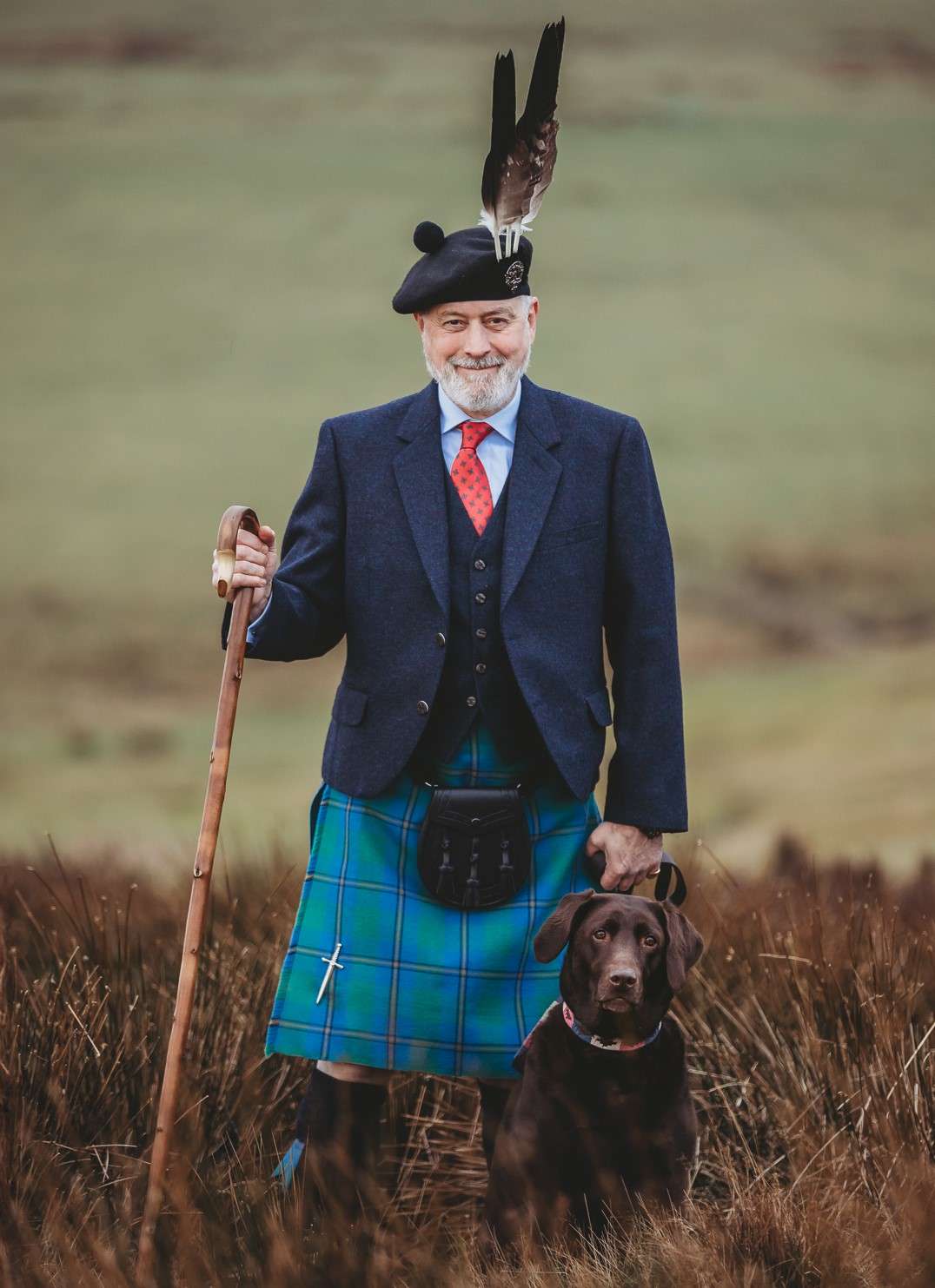
The Irvings of Bonshaw have a deep-rooted history with its line of Clan Chiefs dating back to 1506 in unbroken succession. Further research has indicated there are records going back to the 1120s and this work continues. As a Clan we are fortunate to have The Book Of The Irvings &c that was put together by Colonel J.B. Irving, in 1907, a remarkable achievement given this was done without computers and modern technology.
I am led to understand there is a Location Index for originals at Bonshaw Tower with books located worldwide: The House of Commons Library in the UK, Australia, New Zealand and in the United States of America including the Library of Congress, Washington DC.
With that history and family connection to it, we felt it would be a good idea to have the book cross-referenced and checked for validity by professional ASGRA researchers and what we found is quite surprising. The Book itself is 98% correct with a couple of anomalies that were ironed out by the research.
The Clan Chiefs Irving of Bonshaw
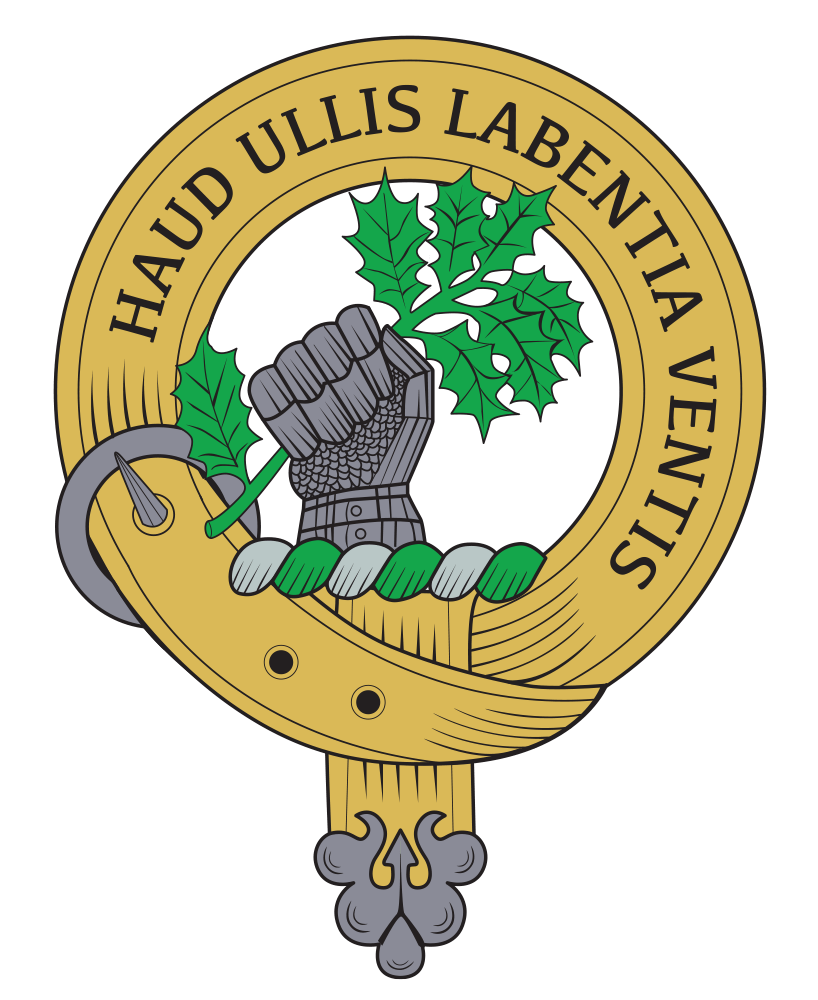
My father was encouraged to matriculate his Arms when he retired as we discovered the last person to do so was back in the 1890s, so we decided it was time to do something about it. In 2014, the Lord Lyon King of Arms formally confirmed my father as Chief of the Name and Arms of Irving of Bonshaw a direct descendant of William Irving of Bonshaw, who was the first to be registered in the 1672 Public Register of All Arms and Bearings in Scotland, a legal record of every coat of arms registered in the country.
This was a significant moment for us as a family as it reaffirmed what we knew about our history and role within the Clan. On my father’s passing in 2021, I felt that it is important to continue with matriculation of the Arms and this was kindly approved by Lord Lyon in March 2021. To have this formal recognition carries with it a certain responsibility I believe that still has relevance in today’s digitally driven environment. The role of Clan Chief evolves over time and today there is a particular focus as the guardian or keeper of each Clan’s history, its roots and above all else its unique identity.
The Irvings & Irvines in Scotland
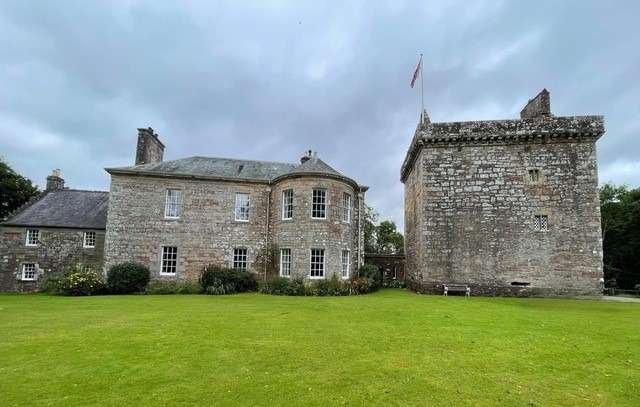
Within the Irvings & Irvines, we have a situation with two Chiefs being granted Arms formally recognised by the Court of the Lord Lyon. In itself this is not unique, given other clans such as Fraser, Stewart and Macleod for example.
The Irvines of Drum, located in Aberdeenshire, are a Scottish Family being appointed by the monarch in 1324 to the Forest of Drum with the barony created in 1326. Their present Chief is Alexander Irvine of Drum 27th Baron. The Irvings of Bonshaw, located in Dumfries & Galloway, are a Scottish Border Reiver Clan with Gaelic origins and earliest records back to 1120s. The present Chief is Rupert Irving of Bonshaw 20th Clan Chief.
The Standing Council of Scottish Chiefs
The Standing Council of Scottish Chiefs was formed in March 1952 in Edinburgh, with the Earl of Elgin, Chief of the House of Bruce, as its founding Convener. At the annual meeting this year his grandson, Lord Charles Bruce, agreed to become the new Convener, succeeding Sir Malcolm MacGregor of MacGregor.
The council and its members not only liaise actively with their clan societies but also with umbrella groups in the US and Canada. Back home, the council also works closely with the Scottish Government both in furthering Scottish interests around the world and in raising awareness within Scotland of the vital role played by heritage tourism in the economy. Today, there are more than 135 members of the council, including the heads of almost all the major Clans and Families in Scotland. Both Rupert Irving of Bonshaw and Alexander Irvine of Drum are members of The Standing Council.
Tartan
This was in itself a unique event that is being continued annually in Edinburgh. I have to say this great fun and there were a good number of Chiefs available to march in the parade. I was particularly impressed with the number of people in the parade itself and strong sense of community on the day. For 2026 Tartan Day, there are planned to be 2,500 participants and the Chiefs will be taking a leading role in the parade.
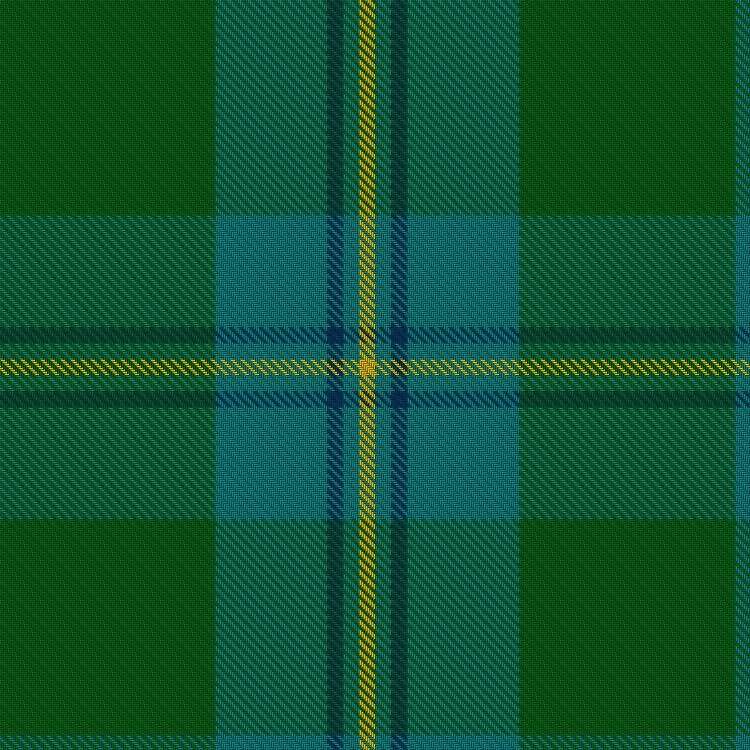
There are two Clan/Family tartans formally registered with The Scottish Register of Tartans in Edinburgh. The other Irvine and Irving tartans are formally registered as Personal only. There is the ‘Irvine’ tartan which is not affiliated with any particular Clan or Family and can be worn by Irvines & Irvings worldwide diaspora. The ‘Irving of Bonshaw’ tartan is for all those individuals and families affiliated with the Old Scots Border Clan of the Irvings & Irvines. Both are attractive tartans to wear, easy on the eye and both look just as excellent in formal or day wear, so our view is that if you like them then why not wear either or both of these tartans. I have both kilt and trews, and I do prefer wearing the kilt as this has become recognised worldwide as Scottish National dress.
Going forward
There is growing interest in Scottish heritage and family history with contact from Clan members over the years increasing in followers in recent times. The website www.clanirving.com is proving to be the primary point of contact and people’s interest is highlighted when they recognise and understand their Border Reiver heritage.
If you have any questions, the best place to start is probably to drop me a note to [email protected]. A lot of the questions I am asked are to do with research and I help as best I can to steer people in the right direction. It is genuinely a pleasure to hear from people.
By: Rupert Irving of Bonshaw, Chief of the Border Clan Irving
Support the Scottish Banner! To donate to assist with production of our publication and website visit: The Scottish Banner