
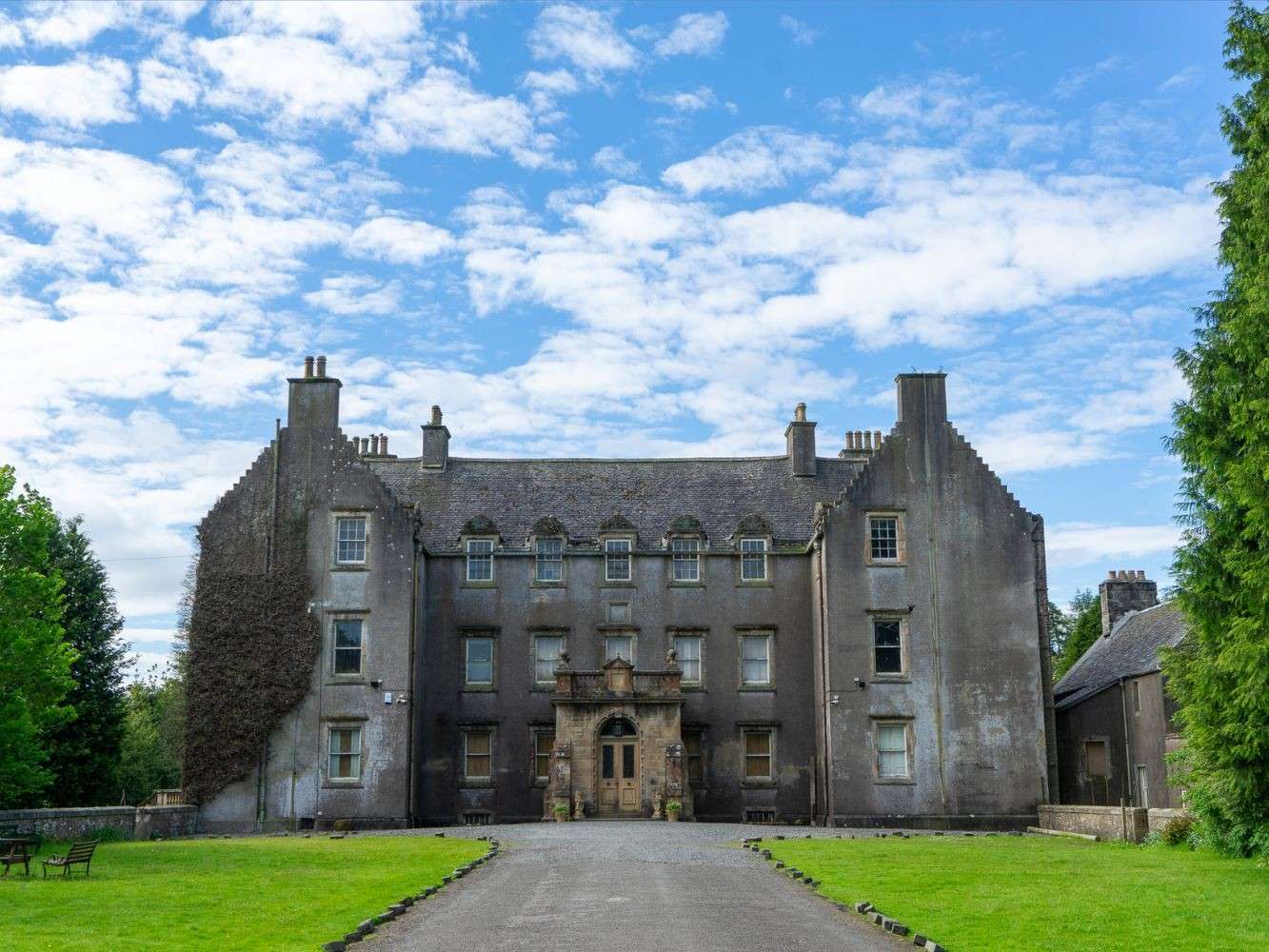
In a revelation that feels straight out of Outlander, researchers at Robert Gordon University have uncovered new evidence of an assassination attempt on Prince Charles Edward Stuart, better known as Bonnie Prince Charlie, during his stay at Bannockburn House in January 1746. The discovery of a lead ball consistent with an 18th century musket shot, found during conservation work on a historic bed in the room traditionally associated with the Prince, adds a dramatic twist to one of Scotland’s most storied chapters.
Using cutting-edge X-ray technology, archaeological visualisation experts from Robert Gordon University identified a deformed lead projectile concealed within the bed’s footboard—silent testimony to a moment of violence that may have unfolded during the Jacobite siege of Stirling. “This is historical detective work at its finest,” said Dr Catherine Bradley, Conservation Trustee at Bannockburn House. “For centuries, local tradition spoke of a shooting incident here. Now, fragments of that story are aligning with physical evidence. Every new detail takes us deeper into the intrigue of 1746.” The find follows last year’s identification of a musket ball impact on the room’s wall, suggesting not one but possibly multiple shots were fired. Researchers are now asking: How many attackers were involved? How did the Prince escape? Could there be truth to the whispered tales of a secret tunnel?
A living story
Professor Pritchard said: “This research improves our understanding of the Jacobite Rising and the dangers faced by Bonnie Prince Charlie. Our 3D visualisation technologies allow for the digital preservation of fragile objects and sites, creating records that support further research and public sharing. By capturing these assets accurately, we are both expanding our knowledge and guaranteeing their preservation for future study.”
The Bannockburn House Trust, in partnership with Robert Gordon University, Johns Hopkins University, and Historic Environment Scotland, is leading the investigation. Researchers emphasise that the investigation remains ongoing. The emerging evidence does not yet conclusively define the nature of the incident, but it does expand the evidence base. Further analysis and archaeological digs are planned. Malcolm McEwan, Chair of the Trust, said: “This is what happens when community heritage meets world-class research. Bannockburn House is not just a building – it’s a living story, and we’re inviting the public to be part of its next chapter.”
The discovery stemmed from a collaborative programme involving Historic Environment Scotland, Robert Gordon University, and Johns Hopkins University; which brings postgraduate students from the United States to Scotland to engage directly with historic buildings, conservation practice, and digital documentation as part of their training.
Main photo: Bannockburn House. Photo courtesy of Bannockburn House Trust.
Do you enjoy our content?
Content on the Scottish Banner website remains free for users. Stories and events listed for the international Scottish community continue to be an important resource for many across the world. As advertising revenue remains a challenge, our readers can donate to help us produce unique Scottish content for global Scots. Every contribution counts and thank you for considering your support.
Support the Scottish Banner! To donate to assist with production of our publication and website visit: The Scottish Banner