
Fin-Men characteristics and sightings
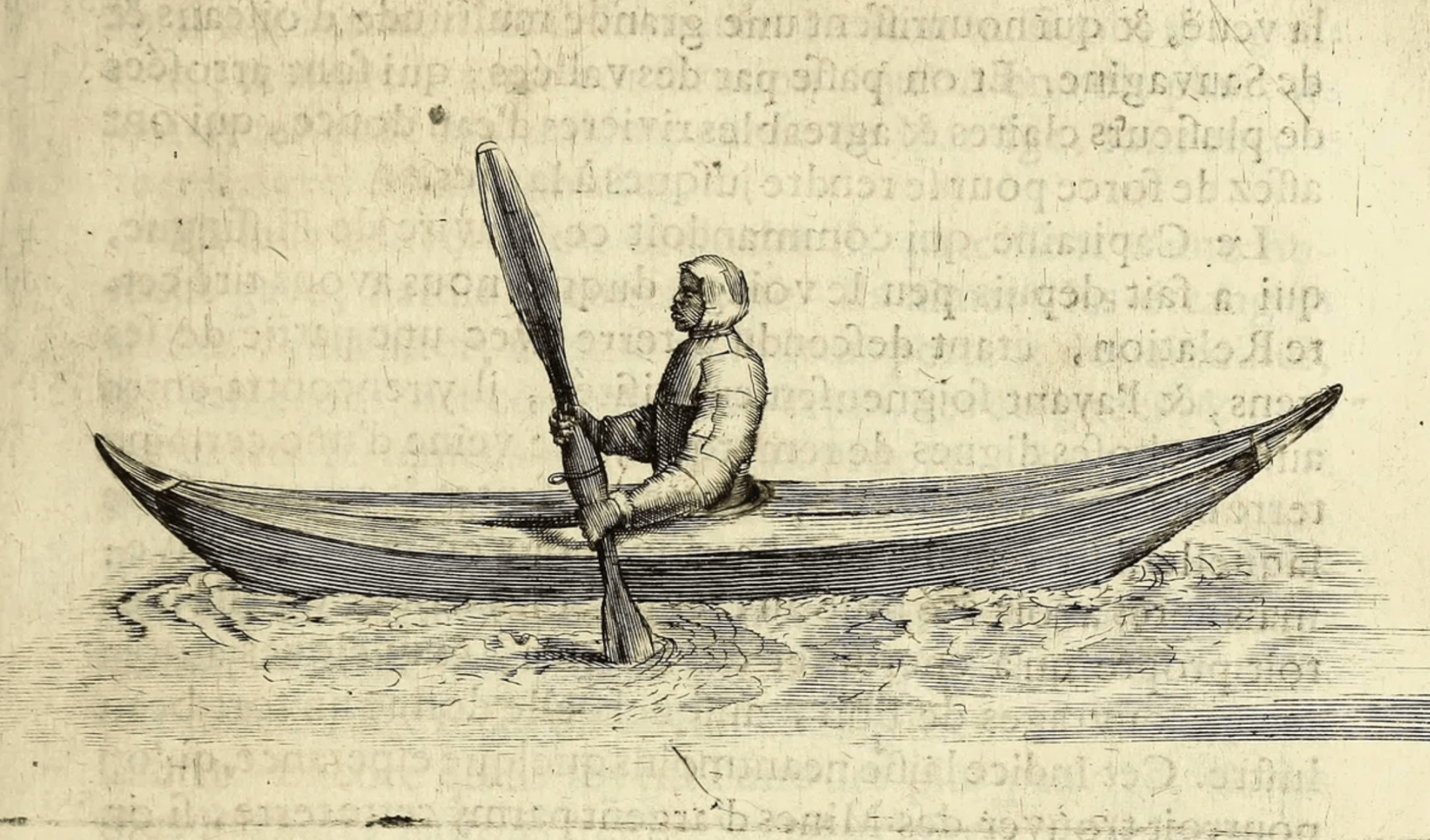
In 1703, an account of Orkney, Shetland, and the Pentland Firth by John Brand was published containing geographical, agricultural, and cultural information on the Northern Isles. Alongside more verifiable facts, he reported many conversations with locals relating to the Fin-Men. Brand wrote of them in general, “His boat is made of seal skins, or some kind of leather, he also hath a coat of leather upon him, and he fitteth in the middle of his boat, with a little oar in his hand.” These boats never had sails and could even be paddled when wholly submerged so as to get underneath dangerously breaking waves. A Fin-Man could cross from Norway to Orkney in just seven strokes of their oar, with the actual act of rowing being a total pretence – their vessels moved by magic, not muscle.
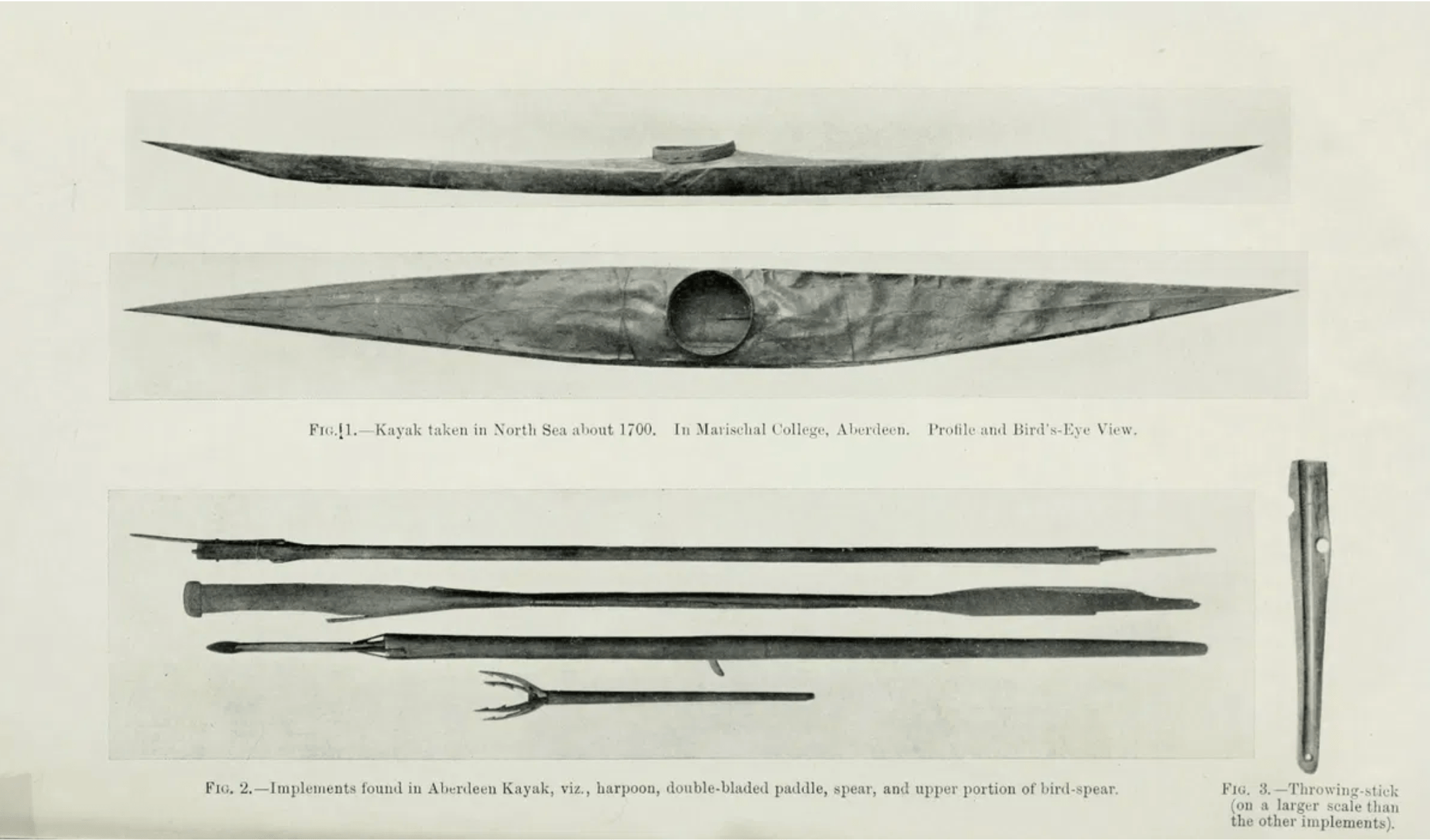
Furthermore, Brand reported, the Fin-Men are amphibious, dwelling in an underwater realm in wintertime and upon a hidden island in summertime. The Fin-Men could cast illusions, making their fins appear as human clothing and even being able to pass as humans for short periods when forced to go on land. Their arrival drove all the fish away from an area, making them ill-received by local fishermen. Fin-Men also had a penchant for making holes in human boats and for breaking fishing lines. The 17th century seems to have been the most prolific for sightings across Orkney and Shetland. One Fin-Man was sighted off Eday, Orkney, in 1682 but easily escaped when pursued. Another off Westray in 1684 also got away, but a sealskin boat later found ashore was allegedly kept in the Burray Kirk for decades afterwards. Fin-Men were also reported along the eastern shores of Moray and Aberdeenshire, though seemingly didn’t ply Scotland’s west coast. In all cases, they were only viewed from afar and no direct interaction with islanders is known of.
Theories: who were the Fin-Men?
People in the Northern Isles were well-primed by existing beliefs to be curious about these new interlopers. Seals were vital to island life, with islanders wearing sealskin shoes and harvesting seal meat and fat – though any unnecessary seal-hunting was seen as taboo, given their sympathetic nature and quirks like responding positively to human songs. There was also a widespread belief that each creature on land, even people and all our social complexities, have aquatic equivalents, so the basic concept of human-like beings paddling over and beneath the waves would have raised no eyebrows. Still, the question remains – who, or what, could these Fin-Men have actually been?
The most common explanation takes a hint from the 17th century spelling of their name, ‘Finn-Men’. The indigenous Sámi people of northern Norway, Sweden, and Finland have long been thought of – by southern peoples who exoticised them – as powerful sorcerers. In the 17th and 18th centuries many travellers’ accounts claimed that the Sámi could control the weather, travel huge distances by magic, and shapeshift. The Sámi were, and are, masters of sealskin kayaks and can travel great distances in them. Could Sámi people have drifted south with errant tides, or even deliberately probed the shores of Scotland’s Northern Isles?
The kayaks used by the Sámi certainly bear a striking resemblance to those of the semi-mythical Fin-Men. Made from greased skins stretched over a wood frame, they were very low-lying in the water, long, and slender. An anorak, worn by the paddler to prevent water ingress, would give the impression from afar that the pilot and vessel were indeed one entity. When such sealskin boats became very waterlogged they became less buoyant and partially submerge. Indeed, Sámi paddlers could keep propelling them forward for a while even when the kayaks were wholly submerged, perhaps explaining sightings of mermaids and Fin-Men whose torsos alone stuck up from the water.
It is quite possible that some Sámi probed Scottish shores. It may also be that, during the Viking age, some Norse brought elements of Sámi lore with them which then fused with local tales about selkies and sunken kingdoms. The eminent 19th century Orcadian folklorist Walter Traill Dennison, however, doubted this simple Finnish connection. When asking older folk why they gave the name of Fin-Men to these rowers, the typical reply was, laconically, “Why surely, because they wear fins; onybody may ken that!
Another flesh-and-blood theory relates to climactic changes. The 17th through 19th centuries in Europe brought the ‘Little Ice Age’, a period when sea temperatures cooled to 5 degrees Celsius colder than they were by the end of the 20th century. Arctic ice pushed further south than previously typical. Many characteristics of the garments and vessels of the Fin-Men and Sámi also apply to those used by the indigenous Inuit of the Arctic Circle around Greenland and northern Canada. It is conceivable that small numbers of Inuit people may have followed the ice floes beyond their usual grounds, even as far as northern Britain.
Magical beings
One more explanation is simply that the term ‘Fin-Men’ became inextricably confused with other magical beings. Orkney was already home to the Finfolk, a similarly-named type of aquatic shapeshifter, and of course the ubiquitous selkie who left its sealskin at the shore to temporarily walk among us in fair form. Even fallen angels who landed in the water after their expulsion from heaven are said to have become seals or selkies. Could these folkloric and cultural associations with seals and divine entities explain some of the traits conferred on the kayakers, especially their great command of magic?
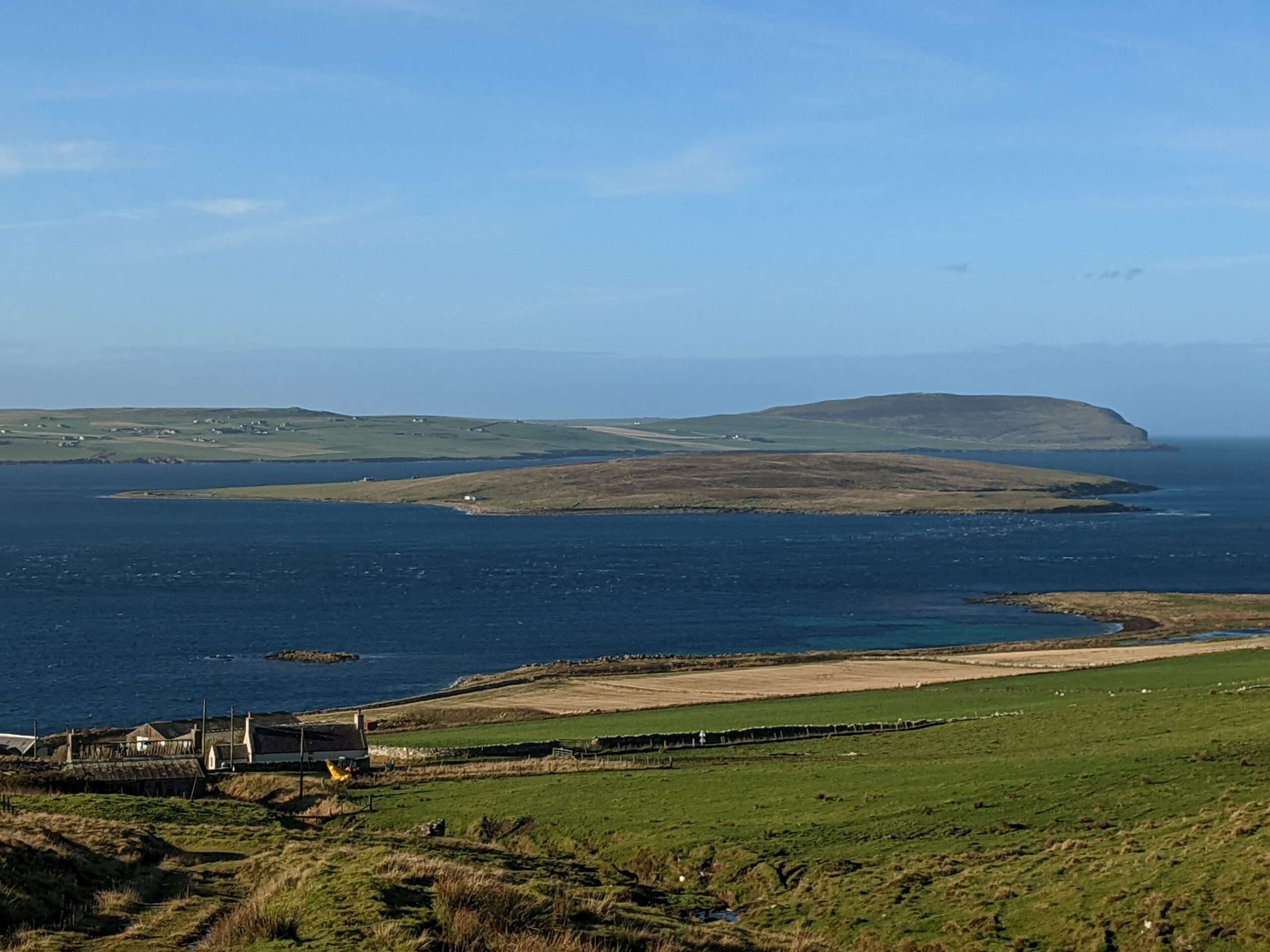
Antiquarian Dr Hugh Marwick observed that in Orkney, the term ‘Finn’ was often applied to the above-mentioned Finfolk who lived in their underwater realm of Finfolkaheem beneath the Eynhallow Sound, where Atlantic and North Sea tides crash together. The Finfolk are the ones most often blamed for snapping fishing lines, poking holes in boats, and having magic powers of illusion and weather-control – sound familiar? In Shetland, by contrast, Marwick says that ‘Finns’ exclusively applied to the very real Sámi people.
Even now, scholars have a very difficult time figuring out if historical references to Fin-Folk have any consistency. The term has been used to describe selkies, sea-trows, the Finfolk of Eynhallow, and the mysterious paddlers described above. Furthermore, the kayaking Fin-Folk are said to be turned away by the sign of the Christian cross, a common weakness of many other folkloric creatures in the Northern Isles. It could well be that strange vessels with lone occupants were indeed spotted off Orkney and Shetland, and that local terminology borrowed from existing archetypes to make sense of them and fit them into their existing legendarium.
An enduring mystery
There are no photographs of Fin-Men sightings, no confirmed face-to-face meetings, and no scientific or historical consensus one way or another. I do personally favour the theory that they were wandering Sámi or Inuit (or both), not least because of the fascinating anthropological implications and the prospect of Arctic kayakers having plied Scottish shores in secret potentially for centuries.
Even if we one day find definitive proof one way or another, I doubt we’ll ever untangle the Fin-Men’s alleged powers from those of other folkloric beings of the Northern Isles. That’s the beauty of such stories – over time, keeping the details consistent doesn’t really matter. It’s the sense of wonder and the shared fascination with something on the brink of the known and the unknown that keeps us coming back for more.
By: David C. Weinczok.
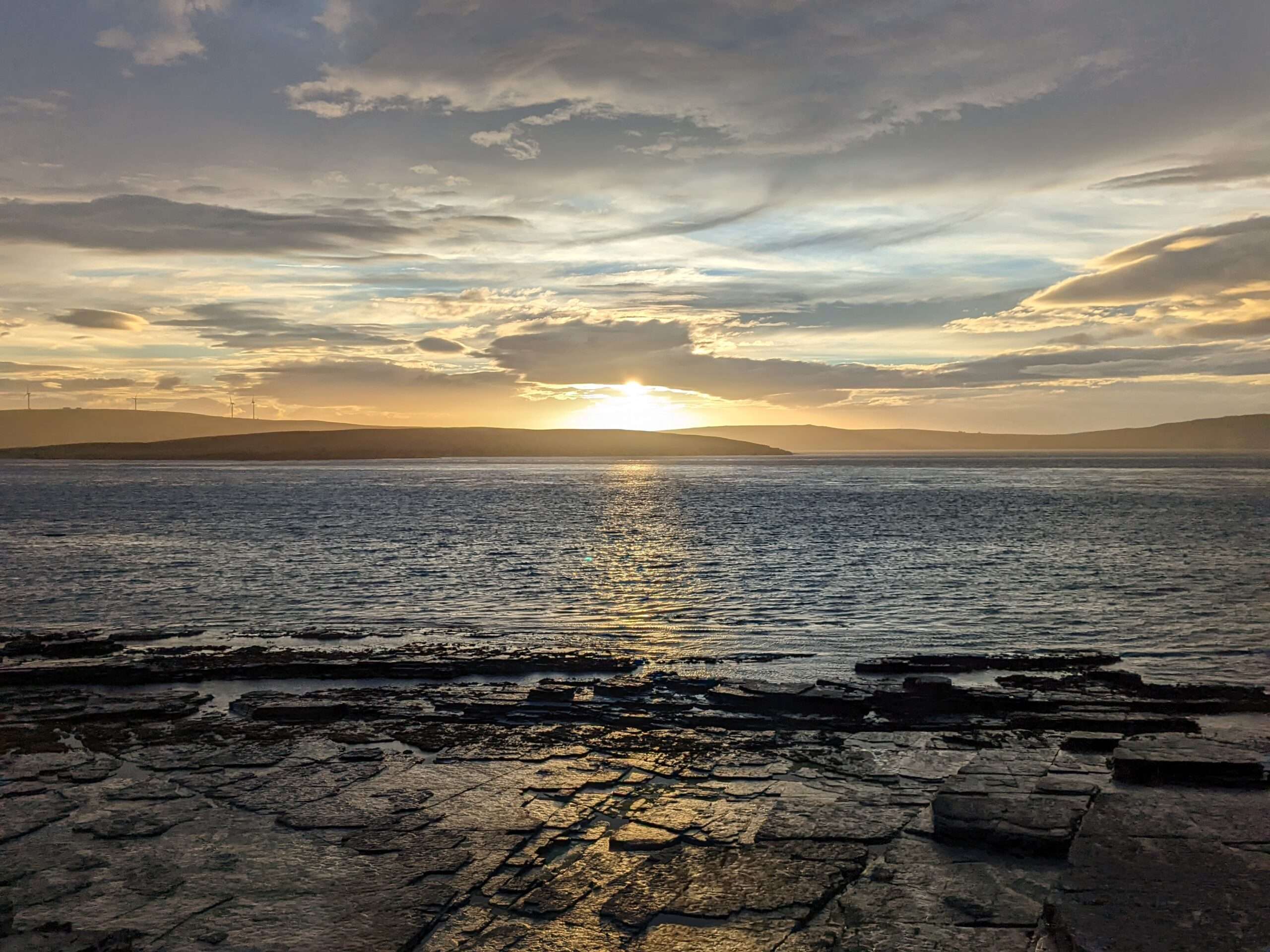
Main photo: The Eynhallow Sound said to be home to the aquatic Fin-Folk. © David C. Weinczok.
Support the Scottish Banner! To donate to assist with production of our publication and website visit: The Scottish Banner