
In the dark, seek light. In the cold, seek warmth. These most primal instincts have been part of the human experience since long before language, agriculture, art, or even the permanent home itself. For the entirety of our existence until just the last century, one thing and one thing alone provided both: fire. A reverence of fire is to winter what the delightful blooming of flowers is to spring. We gather to the flame in the darkest and coldest months because of the promise it holds for what lay ahead – if we manage to endure.
Fire festivals have been celebrated in Scotland from the earliest days of our documented history, and no doubt well beyond. Some, despite the countless comforts of modernity, remain at the heart of communities and social life today.
What follows are just a few of Scotland’s fire-based winter festivities and traditions, beginning with the most spectacular and ending with the most humble and intimate.
Up Helly Aa
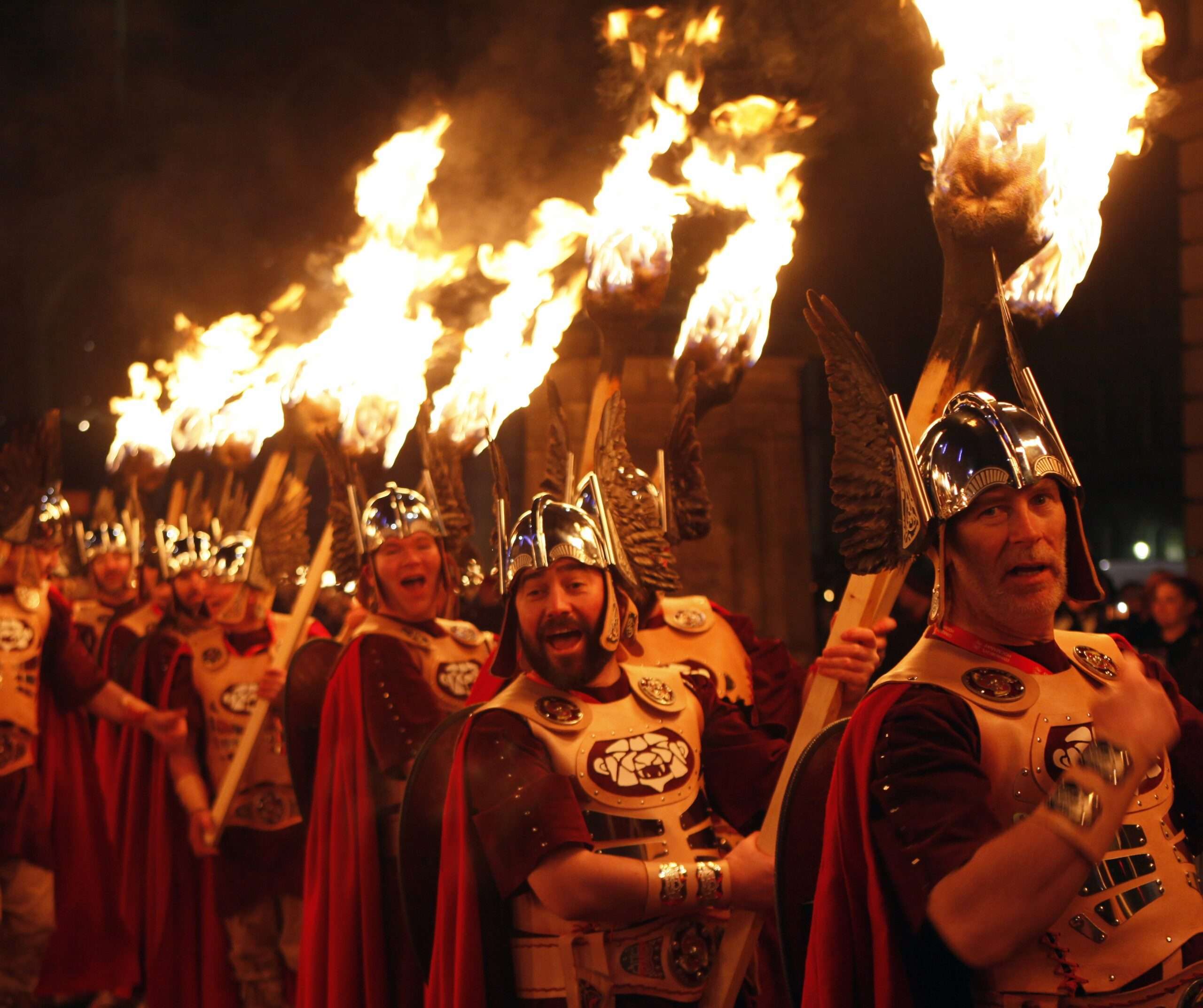
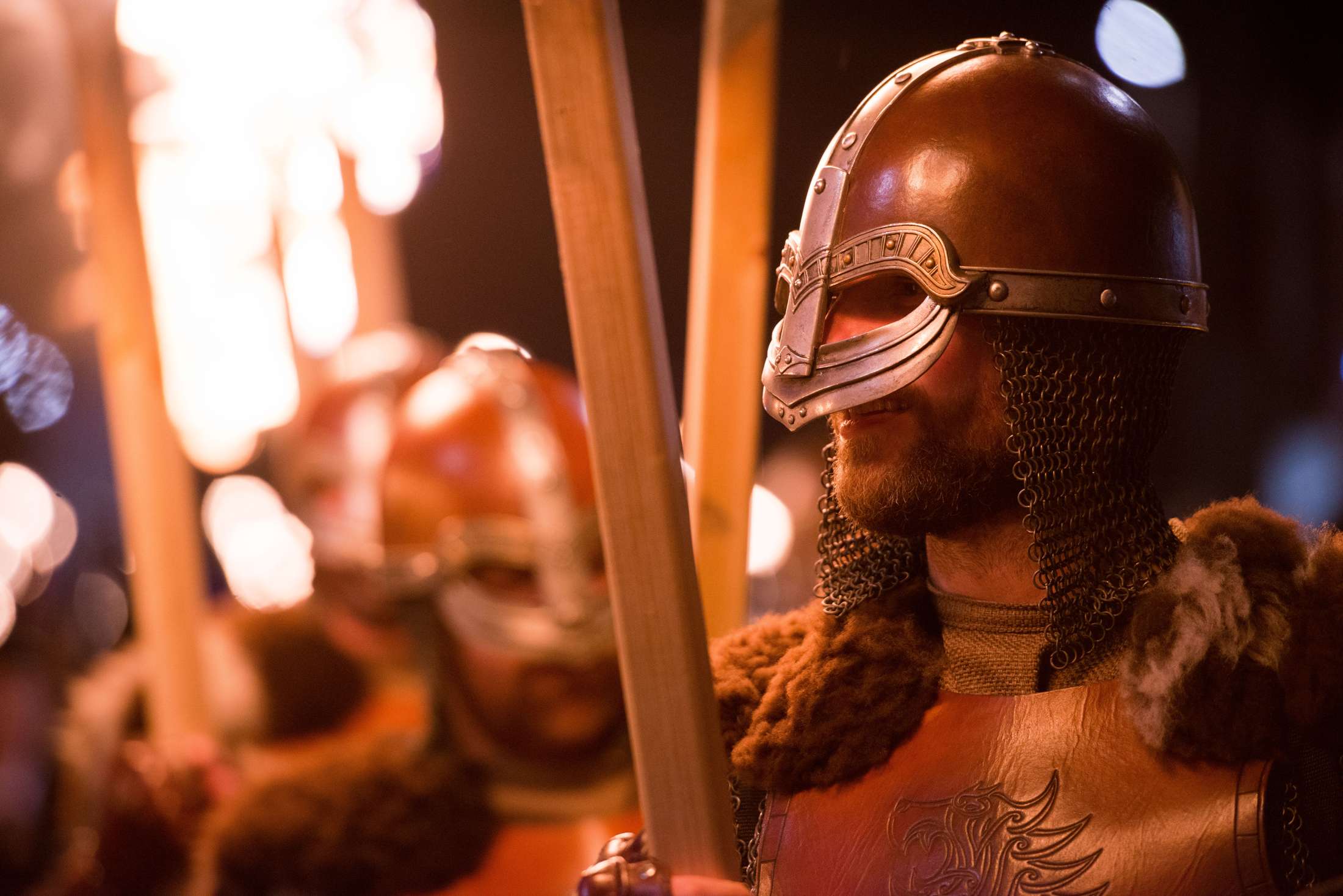
In the 800s AD the sight of a group of Norsemen marching into a Shetland village bearing torches would have been a scene of terror. Since the 1800s that same sight has been a source of joy and jubilation unmatched at any other time of year. This is Up Helly Aa, arguably the most renowned and distinctive of Scotland’s fire festivals.
In the early 19th century groups of young lads, many recently returned from the battlefields of the Napoleonic Wars, took to dragging barrels of flaming tar through the narrow streets of Lerwick. Property damage was common, and a minister in 1824 summed up the chaos thusly: “…the whole town was in an uproar: from twelve o’clock last night until late this night blowing of horns, beating of drums, tinkling of old tin kettles, firing of guns, shouting, bawling, fiddling, drinking, fighting.”
A ban on this ‘tar-barrelling’ in 1874 was followed just two years later with the first organised procession through Lerwick, with torches and fire prominently re-introduced in 1881. The Norse elements only came later. The first longship was burned in the late 1880s, the leader known as the Guizer Jarl entered the scene from 1906, and his select Viking-costumed followers – the Guizer Jarl Squad – were introduced after the First World War. A surge of Norse-themed literature, plays, and antiquarian investigations in the mid-20th century helped put the Viking elements of the festival front and centre. On the last Tuesday in January squads of guizers dressed in themed costumes gather carrying wooden posts topped with paraffin-soaked sacks. The Guizer Jarl, who each year takes the name of a figure from the Norse sagas, leads them through the town. Streetlights are turned off, and the heady reek of paraffin and smoke fill the otherwise pitch-black night.
The guizers gather round a replica Norse longship to sing the ‘Galley Song’ before hurling their torches into it, making a pyre of the dragon ship. The guizers then sing ‘The Norseman’s Home’ and proceed to Lerwick’s multiple halls for a night of revelry with the whole community. The event is never, as a matter of pride, cancelled on account of weather. The following day is called Hop Night with further gatherings, singing, dancing, and no doubt the concoction of many a family hangover recipe. While Lerwick hosts the world-famous Up Helly Aa, variations occur throughout Shetland known as ‘Country Up Helly Aas’.
Edinburgh Torchlight Procession
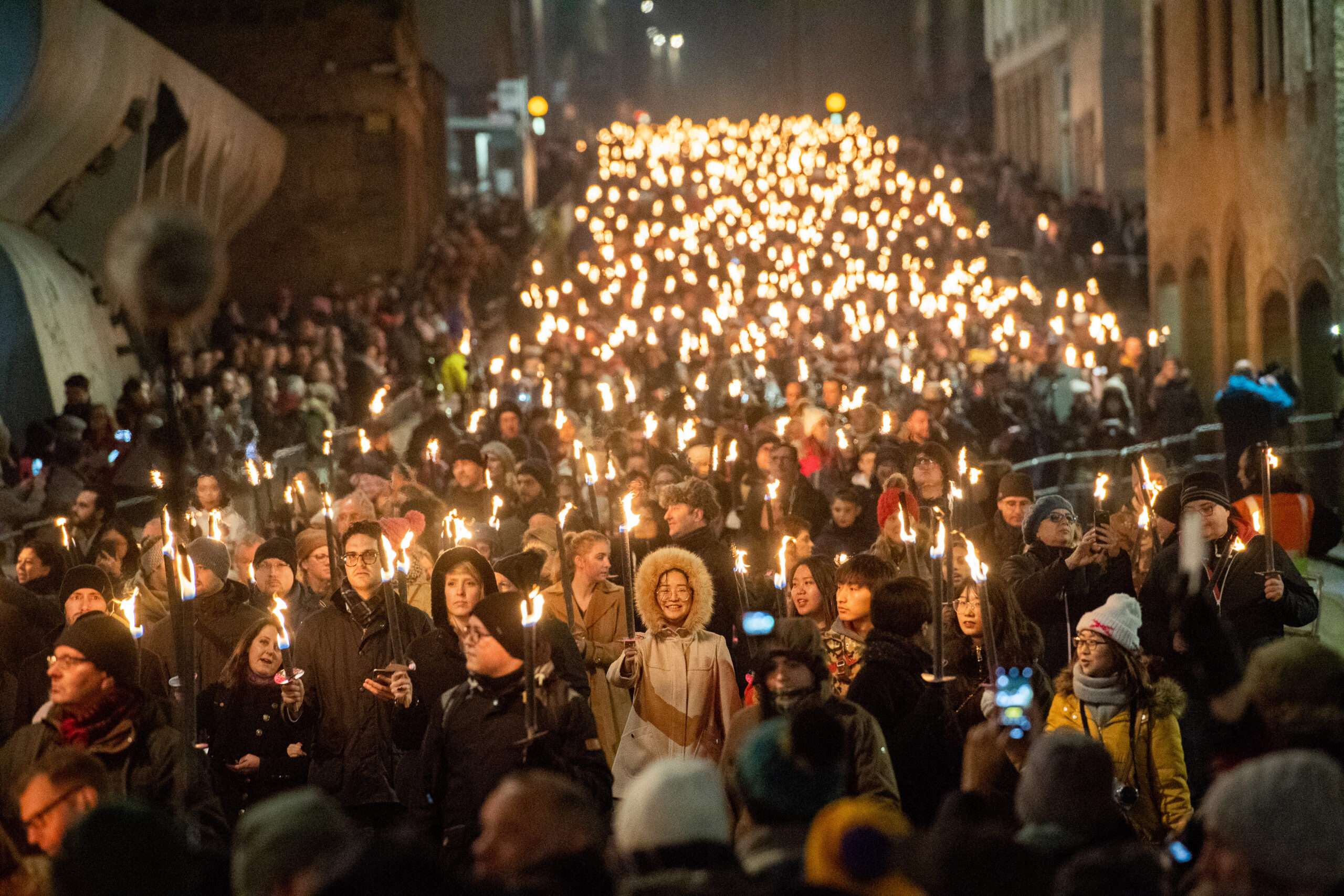
On a far larger scale and with a far shorter history is the Edinburgh Torchlight Procession, which marks the official beginning of Edinburgh’s Hogmanay Festival. There is something undeniably enchanting, even votive, about walking through the Old Town amid a sea of torch-bearers. 15,000 people or more form a serpent of fire through the streets, casting strange shadows on the sandstone buildings and a spell of awe over all involved.
The Torchlight Procession typically occurs on December 29th or 30th, with the first iteration going back only to 1993. This year it will begin in The Meadows, stream through the Old Town past Greyfriars Kirkyard and across the Royal Mile and culminate beneath Edinburgh Castle. Previous years have seen the procession end atop Calton Hill, a much more historically resonant location. For centuries at the winter solstice people would ascend the highest nearby hill to light a torch from a communal fire, bearing the flame with great care back to their own hearths. From Calton Hill celebrants would have seen hilltop fires crackling as far away as North Berwick Law in East Lothian, Largo Law in Fife, and Dumyat near Stirling.
Hogmanay remains the largest and most revered wintertime celebration in Scotland, more so even than Christmas. A Parliamentary Act of 1640 banned Yule celebrations, which were seen as idolatrous by the Protestant majority in the Lowlands. People could be fined, ostracised, or worse if caught celebrating Christmas. Christmas was not made a public holiday in Scotland until 1958, meaning that it was only privately celebrated in much of Scotland for over 300 years. If you’ve ever wondered why Hogmanay is such a hallmark of the Scottish calendar, now you know!
The Stonehaven Fireballs
What could possibly go wrong allowing a group dozens strong to march through the streets of a village swinging tethered fireballs above their heads? As evidenced by only a few singed hairs through the decades, much less than you’d think. Easily the most audacious of Scotland’s fire festivals is the Stonehaven Fireballs. Near midnight on December 31st around 40 people take to Stonehaven’s High Street armed with fireballs set within wire cages and swung round on cords. In addition to being very fun, this was traditionally done – as with many wintertime fire ceremonies – to help ward off harmful spirits and literally burn away the bad things accumulated through the previous year.
Fishing communities have always been exceptionally superstitious, and rituals to cast off bad luck were common the length and breadth of coastal Scotland. The earliest versions of the Stonehaven fireballs, dating back to at least 1908 and very likely a few decades prior, were composed of the scraps from the year’s labours – torn fishing nets and ropes, scraps of leather, broken cork, rags, and whatever else was to hand. Burning these broken things was seen as an auspicious way to bring in the new year.
Some fireball swingers stop at the homes of people they know along the way, leaving their fireballs at the kerbside to enjoy a quick blether and drink before moving on. While the ceremony typically lasts around 20 minutes, this ‘extended version’ can carry on for up to an hour. First footing follows the fireball event. It used to be that only people born in Stonehaven could participate, but in recent years participation has broadened – though most of the volunteers involved are very local and all receive training to ensure that the fireballs remain tamed.
The Burning of the Clavie
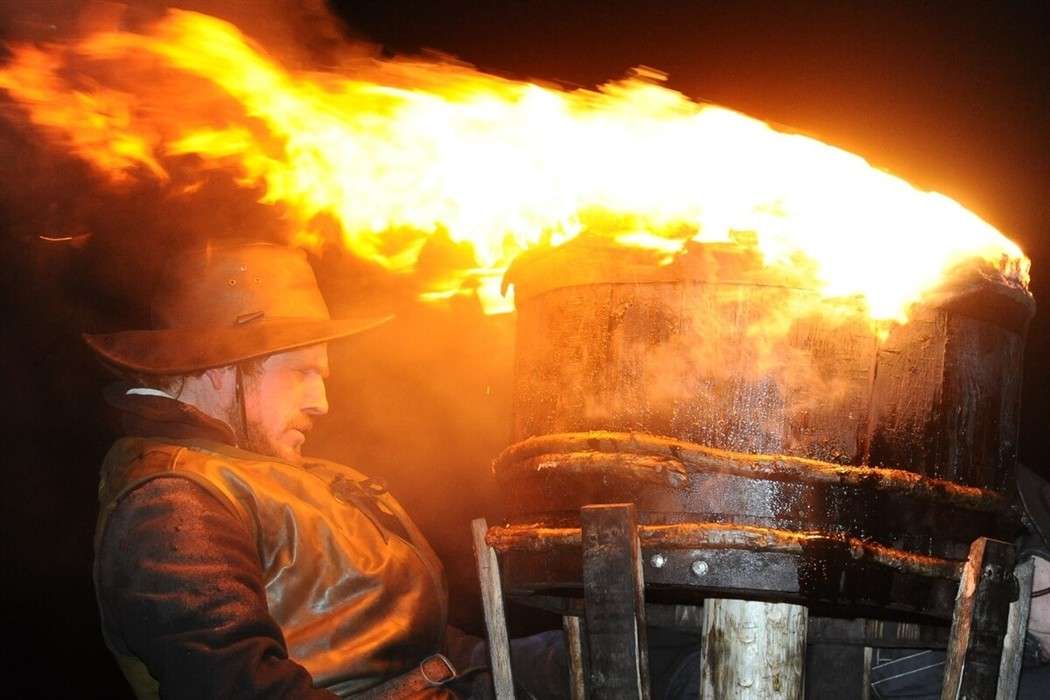
Another fire festival unique to the north-east of Scotland is the Burning of the Clavie in Burghead, celebrated on January 11th. Burghead contains the site of a major Pictish fortress astride the Moray Firth, from which its occupants did battle – with varying results – against viking onslaughts. It is upon the ruins of this very fort that the fire festival takes place.
The eponymous Clavie is a cask split in two and filled with staves. It is carried through the town with the assembled throngs following it until they reach the ramparts of the ancient fort which gives Burghead – with ‘Burg’ meaning a fort – its name. The Clavie is then affixed to a stone cairn and allowed to burn away. Pieces of the Clavie break off and tumble down the slope and are eagerly collected by locals to keep as good luck charms. Some fragments are sent to people born in Burghead – known as ‘Brochers’ – who have since moved away or are unable to attend in person.
So, why January 11th? In 1752 another Act was passed which replaced the Julian calendar with the Gregorian calendar across the UK. This resulted in eleven days being ‘lost’ that year. Many towns across Britain initially balked at the change, but Burghead decided to have it both ways – celebrating the New Year on both the 1st of January and again on the 11th.
The Yule log
On the smallest yet perhaps the most universal end of the scale are the fire-based traditions of the home. Winter was, and remains, a time to coorie in, to tell tales around the hearth, gather with friends and family to sing and tell stories, and to while away the hours indoors mending things and deepening bonds. As discussed in my article from December 2023, these were the origins of the ceilidh, which simply means a ‘gathering’.
Countless Scottish homes from at least the 17th century would have had a Yule log smouldering away in their fireplace. This private celebration of Yule was rarely intruded upon by the Reformation’s ban on Christmas. A large log, ideally of ash or birch, was placed in the fire and kept burning for as long as possible. Some sources say an ideal Yule log would burn from December 25th all the way until January 5th.
In Gaelic the Yule log was called the Cailleach Nollich, the ‘Christmas Oldwife’, evoking the ancient Celtic creation goddess and bringer of winter. A female figure was sometimes drawn in chalk on Yule logs to represent her. So long as the Yule log burnt feasting could continue, and by its light and warmth innumerable people came together and outlasted the darkest days of the year. Pieces of the Yule log were often kept for the rest of the year, placed in attics and thresholds to cleanse the household and bring prosperity and peace for the year ahead.
Main photo: VisitScotland.
Support the Scottish Banner! To donate to assist with production of our publication and website visit: The Scottish Banner