
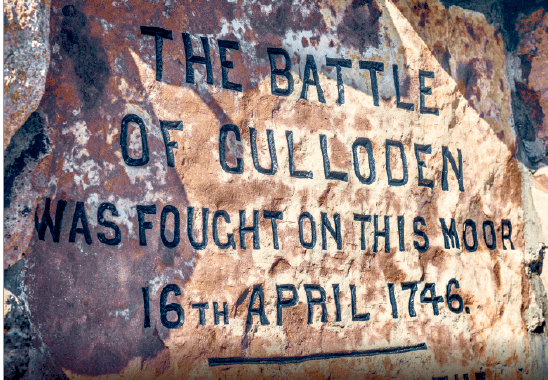
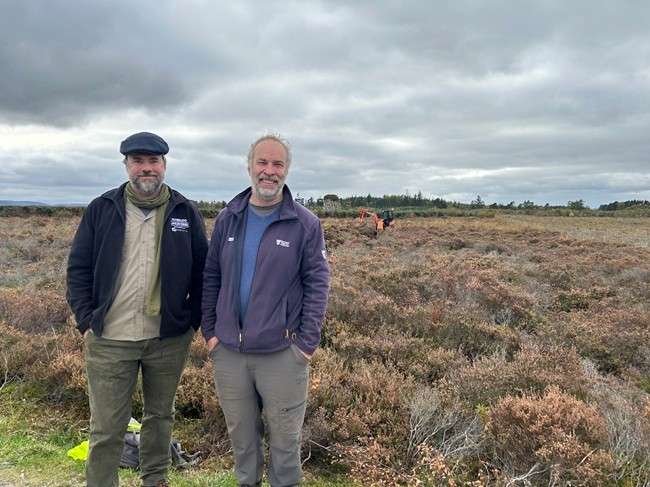
Archaeologists from the University of Glasgow and the National Trust for Scotland have recovered more than 100 projectiles, including lead musket balls and cannon shot, from Culloden Battlefield. The discoveries were made by a team of archaeologists and volunteers led by the Trust’s Head of Archaeology Derek Alexander and the University’s Professor Tony Pollard.
The battle, fought on 16 April 1746, saw the decisive defeat of the Jacobite army led by Bonnie Prince Charlie by government forces commanded by the Duke of Cumberland’s government army.
The last battle fought on British soil
The new findings, from an area of the battlefield that had not previously yielded any archaeological discoveries, is fresh evidence from the last battle fought on British soil. The most striking result from the investigation, which took place between 13-18 October, was the recovery of over 100 projectiles, which included lead musket balls and cannon shot, the latter of which included what is believed to be a three-pound cannon ball fired by the Jacobite artillery. This collection of artefacts not only proves that archaeology from the battle has survived in this area but, the project leaders believe, it has provided evidence for one of the most dramatic episodes in a battle that from beginning to end probably lasted less than an hour.
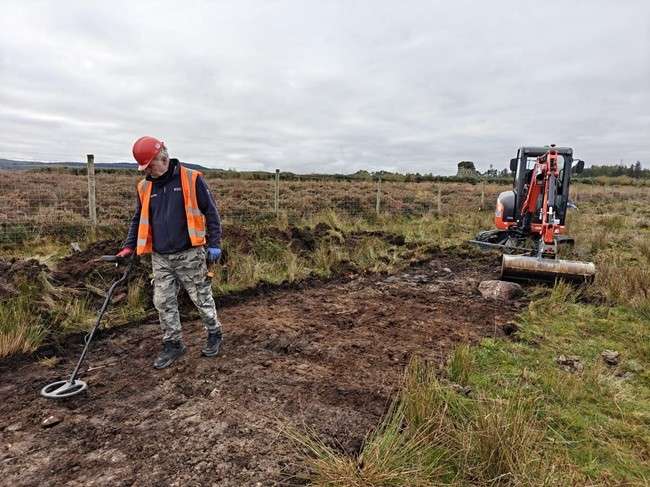
A variety of techniques, including metal detector survey, trial trenching and test pitting were used to examine a portion of the battlefield which, on 16 April 1746, sat between the government and Jacobite lines. This area had failed to produce archaeological material in the past, possibly due to disturbances caused by a 19th century forestation, which created acid soils, and tree clearance in more recent times. The area is also boggy, which has provided further challenges for archaeologists. On the importance of these discoveries to the wider understanding of the battlefield, Derek Alexander said: “We are delighted with the results, especially as the ground we investigated didn’t appear to hold out a great deal of promise. Our volunteers did a fantastic job of enhancing our understanding of the battle and the battlefield as it exists today. This new evidence adds to earlier findings, which include the scatter of objects related to the hand-to-hand fighting on Cumberland’s left, to the south of the present site. We now have a clearer picture of where the various actions that made up the battle took place, and this will assist the National Trust for Scotland in enhancing on-site interpretation and the long-term management of the battlefield. We look forward to bringing the team back together to carry out a more detailed examination of the finds.”
The fate of the Jacobite cause
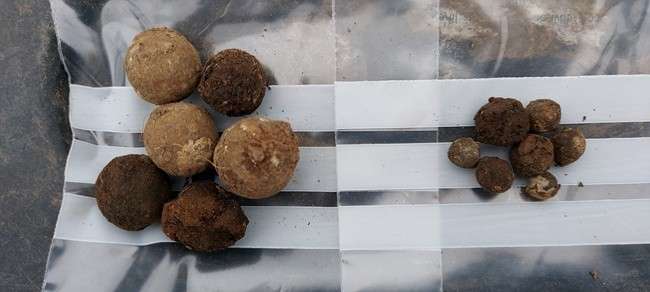
Professor Tony Pollard added: “We’ve only had time to make a rapid assessment of our results, but musket balls fired by Jacobite and government troops, including pistol balls fired by government dragoons, likely relate to one of the last actions in the battle. This fight took place between the initial battle lines, at a location where boggy ground slowed the Highland charge, and this in combination with heavy fire from Cumberland’s line helped to seal the fate of the Jacobite cause. As the Jacobites retreated, a battalion of Irish troops in French service, fighting with the Jacobites, made a brave stand against hundreds of mounted men from Cobham’s Dragoons and possibly Kingston’s Horse, advancing from the right of Cumberland’s line. The job of these horsemen was to cut down the disordered Jacobites, and we have recovered some of the shot fired from their heavy pistols. The Irish troops, numbering about 150 men, under their commander Lieutenant-Colonel Walter Stapleton, blocked this advance and according to an account by Adjutant General John O’Sullivan, one of Bonnie Prince Charlie’s senior officers, fired volleys into the approaching cavalry. The red-coated Irish Picquets then found cover behind the walls of Culloden Parks but their surrender, after suffering heavy casualties, with Stapleton among the dead, was the only alternative to total annihilation. Being regular troops in French service, they were treated as prisoners of war rather than rebels, but none-the-less they suffered the privations of confinement on a prison hulk in the Thames before being repatriated to France in early 1747. This valiant action helped thousands of Jacobites get away from the field, but it gets only brief mentions in most of the history books. A more detailed analysis of the artefacts and their distribution pattern will be required before we can make a definitive statement but at present there are no obvious alternative interpretations.”
Support the Scottish Banner! To donate to assist with production of our publication and website visit: The Scottish Banner