
The BBC quiz show Pointless often features questions where the answers are cities in the UK. It’s surprising how many contestants offer ‘St Andrews’ as an answer. Or perhaps it isn’t, after all, St Andrews has a university (Scotland’s oldest, dating from 1413), a ruined cathedral and is by common consent the world capital of golf. It even has a prominent street called ‘City Road’.
All the same, it’s not a city. If it were, it would be Scotland’s smallest city by a long way, its population just 17,000. However, the year-round influx of tourists, and the seasonal population of students mean that it has the retail, commercial and catering facilities of a rather bigger community. It can feel like a city.
Golf
Now, golf; St Andrews is home to several famous courses and to the Royal & Ancient (R&A), one of the sport’s governing bodies. Confusingly, these days the R&A is a separate organisation from The Royal and Ancient Golf Club of St Andrews, whose clubhouse stands near the modern building that is the R&A World Golf Museum.
A wonderful PG Wodehouse story called The Coming of Gowf tells of a distant kingdom whose king sees a gardener swinging a hoe to hit small round stones. ‘It seems a hard thing to say of anyone, your majesty,’ explains the King’s vizier, ‘but he is a Scotsman.’ It turns out that the man had been captured at a place called ‘Snandrews’. Eventually he teaches the King, and his people, the joys of golf.
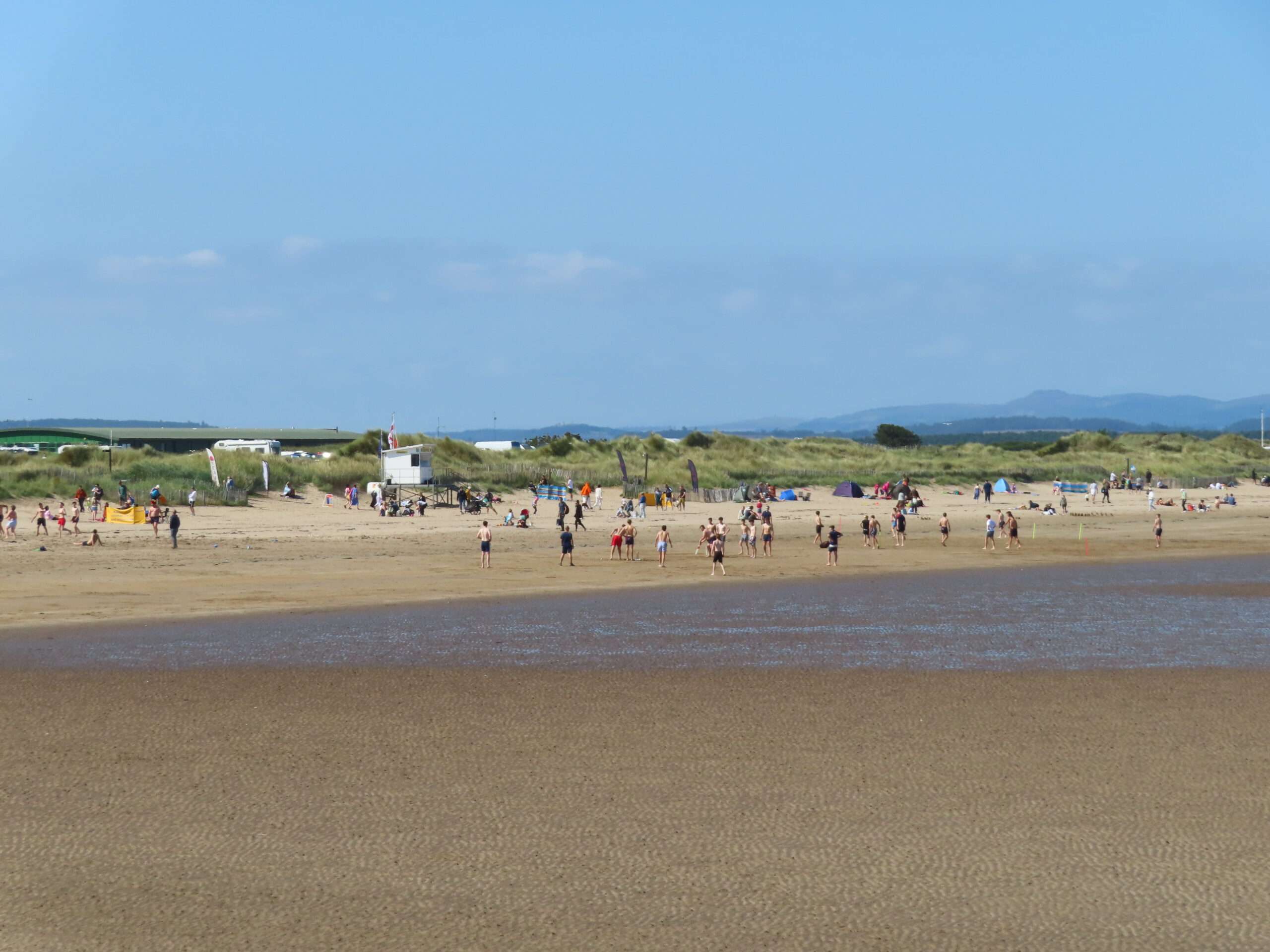
Beyond the golf courses are the West Sands, a fantastic beach, a glorious destination if you can find a hot summer’s day. They are now inextricably linked with another sport because of their role in two of the most memorable sequences in British cinema history.
A group of athletes in 1920s running kit (played by actors including Ben Cross, Ian Charleson, Nicholas Farrell and Nigel Havers) pound along the West Sands as they train for the 1924 Paris Olympics, accompanied by Vangelis’ soaring music. Lump-in-the-throat stuff. It’s Chariots of Fire (1981), of course, and the sequences, which open and close the film, are supposed to take place in Broadstairs in Kent. It’s very obviously St Andrews, though. Apparently there had been no longer term plan to shoot there. Apparently the crew were in Scotland shooting scenes in Perthshire and Edinburgh anyway, and St Andrews was thriftily chosen for the Broadstairs sequences. With unforgettable results.
Cennrigmonaid
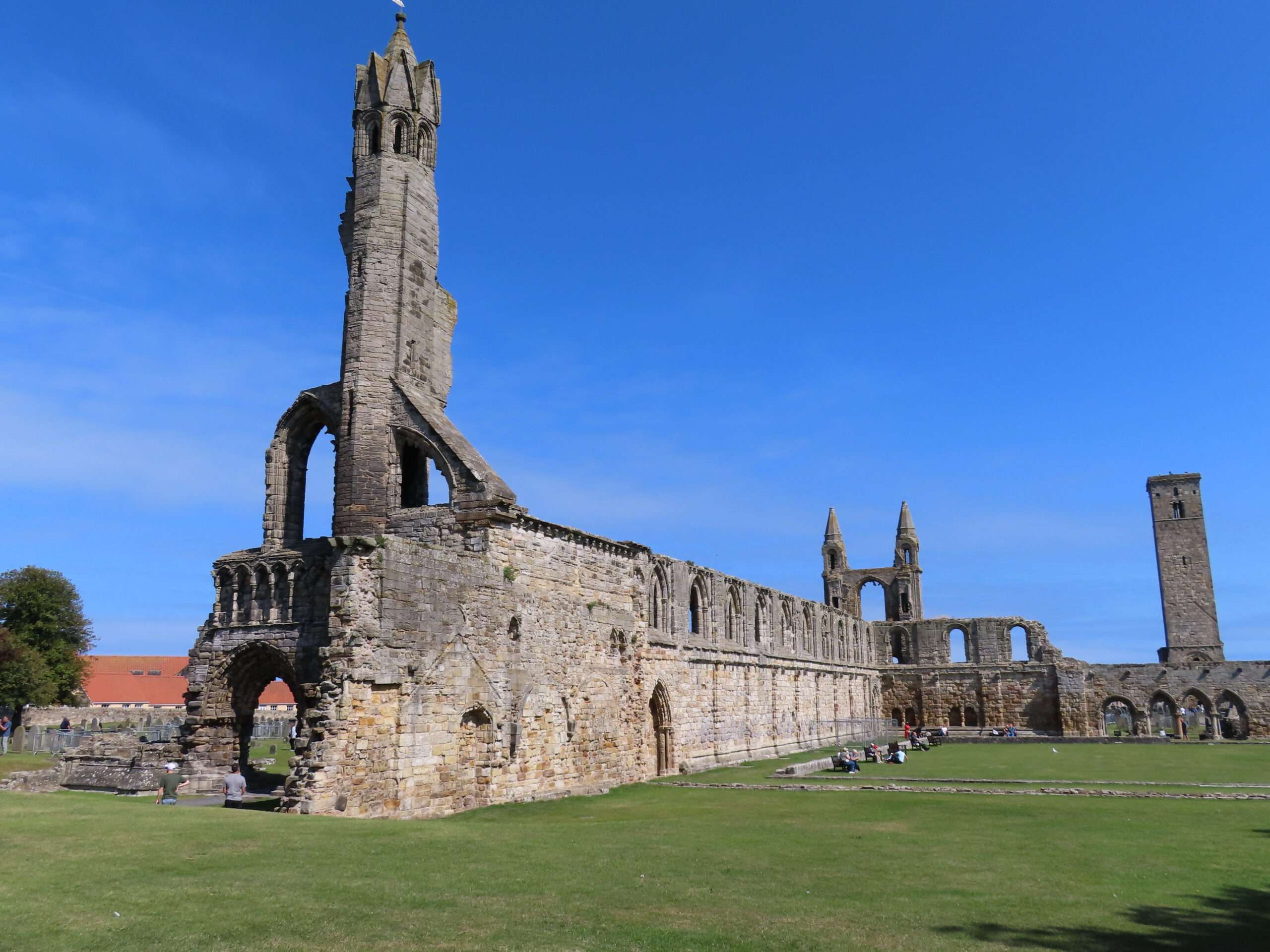
Historic Environment Scotland (HES) care for both St Andrews Castle and St Andrews Cathedral, both mostly in ruins. They’re well worth seeing, though, and there’s a modern visitor centre at the castle which tells much of the St Andrews story. The first, early medieval settlement here was called Cennrigmonaid which, besides being a real mouthful, is said to mean something like ‘Church at the Head of the King’s Mount’. Over the years it was shortened, thankfully, to Kilrymont. There was a monastic settlement at an early date, and it gained royal connections from the time of Kenneth Mac Alpin in the 9th century. But it was during the 11th century that stories began to spread of a 4th century figure called St Rule or Regulus (who may not have existed) taking the relics of St Andrew (who had existed) and lodging them at Kilrymont.
A shrine developed and became the focus of pilgrimage. Queen Margaret famously instituted a ferry – the Queen’s Ferry – from Lothian to Fife to help pilgrims reach the site. Already the seat of a bishop, St Andrews (as it was becoming known) was chosen as the site of an ambitious new cathedral, with David I giving the go-ahead sometime around 1140. The building took many decades, and rose beside the existing, smaller church dedicated to St Rule. In 1270, the west end of the building was destroyed in a storm, just as it approached completion.
The resulting cathedral became the seat of the Archbishop of St Andrews and was effectively the headquarters of Scotland’s medieval church. It was a massive building, perhaps larger than it needed to be as the flow of pilgrims to the shrine of St Andrew was never as large as had been hoped. It certainly had an interesting life, with the invading Edward I of England residing there, holding a parliament, and even stealing lead from the roof. It was only after the English had been removed from Scotland, in 1318, that the cathedral was finally consecrated in full. Robert the Bruce was in attendance.
Historical and cultural depth
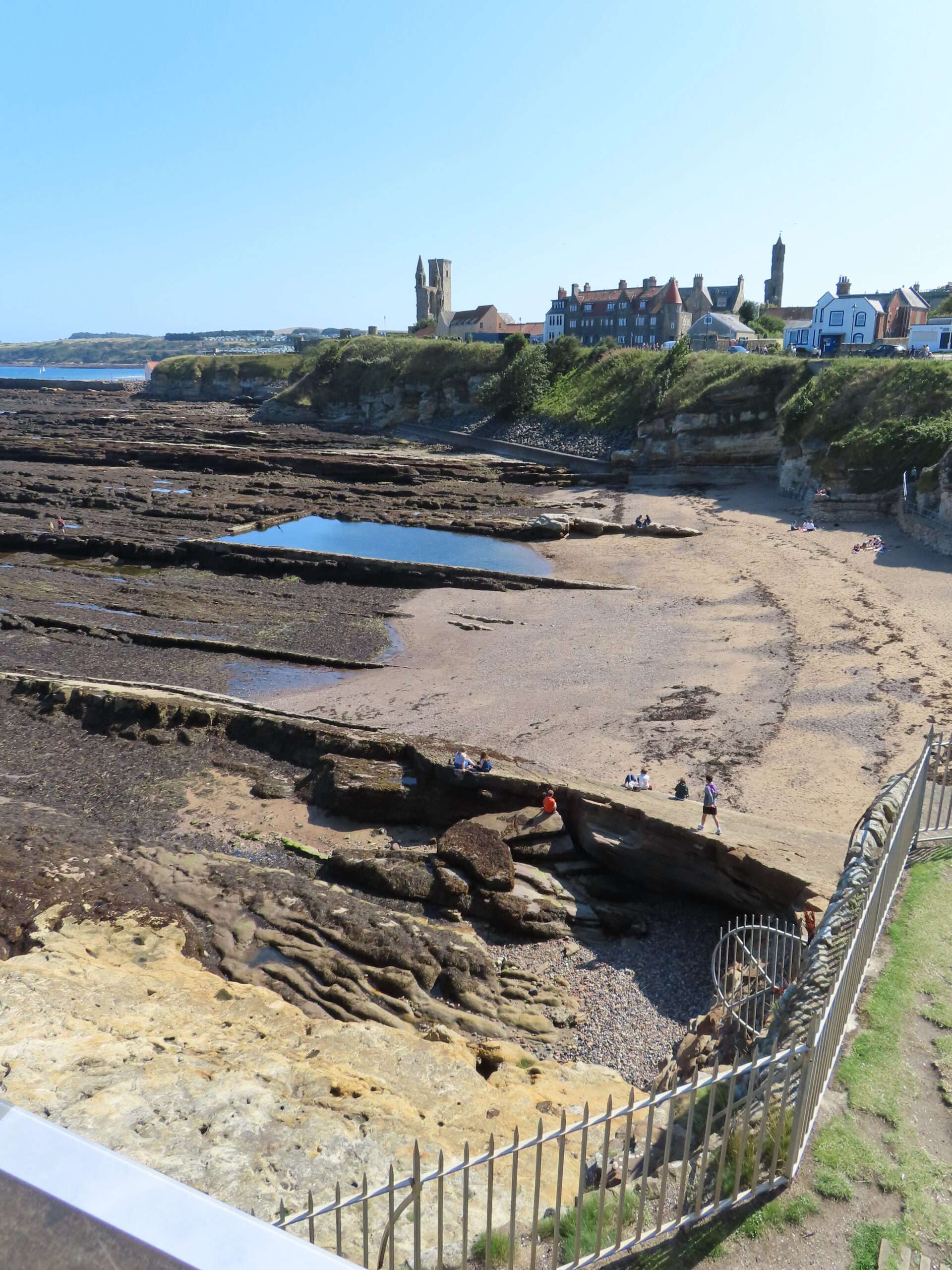
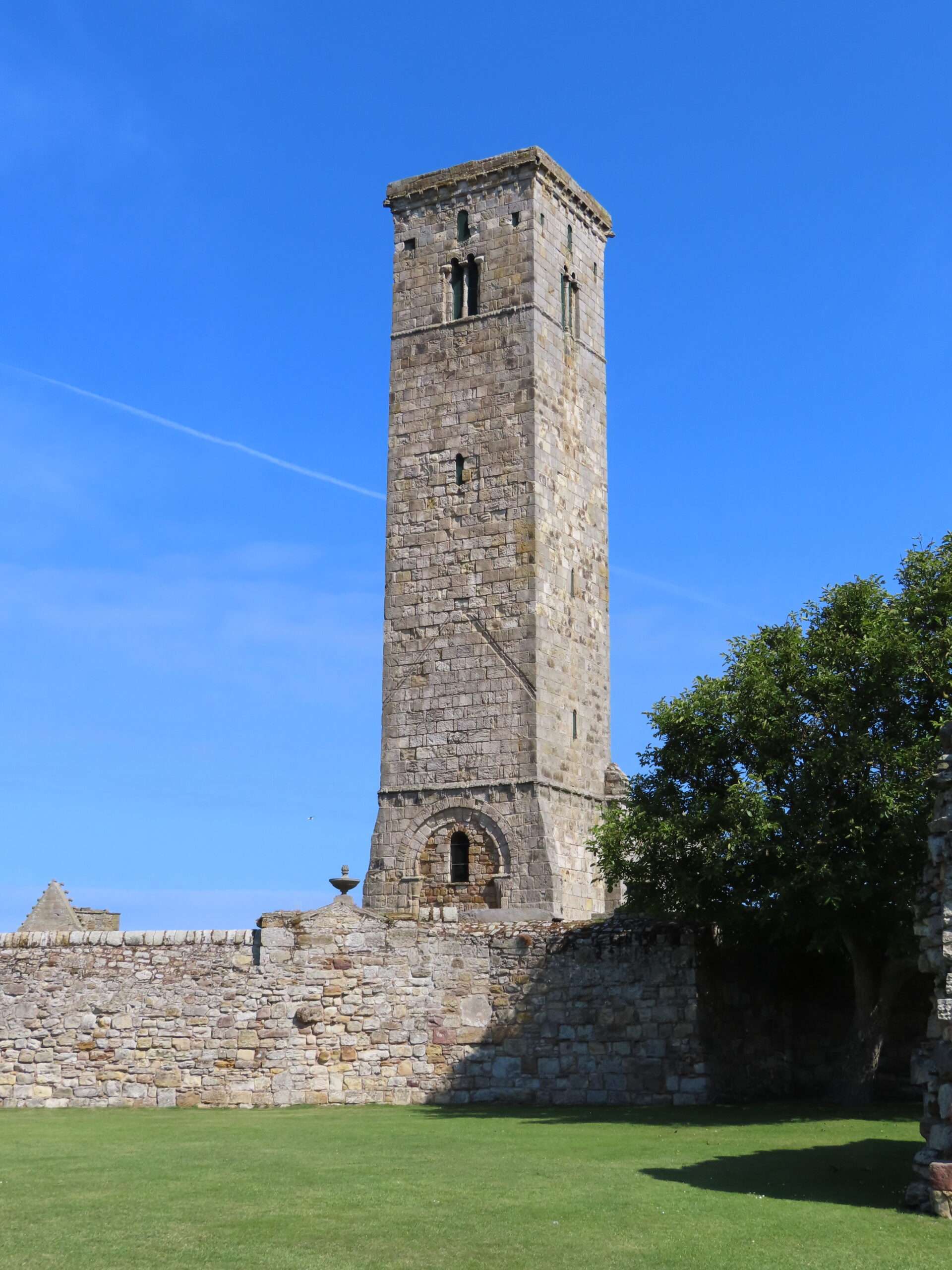
In the cathedral’s heyday, St Andrews could legitimately call itself a city. The cathedral fell out of use after the Reformation; you’ll sometimes read that the building was destroyed at the time by the reformers. In fact, the building was mined over the centuries by local people for building materials. What’s left still does give a sense of the enormous scale of the building in its pomp. I recommend taking one of the regular tours led by HES staff. Your tour finishes with an airy visit to the top of St Rule’s Tower – the remaining bit of the church which preceded the cathedral.
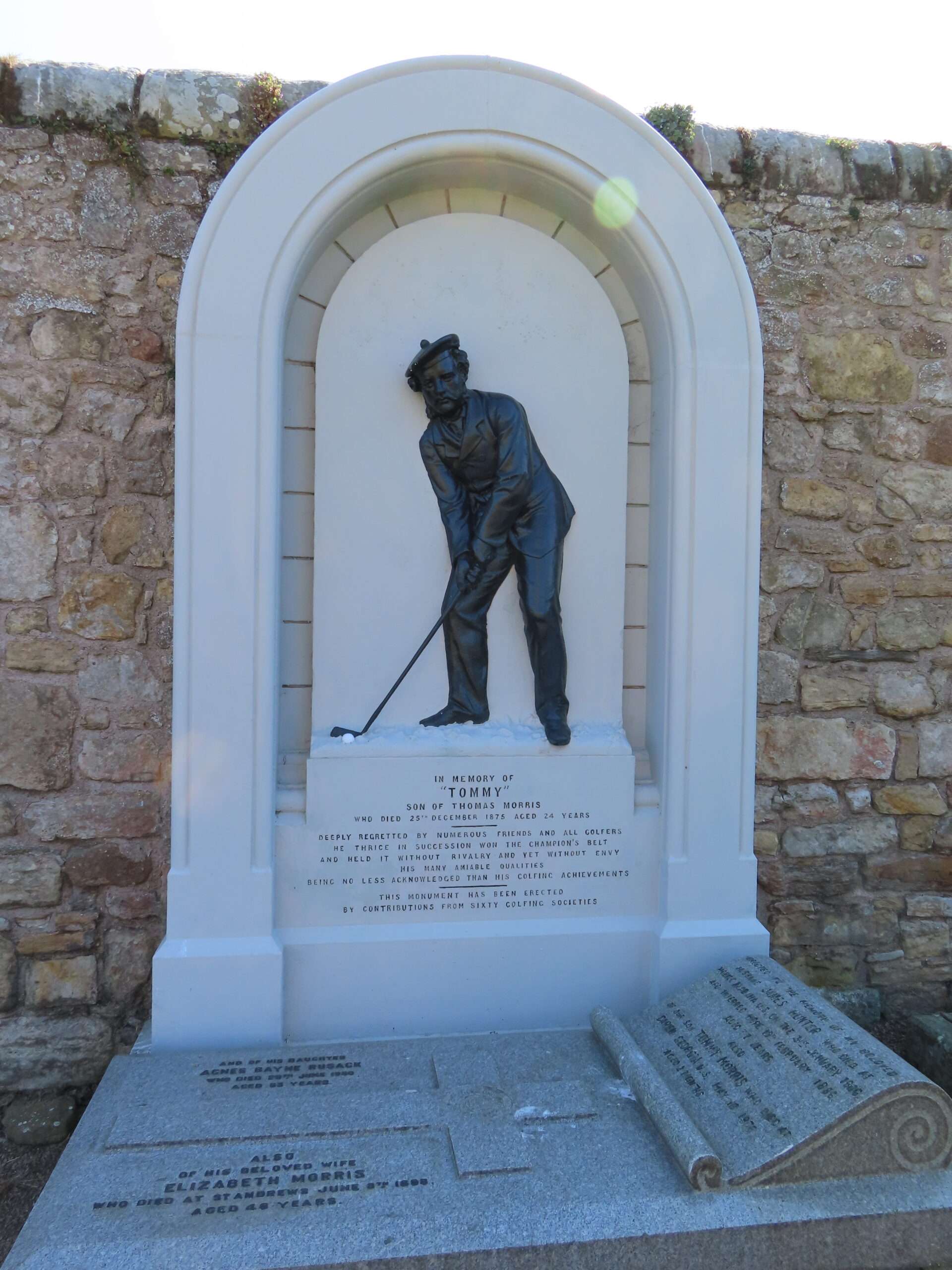
You can’t escape St Andrews’ golfing history even here, though. The precinct has continued to be used for burials and a modern object of pilgrimage is the tomb of Young Tom Morris, a St Andrews lad who won the British Open at the age of 17 – he’s still the youngest to have done so – and died at the tragically early age of 24. There’s a well-worn path to his shrine (for, really, it is a shrine) which is easily identifiable by the bronze statue of Young Tom, complete with club and ball.
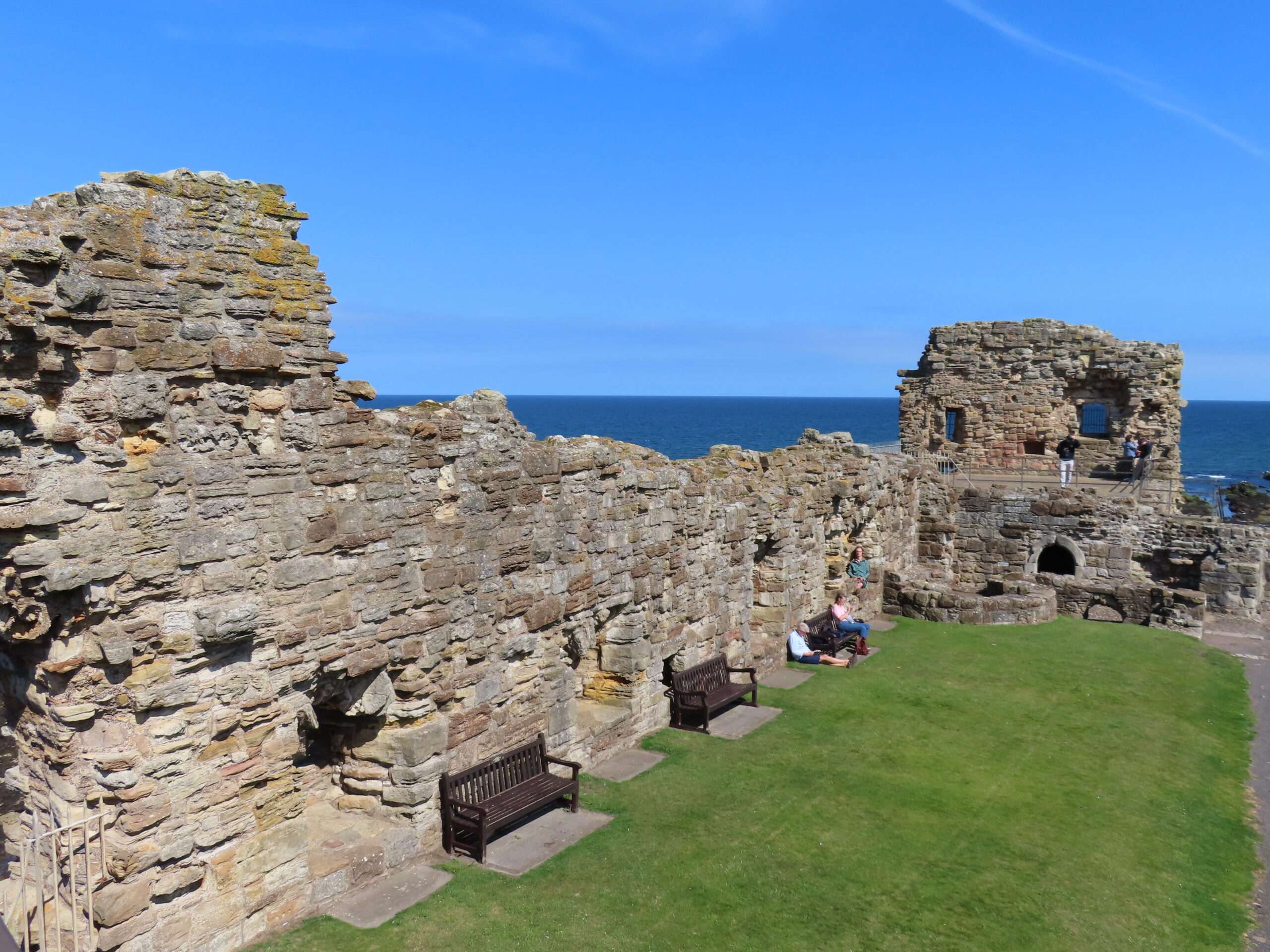
St Andrews Castle was highly bracing on the wet and windy occasion of one of my recent visits. It has a dramatic setting, just a stone’s throw from the cathedral, protected from the sea by dramatic crags. It was the seat of the Bishops and later Archbishops of St Andrews, but it saw many other distinguished guests. James I celebrated Christmas here in 1425 and it’s thought that James III may have been born in the castle.
Nowadays, especially if you visit in term time, the university rather sets the tone of the town. It’s an intriguing thought that St Andrews had a university 400 years before London. The distinctive red gowns add a unique flavour to the place. In recent years, there has been a trend for the younger members of the royal family to study at St Andrews a dream come true for the university’s student recruitment!
One thing St Andrews doesn’t have is a railway station but buses run from Leuchars Station every few minutes so it’s perfectly accessible even without a car. You could call it a seaside resort, but that description does no justice the town’s historical and cultural depth. What it isn’t, not anymore anyway, is a city.
Text and photos: David McVey.
Support the Scottish Banner! To donate to assist with production of our publication and website visit: The Scottish Banner