
November 2025 (Vol. 49, Number 05)
The Woman with the Torch
-
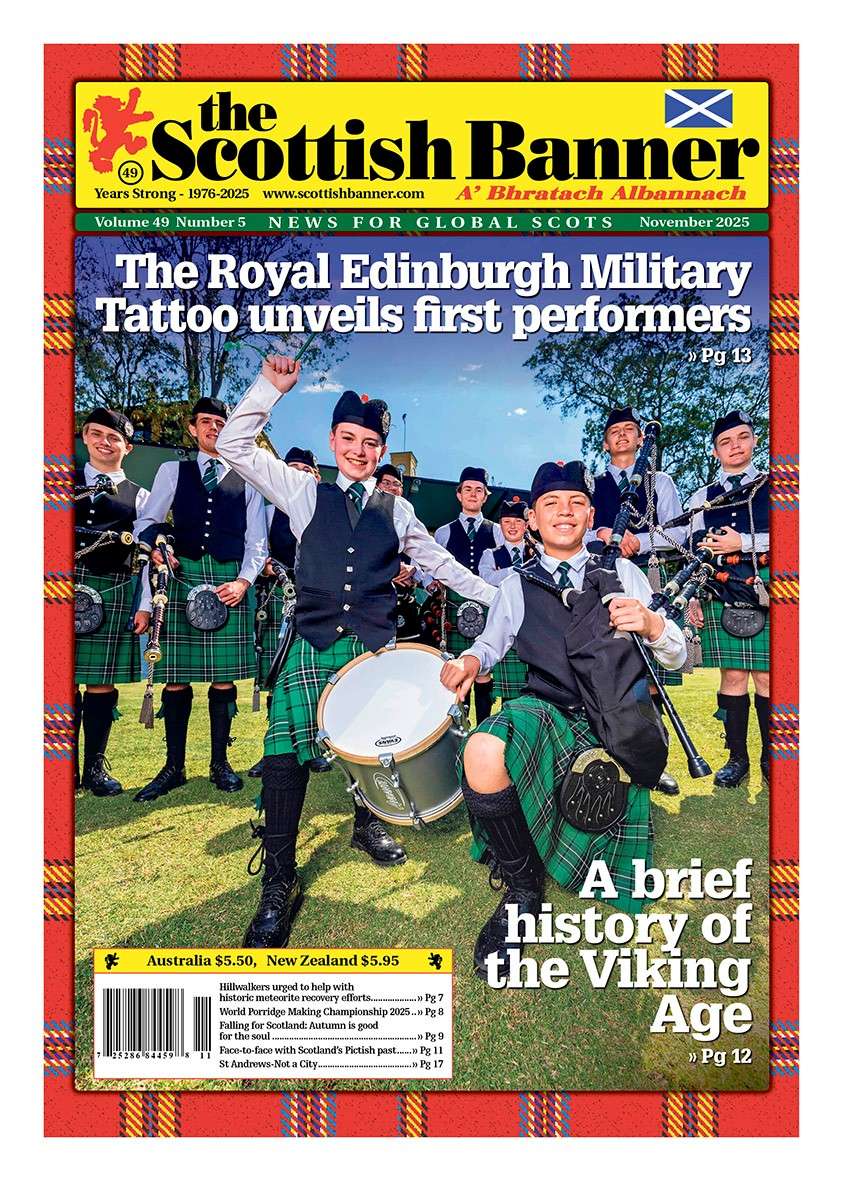
Members of Brisbane Boys’ College Pipe Band who will perform at The Royal Edinburgh Military Tattoo in Brisbane and Auckland. Photo: Luke Marsden.
The city of Edinburgh has recently approved a new statue for the city’s iconic Royal Mile. This statue is surprisingly unique as it is the very first depicting a woman.
That woman is Dr Elsie Inglis who was a pioneering Scottish doctor, suffragist, and humanitarian who transformed women’s healthcare and wartime medicine.
Committed suffragist
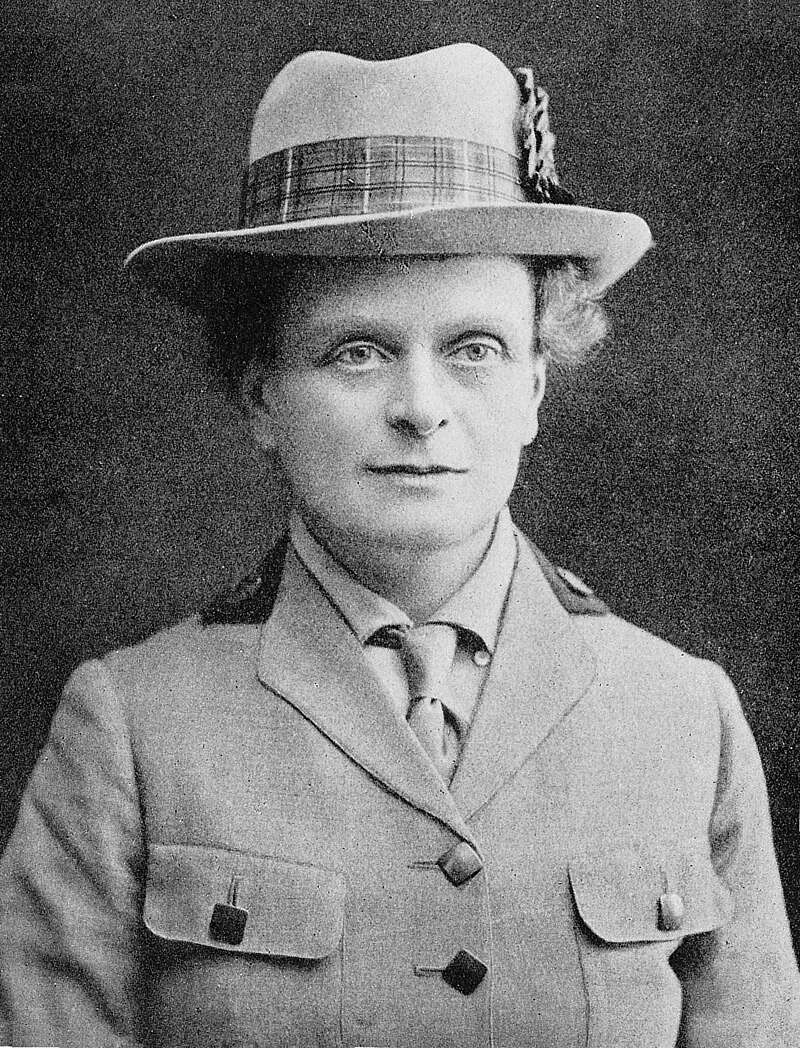
Born in 1864 in British India, Inglis trained at the Edinburgh School of Medicine for Women and qualified in 1892. She was appalled by the poor standards of care for women and became a tireless advocate for improved maternity services. In 1901, founded a women-staffed maternity hospital in Edinburgh, a radical move that challenged the male-dominated medical establishment. Dr Inglis had female staff from not just across Scotland working at her sites, but women from as far as Australia, Canada and New Zealand taking up the cause.
A committed suffragist, Inglis was active in the Scottish Federation of Women’s Suffrage Societies. When World War I broke out, she offered her services to the British War Office—only to be told, “Go home and sit still.” Undeterred, she launched the Scottish Women’s Hospitals for Foreign Service, establishing medical units staffed entirely by women. These hospitals operated in France, Serbia, and Russia, treating thousands of soldiers and civilians under extreme conditions.
Inspiring life
Her work in Serbia was especially heroic. Despite illness, she continued to lead medical efforts and was awarded the Serbian Order of the White Eagle and was the first woman to receive the country’s highest honour. She returned to Britain gravely ill with cancer and died on November 26, 1917, just one day after arriving home.
Dr Inglis’s legacy lives on as a symbol of compassion, courage, and defiance. Her contributions not only advanced medical care for women but also proved that female professionals could excel in the most demanding circumstances. Inglis is buried in Dean Cemetery, Edinburgh, and is today remembered as “The Woman with the Torch” and her inspiring life which helped so many.
In this issue
A cast of over 1,000 is preparing to dazzle Australian and New Zealand audiences as The Royal Edinburgh Military Tattoo gets ready to head overseas in celebration of their incredible 75th anniversary. We include just some of the world class performers in this issue, and for those who cannot make the trip Edinburgh is calling for the 2026 shows also well into development.
Viking invasions and Norse legacy are part of the Scottish story. In this issue we delve into how these fierce raiders went on to build communities and trade and became part of Scotland’s history.
St Andrews is a historic coastal town in Fife, famed as the “Home of Golf” and for its prestigious university (which is Scotland’s oldest). If like me, you may have enjoyed the seaside charm and history the town boasts and if not, you should plan to when visiting Scotland. Some may be surprised St Andrews is not a city but a town, which is full of history, beauty and a place named after Scotland’s patron saint.
Lest We Forget
The following poem was written by a Canadian Medical Corps doctor, Major John McCrae, who was serving with a Field Artillery Brigade in Ypres. The death of one of his friends in May 1915, buried in the cemetery outside his dressing station, affected him severely and he wrote his poem as a way of expressing his anguish at the loss.
In Flanders Fields
In Flanders fields the poppies blow
Between the crosses, row on row,
That mark our place; and in the sky
The larks, still bravely singing, fly
Scarce heard amid the guns below.
We are the Dead. Short days ago
We lived, felt dawn, saw sunset glow,
Loved and were loved, and now we lie
In Flanders fields.
Take up our quarrel with the foe:
To you from failing hands we throw
The torch; be yours to hold it high.
If ye break faith with us who die
We shall not sleep, though poppies grow
In Flanders fields.
On the 11th hour of the 11th day of the 11th month in 1918, the guns of the Western Front fell silent after more than four years of continuous warfare during the First World War. Tuesday November 11th marks the 107th anniversary of the Armistice which ended the First World War (1914–18). Every year at the 11th hour of the 11th day of the 11th month, millions around the world pause in silence to remember the sacrifices many have made so we can enjoy life today.
Remember those who gave their lives in the two world wars and all who have died in combat since. Regardless of where you find yourself this month, I hope you have time to pause and remember all the men and women who gave their all, for all of us. Lest we forget.
This month is also St Andrew’s Day, celebrated on November 30th, which is Scotland’s official national day honouring its patron saint, Saint Andrew the Apostle. Perhaps our events page will have an event you can attend, if you find yourself celebrating, I wish you a wonderful time.
Do you have you any comments from the content in this month’s edition? Share your story with us by email, post, social media or at: www.scottishbanner.com/contact-us
#ScottishBanner, #TheBanner #NewsForGlobalScots
The Scottish Banner is more reliant than ever on our readers helping us to provide you with our unique content by buying a copy of our publication, regardless if by print or digital subscription or at a retail outlet.
We appreciate your support and hope you enjoy this edition.
Support the Scottish Banner! To donate to assist with production of our publication and website visit: The Scottish Banner