
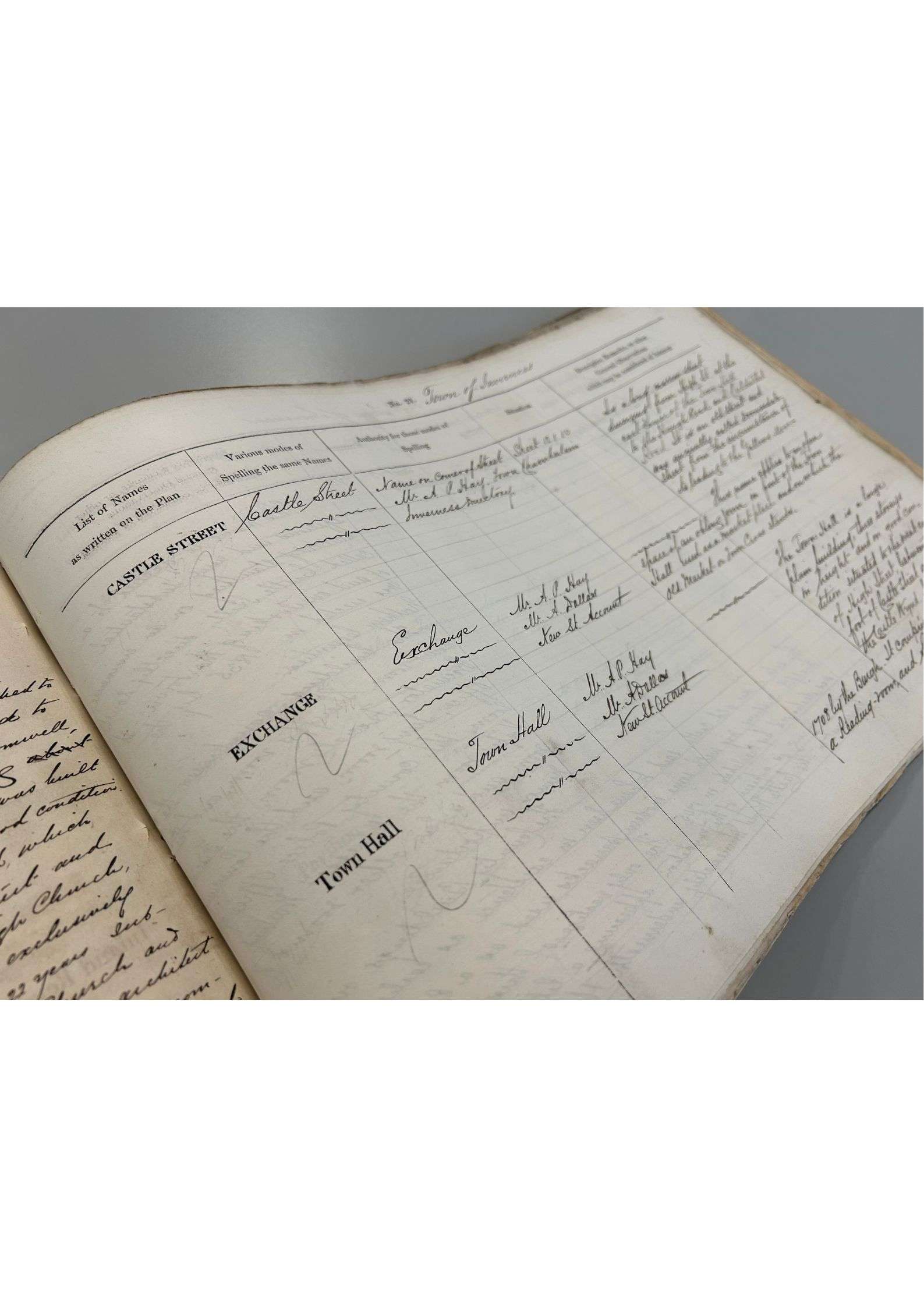
People are being invited to take a tour of Scotland in the mid-19th century through the online records of National Records of Scotland. When the Ordnance Survey (OS) created its first six-inch to the mile maps, its surveyors travelled the country to collect place-names and their spellings. They would use existing publications and local people as sources. It took them almost 40 years to gather all the information.
The result was arguably the first comprehensive gazetteer of Scotland. The Ordnance Survey name books detail just about every geographical feature from Out Stack, the most northly part of Shetland, to the Mull of Galloway, the most southerly part of Scotland.
The books date from between 1845 and 1880. They contain around 300,000 place entries and include everything from famous castles to small local landmarks.
The first comprehensive gazetteer of places in Scotland
The Ordnance Survey name books were also the first systematic attempt at recording Gaelic place-names. The books offer a snapshot in time, capturing the country as it was in Victorian times. The Wallace Monument in Stirling was only at its foundation course at the time of being surveyed in 1861-1862.
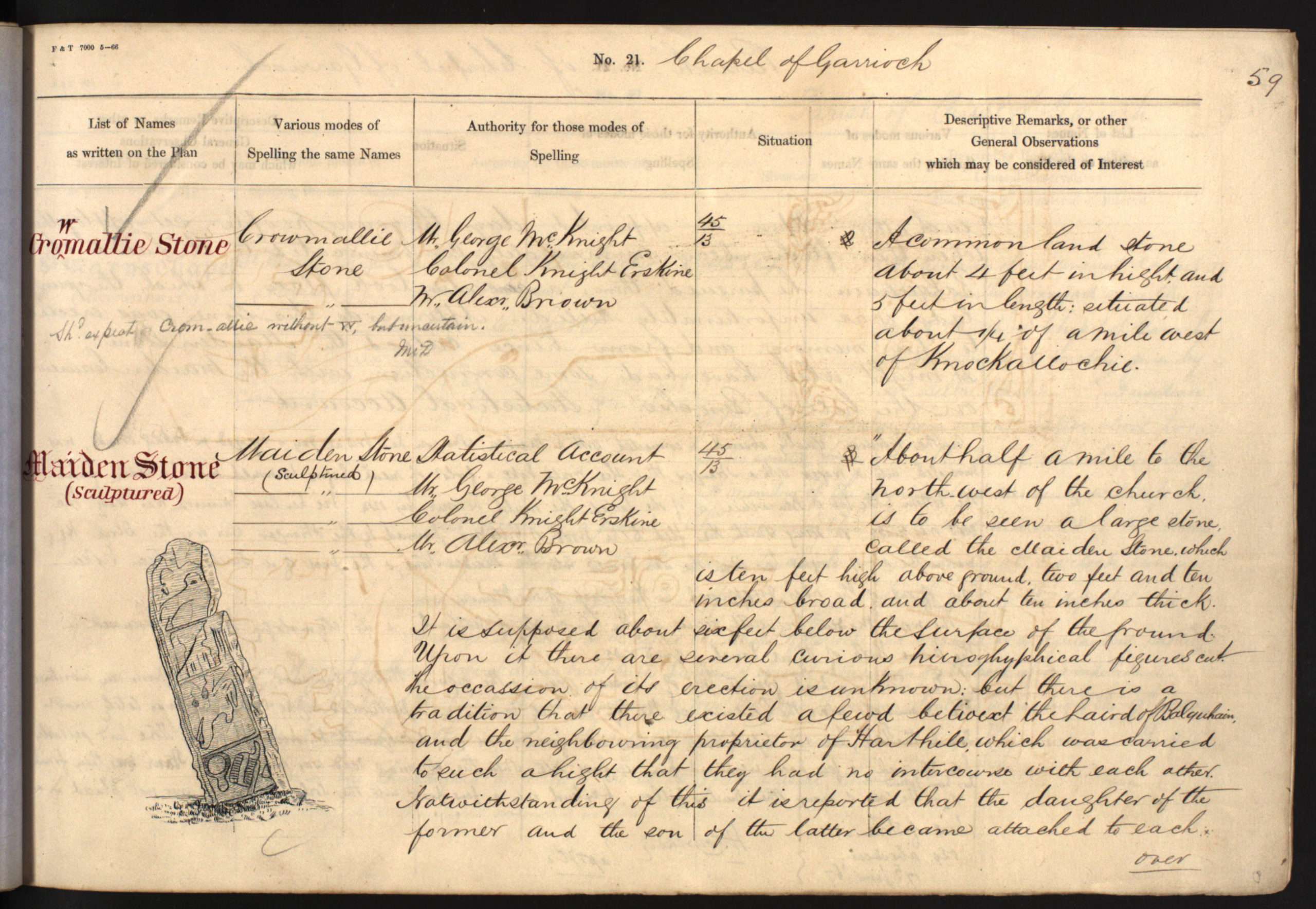
The entry for Ardross Castle, location for TV show The Traitors, remarks on it being ‘an elegant modern building’. Archaeological features are sometimes sketched, including the Maiden Stone at Garioch in Aberdeenshire.
Archivist Jessica Evershed said: “The Ordnance Survey used the name books to inform the spelling of places on their first edition six-inch maps of Scotland. They could be considered the first comprehensive gazetteer of places in Scotland. These records will be fascinating to local and family historians, hoping to understand the evolution of the Scottish landscape and of the places their ancestors worked and lived. They can offer explanations of the origins of place-names from local people, including stories of how place-names came about. Sadly, some of these stories are now forgotten with the passage of time. You can search for a favourite historic building or landmark and compare the historical entry with how it looks today.”
The records are available at: www.scotlandspeople.gov.uk
Main photo: Maiden stone, Chapel of Garioch, Aberdeenshire. Entry includes a sketch of a Pictish stone cross slab with two possible local legends mentioned about its past neither of which was a happy tale for the eponymous Maiden.