
A new and unique book celebrates a rarely acclaimed figure behind the founding of Hibernian Football Club.
Scotland’s capital city is famous for many things, Edinburgh Castle, Holyrood Palace, the Royal Mile, Princes Street, the port of Leith. It was home to many celebrated people: Sir Walter Scott, Robert Louis Stevenson, Sir Arthur Conan Doyle and John Knox among them. It is renowned for its dramatic townscape and the architecture of James Craig, Robert Adam, and William Henry Playfair and others.
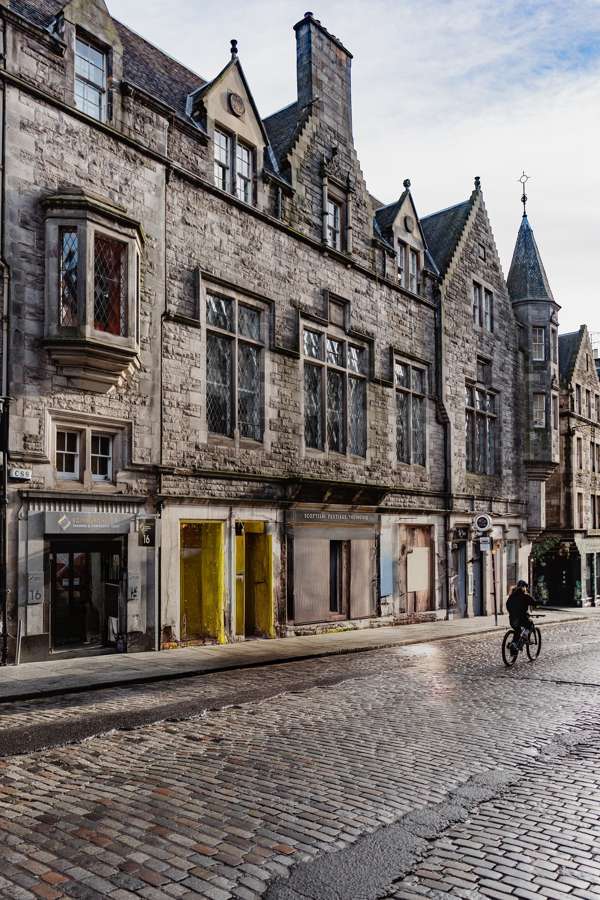
The 19th century city architect David Cousin’s Scots Baronial style is evident in the High Street, Cockburn Street, Jeffrey Street and elsewhere. In one of his creations, the Catholic Institute at 16-28 St Mary’s Street, a new entity was launched by the local parish priest on 6th August 1875.
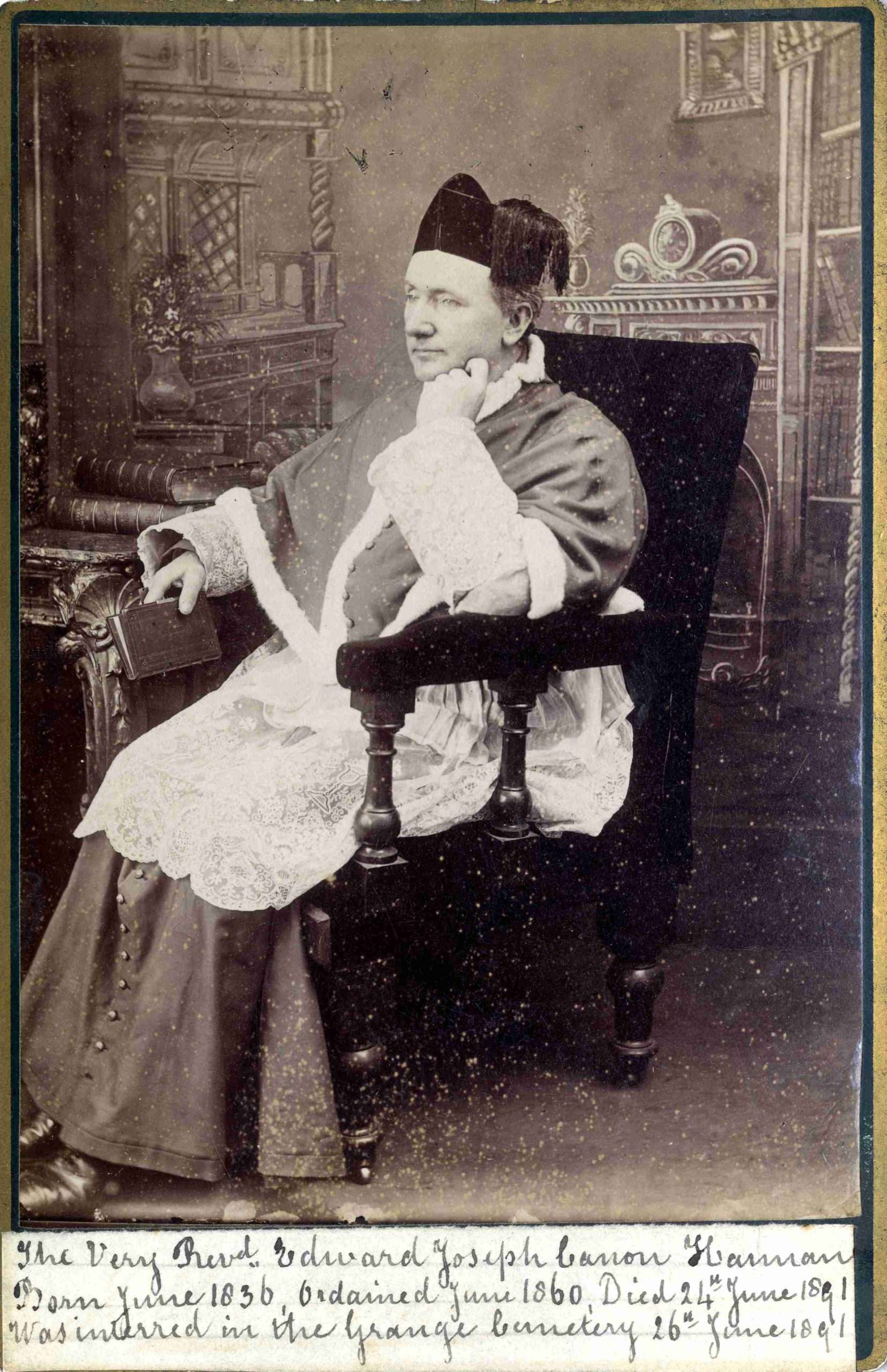
Edward Joseph Hannan of St Patrick’s church in the nearby Cowgate announced that a football team was to be created for the benefit of his parishioners, mostly poor first and second-generation Irish who had escaped the Great Famine in the 1840s.
That football team, Hibernian Football Club, celebrates its 150th anniversary this coming season. The author of Edinburgh’s First Hibernian, history graduate Mike Hennessy, is a lifelong Hibs fan which is what prompted him to shine a light on this rarely acclaimed figure who arrived in Edinburgh from Ballingarry, Co Limerick in 1861 at the age of 25 – and stayed till his death 30 years later, founding Hibs along the way.
Scotland’s capital
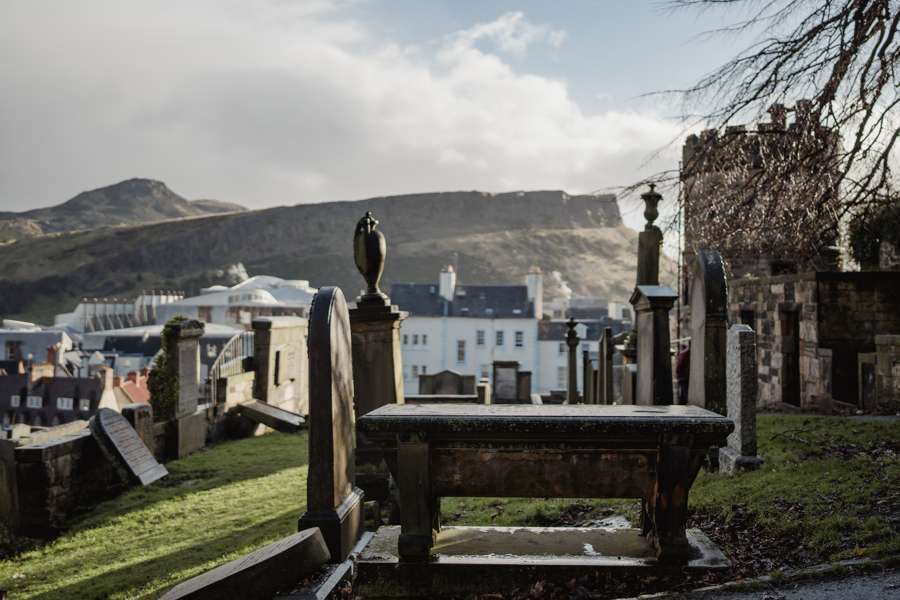
Father Hannan arrived had an immediate impact on his arrival in Edinburgh, working to improve the physical and moral condition of his parishioners, living in some of the most appalling slum tenements with little sanitation, chronic overcrowding and the temptations of alcohol on every street corner and down each dark close. When the Irish arrived, they had little in the way of possessions, had few skills and many could not speak English, making them largely unemployable.
Hannan’s objective was to enable his fellow Irishmen to become valued citizens of Scotland’s capital, contributing to the wealth of the city and to be welcomed rather than shunned by their largely Presbyterian hosts. The vehicles he chose were education, exercise and temperance and to that end he opened a branch of the Catholic Young Men’s Society (CYMS) in 1865 and moved it into the premises on St Mary’s Street in 1870. The Catholic Institute was newly built following the Edinburgh Improvement Act which had paved the way for the demolition of many of the slums and the building of Cousin -designed replacements.
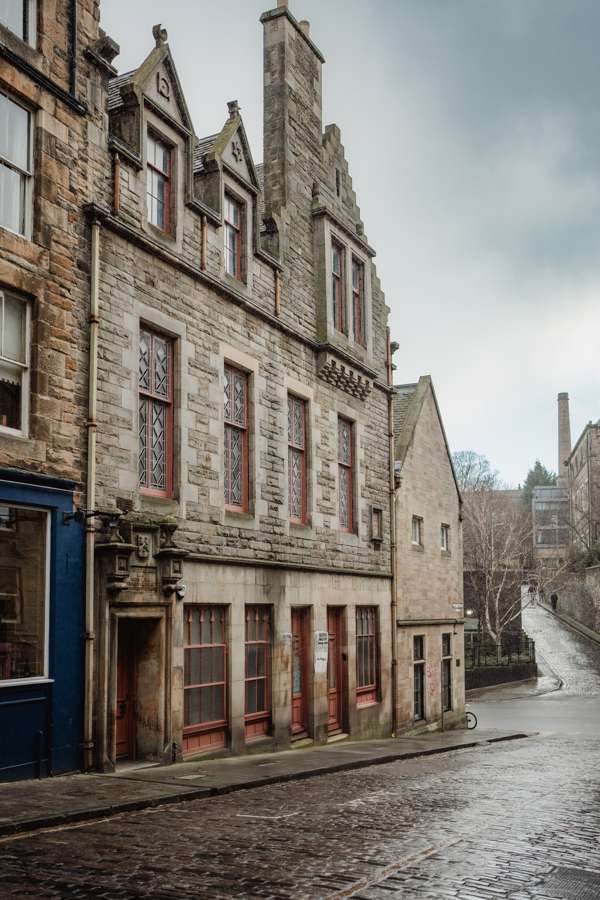
Hannan involved himself with the civic fabric of the city, joining the Parochial and Schools boards, sponsoring the multi-denominational United Industrial School and building St Ann’s school in the Cowgate. The buildings have survived to the present day, as has the presbytery he built adjacent to his church. By involving himself in such matters, he ingratiated himself into Edinburgh society and was able to promote the interests of his parishioners and the poor in general. It is one reason why, when his football club was initially denied admission to the Edinburgh Football Association and the Scottish equivalent, on the grounds that they were Irish and not Scottish, he was able to convince the authorities to reverse their decision and not exclude his parishioners from the new and rapidly expanding game. At that time, Edinburgh boasted only four clubs, namely the 3rd Edinburgh Rifle Volunteers (ERV), Thistle, Hanover and Heart of Midlothian, so Hibernian (by the 1880s also referred to as Hibs) added momentum; and a substantial following.
The Associations had also made their decisions based on a false premise. In the first few years after its founding, around half the playing staff had been born in Edinburgh, and one in England, and many of the club’s financial backers were Scots, not Irish. When Father Hannan launched the club, in the great hall of the Catholic Institute which became known as St Mary’s Street Hall, he could hardly have foreseen that within 12 years they would have won the Scottish Cup, an all too rare occasion since then. Nor that in the post war period it would boast arguably the best forward line Scotland has ever seen, the Famous Five. Gordon Smith, Bobby Johnstone, Lawrie Reilly, Eddie Turnbull and Willie Ormond. Nor for that matter that it would be celebrating 150 years in 2025.
The club has been at the forefront of change in several areas, from pylon floodlights, electronic scoreboards, shirt sponsors and undersoil heating to being the first British team to participate in what is now the Champions League, and the first Scottish team to tour Brazil in the 1950s.
To mark the founding of the club, there will be a series of events throughout the year which will be publicised on the club website, beginning with an exhibition at St Mary’s Street Hall, where it all started, open to all fans, on the 6th of August (visit: www.hibernianfc.co.uk/150).
Edinburgh’s Little Ireland
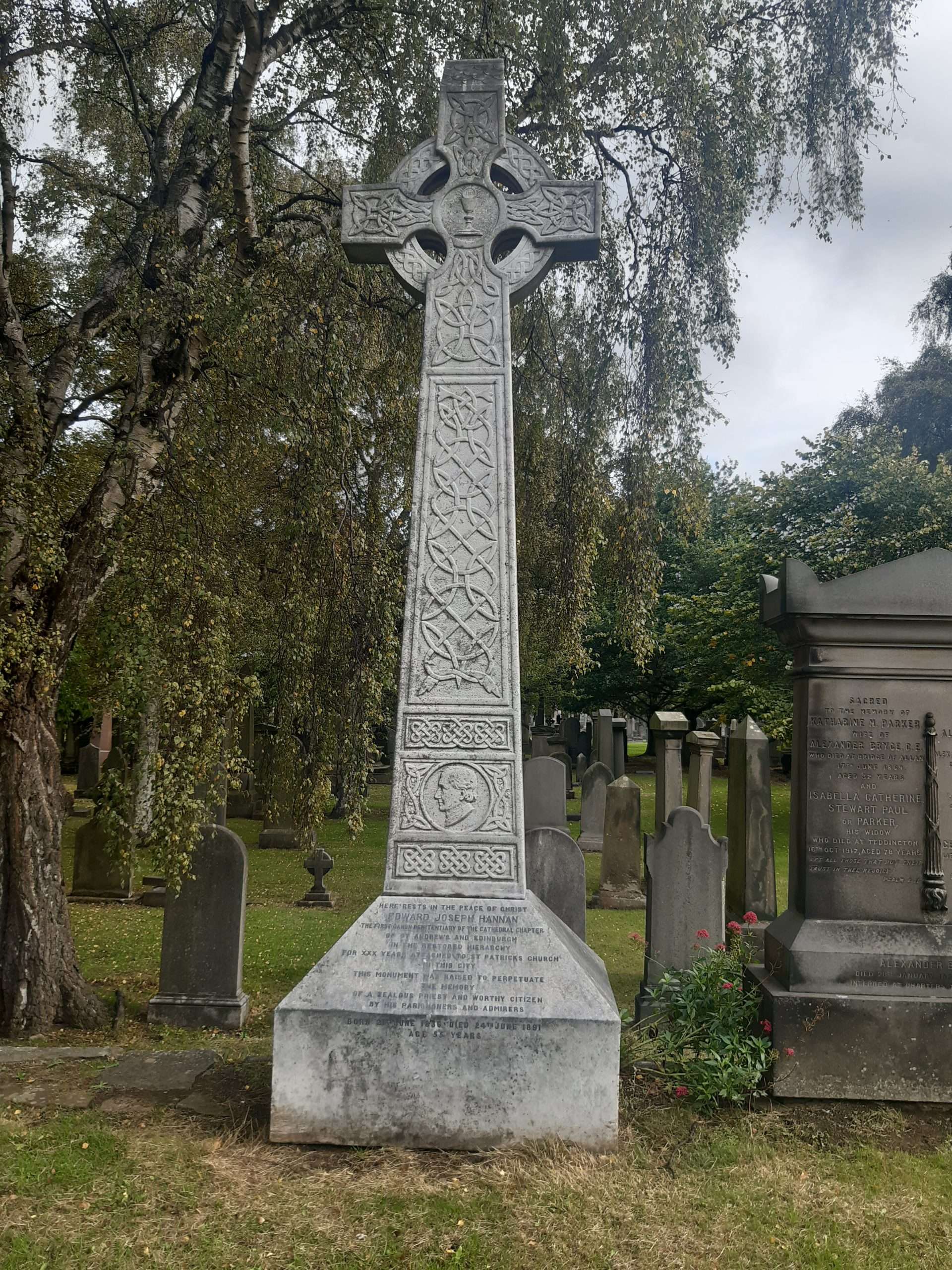
And to coincide with and further mark the occasion, the first ever biography of Canon Hannan will be published. It tells of how he was born on a farm near Limerick, the second of 11 siblings of how he witnessed the worst excesses of the famine as a teenager, and attended seminaries in Limerick and Dublin where his academic record was outstanding, prior to arriving in Scotland.
The book describes the social divisions, the national and political rivalries and the religious tensions in Edinburgh in the second half of the 19th century, the industrialisation and urban development of Scotland’s capital, and the emergence of the game of association football, providing a backdrop to the achievements of the man, and how it was that he came to found the club.
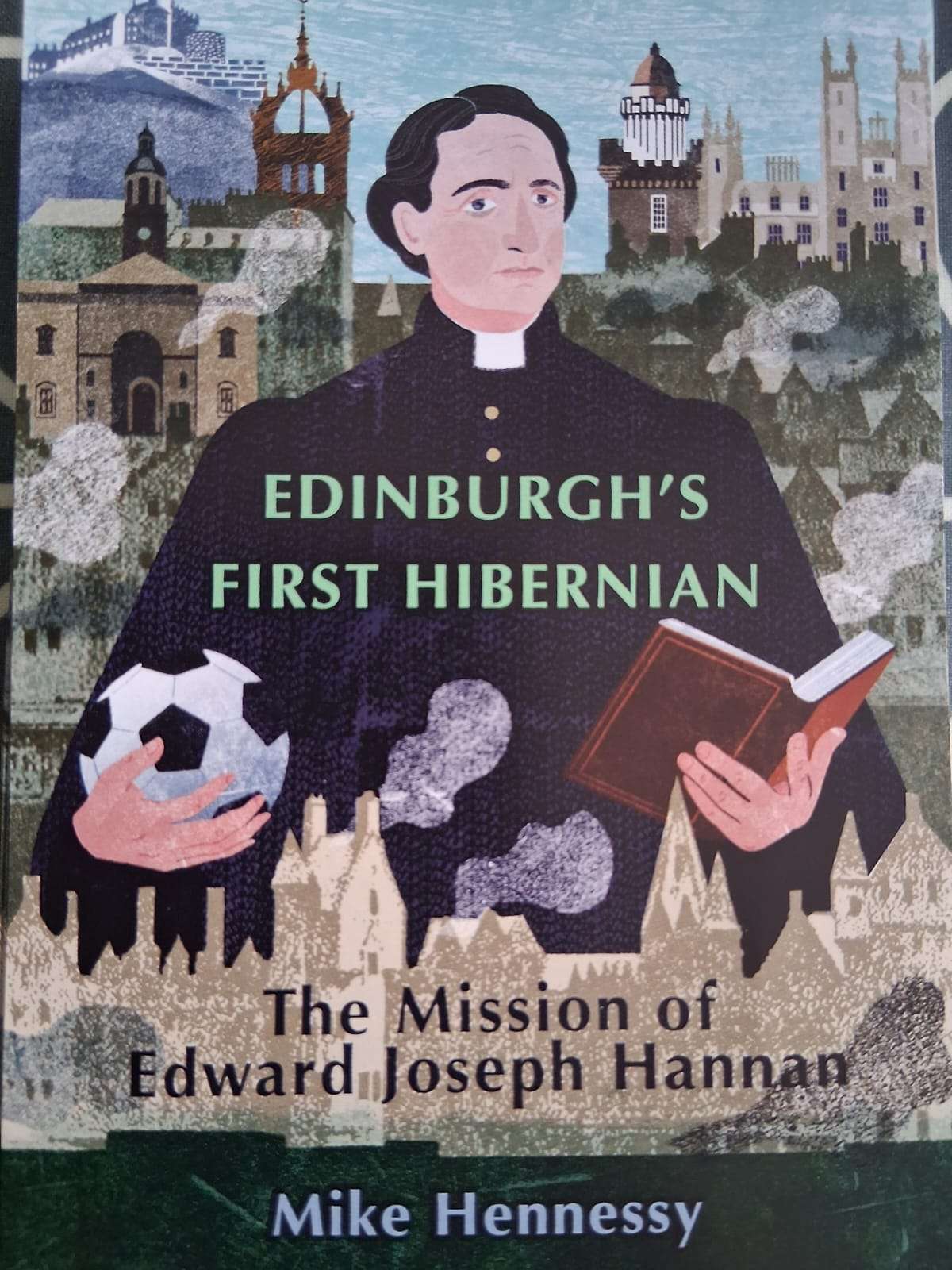
There is some new and unique research, from original documents, and an extensive list of books and articles, which gives a new perspective on exactly how the club came to be founded and the origins of its name, its motto and its early strips; how it lost half of its 1887 Cup winning team to the newly formed Glasgow Celtic; how it became embroiled in the politics of Irish Home Rule; before temporarily stopping playing altogether for some 18 months in 1891, after its home ground, Hibernian Park, was repossessed by its landlord for redevelopment.
Moreover, it takes the reader on a trip of Edinburgh’s Little Ireland, the area from the Cowgate to the Grassmarket, noting its tributaries such as Blackfriars, Niddry and Guthrie Streets where Hannan visited his sick parishioners. And was on one occasion struck down by typhoid. It visits landmarks that still stand today such as the Heriot Schools, Freemasons Halls and Protestant and Catholic churches and schools which stood cheek by jowel, and traces Hannan’s weekly trips to Castle Street or Lauriston in carrying out religious and civic duties.
Edinburgh’s First Hibernian has glowing testimonials from a number of high profile individuals such as Charlie Reid of the Proclaimers, Malcolm McPherson, Hibs former Chairman, Edinburgh councillor Margaret Graham, and Hibs legendary player Pat Stanton who provides a foreword
As one of them, the broadcaster and former professional footballer Pat Nevin aptly puts it, ‘You don’t have to be a Hibernian fan to enjoy it, but it might help.’
The richly illustrated book is available from 6th August in hardback (£25) from various bookstores in the City and from St Pat’s Church, or can be pre-ordered online from Thirsty Books: www.thirstybooks.com/bookshop/edinburghs-first-hibernian
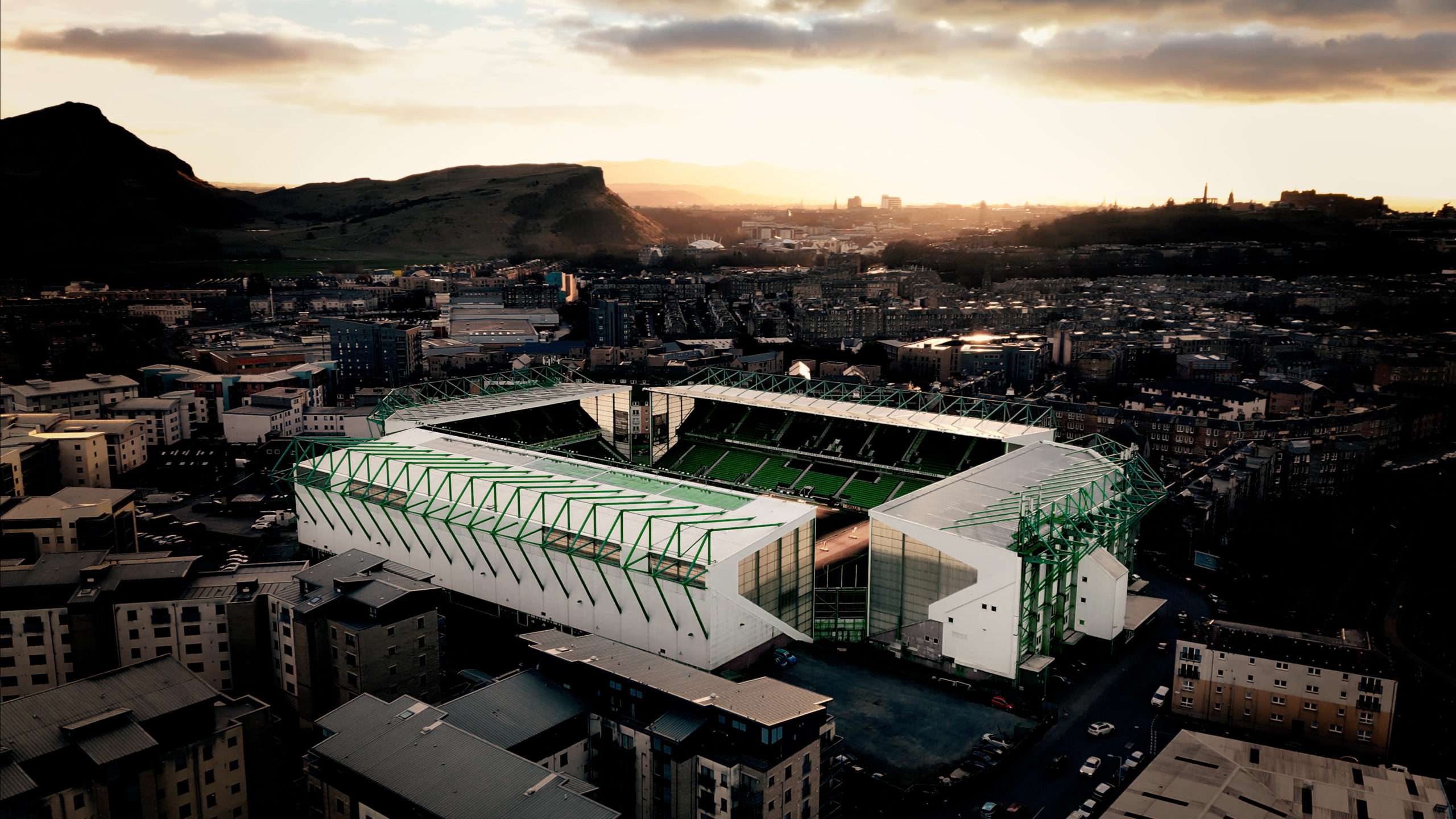
Main photo: Easter Road Stadium and the impressive Edinburgh skyline at dusk.
Support the Scottish Banner! To donate to assist with production of our publication and website visit: The Scottish Banner